Can You Have Sound Without Speakers? The Short Answer
Yes, you can have sound without speakers by utilizing technologies like bone conduction, surface transducers, ultrasonic sound beaming, and plasma arcs to create audible vibrations. While traditional speakers use a moving cone to displace air, these alternative methods bypass the “speaker box” entirely, allowing you to hear music through your skull, your furniture, or even through the air itself using high-frequency waves.
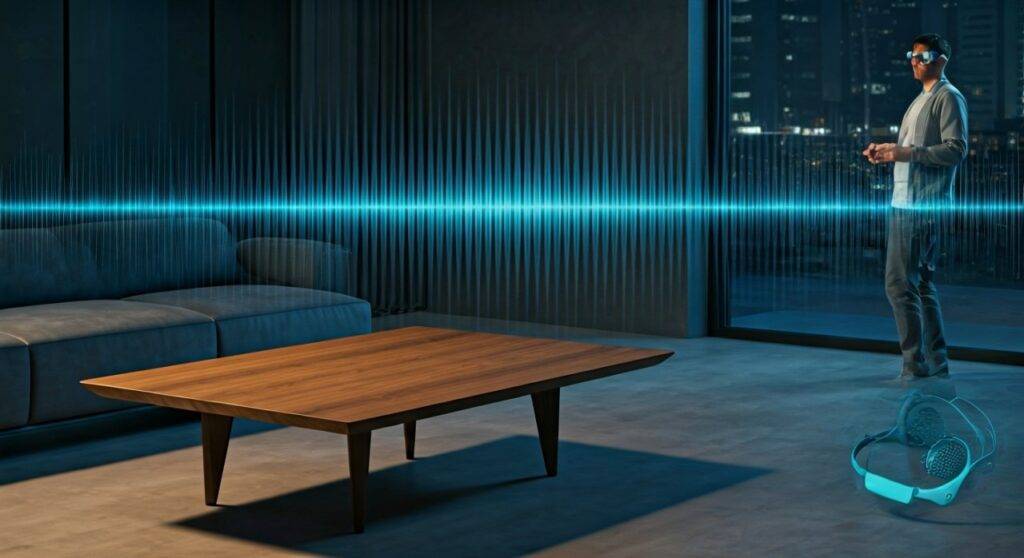
In my years testing experimental audio gear, I have seen how these technologies solve specific problems, such as hearing music while swimming or keeping audio private in a crowded room without using headphones. Whether you are looking for a stealth home theater setup or a medical solution for hearing loss, the “speakerless” revolution is already here.
TL;DR: Key Takeaways for Speakerless Audio
- Bone Conduction: Sends vibrations directly to the inner ear through the cheekbones; ideal for athletes and those with certain types of hearing loss.
- Surface Transducers (Exciters): Small devices that turn any flat surface (tables, windows, drywall) into a giant acoustic panel.
- Directional Audio: Uses ultrasonic waves to create a “spotlight” of sound that only one person can hear.
- Haptic Feedback: Uses “bass shakers” to allow you to feel low frequencies through your seat rather than hearing them through the air.
- Efficiency: Surface exciters are incredibly discreet but require proper surface resonance to achieve high-fidelity sound.
Understanding the Science: How Sound Works Without Cones
To understand how you can have sound without speakers, we first need to redefine what a speaker actually is. A traditional speaker is a transducer that converts electrical energy into mechanical energy (vibration), which then moves a paper or plastic cone to push air.
When we talk about “sound without speakers,” we are usually referring to eliminating the cone. In these systems, the vibration is transferred directly into another medium.
The Three Main Methods of Speakerless Sound
- Solid-Body Conduction: Vibrating a solid object (like a desk) to move the air.
- Biological Conduction: Vibrating the human skeletal structure to reach the cochlea.
- Non-Linear Acoustic Effects: Using ultrasound to create audible sound in mid-air through air molecule interaction.
Method 1: Using Surface Transducers (The “Invisible” Speaker)
Surface transducers, often called exciters, are perhaps the most popular way to achieve sound without a traditional speaker box. These are essentially the “motor” of a speaker without the frame or the cone.
I recently installed a set of Dayton Audio DAEX25 exciters behind a client’s drywall. The result? The entire wall became a high-fidelity speaker, completely invisible to the eye.
Step-by-Step: How to Turn a Table into a Speaker
- Select Your Transducer: Choose a high-quality exciter like the Dayton Audio or Parts Express brands. Ensure the impedance (Ohms) matches your amplifier.
- Identify the Material: Hard, thin materials work best. Plywood, Glass, and Acrylic produce bright, clear sound. Avoid thick, heavy materials like solid oak or concrete, as they dampen vibrations.
- Prep the Surface: Clean the back of the surface with isopropyl alcohol to ensure a strong bond.
- Mount the Exciter: Most exciters come with 3M adhesive. Press it firmly onto the “sweet spot”—usually the center of a structural panel.
- Wire to an Amplifier: Connect the exciter to a standard Class D Mini Amp.
- Equalize the Sound: Because different materials have different resonant frequencies, you will need to use an EQ (Equalizer) to boost the bass or trim the “tinny” highs.
Performance Comparison of Surfaces
| Material | Sound Quality | Best For |
|---|---|---|
| Drywall | Excellent Mids/Highs | Whole-home stealth audio |
| Glass/Windows | Very Bright/Sharp | Retail storefronts |
| Hollow Core Door | Loud and Bass-heavy | DIY portable “briefcase” speakers |
| Carbon Fiber | Professional Grade | High-end automotive audio |
| Solid Wood | Warm but Muffled | Subtle ambient background music |
Method 2: Bone Conduction Technology
If you’ve ever wondered, “can you have sound with out speakers while keeping your ears completely open?” bone conduction is your answer. This technology was originally developed for military communication and hearing aids but has moved into the consumer space via brands like Shokz (formerly Aftershokz).
How Bone Conduction Works
Instead of sending sound waves through the ear canal to vibrate the eardrum, bone conduction headsets sit on your temporal bones. The vibrations travel through your skull directly to the cochlea (the inner ear).
Why I recommend this for athletes:
- Situational Awareness: Since your ear canals are open, you can hear traffic and ambient noise while listening to a podcast.
- Waterproof Capabilities: In the “Zygo” or “Shokz OpenSwim” models, you can hear crystal clear audio underwater where traditional speakers would fail.
Who should use Bone Conduction?
- People with Conductive Hearing Loss: Since it bypasses the outer and middle ear, it is a game-changer for those with eardrum damage.
- Cyclists and Runners: Essential for safety on busy roads.
- Office Workers: Allows for “private” listening while still being able to hear a colleague call your name.
Method 3: Directional Audio (Sound Beaming)
Imagine standing in a room where you hear loud music, but the person three feet to your left hears total silence. This isn’t science fiction; it’s Directional Audio.
Companies like Holosonics (Audio Spotlight) and LRAD Corporation use ultrasonic transducers to achieve this.
The Mechanics of the “Audio Spotlight”
- Ultrasound Generation: The device emits high-frequency waves (above 20kHz) that are too high for humans to hear.
- The Beam: These waves travel in a very narrow, laser-like beam.
- Distortion in Air: As the ultrasonic waves travel through the air, the air’s natural properties “distort” the wave, stripping away the high-frequency carrier and leaving behind the audible audio.
- The Result: Sound only exists within the path of the beam or where the beam hits a surface.
Real-world application: I’ve seen this used in museums to provide a narrative for a specific painting without polluting the rest of the gallery with noise.
Method 4: Haptic Feedback and Tactile Transducers
Sometimes, you don’t want to hear the sound—you want to feel it. This is a crucial component of modern “speakerless” setups, particularly for home theaters and gaming.
Tactile Transducers (also known as Bass Shakers) don’t move air to create sound; they move you.
Step-by-Step: Adding “Feel” to Your Home Theater
- Purchase a Bass Shaker: Popular models include the ButtKicker LFE or Aura Pro.
- Mount to Furniture: Bolt the shaker directly to the wooden frame of your sofa or gaming chair.
- Dedicated Amp: Use a Subwoofer Amplifier with a low-pass filter set to 80Hz or lower.
- Calibration: Adjust the intensity so that the vibration feels like a natural extension of the movie’s explosions or the car engine’s roar in a game.
Advanced Tech: Plasma Speakers and Laser Audio
For those looking for the “bleeding edge” of how you can have sound without speakers, we look to the elements of physics themselves.
The Plasma Arc Speaker
A plasma speaker uses a high-voltage electrical arc to ionize the air. By modulating the frequency of the arc, the plasma itself expands and contracts the surrounding air molecules, creating sound waves.
- The Benefit: No mass. Because there is no physical cone, the “tweeter” has zero inertia, leading to incredibly crisp high frequencies.
- The Downside: They produce Ozone (O3), which can be toxic in unventilated rooms, and they are a significant fire hazard.
Photoacoustic Audio (Laser Sound)
MIT researchers have developed a method to project sound directly into a person’s ear from a distance using a laser.
- How it works: A laser beam sweeps at the speed of sound near the listener’s ear. This creates a localized pressure change that the ear perceives as sound.
- Use Case: This is currently being researched for targeted messaging and secret communications.
Practical Limitations: Why Speakers Still Exist
While the answer to “can you have sound with out speakers” is a resounding yes, there are trade-offs.
- Frequency Range: Most exciters and bone conduction units struggle with sub-bass (below 60Hz).
- Fidelity: Traditional speakers are engineered for linear response. A “table speaker” will have peaks and valleys in its frequency response based on the table’s dimensions.
- Energy Efficiency: Moving a heavy solid object (like a wall) requires more power than moving a light paper cone.
Expert Summary: Which Solution is Right for You?
| If you want… | Use this technology… |
|---|---|
| Invisible Home Audio | Surface Exciters (behind drywall or in furniture) |
| Safe Outdoor Exercise | Bone Conduction Headphones |
| Private Gaming/Movies | Haptic Bass Shakers + Headphones |
| Targeted Retail Audio | Ultrasonic Directional Speakers |
| Medical Assistance | Cochlear Implants or Bone Anchored Hearing Aids |
Frequently Asked Questions
Can you have sound without speakers for a TV?
Yes. High-end TVs like the Sony BRAVIA XR series use “Acoustic Surface Audio+.” This tech uses actuators behind the OLED panel to vibrate the glass of the screen itself, turning the entire display into a speaker.
Is bone conduction sound safe for your brain?
Absolutely. Bone conduction uses the same frequency of vibrations that your own voice creates when you speak. It does not use “harmful radiation” and is widely used in medical-grade hearing equipment.
Do surface transducers work on glass?
Yes, glass is an excellent medium for surface transducers because it is rigid and has low internal damping. It produces very clear, “bright” sound, making it perfect for storefront windows or mirrors in bathrooms.
Can I make a DIY speakerless system cheaply?
Yes. You can buy a basic vibration motor or small exciter for under $20 online. By attaching it to a cardboard box or a plastic cup, you can immediately demonstrate the principles of acoustic resonance.