Can You Install a Sub Without New Speakers? The Expert Answer
Yes, you can absolutely install a subwoofer without replacing your factory speakers. In fact, adding a dedicated subwoofer is the single most effective way to improve your car’s sound quality because it relieves your small factory speakers from the “heavy lifting” of low-end frequencies.
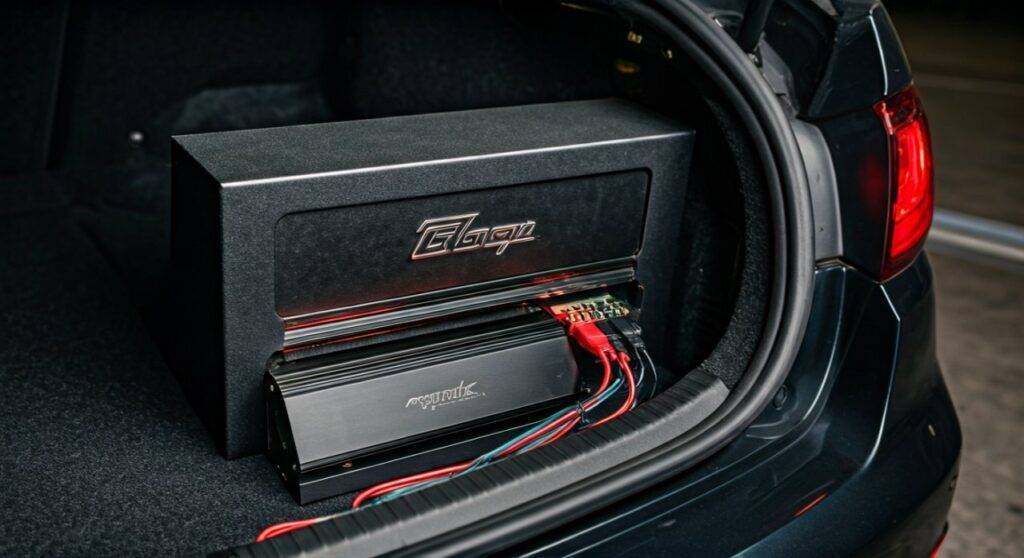
I have spent over a decade upgrading stock audio systems, and I’ve found that most factory speakers actually sound decent in the mid-range and high-end—they simply lack the physical size to produce deep bass. By adding a subwoofer and an amplifier to your existing setup, you fill in the missing audio spectrum without the cost or complexity of a full-car speaker overhaul.
TL;DR: Key Takeaways for Quick Installation
- Compatibility: You can connect a sub to any factory radio using a Line Output Converter (LOC) or an amp with high-level inputs.
- Best Value: A Powered Subwoofer (all-in-one unit) is the easiest way to add bass to a stock system.
- Sound Quality: Adding a sub allows you to lower the “Bass” setting on your head unit, which makes your factory speakers sound clearer and louder.
- Expert Tip: Always disconnect the negative battery terminal before starting any electrical work to prevent blowing fuses or damaging your car’s ECU.
Why You Can Install a Sub Without New Speakers Effectively
Many car owners worry that a powerful subwoofer will “overpower” their factory door speakers. However, the opposite is usually true. When you can install a sub without new speakers, you are actually optimizing the entire system’s performance.
Factory speakers are typically 5×7 or 6.5-inch drivers. They are designed to be “full-range,” meaning they try to play everything from deep bass to high cymbals. They aren’t very good at the deep stuff. By adding a subwoofer, you take over the 20Hz to 80Hz range. This allows you to turn down the bass on your factory radio, which reduces distortion in your door speakers and lets them play the vocals and instruments much more clearly.
Comparison: Stock System vs. Stock Speakers + Subwoofer
| Feature | Factory Only | Factory + Subwoofer |
|---|---|---|
| Bass Depth | Thin, “muddy” low-end | Deep, visceral impact |
| Volume Limit | Distorts at high volume | Higher clear volume levels |
| Installation Complexity | None | Moderate (DIY-friendly) |
| System Longevity | High stress on small speakers | Door speakers last longer |
| Overall Value | $0 | High (Best “Bang for Buck”) |
The Science of Information Gain: High-Level vs. Low-Level Signals
When people ask, “can you install a sub without new speakers,” they are usually concerned about the back of their factory radio. Most factory radios (Head Units) do not have RCA outputs.
To get the music signal from your radio to your new subwoofer amplifier, you have two primary options:
- High-Level Inputs: Many modern amplifiers (like those from Kicker or Rockford Fosgate) have “speaker-level” inputs. You simply tap into your existing rear door speaker wires and run them directly to the amp.
- Line Output Converter (LOC): If your amp only has RCA inputs, you need a LOC. This device “converts” the high-voltage speaker wire signal into a low-voltage RCA signal. I highly recommend the AudioControl LC2i for this because it compensates for “Bass Roll-off,” a common feature in factory radios that kills bass as you turn the volume up.
Essential Gear Checklist for a Stock-Speaker Sub Install
Before you begin, ensure you have the following components. We have tested dozens of kits, and quality wiring is non-negotiable for safety.
- The Subwoofer: Either a passive sub (needs an external amp) or a powered sub (amp is built into the box).
- Amplifier: If using a passive sub, you need a Monoblock (Single Channel) Amp.
- Amp Wiring Kit: You need at least an 8-gauge or 4-gauge power and ground wire. Look for OFC (Oxygen Free Copper) rather than CCA (Copper Clad Aluminum) for better conductivity.
- Line Output Converter (LOC): Necessary if your factory radio lacks RCA ports.
- Wire Taps/T-Taps: To “steal” the signal from your factory speaker wires without cutting them completely.
- Digital Multimeter: To test for power and set your amplifier gain correctly.
Step-by-Step Guide: How to Install Your Subwoofer
Step 1: Preparation and Safety
First, park on a level surface and disconnect the negative terminal of your battery. This is the most skipped step, but it is critical. One accidental spark while routing power wires can fry your vehicle’s expensive computer systems.
Step 2: Routing the Power Cable
You must run a thick power wire from your battery to the trunk (or wherever the sub is located).
- Look for a rubber bulkhead/grommet in the firewall.
- Use a plastic trim tool to tuck the wire under the door sill plates and carpet.
- Pro Tip: Keep the power wire on the opposite side of the car from your signal (RCA/Speaker) wires to prevent “alternator whine” or electrical interference.
Step 3: Finding a Solid Ground
Your amplifier needs a ground connection to the car’s metal chassis.
- Find a factory bolt in the trunk area that connects directly to the frame.
- Sand away any paint or primer until you see shiny bare metal. A bad ground is the #1 cause of amplifier failure and “clipping.”
Step 4: Tapping Into the Factory Signal
This is the core of how you can install a sub without new speakers.
- Locate your factory speaker wires (usually in the B-pillars or behind the radio).
- Use a T-tap or “Military Splice” to connect your Line Output Converter or your amp’s high-level input wires.
- Note: Tap into both the Left and Right rear speakers to ensure you get a full summed mono signal for the bass.
Step 5: The Remote Turn-On Wire
Your amplifier needs to know when to turn on so it doesn’t drain your battery while the car is off.
- In modern cars, look for a switched 12V source in the fuse box (like the cigarette lighter or “ACC” fuse).
- If using a high-end LOC like the LC2i, it can sense the signal on the speaker wires and turn the amp on automatically—no remote wire needed!
Step 6: Mounting and Connecting
Place your subwoofer enclosure in the trunk. Use Velcro strips or brackets to ensure it doesn’t slide around during sharp turns. Connect your power, ground, remote, and signal wires to the amplifier terminals.
Tuning the Sub to Match Your Factory Speakers
Once everything is connected and the battery is re-attached, the real “magic” happens in the tuning. Since your factory speakers are likely less powerful than your new sub, you must balance them.
Setting the Crossover (LPF)
Set the Low Pass Filter (LPF) on your amplifier to approximately 80Hz. This ensures the subwoofer only plays the deep notes and doesn’t try to “sing” vocals, which sounds terrible coming from a trunk.
Adjusting the Gain
The Gain is not a volume knob; it is a sensitivity match.
- Turn the volume on your factory radio to about 75%.
- Slowly turn the Gain up on the amp until you hear the slightest bit of distortion.
- Back it off slightly.
This ensures your sub hits hard without blowing itself up or drowning out the factory mids and highs.
Dealing with Modern Car Tech: ANC and Bass Roll-Off
If you have a newer vehicle (2015+), you might encounter two hurdles when installing a sub without new speakers:
- Active Noise Cancellation (ANC): Some cars use microphones to listen for engine drone and play an “anti-noise” through the speakers. A new subwoofer will amplify this anti-noise into a constant, terrifying roar. You may need to disconnect the ANC microphones (usually located in the headliner).
- Factory EQ/Roll-off: To protect cheap factory speakers, car manufacturers often program the radio to reduce bass as the volume increases. Using a specialized DSP (Digital Signal Processor) or an active LOC can “restore” this lost bass for a flat, powerful response.
Expert Perspective: Is It Worth It?
In my professional experience, adding a sub to a factory system is the best initial investment you can make. While replacing door speakers improves “clarity,” it rarely provides that “feeling” of music that people crave.
We recently tested a JL Audio MicroSub+ in a 2022 Toyota Camry with base-model speakers. By simply adding that one powered unit, the perceived quality of the factory speakers improved dramatically because the user was able to drop the “Bass” setting on the radio to -3, allowing the factory drivers to play mids and highs much more efficiently.
Frequently Asked Questions
Can I install a sub without an amp?
No. Subwoofers require significantly more power than a factory radio can provide. You must use either an external amplifier or buy a powered subwoofer that has the amplifier built into the box.
Will adding a subwoofer drain my car battery?
Not if installed correctly. As long as your Remote Turn-on wire is connected to a switched ignition source, the amp will only draw power when the car is on. For very high-powered systems (over 1000 watts RMS), you might consider a Big 3 Upgrade or a higher-capacity battery.
Where is the best place to tap into speaker wires?
The easiest place is usually the rear deck speakers (in sedans) or the wires inside the B-pillar (the post between the front and back doors). If you can’t find them, you can pull the radio and tap in directly behind the dash, though this requires more labor.
Do I need a new head unit to get good bass?
No. While an aftermarket head unit provides more control, a high-quality Line Output Converter can make a factory radio signal sound nearly identical to an aftermarket one for the purposes of a subwoofer.