Can You Mail Speakers? The Definitive Guide to Safe Shipping
Yes, you can mail speakers through all major carriers including UPS, FedEx, and the USPS. However, success depends entirely on how you manage magnetic interference, delicate voice coils, and lithium-ion battery regulations. To ensure your audio equipment arrives functional, you must use double-walled boxes and at least two inches of padding on all sides to protect the internal components from high-impact shocks.
Quick Summary: Shipping Speakers at a Glance
- Primary Rule: Always double-box high-end or vintage speakers to prevent cabinet corner damage.
- Magnet Safety: Keep speakers at least six inches from the outer box wall to prevent magnetic field interference with sorting machines.
- Battery Laws: Portable speakers with Lithium-Ion batteries must be shipped via ground or labeled specifically for air travel (UN3481).
- Insurance: Never ship speakers valued over $100 without declared value protection or third-party insurance.
- Weight Factor: For floor-standing units, freight shipping on a pallet is often safer and cheaper than standard parcel post.
Can You Mail Speakers Safely? Understanding the Risks
When people ask can you mail speakers, they are often worried about the fragile nature of the cone (diaphragm) and the heavy magnet assembly. I have spent a decade reselling vintage Bose, JBL, and Klipsch units, and I have seen firsthand what happens when a ceramic magnet shifts due to a rough drop. If the magnet shifts even a millimeter, it can pin the voice coil, rendering the speaker “dead on arrival.”
Beyond physical impact, you must consider magnetic shielding. While modern speakers are better shielded, powerful neodymium magnets can theoretically interfere with sensitive electronic sorting equipment if not properly centered in the package. We recommend using a minimum of 3 inches of clearance for any driver larger than 8 inches.
Speaker Shipping Method Comparison
| Carrier | Best For… | Max Weight | Insurance Limit |
|---|---|---|---|
| UPS | Heavy bookshelf & floor-standing | 150 lbs | $50,000 (Declared) |
| FedEx | Fast, high-value electronics | 150 lbs | $1,000+ (Specialty) |
| USPS | Small Bluetooth/Desktop speakers | 70 lbs | $5,000 |
| Freight | Full surround systems/Tower sets | 1,000+ lbs | Varies by carrier |
The Golden Rule: How to Pack Speakers for Mailing
If you want to mail speakers without them ending up in a “shipping fails” compilation, you must follow the Box-in-Box method. This is the industry standard for audiophile-grade equipment. The outer box absorbs the puncture risks, while the inner box manages the G-forces of transit.
Step 1: Protect the Grills and Cones
The most vulnerable part of any speaker is the soft-dome tweeter or the paper cone. If your speakers have removable fabric grills, keep them on but place a piece of acid-free tissue paper between the grill and the driver. This prevents the fabric from rubbing against the surround during vibration.
Step 2: The Primary Wrap
Wrap the entire speaker in non-abrasive plastic stretch wrap. This prevents moisture from entering the wooden cabinet and protects the finish from scuffs. Avoid applying packing tape directly to the speaker surface, as the adhesive can ruin wood veneers or piano-black finishes.
Step 3: The Inner Box
Place the speaker in a box that allows for 2 inches of space on all sides. Fill this gap with high-density PE foam or Instapak. Do not use packing peanuts for heavy speakers; the weight of the speaker will eventually crush the peanuts, leaving the unit resting against the box wall.
Step 4: The Outer Box (The Shield)
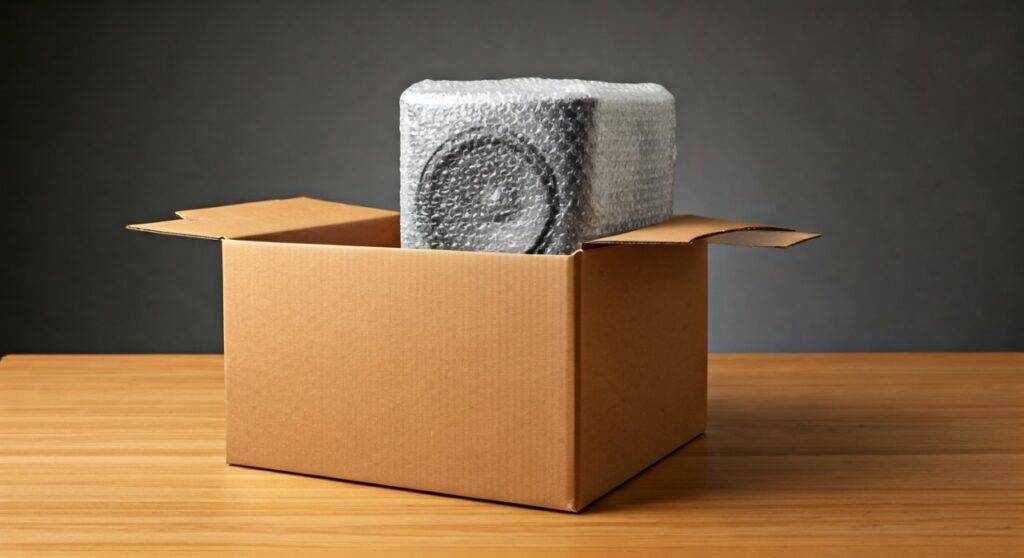
Place the inner box inside a larger, heavy-duty double-walled corrugated box. Fill the void between the two boxes with large-cell bubble wrap. This creates a “crumple zone” that protects the speaker from the 3-foot drops common in automated sorting facilities.
Shipping Speakers with Lithium-Ion Batteries
Many modern speakers, such as the Sonos Move or JBL Flip series, contain rechargeable Lithium-Ion batteries. This changes the answer to can you mail speakers from a simple “yes” to a “yes, with conditions.”
According to IATA and DOT regulations:
- Device Condition: The speaker must be powered off and protected from accidental activation.
- Labeling: Packages containing lithium batteries must have a UN3481 label if they are shipped via air.
- State of Charge: For international air shipping, batteries should ideally be charged to no more than 30% capacity to reduce fire risk.
- Quantity: Most consumer carriers allow up to two batteries contained in equipment per package without complex dangerous goods paperwork.
Calculating the Cost to Mail Speakers
Shipping costs for speakers are driven by Dimensional Weight (Dim Weight) rather than actual weight. Because speakers are bulky, carriers charge you based on the volume of the box.
Pro Tip: I always use a shipping aggregator like PirateShip or Shippo to get commercial rates. When you mail speakers, you can save up to 40% off retail counter prices by printing your own labels.
Estimated Costs (Domestic US)
- Small Bluetooth Speaker (2 lbs): $8.00 – $12.00 via USPS Ground Advantage.
- Medium Bookshelf Pair (25 lbs): $35.00 – $65.00 via UPS Ground.
- Large Tower Speaker (70 lbs): $120.00 – $250.00 via FedEx Home Delivery.
Insurance and Protecting Your Investment
Standard carrier liability (usually $100) is insufficient when you mail speakers of any significant value. If you are shipping brands like Bowers & Wilkins or McIntosh, you must purchase Declared Value coverage.
Warning: Most carriers will deny damage claims if the item was not packed according to their specific guidelines (usually requiring 2 inches of padding and a new box). I always take photos of the packing process to prove the item was secured properly before the carrier took possession.
Common Mistakes to Avoid When Mailing Speakers
- Using Old Boxes: Corrugated cardboard loses 50% of its strength after just one shipment. Always buy new, 200 lb. test boxes.
- Neglecting the Corners: Most speaker damage occurs at the corners of the cabinet. Use plastic corner protectors or extra layers of folded cardboard at these points.
- Ignoring Humidity: If shipping between different climates, the wood can expand or contract. Include a silica gel desiccant pack inside the plastic wrap to manage moisture.
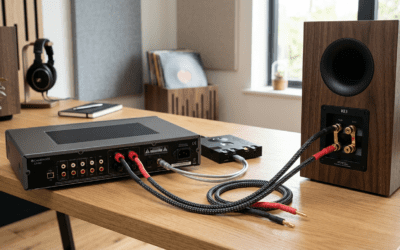
- Leaving Cables Plugged In: Never mail speakers with banana plugs or wires attached. These can snap off and damage the binding posts.
Frequently Asked Questions (FAQ)
Is it safe to mail vintage speakers with paper cones?
Yes, but you must be extra cautious. Paper cones are susceptible to humidity and temperature changes. Ensure the speakers are sealed in a vapor-barrier bag and use rigid foam to ensure the cone never touches the packaging material.
Can you mail speakers via USPS Media Mail?
No. Speakers do not qualify for Media Mail. Using this service for electronics is considered postal fraud and can result in your package being opened, returned, or delivered with “postage due” charges for the recipient.
How do I ship speakers internationally?
When you mail speakers overseas, you must provide a Commercial Invoice and a HS Code (usually 8518.21 or 8518.22). Be aware that magnets may trigger secondary screening in some countries, so clearly label the contents as “Consumer Electronics.”
Should I take the magnets out of the speakers before shipping?
Generally, no. Removing magnets requires specialized tools and re-aligning them is nearly impossible for a layperson. Instead, focus on suspension packaging to ensure the magnet’s mass doesn’t tear the driver from the baffle during a drop.