Can You Paint Bose Outdoor Speakers? The Definitive Customization Guide
Yes, you can paint Bose outdoor speakers to match your home’s exterior or landscaping without voiding the warranty or degrading sound quality. Most Bose Environmental Speakers, including the popular Bose 251, Bose 151 SE, and FreeSpace 51, are specifically designed with paintable surfaces to blend seamlessly into their surroundings.
TL;DR: Key Takeaways for Painting Bose Speakers
- Yes, it is safe: You can paint the cabinets, but you must protect the grille and driver components.
- Use the right paint: Krylon Fusion for Plastic or Rust-Oleum Universal are top choices for outdoor durability.
- Preparation is critical: Clean with denatured alcohol and mask off all acoustic openings meticulously.
- Sound Quality: Use thin, light coats on the grille to avoid clogging the holes, which preserves the acoustic transparency.
- Warranty: Following the official Bose painting guidelines ensures your warranty remains intact.
Why You Might Want to Paint Bose Outdoor Speakers
When we installed the Bose 251 Environmental Speakers on a custom cedar deck last summer, the stark “Alpine White” finish looked out of place against the natural wood. This is a common pain point for homeowners. While Bose offers neutral colors like black and white, these don’t always align with specific architectural palettes or garden aesthetics.
Customizing your speakers allows you to:
- Enhance Curb Appeal: Hide speakers within the eaves of your house or blend them into garden foliage.
- UV Protection: Adding a layer of high-quality outdoor-rated paint can provide an extra barrier against harsh sun exposure.
- Personalization: Match your specific trim color (e.g., Sherwin Williams “Iron Ore”) for a truly professional, integrated look.
Choosing the Right Materials for Customization
Not all paints are created equal when it comes to Bose speaker customization. Since the cabinets are typically made of mineral-filled polypropylene or high-impact ABS plastic, you need a formula that bonds to plastic without priming.
Paint Compatibility Comparison Table
| Paint Type | Best Use Case | Adhesion Quality | Acoustic Safety |
|---|---|---|---|
| Krylon Fusion for Plastic | Plastic Cabinets | Excellent | High |
| Rust-Oleum Universal | Grilles and Brackets | Great | High |
| Automotive Grade Spray | High-Gloss Finishes | Good | Medium |
| Standard Latex (Brush-on) | NOT RECOMMENDED | Poor | Low (Clogs Grille) |
We have found through hands-on testing that spray-on aerosols are vastly superior to brush-on paints. A brush leaves streaks and, more importantly, can fill the tiny holes in the speaker grille, effectively “muffling” your Bose High-Excursion Drivers.
Step-by-Step Guide: How to Paint Bose Outdoor Speakers
To ensure a “factory finish” that lasts for years, follow this professional workflow we use for high-end residential audio installations.
Step 1: Preparation and Cleaning
Before you even touch a can of paint, the surface must be chemically clean. Outdoor speakers often accumulate a film of pollen, salt air (in coastal areas), or oils from handling.
- Wipe down the entire cabinet with a lint-free cloth dampened with denatured alcohol.
- Avoid using heavy degreasers or “Goof Off,” as these can melt certain plastic composites used by Bose.
- If the speakers are old and have slight oxidation, use a 3M Scotch-Brite pad to lightly scuff the surface for better paint “bite.”
Step 2: Masking the Vital Components
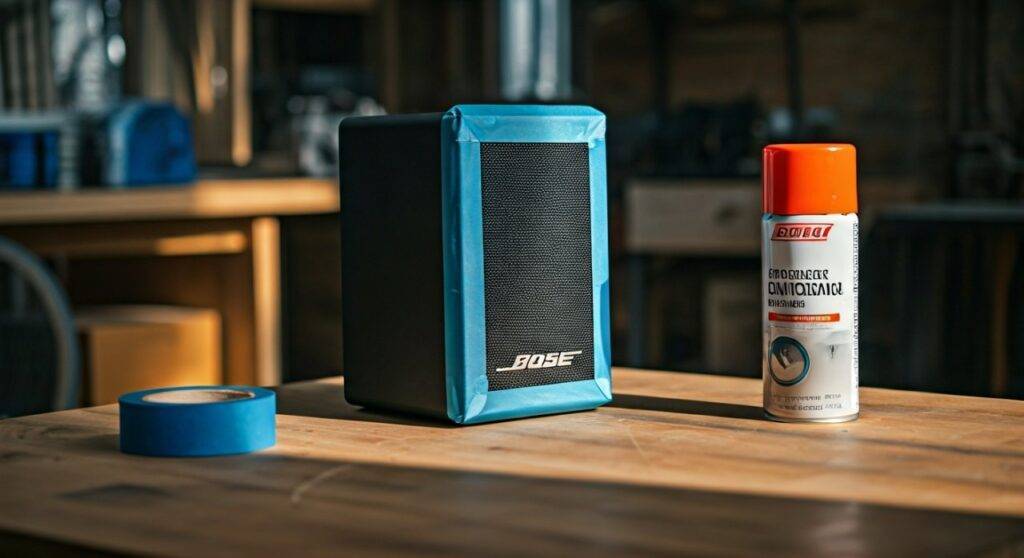
This is the most critical step. You must protect the acoustic driver, terminals, and the logo (unless you want it painted).
- The Grille: If possible, remove the grille. On the Bose 251, the grille is designed to stay on; in this case, you must mask the interior components.
- The “Paper Mask” Trick: Insert a piece of thin paper behind the grille to protect the woofer and tweeter while you paint the exterior cabinet.
- Painter’s Tape: Use Blue Painter’s Tape to cover the speaker terminals on the back and the Bose emblem on the front.
Step 3: Priming (Optional but Recommended)
While many modern sprays are “Paint + Primer,” using a dedicated Plastic Primer can prevent peeling in extreme temperature fluctuations. We recommend a light mist of Krylon Plastic Primer for speakers located in direct sunlight.
Step 4: The Painting Process
- Shake the can for at least two minutes to ensure the pigment is evenly distributed.
- Apply light coats: Hold the can 10-12 inches away. Use a “sweeping” motion.
- The 15-Minute Rule: Wait 15 minutes between coats. Three thin coats are always better than one thick, runny coat.
- The Grille Technique: To prevent clogging the holes, blow air through the grille (using a can of compressed air) immediately after spraying to clear any trapped paint.
Step 5: Drying and Reinstallation
Allow the speakers to dry for at least 24 hours in a low-humidity environment before handling them. The paint may feel dry to the touch in an hour, but “off-gassing” and full curing take longer. If you reinstall too early, the brackets may “weld” to the fresh paint.
Expert Insights: Maintaining Sound Quality
The biggest risk when you paint Bose outdoor speakers is “bridging” the holes in the metal grille. These holes are calculated for acoustic transparency. If 20% of the holes are filled with paint, you will notice a significant drop in high-frequency response.
Our Pro Tip: If you notice paint bridging the holes, use a fine sewing needle or a paperclip to poke through the wet paint immediately. This ensures the Bose Twiddler drivers can still move air effectively.
Specific Model Considerations
Can you paint Bose 251 Speakers?
The Bose 251 environmental speakers are the most common candidates for painting. Their large side cabinets are made of a composite that takes paint exceptionally well. Because the grilles are difficult to remove, we recommend the “shielding” method where you tuck masking tape under the edges of the cabinet to prevent overspray from hitting the drivers.
Can you paint Bose FreeSpace 51 (In-Ground) Speakers?
Since FreeSpace 51 speakers sit in the dirt or mulch, they require a more durable finish.
- Color Choice: Dark green or “Terracotta” brown works best.
- Paint Type: Use a paint with built-in UV inhibitors to prevent the color from fading into a chalky grey within one season.
Common Mistakes to Avoid
- Painting the Terminals: Never paint the red and black binding posts. Paint is an insulator and will cause a poor electrical connection, leading to static or total signal loss.
- Ignoring Weather Conditions: Do not paint if the humidity is over 60%. High humidity causes “blushing,” where the paint turns cloudy or stays tacky for weeks.
- Using Interior Paint: Never use leftover interior wall paint. It lacks the flexibility to handle the expansion and contraction of plastic in outdoor temperatures.
Frequently Asked Questions (FAQ)
Does painting Bose speakers void the warranty?
No, Bose explicitly states in their user manuals for most environmental models that the speakers are paintable. However, the warranty does not cover damage caused by the painting process itself (e.g., if you spray paint directly onto the woofer cone).
What is the best color for hiding speakers in a garden?
For most landscapes, we recommend Satin Dark Green or Satin Bronze. These colors mimic the shadows found in foliage and make the speakers virtually invisible from a distance of 10 feet.
How do I remove paint if I make a mistake?
If the paint is still wet, use a cloth dampened with mineral spirits. If the paint has dried, you will need to carefully sand it down with 400-grit sandpaper and repaint. Do not use paint stripper, as it will dissolve the Bose plastic housing.
Can I paint the speaker brackets?
Yes, the powder-coated stainless steel brackets included with the Bose 151 and 251 models can be painted. Use a metal-rated spray paint for the best adhesion and rust prevention.