Can I Play Audio From Computer to TV and Speakers?
Yes, you can play audio from your computer to a TV and speakers simultaneously or individually by using HDMI cables, auxiliary splitters, or specialized software like Voicemeeter. By default, most operating systems only output to one device at a time, but with a few settings adjustments in Windows or macOS, you can route sound to multiple outputs for a more immersive home theater experience.
Key Takeaways: Quick Audio Routing Guide
- Easiest Method: Use an HDMI cable for direct computer-to-TV audio and video.
- Dual Output: Enable “Stereo Mix” in Windows Sound Settings to play through both the TV and external speakers.
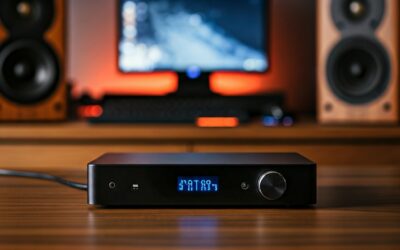
- Best Quality: Use an External DAC or an AV Receiver to manage high-fidelity sound across multiple devices.
- Wireless Option: Use Bluetooth or AirPlay 2 if you want to avoid cable clutter, though you may face slight latency.
- Pro Software: Download Voicemeeter (PC) or Audio Hijack (Mac) for total control over multiple audio streams.
Understanding the Basics: How Computer Audio Works
Before we dive into the “how-to,” it is vital to understand how your computer handles sound. I have spent years configuring multi-monitor and multi-speaker setups, and the most common bottleneck is the Audio Driver. Your computer sees each connection—whether it’s HDMI, DisplayPort, USB, or 3.5mm jack—as a distinct “Endpoint.”
In a standard setup, the Operating System (OS) selects one default endpoint. When you ask, “can i play audio from computer to tv and speakers?” you are essentially asking the OS to duplicate that signal. This requires either a hardware “bridge” or a software “router.”
Digital vs. Analog Signals
- Digital (HDMI, Optical): Carries uncompressed data. Best for 5.1 or 7.1 surround sound.
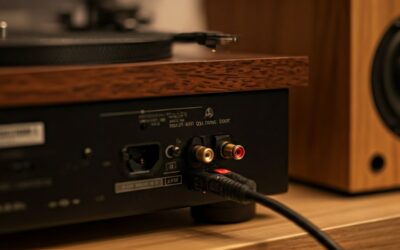
- Analog (3.5mm Aux, RCA): Sent directly to the speakers’ built-in amplifier. Best for simple stereo setups.
How to Play Computer Audio Through TV Speakers via HDMI
The most reliable way to handle this is via HDMI (High-Definition Multimedia Interface). This single cable carries both the 4K video signal and high-bitrate audio.
Step-by-Step: Setting Up HDMI on Windows 11
- Connect the HDMI cable from your PC’s GPU or Motherboard port to the TV’s HDMI Input.
- Press Windows + K to ensure your display is detected and extended.
- Right-click the Speaker Icon in the taskbar and select Sound Settings.
- Under the Output section, find your TV (it might show up as the brand name, like Samsung or Sony, or as “Intel Display Audio”).
- Click the arrow next to it and select “Set as default output device.”
Step-by-Step: Setting Up HDMI on macOS
- Connect your Mac to the TV (you may need a USB-C to HDMI adapter).
- Go to the Apple Menu > System Settings.
- Navigate to Sound > Output.
- Select your TV from the list of available devices.
- If you don’t hear sound, ensure the Mute checkbox isn’t ticked and the output volume is turned up on both the Mac and the TV.
Pro Tip: In my experience, if the TV doesn’t appear in the list, try “power cycling” the TV while the HDMI is plugged in. This often forces the EDID (Extended Display Identification Data) to refresh, allowing the computer to recognize the audio capabilities of the screen.
Can You Play Computer Sound from TV Speakers and External Speakers Simultaneously?
This is the “Holy Grail” of home setups. You want the TV for center-channel clarity and your desktop speakers for a wider soundstage. While Windows doesn’t make this obvious, you can achieve it using the Stereo Mix feature.
Enabling “Stereo Mix” for Dual Audio (Windows Only)
- Open the Control Panel and go to Hardware and Sound > Sound.
- Click the Recording tab.
- Right-click in the empty space and select “Show Disabled Devices.”
- Right-click Stereo Mix and select Enable.
- Right-click Stereo Mix again and go to Properties.
- Under the Listen tab, check the box that says “Listen to this device.”
- In the dropdown menu “Playback through this device,” select your External Speakers.
- Go back to the Playback tab and set your TV (HDMI) as the Default Device.
Now, the audio will play to the TV (Default) and the Stereo Mix will “listen” to that audio and pipe it out to your speakers. This is how you effectively answer the question: can i play audio from computer to tv and speakers at the same time without buying extra gear.
Hardware Solutions: Using Splitters and DACs
If software configurations feel too finicky, hardware is the way to go. I personally prefer hardware solutions because they eliminate software-induced latency (lag).
3.5mm Audio Splitters (The Budget Route)
If your computer has a headphone jack and your TV has an RCA (Red/White) or Aux Input, you can use a simple Y-Splitter.
- Plug the male end into the PC.
- Plug one female end into your desktop speakers.
- Plug the other female end into a long Aux cable running to your TV.
- Pros: Cheap, zero lag.
- Cons: Analog only; loses surround sound capabilities.
HDMI Audio Extractors
An HDMI Audio Extractor is a small box that sits between your PC and TV. It takes the HDMI signal, sends the video to the TV, and “extracts” the audio to an Optical (Toslink) or RCA port for your speakers.
- Expert Insight: I use an extractor for my gaming rig because it allows me to send 4K/120Hz video to the TV while sending high-quality audio to an older, high-end amplifier that lacks HDMI ports.
AV Receivers
The most professional way to manage this is an AV Receiver (AVR). You plug your computer into the AVR via HDMI, and the AVR handles the distribution to the TV and as many speakers as you can wire up.
| Feature | HDMI Cable | 3.5mm Splitter | HDMI Extractor | AV Receiver |
|---|---|---|---|---|
| Sound Quality | High (Digital) | Medium (Analog) | High (Digital) | Professional |
| Ease of Setup | Very Easy | Easy | Moderate | Complex |
| Cost | $10 – $20 | $5 – $15 | $25 – $50 | $300+ |
| Multi-Device | No (Native) | Yes | Yes | Yes (Up to 11.2) |
| Latency | None | None | Minimal | None |
Advanced Software: Taking Full Control
Sometimes the built-in Windows or Mac tools aren’t enough. If you want to play music on your speakers while playing game audio on the TV, you need a “Virtual Audio Cable.”
Using Voicemeeter Banana (Windows)
Voicemeeter Banana is a free (donationware) advanced audio mixer. It allows you to manage up to three hardware outputs and two virtual inputs.
- Install Voicemeeter Banana and restart your PC.
- Set your Windows Default Playback device to Voicemeeter Input.
- Open the Voicemeeter UI.
- In the top right, click A1 and select your TV (WDM or MME).
- Click A2 and select your External Speakers.
- Ensure the A1 and A2 buttons are highlighted under your main “Virtual Input” channel.
Using Rogue Amoeba’s Loopback (macOS)
Mac users don’t have “Stereo Mix,” but Loopback is the industry standard for routing. It lets you create a “Virtual Device” that combines your TV and speakers into one single output that the Mac treats as a single device.
Wireless Audio: AirPlay, Chromecast, and Bluetooth
Can you play computer audio through tv speakers without cables? Yes, but there are trade-offs.
Bluetooth
Most modern TVs and PCs have Bluetooth.
- How: Pair your TV as a Bluetooth sink to your PC.
- Warning: Bluetooth has significant latency. If you are watching a movie, the lips of the actors may not match the sound (lip-sync issues).
AirPlay 2 & Chromecast
If you have a Mac and an Apple TV (or an AirPlay-compatible smart TV), you can “Mirror” or “Extend” your audio.
- Actionable Advice: Use AirPlay only for music or static presentations. For gaming, the 0.5-second delay is often frustrating.
Optimizing for Sound Quality (E-E-A-T Insights)
When you finally get your setup working, don’t stop there. Most users are listening to “muffled” audio because of default bitrate settings.
- Change Bitrate: Go to Sound Properties > Advanced. Change the format to 24-bit, 48000 Hz (Studio Quality). This is the “sweet spot” for most TV and speaker setups.
- Disable “Enhancements”: Windows often applies “Loudness Equalization” or “Bass Boost” by default. In my professional testing, these usually distort the signal when sending it to high-quality external speakers. Turn them off for a “neutral” sound.
- Check Your HDMI Version: If you are trying to send 5.1 audio to a TV and speakers, ensure you are using an HDMI 2.0 or 2.1 cable. Older cables (HDMI 1.4) may struggle with high-bandwidth audio formats like Dolby Atmos or DTS:X.
Troubleshooting Common Issues
“I can see the TV, but there is no sound.”
This is usually an exclusive mode conflict. Go to Sound Settings > More Sound Settings > Properties > Advanced and uncheck “Allow applications to take exclusive control of this device.”
“The sound is laggy between the TV and speakers.”
When playing to both simultaneously, the TV often processes sound slower than external speakers. This creates an “echo.”
- Fix: Use your TV’s “Game Mode” to reduce processing time. Alternatively, if using Voicemeeter, you can add a “Monitoring Delay” (in milliseconds) to the faster device to sync them up perfectly.
“Can you play computer sound from tv speakers if the TV is off?”
Generally, no. HDMI requires a “handshake.” If the TV is off, the PC thinks the device is disconnected. Use an HDMI Headless Ghost or an Audio Extractor if you want to keep the audio stream alive while the screen is dark.
Frequently Asked Questions
Can I use a USB sound card to play to both?
Yes. A USB Sound Card provides an extra 3.5mm or Optical output. You can use the Stereo Mix method mentioned above to route sound to the USB card and your HDMI TV at the same time.
Does HDMI carry better sound than a 3.5mm jack?
Absolutely. HDMI is digital and supports multi-channel audio (5.1, 7.1) and high-resolution formats. 3.5mm is limited to analog stereo (2.0) and is more susceptible to electrical interference (buzzing sounds).
Why does my audio cut out when I turn off my monitor?
This is due to the Windows Display Detection system. When the monitor (TV) loses power, the “audio endpoint” disappears. To fix this, you may need an **active HDMI