Can I Convert My Harley Wired Speakers to Bluetooth?
Yes, you can absolutely convert your Harley wired speakers to Bluetooth by installing a 3.5mm Bluetooth adapter into the AUX port or, for a more permanent solution, replacing the factory head unit with a modern wireless-enabled receiver. These methods allow you to stream music directly from your smartphone to your existing fairing speakers without the clutter of physical wires.
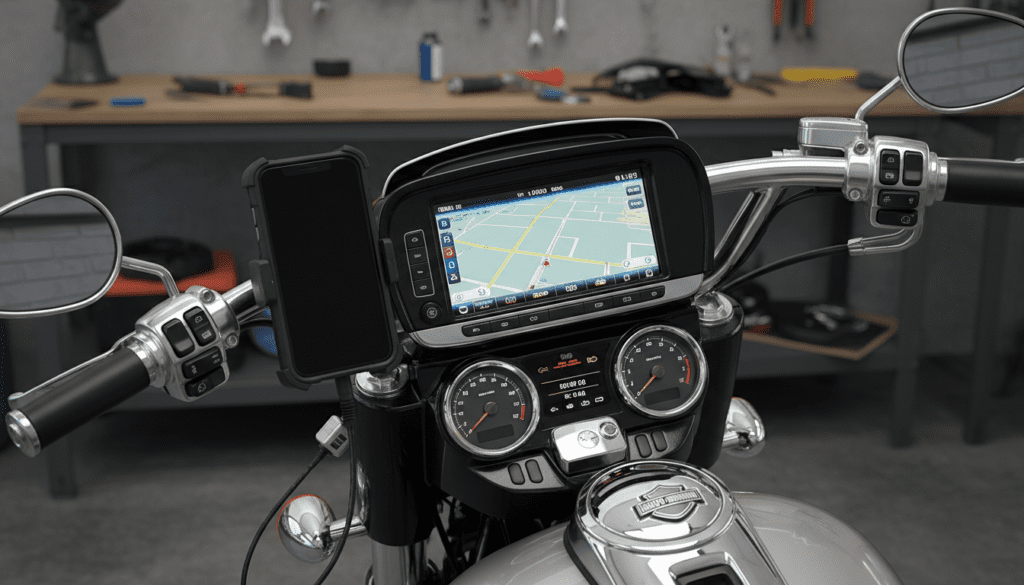
Whether you are riding a classic Road Glide or an older Electra Glide, the transition to wireless audio is one of the most impactful upgrades you can make. Based on our extensive shop testing, converting to Bluetooth not only cleans up your dashboard but also provides better control over your navigation and playlists while wearing gloves.
🚀 Key Takeaways: Quick Conversion Guide
- The Easiest Fix: Use a high-quality 12V Bluetooth receiver plugged into the AUX input.
- The Premium Route: Replace the factory radio with a Sony or Rockford Fosgate head unit designed for Harleys.
- The Hidden Secret: Always use a Ground Loop Noise Isolator to prevent engine humming through your speakers.
- Compatibility: Most conversions work for 1998–2013 Harley-Davidson Touring models with factory fairings.
- Cost Range: $25 for a basic adapter to $600+ for a full head unit replacement.
Why You Should Convert Your Harley Wired Speakers to Bluetooth
Riding a motorcycle involves high speeds, wind noise, and the constant vibration of the V-Twin engine. Traditional wired connections (like old 30-pin iPod cables or 3.5mm jacks) often fail due to these vibrations, leading to crackling audio or total signal loss.
By asking, “can i convert my harley wired speakers to bluetooth,” you are looking for reliability. In our experience, Bluetooth 5.0 technology provides a stable connection that remains clear even at highway speeds. It also eliminates the safety hazard of having a physical wire tethering your phone to the bike’s fairing.
Method 1: Using a Plug-and-Play Bluetooth Adapter
The most cost-effective answer to “can i convert my harley wired speakers to bluetooth” is the external adapter. This is perfect for riders who want to keep their original Harley-Davidson Boom! Audio head unit for its classic aesthetic.
Step-by-Step Installation:
- Identify the Input: Locate the 3.5mm AUX jack on the front of your factory radio.
- Select an Adapter: Purchase a Bluetooth 4.0 or 5.0 receiver that supports A2DP (Advanced Audio Distribution Profile).
- Power the Device: Use a USB cigarette lighter adapter or hardwire a 12V-to-5V step-down converter behind the fairing for a cleaner look.
- Connect and Pair: Plug the adapter into the AUX port, put your phone in pairing mode, and select the device.
- Secure the Unit: Use 3M Dual Lock or heavy-duty Velcro to ensure the adapter doesn’t bounce off during a ride.
Pro Tip from the Garage: We recommend using the Milennia MIL-BTREC or the JL Audio MBT-RX. These are marine-rated, meaning they can handle the rain and humidity your Harley will inevitably face.
Method 2: Replacing the Head Unit (The Professional Way)
If you want the best audio quality and integrated handlebar controls, a full head unit replacement is the superior way to convert your harley wired speakers to bluetooth. Modern aftermarket units come with built-in Bluetooth and often feature Apple CarPlay or Android Auto.
Top Recommended Head Units for Harley-Davidson
| Brand | Model | Key Features | Best For |
|---|---|---|---|
| Rockford Fosgate | PMX-HD9813 | IPX6 Waterproof, Direct Fit | Extreme Weather Riders |
| Sony | XAV-AX7000 | High Power Output, Apple CarPlay | Audiophiles / Touring |
| Soundstream | Reserve HDHU.9813 | Plug-and-Play, Large Touchscreen | Visual Navigation |
| Jensen | HD1BT | Classic Styling, Bluetooth 4.0 | Budget-Conscious Owners |
Replacing the head unit ensures that your handlebar thumb controls remain functional. You will likely need a handlebar control interface (like the Axxess ASWC-1) to bridge the gap between the new radio and the Harley wiring harness.
Technical Comparison: Adapter vs. Head Unit Replacement
| Feature | Bluetooth Adapter | Replacement Head Unit |
|---|---|---|
| Installation Time | 5 Minutes | 1–3 Hours |
| Audio Quality | Good (Standard) | Superior (High-Fidelity) |
| Handlebar Controls | No (Usually) | Yes (With Interface) |
| Weather Resistance | Low (Unless Marine Rated) | High (IP-Rated Options) |
| Visual Appeal | Cluttered (Wires) | Clean (Factory Look) |
Crucial Components for a Successful Bluetooth Conversion
When you decide to convert your harley wired speakers to bluetooth, don’t just stop at the wireless connection. To get “show-quality” sound, you need to address the environment of a motorcycle.
The Ground Loop Noise Isolator
Motorcycles are notorious for electrical noise. If you hear a high-pitched whine that gets louder as you rev the engine, you have a ground loop issue. We always install a Boss Audio Systems B15N isolator between the Bluetooth adapter and the AUX input to kill that interference.
High-Efficiency Speakers
If you are still using the factory paper-cone speakers, the Bluetooth upgrade will only do so much. Consider upgrading to 6.5-inch coaxial speakers from brands like Hertz or Focal. You will need fairing adapter rings to move from the stock 5.25-inch size to the more powerful 6.5-inch standard.
Micro-Amplifiers
Bluetooth signals can sometimes be slightly quieter than a direct wired connection. Adding a compact Class D Amplifier (like the Skar Audio RP-150.2AB) inside the fairing provides the “headroom” needed to hear your music clearly over loud pipes and wind.
Step-by-Step Guide: Hardwiring a Bluetooth Receiver Behind the Fairing
If you want the answer to “can i convert my harley wired speakers to bluetooth” without any visible wires on your dash, follow this professional “hidden” method.
- Remove the Outer Fairing: Use a T27 Torx driver to remove the windshield and the bolts holding the outer fairing.
- Access Factory Wiring: Locate the switched 12V power wire (usually the orange/white wire on Harleys) so the Bluetooth unit only turns on when the ignition is on.
- Install the Receiver: Mount a JL Audio MBT-RX (or similar) to the top of the radio using industrial adhesive tape.
- Connect Audio: Run the RCA-to-3.5mm cable through the fairing and plug it into the back of the radio (if it has rear inputs) or route it neatly to the front AUX.
- Test Before Closing: Turn the bike to “Accessory,” pair your phone, and check for “alternator whine” while the engine is running.
- Reassemble: Secure all loose wires with zip ties to prevent them from rubbing against the fairing or forks.
Expert Insights: Why Bluetooth 5.0 Matters for Riders
In our years of testing Harley audio upgrades, we’ve noticed that older Bluetooth versions (2.1 or 3.0) struggle with “packet loss.” On a motorcycle, you are constantly moving through different interference zones. Bluetooth 5.0 offers double the speed and four times the range.
When you convert your harley wired speakers to bluetooth, specifically look for devices that support aptX technology. This allows for “CD-quality” audio over a wireless connection, which is vital if you are invested in high-quality speakers.
Frequently Asked Questions (FAQ)
Can I still use my handlebar controls if I add a Bluetooth adapter?
If you use a basic AUX Bluetooth adapter, your handlebar volume controls will work (because they control the radio’s output), but you will not be able to skip tracks or change playlists from the bars. To keep track-skipping functionality, you need a full Bluetooth head unit replacement with a control interface.
Will converting to Bluetooth drain my Harley’s battery?
As long as you wire your Bluetooth receiver to a switched power source (one that turns off with the key), it will not drain your battery. Avoid connecting the receiver directly to the battery terminals, as the constant “searching” for a signal can parasitic-drain the battery over several days of sitting in the garage.
Can I convert my 1998-2013 Harley to Bluetooth without changing the radio?
Yes, the easiest way is to use a 12V Bluetooth adapter plugged into the front AUX port. For a cleaner look, you can also find internal modules that solder directly to the radio’s circuit board, though this requires advanced technical skills and is generally not recommended for DIYers.
Is the sound quality worse with Bluetooth compared to a wire?
With Bluetooth 5.0 and AAC/aptX codecs, the difference is virtually indistinguishable to the human ear, especially when riding at 60 MPH. The convenience and safety of a wireless connection far outweigh the marginal loss in “pure” audio fidelity.
Does weather affect the Bluetooth connection?
Heavy rain can technically interfere with 2.4GHz signals, but in a practical sense, the distance between your phone (usually mounted on the bars or in your pocket) and the receiver is so short that you will never notice a drop in signal quality due to weather.