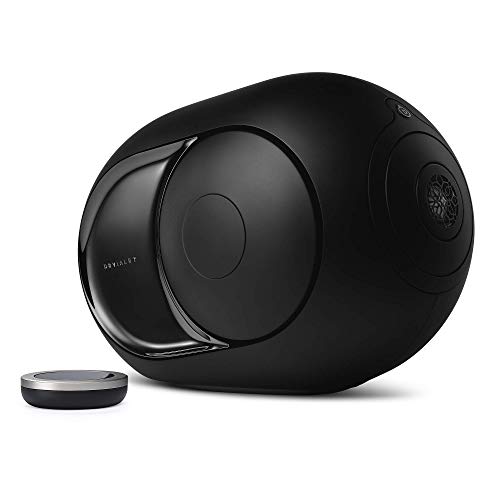

Quick Verdict: High end speaker brands differ primarily in cone material stiffness-to-mass ratio, with beryllium and aluminum offering elevated breakup thresholds above 20 kHz. Power handling ratings, typically specified as continuous RMS wattage at 4 or 8 ohm nominal impedance, should match amplifier output with a 1.5 to 2 times headroom margin. Prioritize documented THD below 0.5 percent at rated SPL.

Pros
- The large driver is positioned for substantial low-frequency impact
- The stated amplifier power suits a high-capacity subwoofer design
- XLR connectivity expands compatibility with some premium systems
- The listing gives room guidance up to 800 square feet
- The sealed enclosure is presented as supporting precise bass reproduction
Cons
- The 70-pound cabinet and roughly 21-inch dimensions create substantial placement demands
- The manufacturer information does not specify crossover, phase, calibration, or control features
- The 800-square-foot suitability claim is manufacturer guidance rather than independent room-performance evidence

Pros
- The white finish can better suit bright or minimalist listening rooms
- The 15-inch driver is designed for substantial low-frequency scale
- The stated 1,000-watt amplifier gives the design a clearly defined power platform
- XLR connectivity may suit compatible premium audio systems
- The listing identifies an intended room range up to 800 square feet
Cons
- A 70-pound cabinet with roughly 21-inch dimensions is difficult to place discreetly
- The listing gives conflicting size information between its size and dimensions fields
- Crossover, phase, calibration, standby, and complete response details are not supplied

Pros
- Handcrafted point-to-point wiring and high-grade components deliver reliable, superior audio performance
- Wide speaker compatibility (4Ω, 8Ω, 16Ω) suits various home Hi-Fi and theater setups
- Built-in 30-second mute delay and tube protection cover enhance safety and longevity
- Dual meter display and infrared remote control make operation intuitive and convenient
Cons
- 12W per channel output may be insufficient for low-sensitivity speakers or large rooms requiring high volume
- Heavy 30.5kg chassis may be difficult to move or place; requires sturdy support

Pros
- Design-forward build with premium textile and aluminum suits style-focused rooms
- Broad wireless support covers phones, tablets, computers, and TVs
- Access to multiple music-streaming services through the app
- Wi-Fi Direct adds AirPlay flexibility beyond a standard network
- Solid zinc remote and Nordic finish reinforce a high-end presentation
Cons
- Manufacturer listing lacks driver, power, and dimension specs, making performance hard to gauge
- Premium styling and positioning place it above budget soundbar options
- Category listing under MP3 and MP4 accessories may confuse shoppers about the product
The clearest specification that separates these 4 high end speakers brands is cone material and the power handling that goes with it. A woofer built from aramid fiber, Kevlar, or a treated paper blend changes how the speaker reproduces bass and midrange, and the RMS power figure tells you whether the speaker can sustain that output without strain. If you ignore these two numbers, you may end up with a speaker that sounds thin in the midrange or one that distorts at the volume you actually listen to. This guide decodes the supplied spec sheets so you can read each listing like a pro: what each figure controls, which requirement separates adequate from inadequate, and which published numbers do not change your decision. The product cards below cover 4 products, and the narrative sections name only the products with detailed records supplied. Relevant engineering and hardware compliance benchmarks are maintained through the Audio Engineering Society (AES) technical standards.
Speaker Specs That Decide Real Sound Quality
| Specification | What it controls in real use | Decision check that matters |
|---|---|---|
| Cone material | Determines stiffness and damping, affecting clarity and bass punch | Compare aramid fiber or Kevlar for precision; paper for warmth |
| RMS power handling | Sustained power the speaker can handle without damage | Match to your amplifier output; higher RMS means more headroom |
| Peak power handling | Brief power bursts for transients | Less critical than RMS; use as a reference only |
| Impedance | Electrical load presented to the amplifier | Check amp compatibility; 8 ohms is common for home and guitar |
| Frequency response | Range of audible frequencies reproduced | Wider range suggests fuller bass and treble, but test conditions vary |
| Woofer size | Affects bass extension and output capability | Larger woofers generally move more air, but cabinet and placement matter |
| Tweeter type | Controls high-frequency clarity and dispersion | Silk dome for smooth highs; metal dome for brightness |
| Cabinet material | Reduces vibration and coloration | MDF or braced wood preferred over plastic |
| Inputs and connectivity | Determines what sources you can connect | Check for RCA, 1/4-inch, or 1/8-inch as needed |
Speaker Profiles for Different Listening Setups
- Car audio enthusiast: required profile is a component kit with aramid fiber cones and dedicated tweeters. Manufacturer listing puts Focal ES 165 KX2E in this profile because it has two 6.5-inch woofers with K2 aramid fiber cones and M-shaped inverted dome FRAK tweeters.
- Guitar or bass player: required profile is a speaker cabinet with high RMS power and a wide frequency response. Manufacturer listing puts Seismic Audio SA-Rift_46G in this profile because it is rated at 250 watts RMS with a 20Hz to 10kHz frequency response.
- Studio or desktop producer: required profile is a pair of powered monitors with Kevlar woofers and silk dome tweeters. Manufacturer listing puts M-AUDIO BX4 in this profile because it has 4.5-inch Kevlar woofers and natural silk dome tweeters.
Power and Impedance Rules That Settle the Choice
RMS Power Handling Rule
Match the speaker’s RMS power rating to your amplifier’s output. The manufacturer listing states the Seismic Audio cabinet handles 250 watts RMS, which suits a moderate amp for guitar or bass. The M-AUDIO BX4 is powered, so its RMS is not stated in the manufacturer listing; rely on the amplifier built into the monitor. The Focal component kit does not state an RMS figure in the manufacturer listing, so confirm the amp’s continuous output before pairing. Going higher in RMS generally adds weight and bulk, as seen in the Seismic cabinet at 36 pounds.
Impedance Rule
Check that the speaker’s impedance matches your amplifier’s rated load. The Seismic Audio cabinet is 8 ohms, a common match for guitar amps. The Focal and M-AUDIO products do not state impedance in the manufacturer listing, so confirm with the manufacturer before connecting. A mismatch can reduce output or stress the amp. Higher impedance (like 8 ohms) is generally safer for tube amps, but solid-state amps may prefer lower loads. For related guidance, examine our breakdown on Professional Portable Sound System of.
Frequency Response Rule
Use the frequency response range to gauge whether the speaker covers the frequencies you need. The Seismic cabinet states 20Hz to 10kHz, which suits bass and guitar but lacks the highest treble. The M-AUDIO and Focal do not state a full frequency response in the manufacturer listing, so compare their woofer and tweeter specs instead. A wider range suggests fuller sound, but the test conditions are not supplied, so treat it as a reference.
Woofer Size and Cone Material Rule
Larger woofers and stiffer cone materials generally produce more controlled bass. The Focal kit uses 6.5-inch aramid fiber cones, which are known for precision. The M-AUDIO uses 4.5-inch Kevlar woofers, offering a balance of size and stiffness for desktop use. The Seismic cabinet uses four 6-inch woofers, but the cone material is not stated. Trade-off: larger woofers and stiffer cones often add weight and require more amplifier power.
Marketing Numbers Versus the Specs That Matter
Some supplied figures look impressive but do not change the buying decision. For example, the Seismic Audio cabinet lists a peak power of 500 watts, but the RMS figure of 250 watts is the one that matters for sustained use. Similarly, the M-AUDIO BX4 touts ‘studio-grade sound’ and ‘crystal-clear’ output, but the real spec is the Kevlar woofer and silk dome tweeter combination. The Focal kit highlights its ‘M’-shaped inverted dome tweeter and TMD surround, but the cone material and crossover design are what determine the sound signature. For related guidance, examine our breakdown on Noise Makers For Party of.
These marketing phrases describe features, but they do not provide a measurable comparison. The manufacturer listing does not include test conditions for frequency response or distortion, so treat those as qualitative. The specifications that actually separate these products are cone material, RMS power, impedance, and woofer size. Focus on those when comparing listings.
Match Your Setup to the Right Speaker Specs
If you are building a car audio system, the Focal ES 165 KX2E fits because its aramid fiber cones and FRAK tweeters are designed for precise, dynamic sound in a vehicle. The manufacturer listing confirms the cone material and tweeter type, which are the specs that matter for clarity and detail. Choose this profile if you want a component kit with separate tweeters and crossovers for a custom install.
For a guitar or bass rig, the Seismic Audio SA-Rift_46G is the match because its 250-watt RMS rating and 8-ohm impedance align with typical amplifier outputs. The four 6-inch woofers provide the low-end punch needed for bass, and the 20Hz to 10kHz response covers the instrument range. If you need more treble extension, consider a cabinet with a tweeter or a different model. For related guidance, examine our breakdown on Record Deck in.
For a desktop studio or gaming setup, the M-AUDIO BX4 is the right pick because its Kevlar woofers and silk dome tweeters deliver balanced sound for near-field listening. The wired inputs (RCA, 1/4-inch, 1/8-inch) make it easy to connect to audio interfaces and instruments. If you need more bass or higher output, look for a larger woofer size, but be prepared for more bulk.
Answers to Common Spec Sheet Questions
What does RMS power mean for a speaker?
RMS power is the continuous power a speaker can handle without damage. The Seismic Audio cabinet states 250 watts RMS, which means it can sustain that level for extended periods. Compare this to your amplifier’s output; if your amp delivers more RMS, you risk distortion or damage. Peak power is a brief burst rating and is less critical.
Why does impedance matter?
Impedance is the electrical load the speaker presents to the amplifier. The Seismic cabinet is 8 ohms, a standard for guitar amps. If your amp is rated for 8 ohms, it will work correctly. Mismatched impedance can reduce volume or stress the amp. For products without a stated impedance, like the Focal kit, check the manufacturer’s specs before connecting. For related guidance, examine our breakdown on Best Cheap Lp Player of.
How do I compare cone materials?
Cone material affects stiffness and damping. Aramid fiber (Focal) and Kevlar (M-AUDIO) are stiff and lightweight, offering precise bass and clear mids. Paper cones are warmer but less stiff. The manufacturer listing states these materials for the Focal and M-AUDIO products, so you can trust those. For the Seismic cabinet, the cone material is not stated, so you may need to rely on its power handling.
What does frequency response tell me?
Frequency response indicates the range of frequencies a speaker can reproduce. The Seismic cabinet states 20Hz to 10kHz, which covers bass and most guitar frequencies but misses the highest treble. The M-AUDIO and Focal do not state a full range in the manufacturer listing, so compare their woofer and tweeter specs instead. A wider range suggests fuller sound, but test conditions vary.
Are peak power ratings useful?
Peak power is the maximum power a speaker can handle in short bursts, like a drum hit. The Seismic cabinet lists 500 watts peak, but the RMS of 250 watts is the figure that matters for continuous use. Peak ratings are often marketing numbers; focus on RMS and impedance for your decision.