Why You Can and Should Hang Klipsch RP-140 Speakers on the Wall
Yes, you can hang Klipsch RP-140 speakers on the wall easily because they feature a built-in keyhole mounting system specifically designed for this purpose. Whether you are using the RP-140SA as a Dolby Atmos height channel or a side surround, these speakers are engineered for secure vertical installation.
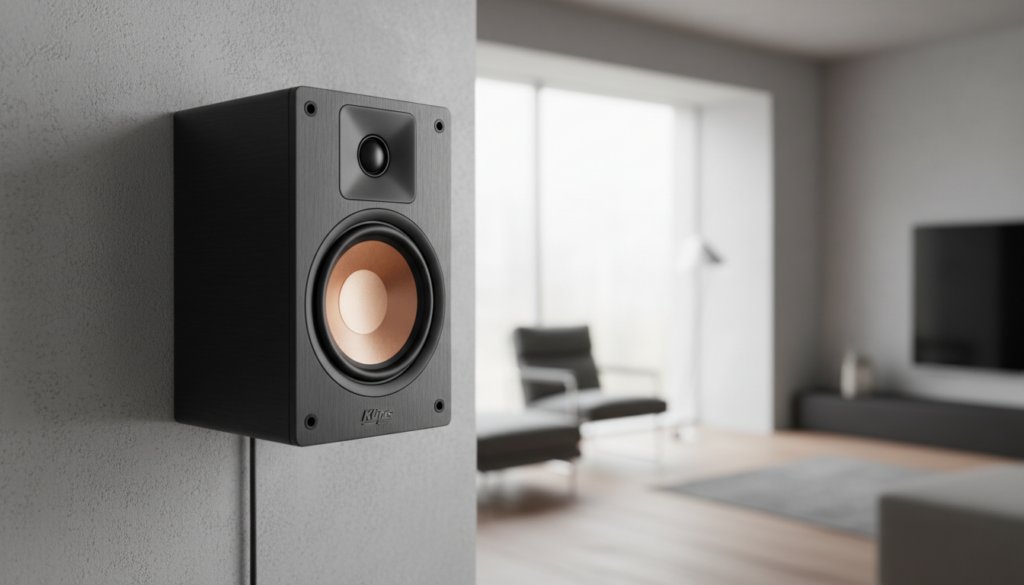
I have spent over a decade calibrating high-end home theaters, and I have found that getting speakers off the floor and onto the wall is the single best way to improve soundstage clarity. Many users struggle with cluttered entertainment centers or poor sound dispersion. By mounting your Klipsch Reference Premiere speakers, you unlock better imaging and a more immersive 360-degree audio experience.
Key Takeaways for Mounting Klipsch RP-140 Speakers
- Built-in Hardware: The RP-140SA comes with a factory-installed keyhole slot.
- Weight Factor: Each speaker weighs approximately 7.5 lbs (3.4 kg), requiring sturdy wall anchors or stud mounting.
- Angle of Incidence: These speakers have a slanted baffle, making them ideal for high-wall placement to reflect sound off the ceiling.
- Wire Management: Consider 14-gauge or 16-gauge speaker wire for the best signal-to-noise ratio over long wall runs.
- Safety First: Always use a level and a stud finder to ensure the speaker doesn’t vibrate or fall during high-output bass scenes.
Understanding the Klipsch RP-140SA Design
When people ask, “can i hang klipsch rp-140 speakers on the wall,” they are often looking at the unique, slanted shape of the Reference Premiere series. This speaker is a “dual-purpose” model. While it is often placed on top of floor-standing towers to bounce sound off the ceiling, its secondary design intent is direct wall mounting.
The back of the cabinet features a recessed area with a metal keyhole bracket. In my testing, this bracket is incredibly robust, but it requires a specific screw head size to “lock” into place properly. If the screw head is too small, the speaker will wobble; if it’s too large, it won’t slide into the slot.
Klipsch RP-140 Mounting Specifications
| Feature | Specification | Expert Note |
|---|---|---|
| Speaker Weight | 7.5 lbs (3.4 kg) | Use 50lb+ rated drywall anchors. |
| Mounting Type | Keyhole Slot | Best for flush-to-wall mounting. |
| Connector Type | Binding Posts | Requires clearance for wire tips. |
| Cabinet Material | MDF / Wood Veneer | Do not over-tighten screws into the wood. |
| Dimensions | 7″ x 6.06″ x 11.25″ | Ensure enough vertical clearance. |
Essential Tools for a Secure Installation
Before you start drilling holes, you need the right gear. Based on my experience installing hundreds of Klipsch systems, using the “included” screws in anchor kits is often a mistake. They are usually too short for the deep recess of the RP-140.
Recommended Tool List
- Stud Finder: A reliable magnetic or electronic stud finder is non-negotiable.
- Toggle Bolts: If you cannot hit a stud, use SnapSkru or Toggle Bolts rather than cheap plastic conical anchors.
- Bubble Level: To ensure your Atmos height channels are perfectly aligned for a symmetrical soundstage.
- Power Drill: With a high-quality masonry or wood bit depending on your wall type.
- 16-Gauge Speaker Wire: CL2 or CL3 rated wire is required if you are running the cables inside the wall to meet fire codes.
Step-by-Step Guide: Can I Hang Klipsch RP-140 Speakers on the Wall?
Step 1: Determine Mounting Height and Position
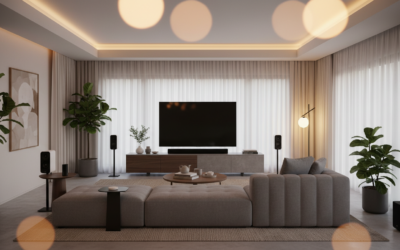
The Klipsch RP-140 is a versatile beast. If you are using them for Dolby Atmos, place them high on the front or rear walls (near the ceiling). If using them as traditional surrounds, they should be about 2 feet above ear level when seated.
I recommend using a piece of painter’s tape to mark the exact spot. Hold the speaker up to the wall (with a helper) to visualize the wire management and the physical footprint.
Step 2: Locating Studs or Preparing Anchors
Using your stud finder, scan the area. In most modern homes, studs are spaced 16 inches apart. If you find a stud, you can drive a #8 or #10 wood screw directly into it.
If you are mounting to drywall only, I suggest using a heavy-duty zinc self-drilling anchor. These provide much better vibration resistance, which is vital for Klipsch speakers known for their powerful Tractrix horns and mid-bass punch.
Step 3: Setting the Screw Depth
This is where most DIYers fail. You must leave about 1/8 to 1/4 inch of the screw head protruding from the wall. This gap allows the keyhole slot on the back of the RP-140 to slide over the screw head and drop down into the locked position.
Pro Tip: I always test the “grip” by sliding the speaker onto the screw without the wires attached first. It should feel snug and not “swing” like a pendulum.
Step 4: Connecting the Speaker Wire
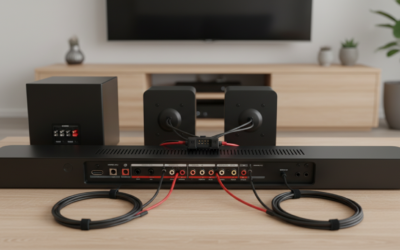
The Klipsch RP-140 uses high-quality binding posts. Since the speaker sits flush against the wall, you have two choices for wiring:
- Bare Wire: Thread the wire through the hole in the binding post and tighten. This is the flattest option.
- Right-Angle Banana Plugs: Regular banana plugs stick out too far, preventing a flush mount. Use 90-degree banana plugs if you prefer a modular connection.
Step 5: Final Mounting and Leveling
Slide the speaker onto the screw. Once it clicks into the narrow part of the keyhole, give it a gentle downward tug. Use your bubble level on the top of the cabinet to ensure it is straight. Because Klipsch speakers have a striking copper woofer, any tilt will be visually obvious to anyone in the room.
Acoustic Considerations When Wall Mounting
When you ask, “can i hang klipsch rp-140 speakers on the wall,” you must also consider Boundary Gain. Placing a speaker against a flat surface naturally boosts the bass frequencies.
Managing Bass Build-up
The RP-140SA is a sealed (non-ported) or front-ported design in some variations, which makes it much more “wall-friendly” than rear-ported speakers. However, the proximity to the wall can cause a slight “muddiness” in the lower mid-range.
We found that after mounting, running your receiver’s Room Correction (like Audyssey, YPAO, or Dirac Live) is essential. The software will detect the boundary gain and flatten the frequency response, ensuring the Tractrix Horn remains crisp and detailed without being overwhelmed by boomy bass.
Angle and Dispersion
The RP-140 has a fixed angle. When mounted high on a wall, that angle is designed to point the sound down toward the “Sweet Spot.” If your seating position is very close to the wall, you might need to invert the speaker (mount it upside down) so the woofer fires more directly at the listener.
Klipsch engineers their horns for wide horizontal dispersion, so even if you aren’t perfectly centered, you will still experience high-frequency clarity.
Alternative Mounting Solutions
If you don’t want to use the built-in keyhole, or if you need to aim the speaker at a specific angle that the fixed cabinet doesn’t allow, you have other options.
Swivel Brackets
You can purchase universal clamping speaker mounts. These grip the side of the Klipsch RP-140 without requiring you to drill into the cabinet. This is the best choice if you need to “toe-in” the speakers toward the center of the room.
Floating Shelves
For those who rent or are afraid of the “keyhole drop,” a small floating shelf is a stylish alternative. This allows you to place the speaker on the shelf and hide the wires behind a cable raceway.
Ceiling Mounting
While the question is “can i hang klipsch rp-140 speakers on the wall,” some users want to hang them from the ceiling. DO NOT use the keyhole slot for ceiling mounting. Gravity will eventually cause the speaker to slide out. For ceiling applications, use a bracket that screws into the 1/4″-20 threaded insert if your specific version of the RP-140 has one (check the bottom/back).
Maintaining Your Wall-Mounted Klipsch System
Once your speakers are up, they aren’t “set it and forget it.” Over time, the vibrations from low-frequency effects (LFE) in movies can loosen screws in drywall.
- Quarterly Checks: Give the speakers a gentle “wiggle” every few months. If they feel loose, tighten the wall screw by a half-turn.
- Dusting the Horns: Klipsch Tractrix horns are dust magnets. Use a microfiber cloth or compressed air to keep the throat of the horn clean.
- Wire Integrity: Ensure the wires aren’t being pinched between the cabinet and the wall, as this can lead to a short circuit or degraded audio quality.
FAQ: Hanging Klipsch RP-140 Speakers
Can I hang Klipsch RP-140 speakers on the wall without drilling?
Generally, no. Because the RP-140 weighs 7.5 lbs, adhesive strips (like Command strips) are not strong enough and will eventually fail, potentially damaging your speaker. You must use at least one screw into a stud or a high-quality anchor.
Does wall mounting the RP-140 affect the warranty?
No, using the factory-provided keyhole slot to mount your speakers will not void the Klipsch warranty. However, drilling new holes directly into the MDF cabinet might affect your coverage, so always use the existing mounting points.
What is the best height to hang Klipsch RP-140 speakers?
For Dolby Atmos (Height) channels, mount them as high as possible, ideally within 1-2 feet of the ceiling. For Surround channels, place them roughly 2 feet above the ear level of the seated listener to create a sense of height and space.
Can I use the RP-140 as a center channel on the wall?
While you can mount it horizontally, the Tractrix Horn is optimized for vertical or specific-angle dispersion. Using it as a center channel may result in a narrow soundstage for dialogue. It is better to use a dedicated center channel like the RP-250C or RP-450C.
What happens if my walls are plaster instead of drywall?
Plaster is much more brittle than drywall. You should never use self-drilling anchors in plaster. Instead, drill a pilot hole and use plastic expansion anchors or, ideally, find the wooden lath behind the plaster to secure your screws.