Managing a Speakers Over Excitement for Maximum Impact
Managing a speakers over excitement requires a shift from chaotic energy to strategic enthusiasm by using tactical breathing, intentional pausing, and grounding physical stances. To balance high energy with clarity, you must master vocal modulation and utilize structured silence to ensure your message isn’t lost in the hype.
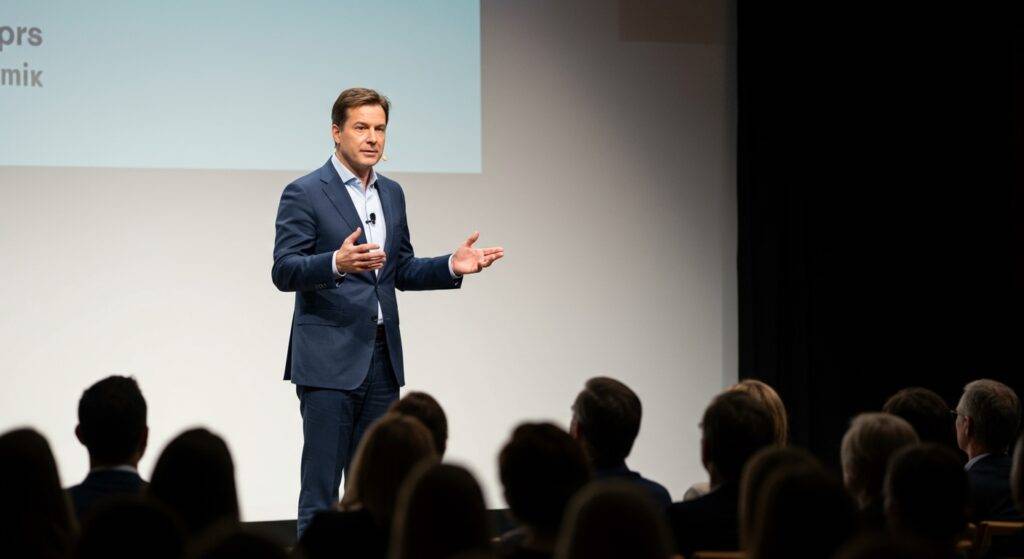
In my years of coaching high-stakes presenters, I’ve observed that the most common barrier to a successful pitch isn’t a lack of passion—it is uncontrolled adrenaline. When a speakers over excitement takes over, they often speak too fast, lose their breath, and overwhelm the audience. True authority comes from “leaning back” into your expertise rather than “leaning in” with desperate energy.
Key Takeaways for High-Energy Presenters
- The 3-Second Rule: Force a three-second pause after every major point to allow the audience to digest the data.
- Ground Your Base: Keep your feet shoulder-width apart to prevent “happy feet” or pacing that distracts from your message.
- Lower Your Register: High excitement often raises vocal pitch; focus on speaking from the diaphragm to maintain an authoritative tone.
- Visual Cues: Place “SLOW DOWN” reminders in your presenter notes to counteract the natural adrenaline rush.
The Psychology Behind a Speakers Over Excitement
Understanding why we get over-excited is the first step toward control. When we are passionate about a topic, our brains release dopamine and adrenaline, triggering a “fight or flight” response that manifests as high-speed delivery.
I recently worked with a tech CEO who was so thrilled about a new product launch that his a speakers over excitement led him to finish a 20-minute presentation in just 11 minutes. The audience was left exhausted rather than inspired. He wasn’t lacking skill; he was suffering from a physiological override.
The “High Energy” Trap
Many speakers believe that more energy equals more engagement. However, there is a “diminishing returns” curve. Once your energy exceeds the audience’s ability to process your words, you become a distraction.
| Feature | Strategic Enthusiasm | Uncontrolled Over-Excitement |
|---|---|---|
| Pace | Varied (Fast for stories, slow for facts) | Constantly rapid and breathless |
| Volume | Purposeful crescendos | Consistently loud/shouting |
| Body Language | Expansive but controlled | Erratic, jerky, or repetitive |
| Audience Impact | Inspired and informed | Overwhelmed and confused |
| Eye Contact | Sustained and connecting | Darting or unfocused |
Step-by-Step Guide to Channeling Your Energy
If you struggle with a speakers over excitement, follow this five-step framework to harness your passion into a professional, persuasive performance.
Step 1: Implement the “Box Breathing” Protocol
Before you step onto the stage or join the Zoom call, your heart rate is likely elevated. Box breathing is a technique used by Navy SEALs to maintain composure under pressure.
- Inhale deeply through your nose for 4 seconds.
- Hold that breath for 4 seconds.
- Exhale slowly through your mouth for 4 seconds.
- Hold empty for 4 seconds.
- Repeat this 4 times. This resets your parasympathetic nervous system and prevents your voice from shaking or rising in pitch.
Step 2: Script Your Silence
When a speakers over excitement manifests, the first thing to disappear is the pause. Silence is your most powerful rhetorical tool.
In your notes, don’t just write your bullet points. Use physical markers like [PAUSE] or [BREATHE] in bold, red text. I recommend my clients use a “Full Stop” technique: after delivering a “power sentence,” physically close your mouth and count to three in your head.
Step 3: Utilize Physical Grounding Points
High energy often leads to unnecessary movement, such as swaying or pacing. This is a physical outlet for a speakers over excitement.
To fix this, identify your “Home Base.” Stand with your feet directly under your shoulders. Imagine your feet are heavy weights sinking into the floor. If you must move to emphasize a point, do so with intention—walk to a new spot, stop, and plant your feet again before speaking.
Step 4: Master Vocal Range and Tone
Excitement naturally pushes the voice into the throat and nose, creating a shrill sound. Professional speakers use diaphragmatic support to keep their voice resonant.
- The Deep Pitch: Practice speaking from your chest. A slightly lower pitch conveys more authority and is easier for audiences to listen to for long periods.
- Volume Contrast: Instead of being loud throughout, try dropping your volume to a stage whisper for your most important points. This forces the audience to lean in and cancels out the “noise” of over-excitement.
Step 5: The “One-Person” Eye Contact Rule
When you are over-excited, you tend to scan the room rapidly. This makes you look nervous. Instead, pick one person, finish an entire sentence while looking at them, then move to another person for the next sentence. This slows down your brain and forces your speaking pace to match a conversational rhythm.
Advanced Techniques for Expert Speakers
Once you have the basics of a speakers over excitement under control, you can use these expert-level drills to refine your delivery.
The “Slow-Motion” Rehearsal
Record yourself giving your presentation at 50% of your normal speed. It will feel incredibly awkward and “wrong.” However, this builds muscle memory for slower articulation. When you finally get on stage, your “fast” speed will naturally settle into a perfect, moderate pace.
The Penny Drop Technique
I often use this drill with executives. Hold a penny in your hand. Every time you finish a thought or a slide, physically drop the penny into a cup or on a table. The sound and the physical action serve as a pattern interrupt, stopping the runaway train of a speakers over excitement.
Analyzing Your “Tick” Words
Over-excited speakers often rely on filler words like “awesome,” “so,” “really,” or “incredibly.”
- Record a 3-minute segment of your speech.
- Transcribe it using an AI tool like Otter.ai or Descript.
- Highlight the superlatives.
- Replace 50% of them with concrete data or stronger verbs.
Using Visual Aids to Dampen Over-Excitement
Your slides can actually help manage a speakers over excitement. If your slides are busy and high-energy, they will only fuel your fire.
- Minimalist Design: Use dark backgrounds with light text to create a “calmer” visual environment.
- The “Blank Slide” Strategy: Insert a completely black slide when you want to make a serious, grounded point. This removes the “energy” of the screen and puts the focus entirely on your (now controlled) presence.
- Animation Control: Avoid fast, flying transitions. Use simple “Fades” to keep the visual rhythm steady.
First-Hand Experience: How I Grounded My Highest-Energy Client
I once coached a startup founder who was pitching for $10M in Series A funding. His a speakers over excitement was so intense that he was literally vibrating on stage. He spoke so fast that the VCs couldn’t follow his revenue model.
We implemented a “Tactile Anchor.” I had him wear a ring on his index finger. Every time he felt his heart rate spike or his words tumble out too fast, he had to touch that ring. This physical sensation brought him back into his body and out of his racing mind. He successfully closed the round because he traded “hype” for “presence.”
FAQ: Navigating High-Energy Speaking
How do I know if I am being too excited?
If you find yourself out of breath at the end of a sentence, or if you notice your audience looking slightly “pushed back” in their chairs, you are likely suffering from a speakers over excitement. Another sign is the “blur effect,” where you realize you’ve finished a slide but can’t remember what you actually said.
Can excitement ever be a bad thing in public speaking?
Yes. While passion is good, uncontrolled excitement kills credibility. It can make you appear unprepared, desperate, or even untrustworthy. Audiences trust speakers who are “in command” of their emotions, not those who are controlled by them.
What is the quickest way to slow down mid-presentation?
Take a sip of water. This is the ultimate “natural” pause. It forces you to stop talking, resets your breathing, and gives the audience a moment to catch up. It is a completely socially acceptable way to buy yourself five seconds of grounding time.
Is “high energy” the same as “over-excitement”?
No. High energy is a choice made to engage an audience; over-excitement is an involuntary physiological response. You can have high energy while remaining perfectly calm, slow-paced, and deliberate in your movements.
Should I apologize if I realize I’m talking too fast?
Never apologize for your passion. Instead, simply say, “I’m incredibly excited about this next part, so I’m going to slow down to make sure I don’t miss a single detail.” This frames your speed as a symptom of value rather than a lack of professionalism.