Can I Mount Speakers in My Cargo Cover? The Definitive Answer
Yes, you can mount speakers in your cargo cover, provided you reinforce the structure to support the added weight and prevent sagging. While most factory cargo covers are made of lightweight pressed fiber or plastic, they can be transformed into an effective acoustic “parcel shelf” with the right MDF reinforcement or custom fabrication.
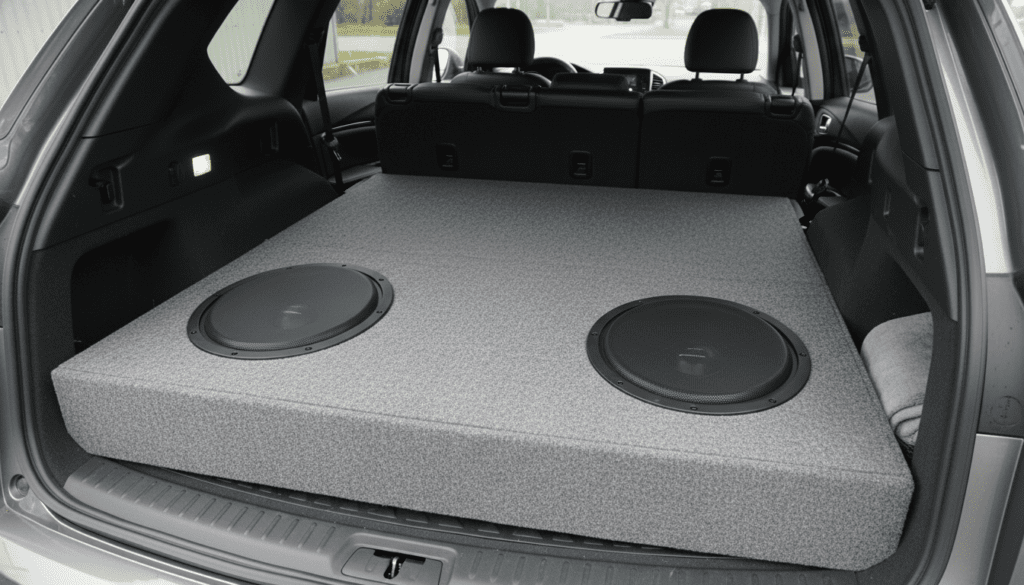
When I first attempted this on a project vehicle, I learned that the primary challenge isn’t the mounting itself, but the structural integrity and vibration damping. Without proper support, the weight of the magnets will cause the cover to bow over time, leading to poor sound quality and potential damage to your hatch mechanism. This guide will walk you through the professional method of installing audio into a rear shelf while maintaining safety and sound fidelity.
Key Takeaways: Cargo Cover Speaker Installation
- Feasibility: Highly feasible for hatchbacks and SUVs, but requires structural reinforcement.
- Best Speaker Types: 6×9-inch coaxial speakers are the industry standard for this location due to their bass response.
- Essential Mod: You must use a quick-disconnect wiring harness so you can still remove the cargo cover when needed.
- Structural Material: Medium Density Fiberboard (MDF) or birch plywood is required to “sandwich” the factory cover for rigidity.
- Acoustic Goal: To create an “Infinite Baffle” setup where the trunk acts as a large enclosure.
The Pros and Cons of Cargo Cover Mounting
Before you start cutting into your interior trim, it is vital to understand the trade-offs. In my experience, this modification is perfect for those who want a “stealth” look without losing floor space to a bulky subwoofer box.
| Feature | Pros | Cons |
|---|---|---|
| Soundstage | Excellent rear-fill and low-end bass response. | Can pull the soundstage too far to the rear. |
| Space | Retains 100% of your trunk floor space. | Limits the height of items you can stack in the back. |
| Aesthetics | Can be hidden under acoustic carpet for a “stealth” look. | Modifies a permanent factory component. |
| Installation | Easier access to wiring than door panels. | Requires heavy reinforcement and custom bracing. |
| Versatility | Removable (if using quick-disconnects). | Added weight may wear out hatch struts faster. |
Structural Integrity: Why You Can’t Just “Screw Them In”
The most common mistake I see DIYers make is mounting a pair of heavy 6×9 speakers directly into a flimsy plastic or cardboard cover. Most factory covers are designed to hold no more than 5–10 lbs of static weight. A pair of high-quality speakers with large magnets can easily exceed this, especially when you factor in the G-forces of driving over bumps.
If you are asking, “can i mount speakers in my cargo cover chevy aveo,” the answer is a firm “only if you brace it.” Small hatchbacks like the Chevy Aveo have particularly thin covers. Without a wooden brace, the vibration from the speaker’s cone will cause the entire plastic shelf to rattle, effectively ruining your audio quality.
Materials Needed for Reinforcement
- MDF (Medium Density Fiberboard): 1/2-inch or 3/4-inch thickness is ideal.
- Acoustic Carpet: To match your vehicle’s interior and hide the wood.
- Spray Adhesive: 3M Super 77 or 90 is my go-to for a permanent bond.
- Sound Deadening Mat: Products like Dynamat or Noico to stop plastic-on-plastic vibration.
- Quick-Disconnect Plugs: To allow for easy removal of the shelf.
Step-by-Step Guide: How to Mount Speakers in Your Cargo Cover
Step 1: Assessing the Mounting Surface
Remove the cargo cover and place it on a workbench. Inspect the underside for structural ribs. If you are working with a Chevy Aveo or similar subcompact, you’ll notice the cover is mostly hollow plastic. You need to identify where the wood reinforcement will sit without interfering with the shelf’s mounting pins.
Step 2: Creating the Reinforcement Template
I recommend creating a “skeleton” or a full-width board of MDF that will be bolted to the underside of the cover.
- Trace the outline of your speakers onto the MDF.
- Cut the holes in the MDF first.
- Then, use those holes as a template to cut the corresponding holes in your factory cargo cover.
Step 3: Bonding and Bolting
Apply a liberal amount of construction adhesive between the MDF and the cargo cover. Use C-clamps to hold them together until dry. For extra security, use small bolts with wide washers (fender washers) to sandwich the plastic between the wood. This ensures the weight of the magnets is supported by the wood, not the fragile plastic.
Step 4: Sound Deadening and Carpeting
Apply butyl-based sound deadener to any remaining exposed plastic on the underside. This prevents the “tinny” sound often associated with rear-shelf speakers. Once the structure is solid, wrap the top side in acoustic carpet. This hides the speaker grilles from prying eyes, providing a “stealth” install that protects your gear from theft.
Step 5: Wiring with Quick-Disconnects
This is the most critical step for practicality. You will eventually need to remove that cover to carry a large item.
- Run your speaker wire from the amplifier or head unit to the side of the trunk.
- Install a Molex connector or a 2-pole trailer plug.
- This allows you to “unplug” your speakers in seconds and lift the cargo cover out of the car.
Optimizing Audio Quality: The “Infinite Baffle” Concept
When you mount speakers in a cargo cover, you are essentially using the entire trunk as the speaker box. This is known as an Infinite Baffle (IB) or “Free Air” setup.
To get the best sound, the seal between the front of the speaker and the back of the speaker must be as tight as possible. If air “leaks” from the trunk back into the cabin through gaps around the speaker, you will lose all your bass response due to phase cancellation.
Pro Tip: Use foam weatherstripping around the edges of the cargo cover where it meets the side plastic panels of the car. This creates a temporary “seal” when the hatch is closed, significantly boosting your mid-bass punch.
Specific Considerations for the Chevy Aveo
When people ask, “can i mount speakers in my cargo cover chevy aveo,” they are usually dealing with a very limited amount of space. The Aveo’s rear struts and hatch hinges are close to the edges of the cover.
- Magnet Clearance: Ensure the magnets don’t hit the tops of the wheel wells or any items stored in the trunk.
- Hatch Struts: The extra 10–15 lbs of an MDF-reinforced shelf might be too much for aging hatch struts. I’ve seen many cases where the hatch no longer stays open on its own. You may need to upgrade to heavy-duty gas struts.
- Wiring Path: In an Aveo, it’s easiest to run the wires under the door sill plates and up through the C-pillar trim to meet the cargo cover.
Safety Warning: The “Projectile” Factor
I cannot stress this enough: security is safety. In the event of a rear-end collision or a sudden stop, a heavy, unbolted cargo cover loaded with speakers becomes a lethal projectile.
- Ensure the Pivot Pins are Secure: Most cargo covers just “sit” in a groove. Use a small bungee cord or a custom latch to ensure the shelf cannot fly forward toward the passengers.
- Weight Limits: Do not overbuild. While 3/4-inch MDF is great for sound, 1/2-inch birch plywood is significantly lighter and nearly as stiff, making it a safer choice for lightweight cars.
Frequently Asked Questions (FAQ)
Will mounting speakers in my cargo cover ruin my car’s resale value?
It can, as you are cutting into a factory component. However, cargo covers are relatively inexpensive to replace. I often suggest buying a second-hand cover from a junkyard to modify, while keeping your original one in the garage for when you sell the car.
Can I use 6.5-inch speakers instead of 6x9s?
Absolutely. While 6×9 speakers offer more surface area for bass, a high-quality pair of 6.5-inch component speakers can provide better clarity. You will simply need to adjust your MDF cutout size accordingly.
Does the cargo cover vibrate a lot with high volume?
If you don’t reinforce it with wood and sound-deadening material, yes, it will rattle significantly. The reinforcement acts as a mass-loader, lowering the resonant frequency of the panel and stopping the “buzzing” sound.
How do I hide the wires so they don’t get snagged?
Use split-loom tubing or expandable braided sleeving to protect the wires. Secure the wiring to the underside of the shelf using adhesive cable tie mounts so nothing hangs down into the cargo area.
Can I put a subwoofer in my cargo cover?
I generally advise against it. An 8-inch or 10-inch “Free Air” subwoofer can technically work, but the weight and the sheer volume of air moved by a sub will likely cause even a reinforced shelf to flex and rattle. Stick to high-quality full-range speakers for this location.
Final Expert Advice for Your Audio Project
Mounting speakers in a cargo cover is a fantastic way to upgrade your sound system without cluttering your trunk. When I build these setups, I focus on the three S’s: Strength, Stealth, and Simplicity. Reinforce your shelf with wood, hide the speakers under a layer of acoustic cloth, and use a simple plug to keep the shelf removable.
Whether you are working on a Chevy Aveo or a high-end SUV, taking the time to do the structural work properly will pay off in crystal-clear audio and a rattling-free driving experience.
**
**
**
**