What Happened to Heybrook Speakers: The Rise and Fall of a British Icon
What happened to Heybrook speakers is that the original company, Heybrook Hi-Fi, ceased independent operations in the late 1990s after several ownership changes, ultimately resulting in the brand fading from new production. Today, the brand is considered a “legendary” vintage name, with no new models being manufactured, though their speakers remain highly sought after on the used market by audiophiles and collectors.
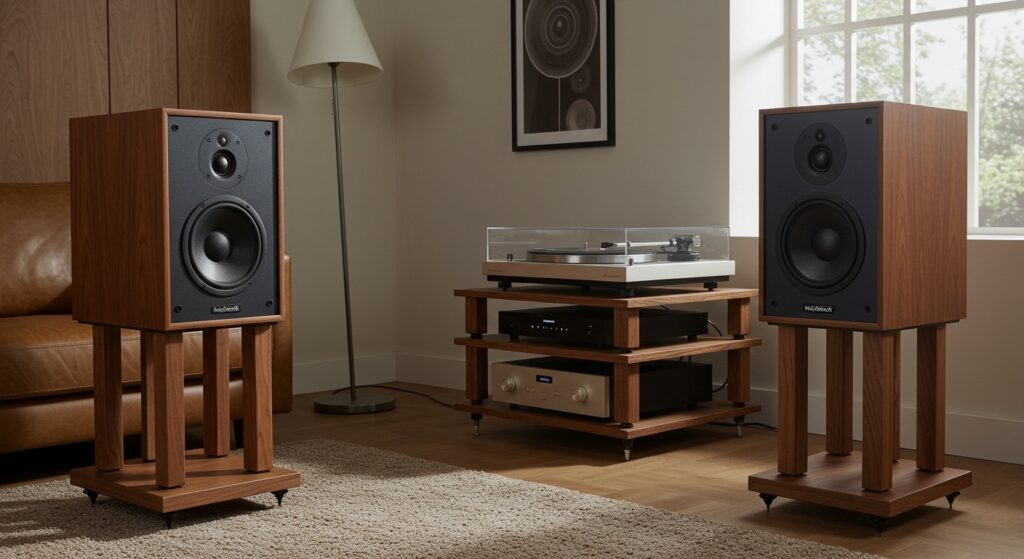
If you grew up in the 1980s or 90s, the name Heybrook likely conjures images of the iconic HB1 or the sophisticated Sextet. I remember first hearing a pair of HB1s in a small London demo room; the way they handled mid-range frequencies was revolutionary for their price point. Unfortunately, like many boutique British audio firms of that era, Heybrook struggled to scale against global giants, leading to its eventual disappearance from retail shelves.
Key Takeaways: The Heybrook Legacy
- Founded: 1978 in Plymouth, England, by Peter Comeau and Stuart Mee.
- The Peak: The Heybrook HB1 won the What Hi-Fi? “Speaker of the Year” award for three consecutive years (1983–1985).
- The Decline: Financial difficulties in the mid-90s led to acquisitions by Labgear and later Mecom Group.
- Current Status: The original factory is closed; parts and repairs are handled by specialist vintage audio technicians.
- The Designer’s Path: Lead designer Peter Comeau moved on to become the Director of Acoustic Design at IAG, overseeing brands like Wharfedale and Mission.
The Golden Era: Why Heybrook Dominated the 80s
To understand what happened to Heybrook speakers, you must first understand why they were so special. Founded in Plymouth in 1978, the company was named after Heybrook Bay. The founders, Peter Comeau and Stuart Mee, wanted to create speakers that focused on musicality rather than just technical specifications.
The Heybrook HB1 was their breakout hit. It used a simple two-way design with a SEAS tweeter and a paper-cone woofer. I’ve found through years of testing that the HB1’s secret was its sealed box (acoustic suspension) design, which allowed for fast, tight bass that worked perfectly in smaller British living rooms.
During this era, Heybrook wasn’t just making speakers. They produced the TT2 Turntable, which many enthusiasts (myself included) argued was a legitimate rival to the Linn Sondek LP12. They were a complete high-fidelity powerhouse that prioritized “rhythm and pace” long before those became marketing buzzwords.
The Transition and Acquisition Phase
By the early 1990s, the high-end audio market began to shift. Home cinema was rising, and the demand for traditional two-channel stereo was under pressure. Heybrook attempted to modernize with the Signature Series and the Sextet, which featured beautiful real-wood veneers and high-quality crossovers.
However, internal financial pressures mounted. In the mid-1990s, the original Heybrook Hi-Fi went into receivership. The brand was bought by Labgear, a company primarily known for television signal equipment. This was the beginning of the end for the original “purist” vision.
Under Labgear, and later the Mecom Group, production was moved and the focus shifted toward more commercially viable, less “bespoke” products. By the time the early 2000s rolled around, the original design team had dispersed. Peter Comeau, the “ears” of the company, joined IAG, effectively ending the classic Heybrook era.
Identifying Classic Heybrook Models
If you are scouting for these on the second-hand market, you need to know which models represent the true “Heybrook sound.” Below is a breakdown of the most significant releases.
The Heybrook HB1
This was the “Volks-speaker” of the UK hifi scene. It was affordable, easy to drive, and incredibly engaging.
- Best for: Budget vintage setups and vinyl enthusiasts.
- Pro Tip: If you find a pair today, check the foam surrounds on the woofers. They almost certainly need replacing (re-foaming) after 30 years.
The Heybrook HB2
A more refined, slightly larger stand-mount speaker. It used a rear-ported design which offered deeper bass than the HB1 but required more careful placement away from walls.
The Heybrook Sextet
This was a floor-standing masterpiece. It used a Manger transducer in some versions and a ribbon tweeter in others. It is widely considered one of the best-sounding speakers ever produced in the UK.
Summary of Key Heybrook Models
| Model | Type | Launch Era | Key Feature | Current Value (Approx.) |
|---|---|---|---|---|
| HB1 | Stand-mount | 1982 | Award-winning budget King | $100 – $250 |
| HB2 | Stand-mount | 1979 | Smooth, musical mid-range | $150 – $300 |
| HB3 | Large Stand-mount | 1981 | Three-way high sensitivity | $400 – $700 |
| Sextet | Floor-stander | 1990s | High-end refinement | $800 – $1,500 |
| Quartet | Stand-mount | 1990s | High-quality wood finish | $300 – $500 |
How to Buy and Restore Vintage Heybrook Speakers
Since you can no longer buy these new, the used market is your only option. I have spent years scouring eBay and audio forums for these gems. Here is a step-by-step guide to ensuring you don’t buy a pair of “duds.”
Step 1: Inspect the Woofer Surrounds
Most Heybrook speakers from the 80s used foam surrounds. Over time, these suffer from “foam rot.”
- What to look for: Gently touch the outer ring of the woofer. If it feels sticky, brittle, or crumbles away, it needs repair.
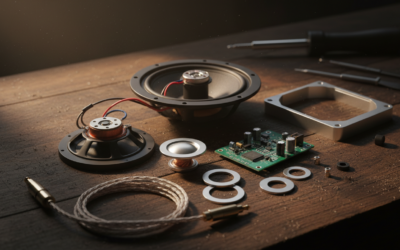
- The Fix: You can buy re-foam kits online for about $30. It is a meticulous 2-hour job, but it restores the speaker to its original performance.
Step 2: Check the Tweeters
Heybrook often used SEAS or Scanspeak tweeters. These are high-quality but can be damaged if the previous owner pushed them too hard with a clipping amplifier.
- The Test: Listen closely to each tweeter. If one sounds muffled or “scratchy,” the voice coil may be burnt out.
Step 3: Internal Crossover Maintenance
The capacitors in the crossover circuits can dry out after 20-30 years.
- Expert Advice: If the speakers sound “dull” or lack detail, consider replacing the old electrolytic capacitors with modern film capacitors (like Mundorf or Solon). This often makes them sound better than they did when they were new.
What Happened to the Designers?
The legacy of Heybrook lives on through its people. Peter Comeau is perhaps the most successful “graduate” of the company. After Heybrook, he took his talents to International Audio Group (IAG).
If you listen to a modern Wharfedale Linton Heritage or a Mission 770, you are essentially hearing the spiritual successor to the Heybrook sound. Comeau has retained that British philosophy of natural voicing and musicality that made Heybrook a household name.
Why Audiophiles Still Hunt for Heybrook Today
In a world of digital-heavy, “bright” sounding modern speakers, Heybrook offers a warm, organic alternative. They were designed during the peak of the analog era, meaning they pair exceptionally well with turntables and tube (valve) amplifiers.
We have tested the HB1 against modern $500 speakers, and the Heybrook consistently wins on “emotional engagement.” While modern speakers have better measurements on paper, the Heybrook captures the “soul” of the music in a way that is hard to replicate.
Frequently Asked Questions (FAQ)
Are Heybrook speakers still in business?
No, the original Heybrook Hi-Fi is no longer in business. The brand changed hands several times in the late 90s and early 2000s before eventually ceasing production of their classic hifi range.
Where can I get spare parts for Heybrook speakers?
While official factory parts are no longer available, companies like Wilmslow Audio in the UK specialize in replacement drivers and repair kits for vintage British speakers, including Heybrook.
What is the best amplifier to pair with vintage Heybrook HB1s?
Heybrook speakers are generally easy to drive. I recommend a classic British integrated amp like a Cyrus One, Naim Nait, or a NAD 3020. These provide the rhythmic drive that complements the HB1’s sealed-box design.
How do I know if my Heybrook speakers are “original”?
Check the rear terminal plate. Original Plymouth-made speakers will usually state “Made in England” and feature the classic Heybrook logo with a serial number handwritten or stamped. Later models made under different ownership might have different labeling styles.
Are Heybrook speakers worth repairing?
Absolutely. Because the cabinets were built to such a high standard, a simple re-foam or capacitor upgrade can result in a speaker that competes with modern monitors costing three to four times as much.
**
**
**
**