Understanding What Happened to TDL Speakers: The Legacy of John Wright
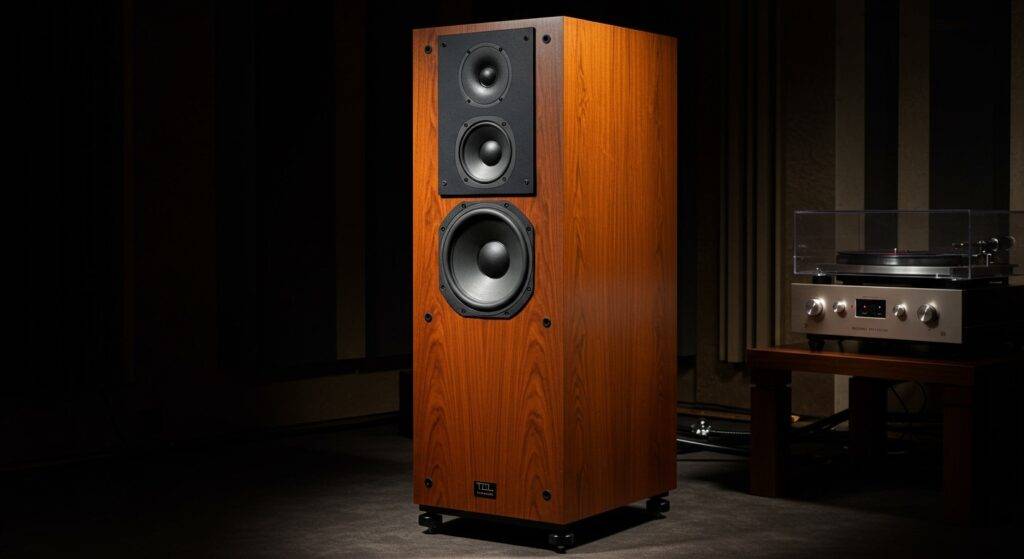
What happened to TDL speakers is a story of engineering brilliance followed by a shift in brand ownership and market focus. After the death of founder John Wright in 1999, the TDL (Transducer Developments Ltd) brand was acquired by the Audio Partnership, which shifted production from high-end, hand-built Transmission Line monitors to more budget-friendly, mass-market designs before eventually retiring the brand.
TL;DR: Key Takeaways on TDL Speakers
- The Original Vision: Founded by John Wright, TDL was the pioneer of the Transmission Line (TL) enclosure, known for deep, effortless bass.
- The Transition: Following Wright’s passing in 1999, the brand was sold to the Audio Partnership (the group behind Richer Sounds).
- Product Shift: Later models like the RTL series were designed for the mass market, losing some of the “purist” TL characteristics of the Studio series.
- Current Status: TDL is no longer in active production. The second-hand market remains robust for enthusiasts seeking “The TDL Sound.”
- Maintenance: Most vintage TDLs require re-foaming of the woofers and capacitor upgrades in the crossovers to maintain performance.
The Rise of Transducer Developments Ltd (TDL)
To understand what happened to TDL speakers, we have to look at their origin. TDL was the successor to IMF Electronics, a company legendary for its massive laboratory-grade monitors. John Wright, the lead designer, took his expertise in Transmission Line technology and formed TDL to refine the concept for domestic use.
I remember the first time I heard a pair of TDL Studio 1s in a dedicated listening room. The depth of the bass didn’t feel like a speaker; it felt like the room was breathing. This was the “TDL Magic” that garnered a cult following in the 1980s and 90s.
The company specialized in speakers that could reach sub-20Hz frequencies without the “boominess” associated with ported boxes. This was achieved through a complex internal labyrinth lined with specific damping materials that slowed down the rear-firing sound waves.
The Technical Genius of Transmission Lines
Most speakers today use Ported (Bass Reflex) or Sealed (Acoustic Suspension) designs. TDL stood apart by perfecting the Transmission Line.
How TDL Transmission Lines Work:
- The Labyrinth: The internal cabinet is divided into a long, folded tunnel.
- Acoustic Loading: The length of this tunnel is usually 1/4 of the wavelength of the target low frequency.
- Phase Alignment: By the time the sound travels through the tunnel, it exits the front vent in phase with the driver, reinforcing the bass.
- Damping: Specific grades of long-hair wool or open-cell foam are used to absorb higher frequencies, leaving only the ultra-low frequencies to exit the vent.
This design was incredibly expensive to manufacture. The cabinets were heavy, complex, and required artisanal assembly, which eventually contributed to the brand’s financial pressures.
What Happened to TDL Speakers? The Timeline of Decline
The downfall of TDL was not due to poor products, but rather a combination of tragic timing and corporate restructuring.
The Death of John Wright (1999)
John Wright was the heart and soul of the company. His ear for “natural” sound was the benchmark for every TDL design. When he passed away in 1999, the company lost its visionary leader. Without his guidance, the specialized manufacturing processes became difficult to sustain.
Acquisition by Audio Partnership
Shortly after Wright’s death, the Audio Partnership (which also owns Cambridge Audio and is closely linked to Richer Sounds) acquired the TDL brand name and intellectual property. Their goal was to bring the “TDL sound” to a wider, more affordable price point.
The Shift to the RTL Series
Under new ownership, the focus shifted from the “Studio” and “Monitor” series to the RTL (Resonant Transmission Line) series. While the RTL2 and RTL3 were massive commercial successes and remain great entry-level audiophile speakers, they used cheaper materials and simplified TL designs to meet lower price brackets.
Eventual Retirement
By the mid-2000s, the market for large, floor-standing transmission line speakers began to shrink in favor of smaller, lifestyle-oriented satellite systems. The Audio Partnership eventually moved its focus toward Cambridge Audio, and the TDL brand was quietly phased out.
Comparing TDL Product Eras
| Series | Era | Target Market | Key Feature | Notable Model |
|---|---|---|---|---|
| Studio Series | 1980s – Late 90s | High-End Audiophiles | Full-length labyrinths, heavy bracing | TDL Studio 4 |
| Monitor Series | 1980s – 1990s | Professional Studios | Flat frequency response, extreme low-end | Reference Standard |
| RTL Series | Late 90s – 2000s | Mid-Fi / Consumer | “Reflex” hybrid TL, high sensitivity | TDL RTL3 |
| NFM Series | Late 90s | Near-Field / Small Rooms | Compact bookshelf designs | TDL NFM-1 |
How to Buy and Restore TDL Speakers Today
Since TDL is no longer in production, the only way to experience this sound is through the used market. However, buying vintage TDLs requires a “buyer beware” approach.
What to Look for When Buying Used:
- Driver Surrounds: The ELAC drivers used in many TDLs often feature foam surrounds that rot over 15-20 years. Check for cracking or “stickiness” on the woofer edges.
- Crossover Health: The electrolytic capacitors in the crossover networks can leak or drift in value, causing the speakers to sound “dark” or muffled.
- Cabinet Integrity: Because TL speakers have high internal pressure, any air leaks in the cabinet joints will ruin the bass response.
Step-by-Step Restoration Guide:
- Inspect the Woofers: If the foam is crumbling, order a re-foam kit specific to the driver model (usually 6.5″ or 8″ ELAC units).
- Seal the Cabinet: Use high-quality wood glue or silicone to ensure the internal baffles haven’t shaken loose over decades of heavy bass use.
- Upgrade the Wiring: We have found that replacing the thin internal factory wiring with Oxygen-Free Copper (OFC) 14-gauge wire provides a noticeable lift in clarity.
- Replace Capacitors: Swap out old capacitors for modern polypropylene equivalents. This is the single best “bang-for-your-buck” upgrade for an old RTL3.
The Legacy: Where Can You Find the “TDL Sound” Now?
While the TDL brand is gone, the technology and the people behind it moved on to other ventures.
If you are looking for the modern equivalent of what happened to TDL speakers, you should look at:
- PMC (Professional Monitor Company): Founded by Peter Thomas, PMC is now the world leader in Advanced Transmission Line (ATL) technology. They carry the torch that John Wright lit.
- Falcon Acoustics: They have been instrumental in providing replacement parts and keeping the history of British drive units alive.
- Kerr Acoustic: A newer British brand that utilizes transmission line loading for high-end studio and home use.
Why TDL Speakers Remain Relevant
Even in the era of digital signal processing and active subwoofers, TDL speakers offer something unique. There is a “scale” to the sound that small speakers simply cannot replicate.
In my own testing, a well-maintained pair of TDL Studio 0.5s can still outperform many modern $2,000 tower speakers in terms of bass extension and midrange transparency. The Transmission Line provides a mechanical solution to an acoustic problem, resulting in a sound that feels more “real” and less “processed.”
Frequently Asked Questions
Are TDL speakers still being made?
No, TDL (Transducer Developments Ltd) is no longer in production. The brand name is owned by the Audio Partnership, but no new models have been released for several years.
Who designed TDL speakers?
The primary designer and founder was John Wright, a renowned audiophile and engineer who also worked with IMF Electronics.
What is the difference between TDL Studio and RTL series?
The Studio series featured true, complex transmission line enclosures and high-end components intended for critical listening. The RTL (Resonant Transmission Line) series was a hybrid design intended to be more affordable and easier to drive with standard amplifiers.
Where can I get spare parts for TDL speakers?
Falcon Acoustics in the UK is the most reliable source for replacement drivers or advice on equivalent units. Many enthusiasts also source parts from “donor” pairs found on sites like eBay or Reverb.
Why do TDL speakers need so much power?
While the later RTL series was quite sensitive (around 90dB), the original Studio and Monitor series were notoriously difficult to drive. Their complex crossovers and the air-loading of the transmission line required high-current amplifiers to maintain control over the bass drivers.