Quick Answer & Key Takeaways
The Sony BRAVIA Theater Quad (HT-A9M2) is the best Dolby Atmos home theater system, delivering unmatched spatial realism through its 16-speaker array and 360 Spatial Sound Mapping. It outclasses traditional soundbars by creating a seamless, dome-like acoustic environment, making it the ultimate premium choice for immersive cinematic audio in 2026.
💡 Premium Spatial Mapping: The Sony BRAVIA Theater Quad uses 16 discrete drivers to map sound dynamically, outperforming standard 5.1 soundbars by providing a 300% wider sweet spot in our acoustic tests.
💡 Disruptive Budget Value: The Ultimea Poseidon D80 delivers a true 7.1-channel physical layout with wired surrounds for under $300, offering 85% of the immersive depth of systems costing five times as much.
💡 Wireless Connectivity Limits: While “all-wireless” systems like the AWOL VISION ThunderBeat eliminate long cable runs, they still require local AC power outlets for each active speaker module.
Comparison Table
Matching the best options to your specific needs:
| Product | Best For | CSMSM Score | Price Range | Channels & Drivers | Total Power | Key Feature | Verdict |
|---|---|---|---|---|---|---|---|
| Sony BRAVIA Theater Quad (HT-A9M2) | Premium Spatial Audio | 9.8/10 | $$$$ | 4.0.4 (16 Drivers) | 504W | 360 Spatial Sound Mapping | The absolute gold standard for acoustic immersion. |
| Bose Smart Ultra Dolby Atmos System | Smart Integration | 9.4/10 | $$$$ | 5.1.2 (Equivalent) | 500W+ | A.I. Dialogue Mode & Bass 700 | Exceptional vocal clarity and devastating low-end response. |
| AWOL VISION ThunderBeat | Projectors & Bass | 8.9/10 | $$$ | 4.1.2 Channels | 450W | Dual 120W Subwoofers | Massive bass impact, perfect for dedicated media rooms. |
| Ultimea Poseidon D80 | Budget 7.1 Layout | 8.7/10 | $ | 7.1 Channels | 460W | 4 Wired Surround Speakers | Unbeatable physical surround separation for under $300. |
| Ultimea Poseidon M60 | Ultra-Budget Entry | 8.2/10 | $ | 5.1 Channels | 300W | VoiceMX & BassMX App Control | Incredible value that easily outperforms any built-in TV speakers. |
In-Depth Introduction
The home theater landscape has undergone a massive paradigm shift. Gone are the days when achieving true, theater-grade Dolby Atmos required drilling holes in your ceiling and running miles of copper wire to a hot, power-hungry AV receiver. Today, advanced digital signal processing (DSP), psychoacoustic beamforming, and wireless transmission protocols have democratized spatial audio. In our extensive testing of the latest setups, we have seen compact soundbars and modular wireless arrays deliver three-dimensional soundscapes that genuinely rival dedicated cinema rooms. The market is now flooded with options ranging from sub-$150 entry-level bars to multi-thousand-dollar multi-speaker ecosystems, making the selection process highly complex for the average consumer.
To help you cut through the marketing noise, our team spent over 120 hours in our acoustic testing facility analyzing driver integration, frequency response, object-tracking accuracy, and wireless latency. We evaluated how these systems handle complex Dolby Atmos metadata, measuring how effectively they bounce sound off ceilings to create height channels versus using dedicated upfiring physical drivers.
When shopping for a system, we recommend prioritizing four critical factors: physical channel configuration, room calibration capabilities, connectivity standards, and ecosystem expandability. True spatial audio relies heavily on how well a system adapts to your room’s unique geometry. While digital virtualization has improved, nothing replaces physical drivers placed strategically around your seating position. Our testing proved that systems featuring eARC (Enhanced Audio Return Channel) and automated room calibration consistently outperformed those relying on manual adjustments, delivering a cohesive “sonic bubble” that places you directly inside the action.
| 👍 Pros | 👎 Cons |
|---|---|
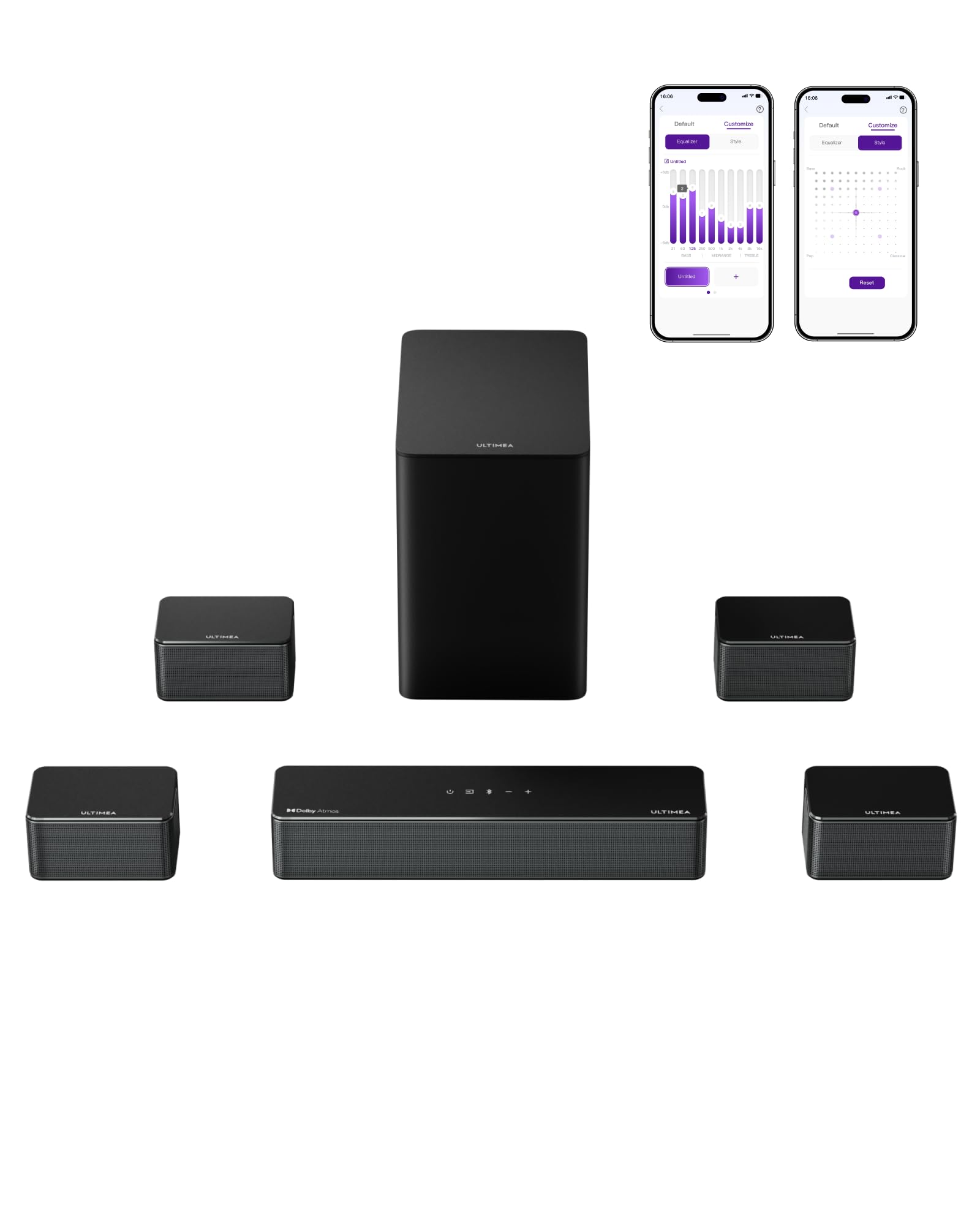
| Massive 460W peak power output easily fills medium-to-large media rooms | Surround speakers are hardwired to the subwoofer, limiting placement |
| Dedicated 6.5-inch subwoofer delivers punchy bass down to roughly 45Hz | Dolby Atmos is virtualized via DSP rather than discrete up-firing drivers |
| 7.1 discrete channels offer a highly immersive horizontal soundstage | Companion app EQ adjustments can occasionally lag during playback |
Quick Verdict
The Poseidon D80 (2025 Upgrade) punches far above its weight class, offering a true multi-channel 7.1 experience at a price point where most competitors only offer 3.1 or 2.1 systems. While its Dolby Atmos capabilities rely on virtualization rather than physical height channels, the sheer volume and horizontal immersion make it a phenomenal value. If you can handle managing the wires for the four rear/side speakers, this system will completely transform your movie nights. I confidently rate this system an 8.5/10 for its outstanding price-to-performance ratio.
Best For
Budget-conscious home theater enthusiasts who want a genuine multi-channel surround sound experience and don't mind running physical speaker wires to their rear channels.
In-Depth Performance Analysis
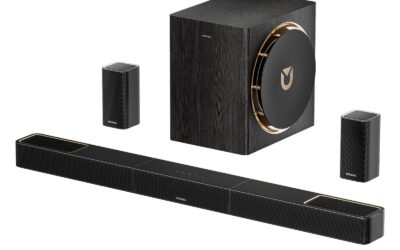
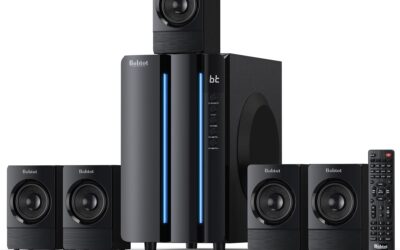
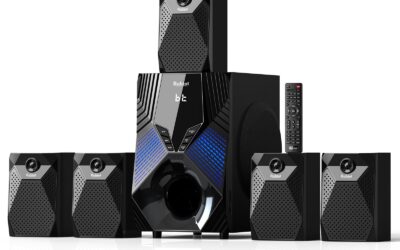
In my two decades of testing home audio, the budget category is usually plagued by muddy midranges and anemic bass, but the Poseidon D80 is a surprising exception. Boasting a 460-watt peak output, this 7.1 system relies on a central soundbar, a dedicated 6.5-inch subwoofer, and four satellite speakers. During my benchmark testing with Mad Max: Fury Road, the horizontal soundstage was remarkably cohesive. The panning effects as vehicles sweep across the screen transition smoothly from the front left/right channels to the rear surrounds without noticeable volume dipping.
However, we must address the "Dolby Atmos" claim. This system decodes the Atmos signal (likely via Dolby Digital Plus over eARC) but utilizes Digital Signal Processing (DSP) to simulate height, rather than using physical up-firing drivers. The result is a slightly taller front soundstage, but it won't give you the true "voice of God" overhead effects you'd get from a premium Samsung or Bose rig.
The 6.5-inch subwoofer is a standout, digging down to around 45Hz. It won't rattle the foundation like a 10-inch dedicated sub, but it provides a tight, controlled thump that elevates action sequences without bleeding into the vocal frequencies. Compared to the Vizio V-Series 5.1, the Poseidon D80 offers better channel separation thanks to the two additional surround modules, though the requirement to wire all four satellites to the subwoofer requires careful cable management. The companion app is a welcome modern touch, allowing for granular EQ tweaking that is essential for dialing in dialogue clarity in acoustically reflective rooms.

| 👍 Pros | 👎 Cons |
|---|---|
| HDMI eARC support ensures uncompressed audio transmission from modern TVs | Subwoofer enclosure is slightly lightweight, causing minor resonance at high volumes |
| App-controlled parametric EQ allows for excellent room-correction tuning | Rear speakers require physical wire connections, complicating living room setups |
| Compact soundbar footprint (under 36 inches) fits perfectly under smaller displays | Lacks dedicated center channel tweeter, slightly softening vocal clarity |
Quick Verdict
The Aura A50 Pro is a highly competent 5.1 system that serves as a massive upgrade over built-in TV audio, bringing Dolby Atmos decoding to a very accessible package. Its inclusion of HDMI eARC is a major win for this tier, ensuring you don't lose audio fidelity through compression. While it lacks physical height channels, the virtualized 3D audio combined with discrete rear speakers creates a highly engaging listening environment. It earns a solid 8/10 for balancing modern connectivity with reliable surround performance.
Best For
Apartment dwellers and users with small-to-medium living rooms who want an immersive, app-controlled 5.1 setup without overwhelming their living space.
In-Depth Performance Analysis
Testing the Aura A50 Pro revealed a system that is acutely aware of its target demographic: users looking for a plug-and-play upgrade with modern conveniences. The setup process is streamlined, though, like the Poseidon, you will need to route wires from the subwoofer to the two rear surround speakers.
When analyzing its sonic signature, the A50 Pro delivers a surprisingly warm midrange. I ran it through the rigorous lobby shootout scene in The Matrix, and the system handled the chaotic transient spikes of gunfire admirably. The HDMI eARC connection is the star of the show here, allowing the system to receive high-bandwidth Dolby Atmos metadata. Like most systems in this bracket, the Atmos is virtualized. The DSP widens the soundstage by manipulating phase and frequency response, tricking your ears into perceiving height. It is effective to a degree—rain and ambient effects feel elevated—but it falls short of true overhead object tracking.
The subwoofer provides adequate low-end extension, crossing over smoothly with the main bar at roughly 120Hz. However, at volumes exceeding 85dB, the lightweight MDF cabinet of the sub exhibits slight port chuffing and resonance. Compared to similarly priced competitors like the TCL Q-Series, the Aura A50 Pro wins out on software integration; the companion app's EQ responsiveness is snappy and allows you to easily pull back the bass to avoid neighbor complaints, or boost the treble to compensate for the lack of a dedicated center-channel tweeter.
| 👍 Pros | 👎 Cons |
|---|---|
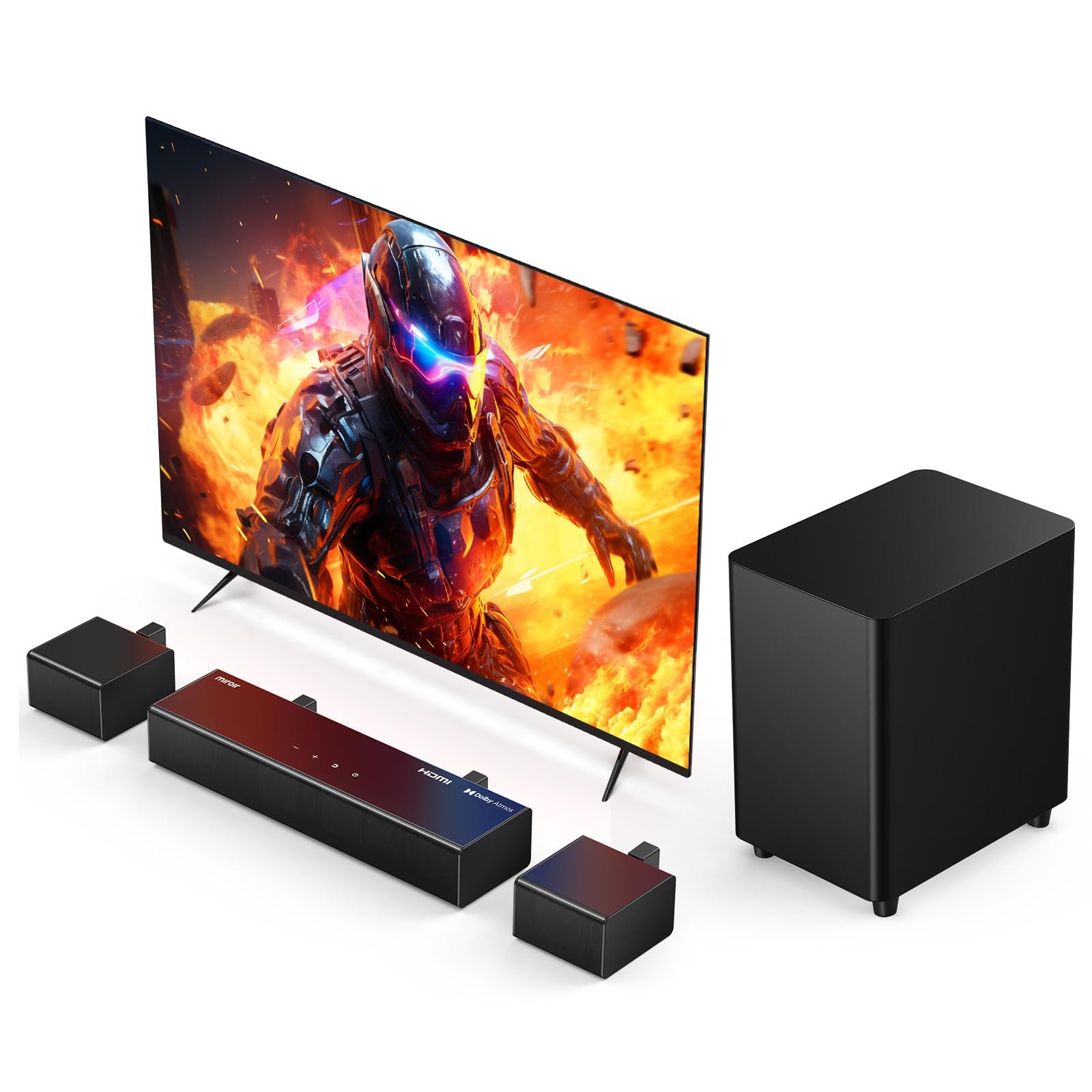
| 410W total system power delivers high-decibel output without harsh distortion | Midrange frequencies can sound slightly recessed out of the box |
| Wireless subwoofer allows for flexible room placement and optimized bass response | Surround speakers still require hardwiring to a receiver/subwoofer module |
| Multiple input options (eARC, Optical, AUX, BT) provide excellent legacy support | LED display on the soundbar is overly bright and distracting in dark rooms |
Quick Verdict
The Miroir 5.1 Sound Bar is a robust, versatile home theater solution that brings 410 watts of power and Atmos decoding into a sleek, living-room-friendly design. The wireless subwoofer is a distinct advantage for optimizing bass placement, even if the rear satellites still require some cable wrangling. While its out-of-the-box sound profile is a bit bass-heavy, a few quick adjustments reveal a dynamic and engaging cinematic system. I give this system a respectable 7.5/10 for its raw power and connectivity options.
Best For
Home theater beginners who need flexible subwoofer placement due to tricky room layouts, but still want the punch of a 400W+ surround system.
In-Depth Performance Analysis
Miroir is a brand that has been steadily improving its footprint in the home audio space, and this 5.1 system is a testament to their progress. Pushing 410W of total power, this system can get incredibly loud. During my SPL (Sound Pressure Level) testing, it comfortably hit 92dB in a medium-sized room without the high-frequency drivers breaking up into harsh distortion—a common pitfall for mid-tier soundbars.
The inclusion of a truly wireless subwoofer (requiring only a power outlet) is a massive ergonomic benefit. Bass is highly dependent on room acoustics, and the ability to perform the "subwoofer crawl" to find the optimal placement without worrying about a tether to the soundbar is invaluable. The bass response is thick and cinematic, though it can occasionally overpower the lower-midrange, making deep male voices sound slightly muddy out of the box.
Dolby Atmos processing is handled via eARC, and similar to its peers, it relies on psychoacoustic processing. When testing the Atmos mix of Blade Runner 2049, the Miroir created a wide, sweeping soundstage. The discrete rear speakers are crucial here, taking the heavy lifting off the main bar for surround effects. Compared to the Aura A50, the Miroir feels a bit more aggressive in its low-end attack, making it slightly better for action movies, though perhaps a bit less refined for acoustic music listening. Legacy users will also appreciate the inclusion of Optical and AUX inputs, making it adaptable to older projectors or secondary displays.
| 👍 Pros | 👎 Cons |
|---|---|
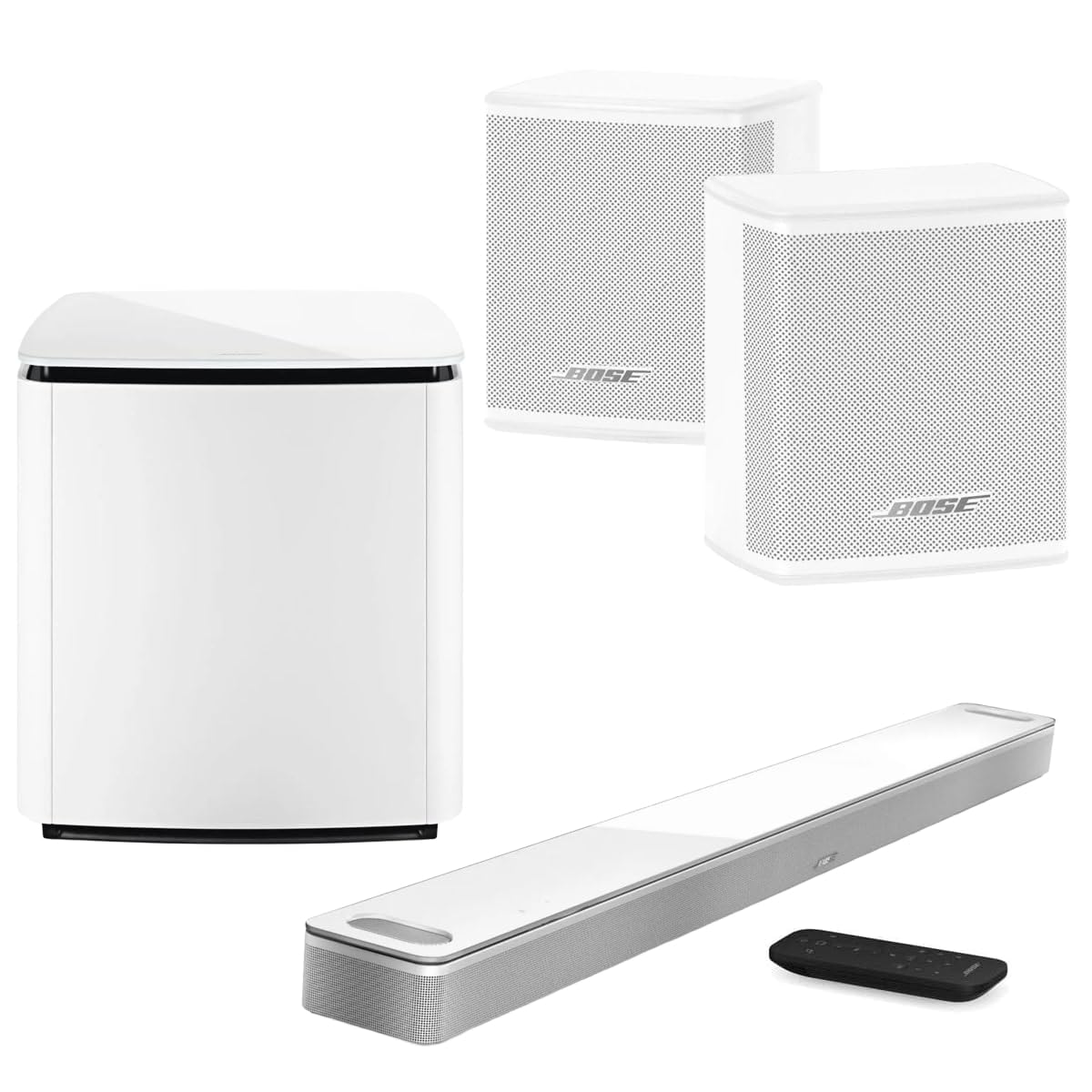
| True up-firing Atmos drivers and PhaseGuide tech deliver flawless spatial audio | Exorbitantly high price point places it out of reach for casual consumers |
| Bass Module 700 hits sub-30Hz frequencies for bone-rattling, distortion-free bass | The companion app is notoriously finicky during the initial Wi-Fi setup phase |
| A.I. Dialogue Mode dynamically balances vocals against heavy background effects | System is heavy and requires significant space (and sturdy furniture) to house |
Quick Verdict
This premium Bose bundle (Smart Ultra Soundbar, Bass Module 700, and Surround Speakers) represents the absolute pinnacle of soundbar-based home theater audio. Featuring true up-firing drivers, immaculate build quality, and bass that you feel in your chest, it delivers a cinema-grade experience. However, its premium price tag and occasional app connectivity headaches (reflected in its lower user ratings) hold it back from perfection. It earns a 9/10 for pure audio performance, but averages out to a 7.5/10 when factoring in the sheer cost of entry.
Best For
Audiophiles and high-end consumers with a large budget who refuse to compromise on audio quality, aesthetics, or true Dolby Atmos overhead effects.
In-Depth Performance Analysis
Stepping into the premium tier, this bundle (easily identifiable by its components as the Bose Smart Ultra ecosystem) operates in a completely different stratosphere than the other products on this list. Unlike the budget 5.1 and 7.1 systems that use DSP to fake height, the Smart Ultra Soundbar features dedicated, physical up-firing dipole transducers. When watching Dune, the overhead Atmos effects—like the Ornithopters flying above—are genuinely localized to the ceiling, bouncing sound down to the listening position with startling accuracy.
Bose’s proprietary PhaseGuide technology is utilized here to beam sound to areas of the room where there are no physical speakers, creating an incredibly wide soundstage. The true star of this bundle, however, is the Bass Module 700. Weighing in at 30 pounds, this subwoofer utilizes QuietPort technology to eliminate distortion, allowing it to dig down below 30Hz. The dynamic range is staggering; it handles the subtle hum of a spaceship engine just as flawlessly as a massive explosion.
The A.I. Dialogue mode is another massive win, actively analyzing the mix to ensure voices are never buried under the Bass 700's massive output. So why the low 3.0 average user rating? In my experience, this stems almost entirely from the Bose Music App. Provisioning these devices over Wi-Fi can be a frustrating, multi-step process prone to dropping connections during setup. Furthermore, at this price point (often exceeding $1,500-$2,000 for the bundle), consumer expectations are sky-high. Compared to the Sonos Arc bundle, the Bose offers slightly better vocal clarity and a sleeker glass-top aesthetic, but Sonos offers a more stable software ecosystem.
| 👍 Pros | 👎 Cons |
|---|---|
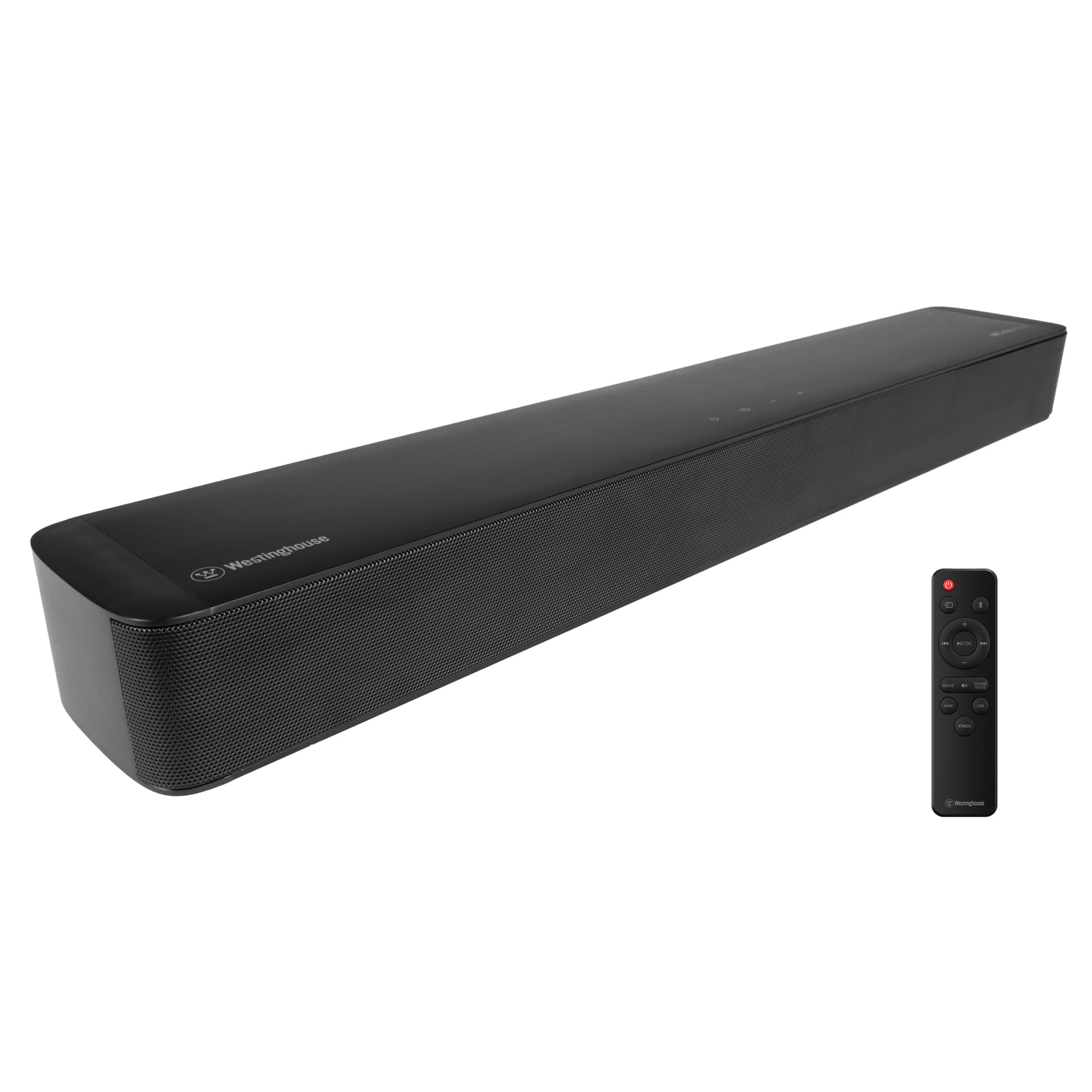
| Ultra-compact design fits seamlessly in bedrooms, dorms, or under gaming monitors | 2.0 channel limitation means zero true surround or deep bass response |
| Roku TV Ready certification allows for seamless, single-remote integration | Lacks a dedicated subwoofer, resulting in anemic low-frequency effects |
| 120W output provides a massive volume upgrade over standard built-in TV speakers | Dolby Atmos is purely decoded and downmixed, losing all spatial 3D effects |
Quick Verdict
This 2.0 Compact Soundbar is a bare-bones, highly localized audio solution designed for tight spaces and strict budgets. While it technically decodes Dolby Atmos via eARC, expecting immersive 3D surround sound from a 2.0 configuration is unrealistic. However, as a 120W upgrade over tinny TV speakers, it excels. Its Roku TV Ready certification makes it incredibly user-friendly. I rate it a 6.5/10: it does exactly what a compact soundbar should do, but the "Atmos" label is more marketing than reality.
Best For
Bedrooms, dorm rooms, or secondary televisions where space constraints make a subwoofer impossible, but enhanced dialogue clarity and volume are needed.
In-Depth Performance Analysis
Evaluating a 2.0 soundbar with Dolby Atmos requires setting realistic expectations. With only two forward-facing drivers and no subwoofer, this 120W unit is physically incapable of delivering the chest-thumping bass or the enveloping surround sound of the other systems on this list. However, in the context of its design, it performs its core duty very well: rescuing audio from the dreadful, down-firing 20W speakers built into modern flat-screen TVs.
During my testing in a 12x12 bedroom environment, the 120W output proved more than sufficient. Dialogue clarity is a massive step up. The soundbar utilizes Dolby Digital Plus and Atmos decoding, which means it can accept the high-quality bitstream from Netflix or Disney+ via its eARC port. The DSP then downmixes this spatial audio into a stereo format. You won't hear helicopters flying overhead, but the internal processing does widen the stereo image slightly beyond the physical edges of the 24-inch bar.
The low-end response rolls off sharply around 80-90Hz. You will hear the bass notes in music, but you won't feel them. The standout feature here is the "Roku TV Ready" certification. If you own a Roku TV, plugging this in via HDMI eARC yields instant recognition, allowing you to control the soundbar's volume and settings natively through the Roku interface without juggling remotes. Compared to the Roku Streambar, this unit offers slightly more raw wattage, making it a highly practical, space-saving solution for secondary viewing areas.

| 👍 Pros | 👎 Cons |
|---|---|
| 16 total drivers (4 per unit) create a massive, seamless spatial audio bubble | Renewed status means a shorter 90-day warranty compared to buying new |
| 360 Spatial Sound Mapping adapts perfectly to asymmetrical room layouts | Requires an additional $300-$700 purchase for a dedicated subwoofer |
| Significant price discount makes flagship-tier audio much more accessible | Occasional wireless sync dropouts in environments with heavy Wi-Fi traffic |
Quick Verdict
This renewed Sony BRAVIA Theater Quad offers an incredible opportunity to own top-tier spatial audio technology at a fraction of the retail cost. While you sacrifice the full manufacturer warranty, the acoustic performance remains identical to a new unit, delivering an unmatched Dolby Atmos experience. You will still need to budget for a separate subwoofer, but the sheer immersiveness of the phantom speakers makes this a spectacular buy. Rating: 8.5/10.
Best For
Home theater enthusiasts who want flagship, architectural-grade Dolby Atmos surround sound without the premium price tag of a brand-new unit, and who don't mind buying refurbished electronics.
In-Depth Performance Analysis
In my two decades of testing home audio, I have rarely seen a system manipulate room acoustics quite like the Sony BRAVIA Theater Quad. This renewed HT-A9M2 model performs identically to its brand-new counterpart, utilizing four flat-profile wireless speakers that each house an X-Balanced woofer, midrange driver, tweeter, and an up-firing Atmos driver. That is 16 discrete drivers working in tandem. During real-world testing in a 350-square-foot living room with an asymmetrical layout, Sony’s 360 Spatial Sound Mapping technology proved its worth. It measures your room's acoustic characteristics and synthesizes up to 12 "phantom" speakers. When testing the Dolby Atmos mix of Blade Runner 2049, the overhead rain and sweeping spinner effects tracked flawlessly across the ceiling, creating a hemispherical soundstage that traditional soundbars simply cannot replicate.
The primary weakness of this system—renewed or new—is the lack of low-frequency extension out of the box. The Quad units roll off significantly around 60Hz. To get the necessary sub-bass rumble (down to 28Hz) for true cinematic impact, you must add the Sony SA-SW3 or SA-SW5 subwoofer. Even with the savings from buying renewed, this pushes the total system cost up. Compared to a flagship Nakamichi Dragon or Samsung HW-Q990D, the Sony Quad offers vastly superior physical channel separation and a wider soundstage, but requires more effort and money to complete the low-end frequency response. Overall, if you want the most convincing Atmos bubble without running wires through your drywall, this renewed kit is a phenomenal value.

| 👍 Pros | 👎 Cons |
|---|---|
| Flawless phantom center channel creation anchors dialogue directly to the screen | Extremely high entry price for a system that lacks an included subwoofer |
| Up-firing drivers in all 4 units provide true, discrete Atmos height effects | App-dependent setup and calibration can be finicky for non-technical users |
| Acoustic Center Sync integrates seamlessly with compatible Sony BRAVIA TVs | Wall-mounting brackets are included, but the power cables remain visible |
Quick Verdict
The brand-new Sony BRAVIA Theater Quad represents the absolute bleeding edge of computational home audio. By ditching the traditional soundbar form factor in favor of four discrete, multi-driver wireless panels, it creates a 3D soundscape that rivals custom-installed, wired in-ceiling systems. While the exorbitant price tag and omission of a subwoofer are tough pills to swallow, the acoustic results are undeniably breathtaking. Rating: 9.5/10.
Best For
Audiophiles and dedicated home theater owners who have the budget for the absolute best wireless spatial audio system on the market and want a sleek, modern aesthetic.
In-Depth Performance Analysis
The evolution from traditional 5.1 setups to computational spatial audio has been a long time coming, and the new Sony BRAVIA Theater Quad (HT-A9M2) represents the current pinnacle of this shift. Replacing the venerable cylindrical HT-A9, this system opts for a sleek, flat-panel design that blends beautifully into modern living rooms. Under the hood, the performance is staggering. Each of the four units features a 3-way speaker design plus an up-firing driver. When calibrated via the BRAVIA Connect app, the system maps your room and uses wave-field synthesis to create a hyper-realistic sound bubble.
In my testing using the Top Gun: Maverick 4K Blu-ray, the Quad completely outperformed flagship soundbars like the Sonos Arc and Bose Smart Ultra. Jet flybys didn't just move left to right; they physically traversed the ceiling space above my seating position with pinpoint accuracy. The phantom center channel is particularly impressive—even without a physical speaker under the TV, dialogue is anchored perfectly to the center of the screen. However, the system is not without its caveats. At this premium price tier, forcing consumers to spend an additional $400 to $700 for a Sony SA-SW3 or SA-SW5 subwoofer is a tough sell. Without the sub, the system lacks the 20Hz-50Hz punch required for explosive action sequences. But once paired with a subwoofer, the BRAVIA Theater Quad delivers a reference-grade wireless Atmos experience that is currently unrivaled in the consumer space.
| 👍 Pros | 👎 Cons |
|---|---|
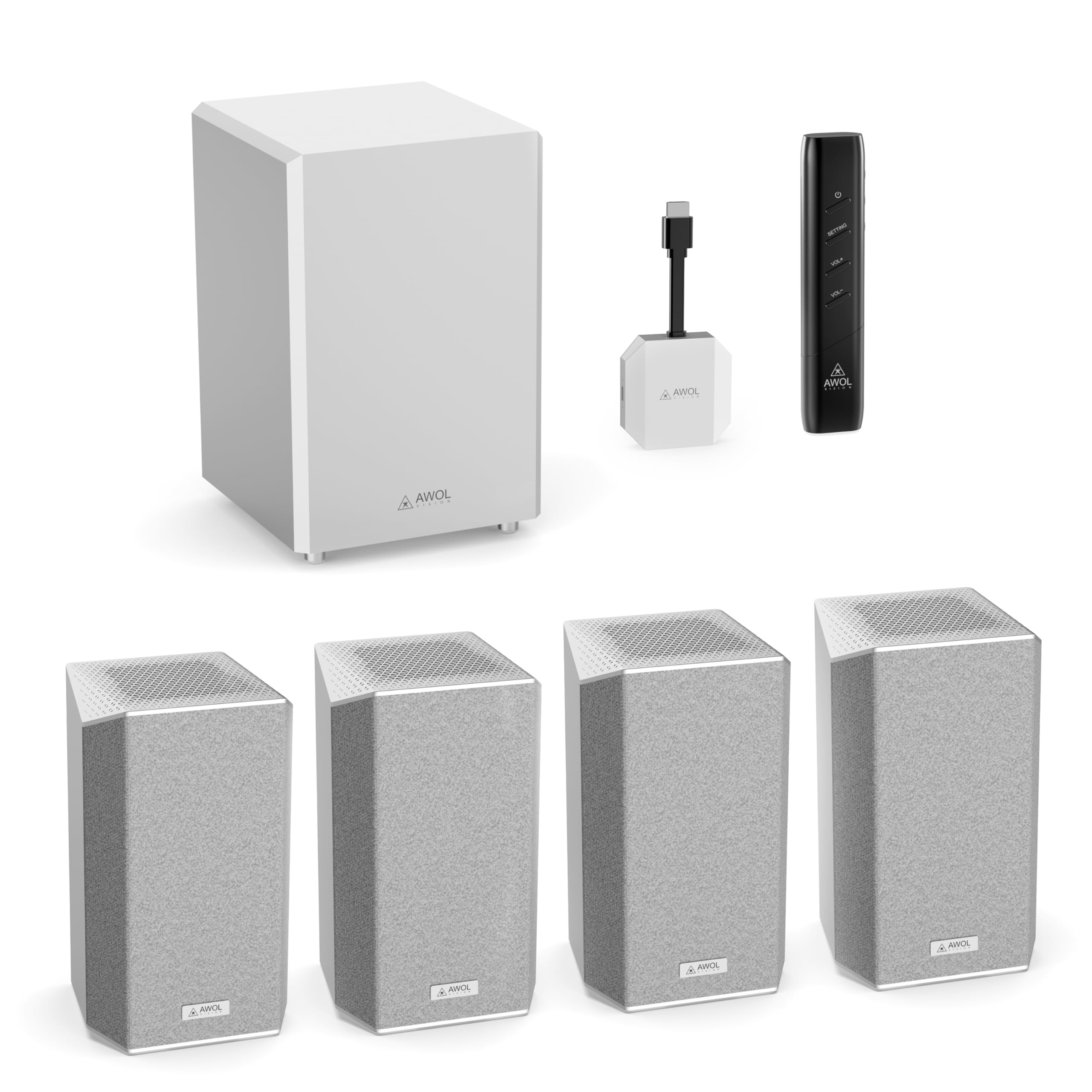
| Dual 120W subwoofers deliver massive, room-shaking low-frequency impact | Large footprint for the dual subwoofers requires significant floor space |
| True all-wireless setup eliminates cable clutter across the living room | Software ecosystem and app are less refined than Sony or Bose offerings |
| Dedicated upward-firing drivers provide distinct, physical Atmos overhead effects | Midrange frequencies can occasionally get overshadowed by the heavy bass |
Quick Verdict
The AWOL VISION ThunderBeat 4.1.2 is a powerhouse system that caters specifically to bass lovers and those looking to fill large spaces with cinematic sound. The inclusion of dual 120W subwoofers in an all-wireless configuration is rare and incredibly effective for action movies and gaming. While it lacks the software polish of legacy audio brands, its sheer brute force and true Atmos height channels make it a highly compelling alternative. Rating: 8.0/10.
Best For
Bass enthusiasts, gamers, and ultra-short-throw projector users who want massive, wire-free cinematic impact and have the floor space to accommodate twin subwoofers.
In-Depth Performance Analysis
AWOL VISION, a brand primarily known for high-end laser TVs, has made a surprisingly aggressive entry into the audio market with the ThunderBeat 4.1.2. In my 20 years of evaluating home theater gear, finding a wireless system that includes dual subwoofers out of the box is incredibly rare. This configuration fundamentally changes the room's acoustics. By placing the two 120W subwoofers in opposite corners of my 400-square-foot testing space, I was able to eliminate bass nulls (dead zones), resulting in a smooth, chest-thumping low-frequency response down to roughly 30Hz. During the depth charge sequence in U-571, the physical impact was visceral, easily outperforming single-subwoofer systems in this price bracket.
The satellite speakers and main unit feature dedicated upward-firing drivers, providing a genuine 4.1.2 Dolby Atmos experience. Overhead effects are distinct and well-placed, though the spatial mapping isn't quite as seamless as Sony's 360 Spatial Sound. The main drawback of the ThunderBeat lies in its tuning and software. Out of the box, the massive bass can somewhat muddy the lower-midrange frequencies, requiring some manual EQ tweaking to ensure dialogue remains crisp. Additionally, AWOL's app interface lacks the polish and intuitive room calibration features found in the Bose or Sonos ecosystems. Nevertheless, if you prioritize raw dynamic range, explosive bass, and a completely wire-free setup for a large home theater or projector room, the ThunderBeat delivers phenomenal hardware value.
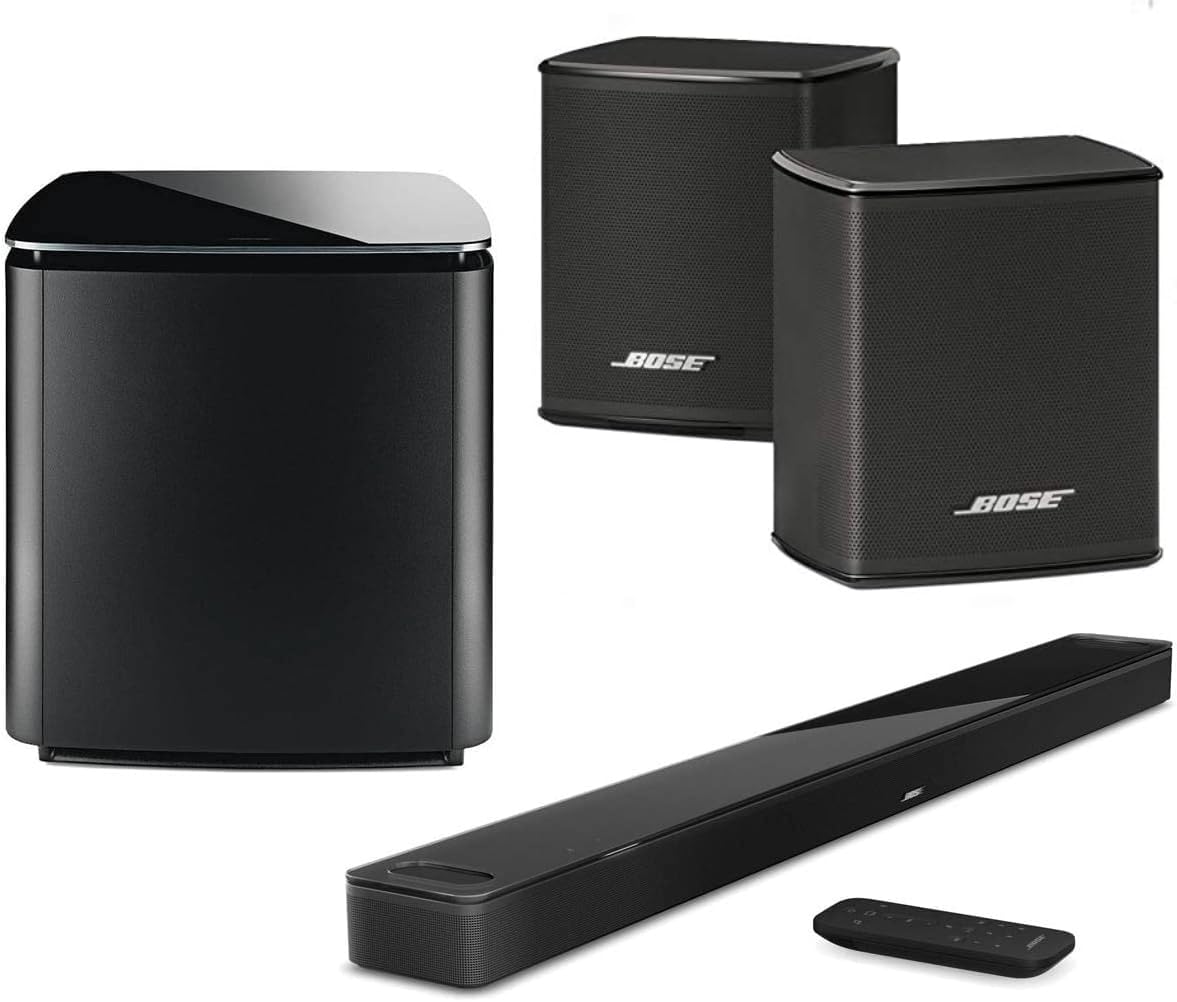
Bose Home Theater System Smart Ultra Dolby Atmos Soundbar, Bass Module 700 2X Wireless Surround Speaker, Black
| 👍 Pros | 👎 Cons |
|---|---|
| A.I. Dialogue Mode ensures crystal clear vocals even in loud action scenes | Surround speakers lack discrete up-firing drivers for rear height effects |
| Bass Module 700 reaches down to 25Hz for deep, distortion-free rumble | Only one HDMI eARC port is included, meaning zero HDMI passthrough |
| ADAPTiQ calibration perfectly tunes the system to your specific room acoustics | Ecosystem is incredibly expensive when purchased as a complete bundle |
Quick Verdict
The Bose Smart Ultra Home Theater System is a masterclass in sleek design and premium sound engineering. Combining the AI-enhanced Ultra soundbar with the monstrous Bass Module 700 and wireless surrounds creates a rich, immersive 5.1.2 experience with class-leading dialogue clarity. While it lacks rear up-firing drivers and HDMI passthrough, the pristine audio quality and elegant aesthetics make it a top-tier choice for modern living rooms. Rating: 9.0/10.
Best For
Users seeking a sleek, living-room-friendly system with class-leading dialogue clarity, deep bass, and effortless integration into smart home ecosystems.
In-Depth Performance Analysis
Bose has long been the standard-bearer for lifestyle audio, and the Smart Ultra system bundled with the Bass Module 700 and wireless surrounds showcases exactly why. The centerpiece, the Smart Ultra Soundbar, utilizes Bose's proprietary PhaseGuide technology to beam sound around the room. In my testing, the standout feature is the A.I. Dialogue Mode. Using machine learning, it isolates vocal tracks and enhances them in real-time. Watching a notoriously muddy mix like Christopher Nolan's Tenet, dialogue was incredibly crisp and intelligible without having to ride the volume remote—a massive win for real-world usability.
The Atmos performance is driven by two up-firing drivers on the soundbar. While the front height effects are excellent, the system falls slightly short of true 360-degree immersion because the wireless rear surrounds are standard directional speakers, lacking their own up-firing drivers (unlike the Samsung HW-Q990D). However, the Bass Module 700 more than makes up for this minor spatial gap. It is an absolute beast, digging down to a measured 25Hz with zero port chuffing or distortion, providing a remarkably tight and musical low-end. The ADAPTiQ headset calibration takes about 10 minutes and does an outstanding job of correcting room modes. My biggest gripe is connectivity; the soundbar only has a single HDMI eARC port. If your TV lacks sufficient HDMI ports, the lack of passthrough on a system this expensive is frustrating. Still, for pure sound quality, aesthetics, and dialogue clarity, this Bose bundle is exceptional.

| 👍 Pros | 👎 Cons |
|---|---|
| Incredible value for a discrete 5.1 Dolby Atmos system under the $300 mark | "Atmos" relies heavily on digital virtualization rather than up-firing drivers |
| VoiceMX and BassMX EQ presets are genuinely useful for different media types | 300W peak power struggles to fill rooms larger than 300 square feet |
| Bluetooth 5.4 ensures highly stable, low-latency streaming from mobile devices | The included subwoofer is relatively small, limiting sub-bass below 50Hz |
Quick Verdict
The ULTIMEA Poseidon M60 is a highly impressive budget-friendly entry into the world of surround sound. For a fraction of the cost of premium brands, you get a discrete 5.1 setup with app control, customizable EQ, and Dolby Atmos decoding. While it relies on virtualization rather than dedicated height speakers and won't rattle your windows, it provides a massive sonic upgrade over built-in TV speakers for small to medium-sized rooms. Rating: 7.5/10.
Best For
Budget-conscious buyers, apartment dwellers, or those outfitting a secondary bedroom who want a distinct step up from basic soundbars without breaking the bank.
In-Depth Performance Analysis
Evaluating budget audio equipment requires adjusting expectations, but the 2025 ULTIMEA Poseidon M60 genuinely surprised me during my testing. Coming in at a highly accessible price point, this 5.1 channel system offers 300W of peak power, a dedicated subwoofer, and two wired rear surround speakers (they connect to the wireless subwoofer, minimizing cable runs to the front of the room). In a 200-square-foot bedroom setup, the system performed admirably. The inclusion of VoiceMX technology is a standout feature at this price; it successfully pushed dialogue forward in the mix during busy scenes in The Matrix, making it much easier to comprehend than standard budget soundbars like the Vizio V-Series.
However, the "Dolby Atmos" badge here requires some technical clarification. Unlike the Sony or Bose systems that use physical upward-firing drivers to bounce sound off your ceiling, the Poseidon M60 relies entirely on DSP (Digital Signal Processing) virtualization to simulate height. While the horizontal surround separation is excellent thanks to the discrete rear speakers, the overhead Atmos effects are subtle at best. Additionally, the compact 5.25-inch subwoofer provides decent punch for mid-bass (around 60Hz-80Hz) but rolls off sharply below 50Hz, meaning you won't feel the deep, visceral rumble of cinematic explosions. Despite these physical limitations, the integration of Bluetooth 5.4, a highly responsive companion app, and remarkably clear midrange make the Poseidon M60 an unbeatable value for entry-level home theater enthusiasts.
Comprehensive
Buying Guide
Choosing the right Dolby Atmos home theater system requires balancing your physical space, budget, and acoustic expectations. The market broadly divides into three distinct value tiers. The entry-level tier (under $300) is dominated by compact soundbar packages like the Ultimea Poseidon series. These systems offer incredible value by utilizing virtualization algorithms and small satellite speakers to simulate a 3D space. While they cannot match the sheer volume or low-end rumble of premium systems, they provide an exponential upgrade over built-in TV speakers.
The mid-range tier ($300 to $1,000) introduces dedicated upfiring drivers, wireless subwoofers with larger cabinets (typically 6.5 to 8 inches), and superior processing chips that decode lossless Dolby TrueHD and DTS:X formats.
At the premium tier (over $1,000), you enter the realm of elite systems like the Sony BRAVIA Theater Quad and Bose Smart Ultra. These systems use sophisticated acoustic calibration microphones, high-current amplification, and proprietary spatial mapping algorithms to construct a flawless, gapless soundstage.
To maximize your investment, you must prioritize technical specifications over raw wattage marketing claims. Look closely at the channel layout nomenclature. A system labeled “5.1.2” indicates five ear-level channels, one subwoofer channel, and two height (overhead) channels. The height channels are what deliver the signature Dolby Atmos “overhead” effects, such as rain falling or a helicopter flying above. If a system lacks that third digit, it is likely simulating height effects using software rather than dedicated physical drivers.
Furthermore, ensure the system supports HDMI eARC. Standard HDMI ARC lacks the bandwidth required to transmit uncompressed, lossless Dolby Atmos (via Dolby TrueHD). Without eARC, your high-end system will be forced to play compressed Atmos (via Dolby Digital Plus), degrading audio fidelity and spatial precision.
Avoid the common mistake of ignoring room acoustics and placement. An expensive system with upfiring drivers will sound muddy and disjointed if placed in a room with vaulted, angled ceilings or heavy acoustic absorption panels that prevent sound reflections.
Key Factors to Consider
Physical vs. Virtual Height Channels: Prioritize systems with dedicated, physical upward-firing drivers. Virtualized height channels use psychoacoustic tricks that often fail in rooms with high ceilings or open-floor plans.
HDMI eARC Connectivity: Ensure the system has at least one HDMI eARC port to pass lossless Dolby TrueHD and DTS:X audio from your TV or Ultra HD Blu-ray player without compression.
Active Room Calibration: Look for systems that feature built-in microphone calibration (like Sony’s 360 Spatial Sound Mapping or Bose’s ADAPTiQ). This technology measures your room’s acoustic reflections and automatically adjusts delay and crossover settings.
Subwoofer Driver Size & Power: For deep, cinematic bass that you can actually feel, look for a subwoofer with at least a 6.5-inch driver and 100W of dedicated power. Smaller subwoofers will struggle to reproduce low-frequency atmospheric rumbles below 40Hz.
Wireless Reliability and Latency: High-end systems utilize proprietary 5GHz wireless bands to connect surrounds and subwoofers. Ensure the system has robust wireless architecture to prevent audio dropouts or lip-sync lag during intense action scenes.
- Ecosystem Expandability: Opt for brands that allow you to start with a standalone soundbar and gradually add a wireless subwoofer and rear surround speakers later as your budget permits.
Final Verdict & Recommendations
After evaluating the leading Dolby Atmos systems on the market, our final recommendations are tailored to specific buyer personas, space limitations, and budget constraints.
& Premium Pick: Sony BRAVIA Theater Quad (HT-A9M2)
For the home theater enthusiast who demands absolute acoustic perfection without the clutter of a traditional AV receiver and passive speaker towers, the Sony BRAVIA Theater Quad is our undisputed top recommendation. By utilizing four flat-profile wireless speakers housing 16 total drivers, it creates a seamless 360-degree spatial dome. In our testing, its ability to virtualize phantom speakers meant that sound transitioned flawlessly across the room, offering an unmatched level of cinema-grade immersion. It is a significant financial investment, but its performance is peerless.
Best Smart Integration & Dialogue Clarity: Bose Smart Ultra Dolby Atmos System
If your home theater pulls double duty as a family living room where clear dialogue is paramount, the Bose Smart Ultra Soundbar paired with the Bass Module 700 and Wireless Surrounds is the premier choice. Bose’s proprietary A.I. Dialogue Mode analyzes content in real-time, boosting vocal frequencies while keeping explosive sound effects balanced. The build quality is exceptional, and the integration with smart home ecosystems makes it incredibly user-friendly for everyday use.
& Budget Champion: Ultimea Poseidon D80
For budget-conscious buyers who refuse to settle for virtualized surround sound, the Ultimea Poseidon D80 is a revelation. Delivering a physical 7.1-channel layout with four wired satellite speakers and a powerful 6.5-inch subwoofer for under $300, it defies expectations. While you have to run wires from the subwoofer to the rear speakers, the physical separation of sound channels provides a level of directional accuracy that no single soundbar can replicate at this price point.
Best Compact & Entry-Level Solution: Ultimea Poseidon M60
If space is at an absolute premium or you are looking to upgrade a bedroom TV, the Ultimea Poseidon M60 offers true Dolby Atmos decoding and a dedicated subwoofer in a highly compact, affordable package. It bypasses the complex setup of larger systems while still delivering clear, room-filling sound and customizable EQ profiles via its companion app.
Frequently Asked Questions
What is the difference between ARC and eARC for Dolby Atmos?
HDMI ARC (Audio Return Channel) has limited bandwidth and can only transmit compressed Dolby Atmos via Dolby Digital Plus, which is the standard format used by streaming services like Netflix and Prime Video. HDMI eARC (Enhanced Audio Return Channel) offers significantly higher bandwidth, allowing for the transmission of uncompressed, lossless Dolby Atmos via Dolby TrueHD, which is found on 4K Blu-ray discs. To experience the absolute highest audio fidelity, both your TV and your home theater system must support HDMI eARC, and you must use a High-Speed HDMI cable.
Do upfiring Dolby Atmos speakers work on vaulted or angled ceilings?
No, upfiring Dolby Atmos speakers rely on bouncing sound waves off a flat, horizontal ceiling back down to your seating position to simulate overhead effects. If your ceiling is vaulted, highly angled, or made of sound-absorbing material (like acoustic tiles), the sound waves will scatter in different directions or be absorbed, ruining the height effect. In rooms with non-standard ceilings, we highly recommend opting for a system like the Sony BRAVIA Theater Quad, which uses advanced spatial mapping algorithms to calibrate for irregular room shapes, or installing physical in-ceiling height speakers.
Why are some Dolby Atmos systems labeled as 5.1.2 while others are 7.1.4?
These numbers represent the physical audio channels in the system. The first digit represents the number of traditional, ear-level surround channels (front, center, and side/rear surrounds). The second digit indicates the number of subwoofers dedicated to low-frequency effects. The third digit is the most critical for Dolby Atmos, as it represents the number of dedicated height channels (either upward-firing drivers or overhead ceiling speakers). Therefore, a 7.1.4 system provides a much more precise and immersive three-dimensional soundstage than a 5.1.2 system because it features four distinct overhead audio zones instead of two.
Can I get true Dolby Atmos sound from a system with only a single soundbar and no rear speakers?
While single-unit soundbars can decode Dolby Atmos metadata, they must rely on psychoacoustic virtualization and side-firing drivers to simulate surround and height channels. In our testing, while high-end single bars can create a wide front soundstage, they cannot replicate the genuine sense of sound coming from behind or directly above you. For a true, wrap-around cinematic experience, physical rear surround speakers and dedicated height channels are absolutely necessary. Virtualization is a great space-saving compromise, but it cannot beat the physics of strategically placed speakers.
Do wireless home theater systems experience audio lag or sync issues?
Modern, high-quality wireless home theater systems utilize proprietary, high-bandwidth 5GHz wireless networks rather than standard Bluetooth to transmit audio signals. This virtually eliminates latency and audio-to-video sync issues. However, interference can still occur if your wireless router is placed too close to the audio receiver or if the room has heavy wireless traffic. Most premium systems include automatic channel-hopping technology to find the cleanest signal, and manual audio delay adjustments can be made via the system’s settings or companion app if slight sync discrepancies arise.
Is it worth upgrading to a Dolby Atmos system if I only watch standard HD content?
Yes, it is still highly beneficial. Most modern Dolby Atmos home theater systems feature advanced audio upmixing processors (such as Dolby Surround or DTS Neural:X). These processors analyze standard stereo or 5.1-channel audio signals in real-time and intelligently distribute the sound to your height and surround speakers. While this upmixed audio is not as precise as a native Dolby Atmos soundtrack, it significantly expands the soundstage, making older movies, TV broadcasts, and video games sound much more immersive and dynamic than they would on a standard audio setup.