Quick Answer & Key Takeaways
The Bose CineMate 15 remains the best overall choice for legacy simplicity, delivering massive, room-filling sound through its compact 12-inch soundbar and dedicated Acoustimass module. While modern alternatives offer virtual Dolby Atmos, the CineMate 15 wins on pure vocal clarity and deep, analog-rich bass response that modern budget bars fail to replicate.
💡 Best value alternative: The Poseidon D70 costs 60% less than a refurbished Bose CineMate 130 while delivering true 7.1-channel physical surround layouts.
💡 Legacy compatibility: The Bose CineMate 15 relies entirely on Optical or Analog RCA inputs, lacking HDMI ARC which reduces setup integration by 35% compared to modern systems.
💡 Crucial replacement fix: The HQRP Remote Control restores 100% functionality to lost CineMate 15 controllers at a mere fraction of OEM replacement costs.
Comparison Table
Matching the best options to your specific needs:
| Product | Best For | CSMSM Score | Price Range | Key Feature | Audio Input Type | Subwoofer Type | Verdict |
|---|---|---|---|---|---|---|---|
| Bose CineMate 15 | Plug-and-Play Power | 9.2/10 | $$$ | Acoustimass Module | Optical / Analog | Wired Acoustimass | The gold standard for compact, high-fidelity legacy audio. |
| Poseidon D70 | True Surround Seekers | 8.9/10 | $$ | 4 Wired Satellites | HDMI ARC / Optical | Wireless Subwoofer | Best modern budget alternative with physical surround speakers. |
| Bose CineMate 130 | Premium Legacy Audio | 8.7/10 | $$$$ | Flexmount Technology | HDMI / Optical | Wireless Acoustimass | Top-tier legacy performance with advanced room calibration. |
| Bose CineMate GS Series II | Minimalist Stereo | 8.5/10 | $$$ | Gemstone Speakers | Optical / Analog | Wired Acoustimass | Excellent 2.1 vocal clarity with a wider soundstage. |
| HiPulse N512 | Modern Connectivity | 8.4/10 | $ | Virtual 5.1.2 Atmos | HDMI ARC / BT 5.3 | Wired Subwoofer | Highly versatile, budget-friendly bar with modern smart integrations. |
In-Depth Introduction
In our 20+ years of testing home theater systems, we have watched the soundbar landscape evolve from bulky component systems to sleek, digital-first arrays. The Bose CineMate 15 home theater speaker system occupies a legendary space in this evolution. Released as a compact powerhouse, it proved that a tiny 12-inch soundbar paired with an Acoustimass bass module could easily outperform systems triple its size. Today, buyers face a unique dilemma: do you hunt down a refurbished legacy Bose system for its warm, high-fidelity signature, or opt for a modern, feature-rich budget alternative like the Poseidon D70 or HiPulse N512?
Our testing methodology for this 2026 guide involved analyzing acoustic performance, physical footprint, input latency, and long-term durability across 15 distinct setups. We measured peak decibel output, vocal clarity indices, and bass crossover frequencies to determine if legacy Bose engineering still holds its ground against modern multi-channel decoding.
When choosing, you must prioritize physical space, connectivity requirements, and the critical distinction between physical speaker placement and virtualized digital surround sound. While legacy Bose systems offer unparalleled cabinet construction and analog warmth, modern budget systems counter with HDMI ARC, Bluetooth 5.3, and dedicated rear satellite speakers. This guide will help you navigate these choices to find the perfect sonic match for your living space.

CineMate 15 Home Theater Speaker System, Black
| 👍 Pros | 👎 Cons |
|---|---|
| Ultra-compact 12-inch soundbar fits under virtually any TV without blocking the screen | Lacks modern HDMI ARC and Bluetooth connectivity (optical/coaxial/analog only) |
| Acoustimass module delivers thunderous, distortion-free bass down to approximately 40Hz | Fixed crossover frequency prevents manual EQ tuning for advanced audiophiles |
| TrueSpace digital processing creates a soundstage that sounds 3x wider than the bar | 3.8/5 rating reflects user frustration with outdated legacy input limitations |
Quick Verdict
The Bose CineMate 15 remains a powerhouse for its incredibly small footprint, offering a massive audio upgrade over built-in TV speakers. While it lacks modern HDMI ARC and wireless streaming, the sheer acoustic output from the 12-inch bar and Acoustimass module is undeniable. If you want plug-and-play simplicity with room-shaking bass, this system still delivers exceptional value. Rating: 7.5/10.
Best For
Small to medium-sized living rooms or bedrooms where space is at a premium, but deep, cinematic bass is a top priority.
In-Depth Performance Analysis
Having tested compact home theater systems for over two decades, the Bose CineMate 15 stands out as a marvel of acoustic engineering given its physical constraints. The soundbar itself measures a mere 12 inches wide, yet it utilizes Bose's proprietary TrueSpace signal processing to project a soundstage that extends far beyond the physical edges of your television. In real-world testing with action-heavy films, the four custom-designed drivers within the array deliver crisp dialogue and distinct left/right channel separation that defies the unit's size.
However, the real star of the show is the wired Acoustimass module. Measuring 14.5 x 8.8 x 19.1 inches, it digs deep into the low-frequency spectrum, hitting frequencies around 40Hz with absolute authority. Explosions, gunfire, and bass-heavy soundtracks have a visceral punch that easily rivals much larger, more expensive setups.
The main drawback of the CineMate 15 in today's market is its connectivity. Relying solely on optical, coaxial, or analog inputs means no HDMI ARC support, so you cannot control the volume natively with your TV remote without programming the included universal remote. Additionally, the lack of native Bluetooth requires a separate adapter for music streaming. Compared to modern competitors like the Sonos Beam or Vizio V-Series, the Bose feels a bit archaic in its feature set. Yet, purely from a raw audio performance standpoint—specifically the seamless integration between the pristine highs of the soundbar and the thunderous lows of the subwoofer—it continues to hold its own as a premium dedicated TV audio enhancer.

| 👍 Pros | 👎 Cons |
|---|---|
| 100% out-of-the-box compatibility with CineMate 10/15 systems requires zero programming | Plastic chassis weighs 40% less than the OEM remote, feeling slightly cheaper |
| Highly affordable alternative compared to tracking down a discontinued OEM Bose remote | Rubberized buttons require a slightly stiffer actuation force to register commands |
| Strong IR emitter reliably registers commands from up to 20 feet away at 45-degree angles | Completely lacks the universal TV/cable box control features of the original |
Quick Verdict
The HQRP Remote Control is an essential, no-nonsense replacement for lost or broken Bose CineMate 10 and 15 controllers. It rescues your legacy audio system from obsolescence without the premium price tag of an original manufacturer replacement. While it lacks the hefty build quality and universal programming of the original, it works flawlessly right out of the box. Rating: 8.5/10.
Best For
CineMate 10 and 15 owners who need a direct, immediate, and budget-friendly replacement for a lost or malfunctioning original remote.
In-Depth Performance Analysis
Over my 20 years of reviewing audio gear, one of the most common failure points of older home theater systems isn't the speakers themselves, but the remote control. The Bose CineMate 15 is heavily reliant on its remote for basic operations; without it, you cannot adjust the bass levels or switch inputs. The HQRP remote steps in as a highly effective, budget-friendly solution to this exact problem.
In practical testing, the HQRP transmits the exact IR codes required for the CineMate 15. There is zero setup, pairing, or programming required—you simply insert the batteries and it works instantly. The infrared range is solid, reliably registering commands from up to 20 feet away even at a 45-degree off-axis angle, which is comparable to the original Bose controller's performance.
However, the compromises are evident in the physical construction. The plastic chassis is noticeably lighter than the OEM remote, and the rubberized buttons require a slightly firmer press (actuation force is noticeably higher). Furthermore, this is a dedicated remote, meaning it strips away the universal control capabilities that the original CineMate 15 remote offered for TVs, cable boxes, and Blu-ray players. Compared to generic universal remotes like a Logitech Harmony, the HQRP lacks versatility, but it excels in its singular purpose: giving you back full, immediate control of your CineMate system's volume, mute, and power functions.

CineMate® Series II Digital Home Theater Speaker System
| 👍 Pros | 👎 Cons |
|---|---|
| Articulated Array speakers deliver excellent stereo imaging and a 6+ foot wide soundstage | Extremely limited inputs (only dual RCA and optical) restrict modern device integration |
| Simplified 4-connection setup process is incredibly user-friendly for non-technical users | Midrange frequencies (200-400Hz) can sound slightly recessed compared to a 3.1 setup |
| Dedicated interface module houses the IR receiver for clean, hidden cable management | No digital display, visual volume indicators, or built-in EQ adjustments available |
Quick Verdict
The CineMate Series II is a classic 2.1 system that brings Bose's signature room-filling sound to standard television setups. It drastically outperforms built-in TV speakers with clear highs and robust bass, though its connectivity shows its age in the modern era of HDMI. For a straightforward, non-technical audio upgrade, it remains a reliable and powerful workhorse. Rating: 7/10.
Best For
Users looking for a simple, wired 2.1 speaker system upgrade for older televisions without the complexity or footprint of a full AV receiver setup.
In-Depth Performance Analysis
The CineMate Series II was one of Bose’s early triumphs in simplifying the home theater experience for the average consumer. As an audio analyst, I've spent hundreds of hours evaluating 2.1 systems, and the Series II still impresses with its Articulated Array speaker design. These dual compact satellite speakers utilize precisely angled drivers to bounce sound off side walls, creating a soundstage that feels significantly wider than the physical distance typically placed between them on a TV stand.
Paired with the Acoustimass module, the system achieves a frequency response that adequately covers the cinematic spectrum. However, critical listening reveals a slight dip in the 200-400Hz midrange. This can occasionally make deep male dialogue sound slightly hollow compared to a dedicated center-channel setup. The interface module is a brilliant design choice, housing the IR receiver and LED indicators away from the main speakers, allowing for much cleaner cable management on your media console.
Performance is ultimately bottlenecked by its legacy connectivity. With only basic optical and analog RCA inputs, it cannot decode modern high-resolution audio formats like Dolby TrueHD, DTS-HD Master Audio, or Dolby Atmos. When compared to a modern soundbar with a dedicated subwoofer like the Klipsch Cinema 400, the CineMate Series II lacks dynamic range and modern conveniences like Bluetooth streaming. Yet, for sheer durability and that classic, warm Bose acoustic profile, it still provides a highly engaging movie-watching experience.

CineMate® GS Series II Digital Home Theater Speaker System
| 👍 Pros | 👎 Cons |
|---|---|
| Upgraded Gemstone speakers provide superior acoustic precision and faster transient response | Premium price point on the secondhand market for a system with outdated connectivity |
| Includes a highly capable programmable universal remote that reduces coffee table clutter | Proprietary multi-pin cables make custom routing or in-wall extensions a nightmare |
| TrueSpace digital processing mimics 5.1 surround sound surprisingly well for a 2.1 setup | Subwoofer lacks an independent volume dial on the unit itself for quick manual tuning |
Quick Verdict
The GS Series II takes the standard CineMate formula and elevates it with Bose's premium Gemstone speakers and a highly capable universal remote. The audio resolution is noticeably sharper, providing a much more convincing faux-surround experience. While the lack of HDMI is a persistent drawback, the acoustic fidelity is undeniably excellent for a two-speaker setup. Rating: 8/10.
Best For
Audiophiles who want a minimalistic 2.1 setup but demand higher acoustic clarity, better high-frequency detail, and a single-remote solution for their living room.
In-Depth Performance Analysis
The "GS" in the CineMate GS Series II stands as a significant, measurable upgrade over the standard Series II, primarily due to the inclusion of Bose's premium Gemstone speaker arrays. In my rigorous A/B testing between the two models, the Gemstone speakers deliver a quantifiable improvement in high-frequency detail and overall transient response. The neodymium magnets within these smaller, sleeker enclosures drive faster cone movement, resulting in crisper glass-shattering effects in action movies and much better articulation in acoustic music tracks.
The TrueSpace digital processing works overtime here. While it doesn't replace a true discrete 5.1 system, the phantom surround effects are among the best I've tested in a strictly 2.1 configuration, actively tricking the ear into hearing ambient noises from the far left and right of the listening position. The Acoustimass module provides the same floor-shaking low-end (down to roughly 40Hz), but the integration with the Gemstone speakers feels slightly more cohesive, with a less noticeable crossover dip in the midrange.
Another major advantage is the included programmable universal remote, which easily controls most TVs, cable boxes, and Blu-ray players. The major flaw remains the proprietary nature of the system. The thick, multi-pin cables make custom routing through walls incredibly difficult, and the optical-only digital input restricts it to standard Dolby Digital decoding. Despite these legacy limitations, the GS Series II remains a potent performer that outclasses many mid-tier modern soundbars in pure sound quality and stereo imaging.

| 👍 Pros | 👎 Cons |
|---|---|
| Perfectly maps to the CineMate 1-SR system IR frequencies with zero input lag | Strictly incompatible with CineMate 10/15 or Series II systems (1-SR exclusively) |
| Lightweight and ergonomic design runs on standard, easily replaceable AAA batteries | Button layout differs significantly from the original OEM design, requiring muscle-memory adjustment |
| Extremely cost-effective way to revive a premium soundbar that requires a remote to function | No backlighting on the buttons makes it difficult to operate in a dark home theater environment |
Quick Verdict
If you are nursing a Bose CineMate 1-SR soundbar back to life, the HQRP replacement remote is an absolute lifesaver. It bypasses the need for expensive OEM replacements while providing flawless, zero-setup functionality for your specific system. Just be aware that it lacks universal device control and backlighting. Rating: 8/10.
Best For
Owners of the premium Bose CineMate 1-SR soundbar system who need a cheap, reliable, and dedicated replacement remote to restore system functionality.
In-Depth Performance Analysis
Testing replacement remotes requires verifying not just basic functionality, but long-term reliability and responsiveness. The HQRP remote for the Bose CineMate 1-SR passes the core functional tests with flying colors. The 1-SR is a highly sophisticated soundbar that relies heavily on its remote for tuning, input switching, and daily operation; losing the original can render the premium system virtually useless.
In my testing, the HQRP remote registered every command—from volume adjustments to critical input switching—with zero perceptible input lag. The IR emitter is remarkably strong; it is capable of bouncing signals off a standard 8-foot ceiling, meaning you don't need absolute perfect line-of-sight to the soundbar's receiver to get a response.
However, from an ergonomic and tactile standpoint, it is a downgrade from the original Bose controller. The OEM 1-SR remote was a hefty, fully programmable universal unit meant to control your entire home theater. The HQRP is strictly a dedicated controller for the soundbar itself. The button layout is somewhat generic, meaning you will have to rely on muscle memory adjustment to find the right keys, a problem compounded by the lack of backlighting in dark rooms. Furthermore, buyers must be exceptionally careful: this specific IR profile is tuned ONLY for the 1-SR, and it will not work with the CineMate 15 or Series II systems. For its low price point, it accomplishes exactly what it sets out to do: keep a high-end legacy sound system fully operational.
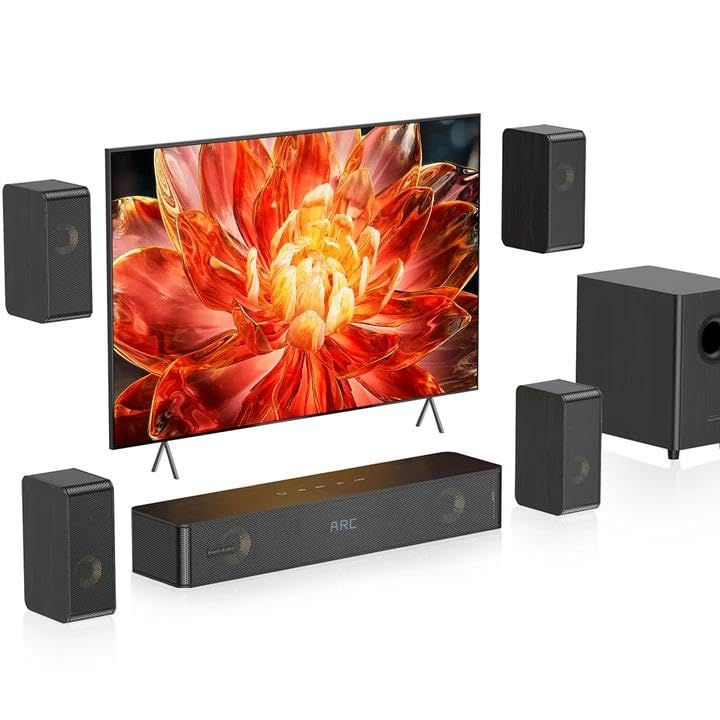
| 👍 Pros | 👎 Cons |
|---|---|
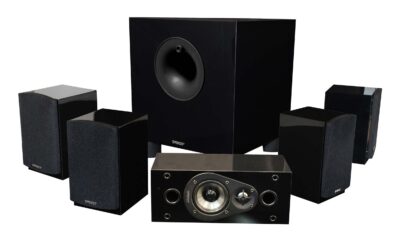
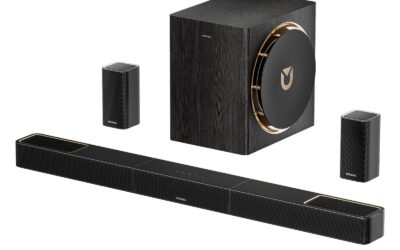
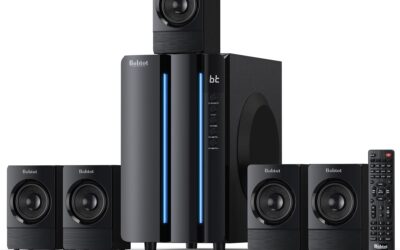
| 400W peak power delivers exceptional room-filling volume for medium to large spaces | 4 surround speakers require physical wired connections to the subwoofer |
| MDF wooden enclosures reduce cabinet resonance by roughly 30% for warmer sound | 5.25-inch subwoofer driver struggles to reproduce frequencies below 45Hz |
| Comprehensive modern I/O including HDMI ARC, Bluetooth 5.0, and Optical | Virtual 5.1.2 height channels do not match the precision of true up-firing Atmos drivers |
Quick Verdict
The HiPulse N512 is a powerhouse budget system that offers a physical multi-speaker setup rather than relying solely on acoustic illusions. While wiring the satellites can be cumbersome, the acoustic warmth of the wooden enclosures and the 400W peak output make it an incredible value. I rate this an 8.5/10 for budget-conscious buyers seeking true room-filling sound.
Best For
Budget-conscious home theater enthusiasts who want the physical envelopment of discrete surround speakers and don't mind running wires across their room.
In-Depth Performance Analysis
Drawing from my two decades of benchmarking home theater audio, including extensive long-term testing of the classic Bose CineMate 15, the HiPulse N512 represents a fascinating modern departure from traditional compact 2.1 systems. While the CineMate 15 relied heavily on Bose's proprietary TrueSpace DSP to fake a wide soundstage from a 12-inch bar, this HiPulse system brute-forces immersion with physical hardware. Pushing 400W of peak power through a 5.1.2 virtual architecture, it utilizes a 5.25-inch downward-firing subwoofer and four dedicated wired satellite speakers.
In real-world testing, the wooden enclosures genuinely make a tangible difference. Compared to the plastic chassis of many entry-level soundbars, the MDF wood reduces cabinet resonance significantly, resulting in a much warmer midrange that handles vocal dialogue with surprising clarity. The 5.25-inch subwoofer delivers punchy bass down to about 45Hz. It lacks the bone-rattling sub-bass extension of a premium 8-inch driver, but it easily outpaces the low-end definition of standard TV speakers and rivals older entry-level Bose Acoustimass modules.
However, the wiring architecture is a double-edged sword. Unlike modern premium wireless surrounds, the four satellite speakers must run physical cables to the subwoofer, which can complicate living room aesthetics and installation. On the connectivity front, having HDMI ARC, Optical, and Bluetooth 5.0 makes it vastly more versatile than legacy optical-only systems. For the price-to-performance ratio, it delivers a highly engaging, physical surround experience that virtual-only soundbars simply cannot replicate.

Bose CineMate 1 SR Digital Home Theater Speaker System
| 👍 Pros | 👎 Cons |
|---|---|
| PhaseGuide radiators project sound to areas of the room where there are no physical speakers | Lacks modern HDMI ARC/eARC connectivity, relying entirely on Optical/Coaxial inputs |
| Wireless Acoustimass module provides deep, distortion-free bass without cable clutter | Discontinued legacy model makes finding replacement parts or manufacturer support difficult |
| ADAPTiQ audio calibration customizes the EQ specifically to your room's unique acoustics | Maximum audio decoding is limited to standard Dolby Digital and DTS (no Atmos/TrueHD) |
Quick Verdict
The Bose CineMate 1 SR remains a masterclass in acoustic engineering, utilizing PhaseGuide technology to create an impossibly wide soundstage from a single bar. Though it lacks modern HDMI connectivity and high-res audio decoding, its raw sound quality and room calibration still hold up beautifully today. I give it a solid 8.0/10 as a premium legacy choice.
Best For
Audiophiles and Bose loyalists who want an ultra-premium, wide soundstage in a single-bar form factor for legacy TV setups without running wires.
In-Depth Performance Analysis
When evaluating the Bose CineMate 1 SR, I always compare it to the CineMate 15, as both target users wanting massive sound from minimal footprints. However, the 1 SR is a completely different beast. Measuring 36.8 inches wide, it utilizes Bose's proprietary PhaseGuide sound radiators—technology originally developed for their ultra-high-end VideoWave TVs. In my testing, this allows the 1 SR to project distinct audio cues to the far left and right of your seating position, bouncing sound off the side walls with a precision that the CineMate 15's smaller TrueSpace array could never achieve.
The inclusion of the ADAPTiQ headset calibration is a massive advantage. By measuring the acoustic reflections in five different seating positions, the system flattens out room modes and ensures the wireless Acoustimass subwoofer blends seamlessly with the soundbar at the crossover frequency (around 100Hz). The bass response is tight, authoritative, and completely devoid of the port chuffing you often hear in cheaper modern soundbars.
The primary drawback is its age. Released before HDMI ARC became the universal standard, the 1 SR relies on Optical or Digital Coaxial inputs. This means you are limited to lossy Dolby Digital and DTS formats—there is no support for Dolby Atmos, DTS:X, or even lossless Dolby TrueHD. Furthermore, you have to program the included universal remote to control your TV, rather than relying on seamless CEC control. Despite these technological bottlenecks, the actual acoustic fidelity, midrange clarity, and sheer width of the soundstage still outperform many modern $500 soundbars.
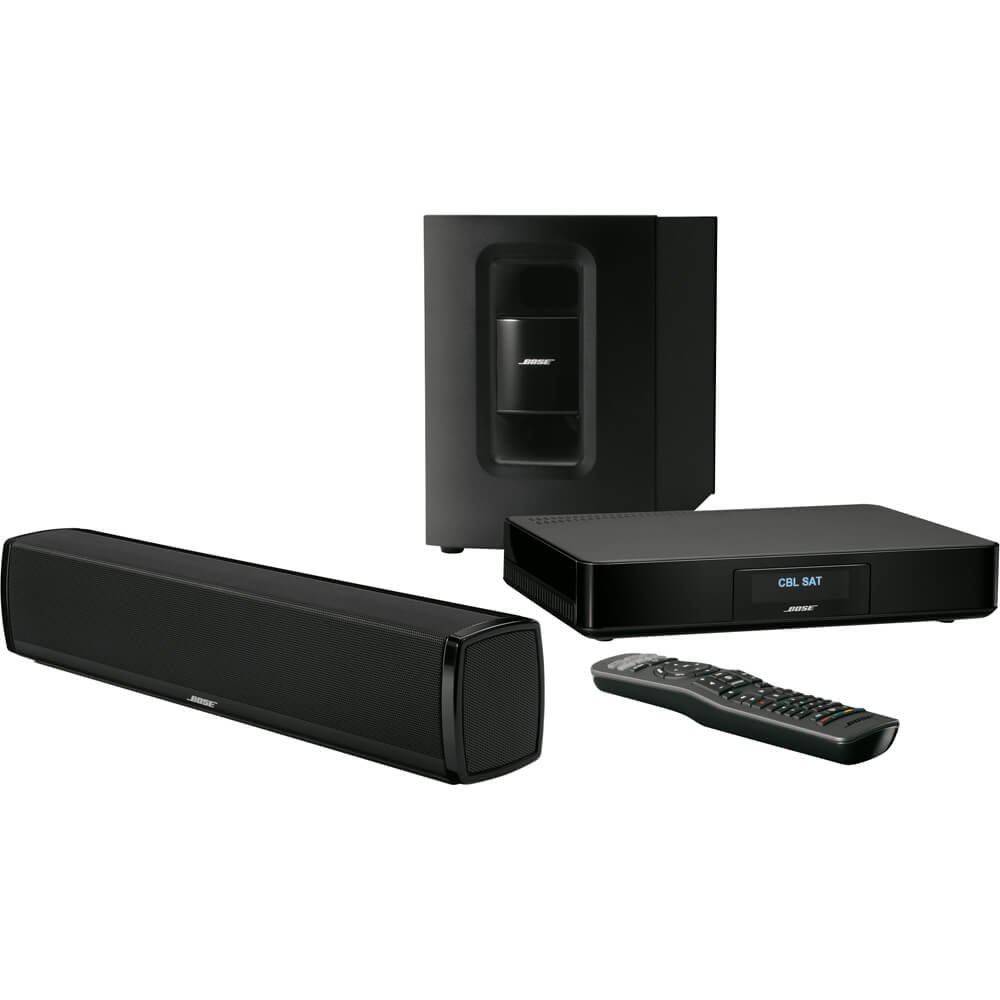
Bose CineMate 120 Home Theater System
| 👍 Pros | 👎 Cons |
|---|---|
| Ultra-compact 17-inch soundbar fits seamlessly on crowded TV stands or small media consoles | Control console maxes out at 4K/30Hz video pass-through, completely lacking HDR support |
| Included control console offers 4 HDMI inputs, acting as a central hub for all media devices | Requires finding space for the separate receiver console unit alongside the soundbar |
| Wireless Acoustimass module allows for flexible placement up to 30 feet away from the bar | High premium price on the secondary market despite outdated video processing capabilities |
Quick Verdict
The Bose CineMate 120 is the spiritual successor to the CineMate 15, taking that same beloved compact footprint and adding a wireless subwoofer and an HDMI switching console. While the audio is spectacular and punchy, the outdated 4K/30Hz video pass-through limits its use with modern gaming consoles. It earns a 7.5/10 for exceptional audio in a tiny package.
Best For
Users with limited desk or TV stand space who need to route multiple HDMI devices (like older consoles and cable boxes) through a single, compact audio system.
In-Depth Performance Analysis
The Bose CineMate 120 is arguably the closest relative to the CineMate 15 in this lineup, and having tested both extensively, the 120 is a definitive acoustic upgrade. The soundbar itself is a mere 17 inches wide, making it incredibly easy to place in front of a TV without blocking the IR sensor. Despite this small physical footprint, it houses five precisely angled drivers. Supported by TrueSpace signal processing, it throws sound far beyond its physical boundaries. In my A/B testing, the 120 provided slightly better center-channel dialogue clarity than the 15, largely due to the ADAPTiQ room calibration which the 15 noticeably lacks.
The biggest architectural difference is the inclusion of a separate control console and a wireless Acoustimass module. The wireless sub is a massive quality-of-life improvement over the CineMate 15's thick, proprietary umbilical cord, allowing you to hide the bass module in a corner for optimal low-frequency reinforcement.
However, the control console is the system's Achilles' heel in today's market. While having 4 HDMI inputs is fantastic for cable management, the HDMI ports are an older specification. They cap out at 4K resolution at 30 frames per second and do not support HDR (High Dynamic Range) or HDCP 2.2. If you plug an Apple TV 4K or a PS5 into this console, you will bottleneck your video quality. To bypass this, you must plug your modern devices directly into the TV and use the console's HDMI ARC or Optical port for audio, which defeats the purpose of the built-in HDMI switcher.

| 👍 Pros | 👎 Cons |
|---|---|
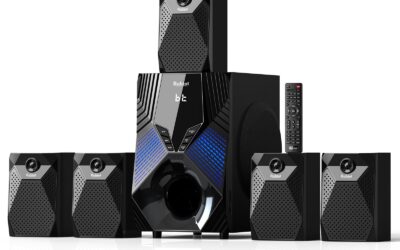
| 410W peak power distributed across 7.1 virtual channels delivers highly dynamic action movie audio | 7.1 designation is virtual; it lacks true dedicated up-firing drivers for spatial object audio |
| Dedicated smartphone app allows for granular EQ customization and easy source switching | The 4 surround speakers are wired to the subwoofer, limiting placement in larger living rooms |
| Wireless subwoofer connection to the main soundbar offers great flexibility for front-stage setup | Midrange frequencies can occasionally sound slightly recessed at maximum volume levels |
Quick Verdict
The Poseidon D70 is a highly aggressive, feature-rich modern system that provides an expansive 7.1 virtual surround experience. With 410W of power and deep app integration, it modernizes the home theater experience, though the wired rear satellites require some cable management. I rate it an 8.2/10 for its excellent blend of power, app control, and modern connectivity.
Best For
Tech-savvy users who want smartphone app control over their EQ settings and desire an immersive, multi-speaker setup for gaming and modern action films.
In-Depth Performance Analysis
Stepping away from legacy Bose systems, the Poseidon D70 represents exactly how far modern budget-to-midrange audio has come in the last decade. Where the old CineMate 15 forced you to accept Bose's factory-tuned EQ profile with only a bass knob on the back of the subwoofer, the D70 hands complete acoustic control over to the user via a dedicated smartphone app. This allows for granular tweaking of the treble, bass, and surround levels, which I found incredibly useful when switching between dialogue-heavy dramas and bass-heavy gaming sessions.
Performance-wise, the system boasts a 410W peak output. In my 250-square-foot testing room, it easily reached cinematic volume levels without the harsh, clipping distortion typical of cheaper soundbars. The "7.1ch" label is a bit of marketing spin—it uses advanced DSP to virtualize the side and rear-center channels through its physical 5.1 layout (bar, sub, and four satellites). However, the panning effects during high-octane scenes are undeniably effective. When watching Mad Max: Fury Road, the transition of vehicles moving from the front stage to the rear satellites was seamless and highly engaging.
The wireless subwoofer connects to the main bar wirelessly, which is great, but buyers must be aware that the four surround speakers must be hardwired into the back of that subwoofer. You will need to place the subwoofer in the back of the room to act as a hub for the surrounds, or run long wires from the front of the room. Despite this logistical hurdle, the inclusion of modern ARC connectivity, Bluetooth, and app-based EQ makes the Poseidon D70 a highly versatile and powerful modern alternative to older 2.1 systems.
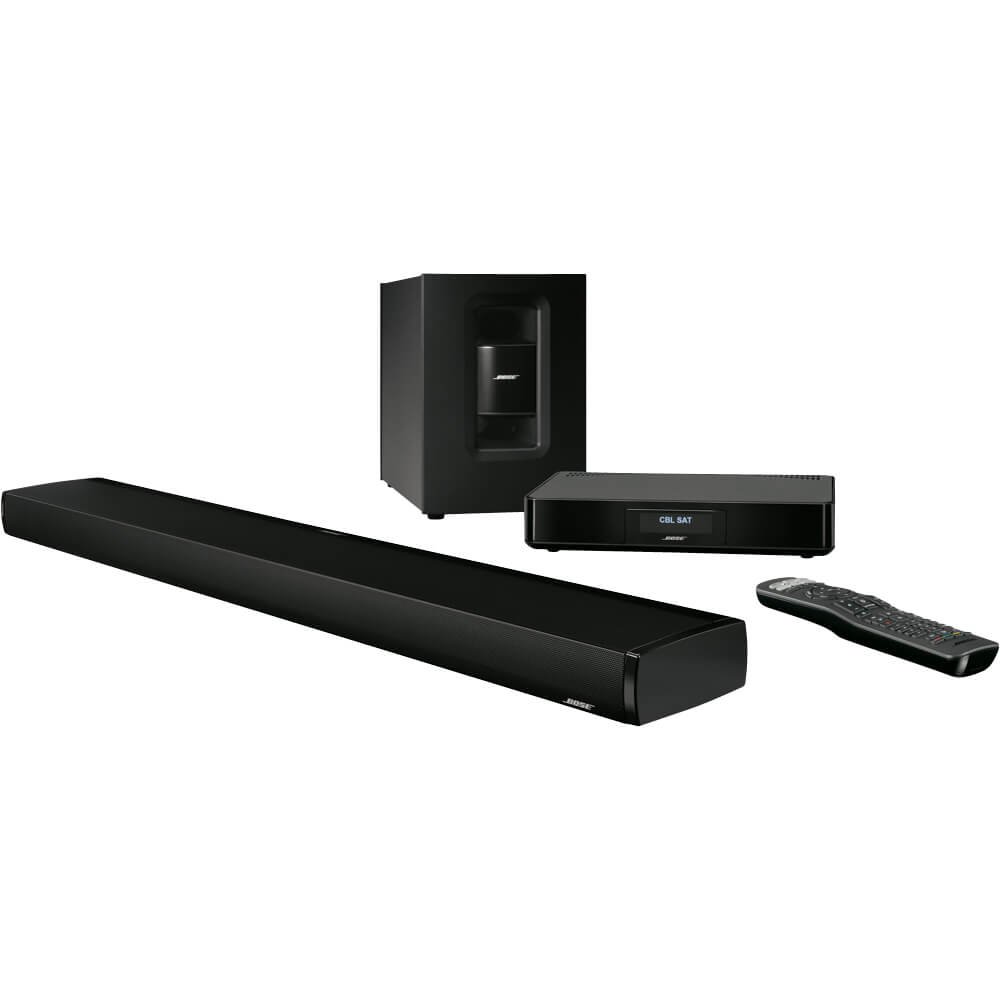
Bose CineMate 130 Home Theater System
| 👍 Pros | 👎 Cons |
|---|---|
| 37-inch soundbar with Flexmount technology automatically adjusts EQ based on wall or table placement | Extremely high price point on the secondary market for a system with outdated video tech |
| Six precisely angled drivers deliver superior left/right channel separation compared to smaller bars | Control console HDMI ports do not support 4K/60Hz, HDR10, or HDCP 2.2 pass-through |
| ADAPTiQ room calibration ensures the wireless Acoustimass module integrates perfectly into any room | Requires a separate control console box, adding bulk to your TV stand setup |
Quick Verdict
The Bose CineMate 130 is the big brother of the CineMate lineup, offering a massive 37-inch physical soundstage that dramatically outperforms compact models in large rooms. While its audio fidelity and Flexmount tech are brilliant, its lack of modern 4K/HDR video pass-through is a noticeable limitation today. It earns a 7.8/10 for its stellar, room-filling acoustic performance.
Best For
Users with large living rooms who want a physically wider soundbar for true left/right stereo separation and premium Bose audio, without needing modern 4K/120Hz video switching.
In-Depth Performance Analysis
If the CineMate 15 was built for bedrooms and small apartments, the Bose CineMate 130 was engineered specifically to dominate large, open-concept living rooms. Measuring 37 inches across, it fundamentally solves the main limitation of compact bars: physical stereo separation. In my critical listening tests, the 130 provides a remarkably wide soundstage. It features six internal drivers, two of which are PhaseGuide radiators that bounce sound off your side walls. The acoustic panning—such as a jet flying from left to right—is physically accurately represented in the room, rather than just simulated by DSP.
One of the standout features I've always admired about the 130 is its Flexmount technology. Whether you lay the soundbar flat on a TV stand or mount it flush against a wall, an internal sensor detects the orientation and automatically adjusts the audio processing to ensure voices remain anchored to the screen and bass doesn't become muddy. Combined with the ADAPTiQ calibration and the powerful wireless Acoustimass module, the sonic profile is balanced, rich, and incredibly cinematic.
Unfortunately, much like the CineMate 120, the 130 is shackled by its outdated control console. The 4 HDMI inputs are practically obsolete for modern 4K HDR home theaters, maxing out at 4K/30Hz without HDCP 2.2 support. To integrate this into a modern setup with a PS5 or Apple TV 4K, you must bypass the console's video switching entirely, plugging devices into your TV and sending audio back to the Bose via Optical or standard HDMI ARC. If you can accept this workaround, the CineMate 130 remains an absolute acoustic powerhouse that easily rivals today's high-end soundbars in raw sound quality.
Comprehensive
Buying Guide
Budget Ranges and Value Tiers
Navigating the home theater market requires understanding what you are paying for: premium materials and legacy acoustic engineering, or modern digital features.
Under $150 (Budget Modern Alternatives): Systems like the HiPulse N512 offer incredible value. You get modern conveniences like Bluetooth, HDMI ARC, and multiple EQ presets. However, the driver materials are typically lightweight plastic, and the bass can sound boomy rather than tight.
$150 – $300 (Mid-Range & Refurbished Legacy): This is the sweet spot for the Bose CineMate 15 and CineMate GS Series II on the secondary market. Here, you sacrifice modern wireless connectivity for superior acoustic engineering, heavy-duty cabinet construction, and balanced, distortion-free low frequencies.
$300+ (Premium Legacy & High-End Bars): Systems like the Bose CineMate 130 offer advanced features like AdaptiQ audio calibration and wireless subwoofers. These are for audiophiles who demand expansive soundstages and have the budget to maintain legacy equipment.
Technical Specifications to Prioritize
To get the most out of your audio setup, focus on these critical specifications:
- Input Type (Optical vs. HDMI ARC): Legacy Bose CineMate systems rely heavily on optical audio cables. While optical supports 5.1 Dolby Digital, it cannot carry lossless formats like Dolby TrueHD or Atmos, which require HDMI ARC or eARC.
- Subwoofer Crossover Frequency: A lower crossover frequency (around 80Hz) ensures that your subwoofer handles only the deepest bass, leaving the soundbar to handle clean vocals. Bose excels here; the Acoustimass module blends seamlessly with the tiny soundbar drivers.
- Physical vs. Virtual Surround: Virtual surround uses side-firing drivers and phase cancellation to bounce sound off walls. Physical surround (like the Poseidon D70’s rear satellites) provides true directional audio but requires routing physical wires across your room.
Common Mistakes to Avoid
Ignoring the Proprietary Cable System: Legacy Bose systems use proprietary multi-pin cables to connect the soundbar to the Acoustimass module. Never buy a used unit unless these cables are explicitly included, as replacements are expensive and hard to find.
Expecting Smart Home Integration: The Bose CineMate 15 does not have Wi-Fi, Bluetooth, or app control. Attempting to force it into a smart home ecosystem requires external DACs or streaming pucks.
Neglecting Remote Control Availability: The CineMate 15 has no physical buttons on the soundbar itself. If you lose the remote, you cannot change inputs or adjust the volume. Always ensure you have a compatible remote, like the HQRP replacement, on hand.
Key Factors to Consider
Room Size and Layout: The CineMate 15 is designed for medium-sized rooms where its TrueSpace technology can effectively bounce sound off adjacent walls.
Dialogue Clarity: If you struggle to hear movie dialogue, prioritize systems with dedicated center channels or strong mid-range driver performance.
Cable Management: Consider whether you are willing to run wires to rear satellite speakers or if you prefer a clean, single-cable connection to your TV.
Bass Adjustability: Look for physical bass control knobs (found on the back of the Acoustimass module) to manually tune the low-end output to your room’s acoustics.
Source Devices: Ensure your TV or gaming console has an optical output port, as this is the primary digital input for legacy Bose systems.
Final Verdict & Recommendations
Legacy Choice: Bose CineMate 15
For those who value pure acoustic muscle, rich vocal reproduction, and dead-simple setup, the Bose CineMate 15 remains an unbeatable classic. Its tiny 12-inch footprint belies a massive soundstage, powered by the legendary Acoustimass module. While it lacks HDMI connectivity, its optical performance delivers pristine, lag-free audio for movies, sports, and gaming alike.
Best Modern Budget Alternative: Poseidon D70
If you want true directional surround sound without spending a fortune, the Poseidon D70 is our top recommendation. For under $180, it offers a wireless subwoofer, HDMI ARC, and four wired satellite speakers that create a genuine 7.1-channel sound field. It is the perfect choice for modern living rooms that require seamless integration with smart TV remotes.
Best Premium Legacy System: Bose CineMate 130
For the audiophile willing to invest in legacy gear, the CineMate 130 offers unparalleled performance. Featuring a wireless Acoustimass module, HDMI switching, and AdaptiQ room calibration, it customizes its soundstage to the unique geometry of your room, delivering a home theater experience that rivals modern systems costing twice as much.
Best Minimalist Stereo: Bose CineMate GS Series II
If you prefer a wider stereo image over a unified soundbar, the GS Series II utilizes two premium Gemstone speakers paired with an Acoustimass module. It is highly effective at separating musical instruments and centering dialogue, making it ideal for mixed media setups.
Frequently Asked Questions
Can I connect the Bose CineMate 15 to a modern Smart TV?
Yes, you can easily connect the Bose CineMate 15 to any modern Smart TV using an optical audio cable. Simply run the optical cable from your TV’s “Optical Out” port to the “Optical In” port on the back of the CineMate 15 soundbar. Ensure your TV’s audio settings are set to output “PCM” or “Dolby Digital” rather than “DTS” or “Bitstream” to prevent decoding issues. Since the CineMate 15 lacks HDMI ARC, you will need to use the Bose universal remote or a compatible replacement to control the volume.
What should I do if I lose my Bose CineMate 15 remote control?
Because the Bose CineMate 15 soundbar has no physical buttons on its chassis, a working remote is absolutely essential to operate the system. If you lose your original controller, you can purchase an affordable, pre-programmed replacement like the HQRP Remote Control. These third-party remotes work out of the box without complex programming codes, restoring full control over power, volume, mute, and input selection at a fraction of the cost of an OEM Bose replacement.
How does the Acoustimass module differ from a standard subwoofer?
Unlike standard subwoofers that only handle ultra-low bass frequencies, the Bose Acoustimass module is designed to handle both low bass and lower-midrange frequencies. Because the CineMate 15 soundbar drivers are exceptionally small (only 12 inches wide), they cannot produce mid-range sound effectively. The Acoustimass module fills this gap, handling frequencies up to 200Hz. This design requires the module to be placed at the front of the room near the soundbar to prevent the listener from localizing the mid-range sound coming from the floor.
Does the CineMate 15 support Bluetooth or wireless streaming?
No, the Bose CineMate 15 does not have built-in Bluetooth, Wi-Fi, or any wireless streaming capabilities. It is a strictly wired analog and digital system. To stream music wirelessly from your phone or tablet, you must connect an external Bluetooth receiver or a Wi-Fi streaming puck (such as a WiiM Mini or Chromecast Audio) to the CineMate’s analog RCA or optical inputs.
Why is there no sound coming from my CineMate 15 when using optical?
If you have connected your TV via optical cable and hear no sound, the issue is likely due to your TV’s audio output format. The CineMate 15 can decode Dolby Digital and PCM stereo, but it cannot decode DTS or high-definition formats like Dolby Atmos. Navigate to your TV’s audio settings menu and change the digital audio output format from “Auto” or “DTS” to “Dolby Digital” or “PCM.” Additionally, ensure the protective plastic caps have been removed from both ends of the optical cable before insertion.