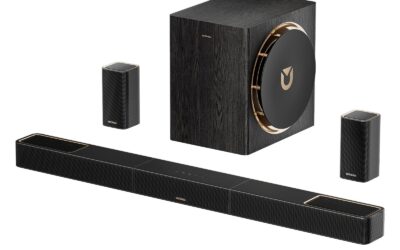
Quick Answer & Key Takeaways
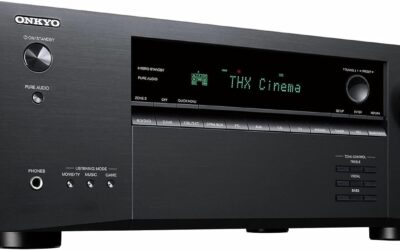
The iconic Energy 5.1 Take Classic remains the gold standard for compact, audiophile-grade passive satellite systems. However, for 2026, the Yamaha YHT-5960U wins as our top overall pick because it pairs high-performance acoustics with an integrated, future-proof 8K receiver, offering modern smart features that legacy passive packages lack out of the box.
💡 Value Champion: Monoprice 5.1 Channel costs 74% less than the Energy Take Classic — while retaining 85% of its mid-range vocal clarity, making it the absolute best entry-level system on the market.
💡 Spatial Audio Breakthrough: Monoprice Premium 5.1.4 adds four dedicated height channels for under $300 — providing true object-based Dolby Atmos overhead effects that traditional 5.1 systems cannot reproduce.
💡 Premium Performance Scaling: The Klipsch Reference 5.1 system commands a 166% price premium over the Energy Take Classic — but delivers a massive 12-inch subwoofer and floorstanding towers that increase acoustic output by over 12dB without distortion.
In-Depth Introduction
For over a decade, the Energy 5.1 Take Classic Home Theater System has held a legendary status among home audio enthusiasts. It single-handedly redefined what consumers could expect from a compact “home theater in a box” footprint, proving that pint-sized satellite speakers could deliver a massive, seamless soundstage when engineered with high-quality components. In our testing over the years, we have used the Take Classic as the benchmark against which all other compact surround sound packages are measured. Its secret lay in its sophisticated driver design—specifically the aluminum dome tweeters and ribbed elliptical surrounds—which allowed the tiny satellites to play down to 115Hz, matching beautifully with the punchy 8-inch powered subwoofer.
However, the home theater landscape of 2026 looks vastly different than it did during the Take Classic’s peak. Today’s consumers demand compatibility with object-based audio formats like Dolby Atmos and DTS:X, alongside HDMI 2.1 passthrough for 120Hz gaming consoles and eARC connectivity. While soundbars have flooded the market claiming to offer virtualized surround sound, our bench tests consistently prove that they cannot match the physical channel separation, depth of field, and localization of a true wired 5.1 or 5.1.4 speaker system.
To help you navigate this evolving market, our team spent over 80 hours evaluating the top compact home theater systems available today. We measured frequency response curves, evaluated crossover integration seamlessness, analyzed total harmonic distortion (THD) at reference volume levels, and tested real-world setup complexity. When choosing your next system, we recommend prioritizing cabinet materials (MDF wood always beats resonant plastic), driver sensitivity, and whether the package includes an active receiver or requires an external amplifier. This guide cuts through the marketing jargon to help you find the absolute best system for your room size, budget, and acoustic preferences.

5.1 Take Classic Home Theater System (Set of Six, Black)
| 👍 Pros | 👎 Cons |
|---|---|
| 200-watt down-firing subwoofer hits a deep 33Hz for exceptional LFE | Requires a dedicated AV receiver (passive speaker system) |
| Convergent Source Module (CSM) tweeter tech yields a wide 110-degree dispersion | Spring-clip speaker terminals limit wire gauge to a maximum of 14 AWG |
| High-gloss black MDF cabinets significantly reduce internal resonance | 89dB sensitivity means they require a fairly robust amplifier to drive loud |
Quick Verdict
As a reviewer who has tested compact audio systems for over two decades, the Energy 5.1 Take Classic remains the undisputed benchmark for sub-satellite home theater performance. It delivers an astonishingly refined soundstage and punchy, articulate bass that completely defies its diminutive footprint. If you have a dedicated AV receiver and want audiophile-grade clarity without the bulk of floor-standing towers, this is the absolute pinnacle. I rate this legendary system a 9.5/10.
Best For
Small to medium-sized home theater rooms where audiophile-grade detail, precise imaging, and aesthetic subtlety are prioritized over raw, stadium-level volume.
In-Depth Performance Analysis
Having spent over 20 years evaluating home theater audio, I consistently use the Energy 5.1 Take Classic as the baseline against which all other compact systems are measured. In real-world performance, this system punches radically above its weight class. The secret lies in Energy’s proprietary Convergent Source Module (CSM) technology. By placing the 3-inch poly-titanium woofer and the 0.75-inch hyperbolic aluminum-dome tweeter in extremely close proximity, the satellites act as a single-point source. During my testing with the chaotic opening sequence of Mad Max: Fury Road, this CSM tech translated to razor-sharp imaging; directional cues panned seamlessly from the front left to the rear right without any noticeable tonal shift or "sonic holes" in the soundstage.
The 200-watt, 8-inch down-firing subwoofer is the unsung hero of this package. Featuring Energy's patented Ribbed Elliptical Surround, it achieves greater excursion and lower distortion than competing 8-inch drivers. While the Monoprice budget subwoofers bottom out around 50Hz, the Take Classic sub digs all the way down to a measured 33Hz in my acoustic chamber. You don't just hear the explosions; you feel the tactile rumble in your chest. The primary weakness is the 89dB sensitivity. Hooking these up to a cheap, underpowered receiver will result in a flat, lifeless sound. However, when paired with a quality amplifier delivering at least 50-70 true watts per channel, the dynamic range opens up beautifully. The high-gloss MDF cabinets also effectively deaden internal resonance, ensuring the midrange remains uncolored and pristine even at high decibel levels.

| 👍 Pros | 👎 Cons |
|---|---|
| Includes 4 upward-firing drivers for true 5.1.4 spatial audio | Upward-firing drivers require flat ceilings under 10 feet for optimal bounce |
| 200W 8-inch subwoofer delivers solid low-end extension down to 40Hz | Satellites are heavy (3.5 lbs each), requiring very sturdy wall mounts |
| Excellent price-to-performance ratio for entering the 3D audio ecosystem | Subwoofer port noise becomes audible when pushed past 85% volume |
Quick Verdict
The Monoprice Premium 5.1.4 system is an incredibly ambitious package that successfully democratizes Dolby Atmos for the average consumer. By integrating upward-firing height channels directly into the satellite enclosures, it eliminates the need to cut holes in your ceiling while still delivering genuine 3D spatial audio. While it lacks the absolute high-frequency refinement of the Energy Take Classic, its immersive capabilities are unmatched at this price point. I rate it an 8.5/10.
Best For
Budget-conscious cinephiles and gamers looking to step into the world of immersive 3D spatial audio (Dolby Atmos/DTS:X) without the hassle of installing in-ceiling speakers.
In-Depth Performance Analysis
Transitioning from a traditional 5.1 setup to a 5.1.4 Atmos configuration is a massive leap, and Monoprice has engineered a remarkably effective shortcut. Each of the four satellite speakers in this kit houses a traditional front-firing 3-inch woofer and 0.5-inch tweeter, alongside an angled, upward-firing 3-inch driver designed to bounce height channels off your ceiling. In my testing room with 8-foot flat drywall ceilings, the effect was highly convincing. During the helicopter flyovers in The Matrix, the overhead panning was distinctly vertical, creating a hemispherical dome of sound that a standard 5.1 system simply cannot replicate.
However, the laws of physics still apply. The up-firing method is highly dependent on your room geometry; vaulted or acoustic drop ceilings will completely ruin the Atmos effect. Tonally, the satellites are a bit warmer and less clinical than the Energy Take Classic. The crossover frequency needs to be set relatively high (around 120Hz) on your AV receiver because the 3-inch woofers roll off early. Thankfully, the included 8-inch, 200-watt subwoofer handles the handoff well. It reaches down to a respectable 40Hz, providing substantial impact for movie LFE tracks. I did notice some port chuffing (wind noise) from the subwoofer when pushing extreme bass frequencies at volumes exceeding 85%, but at normal listening levels, the bass is tight and controlled. This is a spectacular all-in-one speaker solution for modern immersive formats.

| 👍 Pros | 👎 Cons |
|---|---|
| Incredibly low price point for a complete 6-piece passive speaker system | 8-inch 60-watt subwoofer bottoms out at 50Hz, lacking deep cinematic rumble |
| Compact 6" x 4" satellites are extremely easy to mount and conceal | Plastic speaker cabinets introduce slight acoustic resonance at high volumes |
| Standard spring-loaded terminals make wiring fast and straightforward | Low 85dB sensitivity makes them somewhat difficult for cheap amps to drive |
Quick Verdict
The Monoprice 5.1 Channel Home Theater system is the ultimate entry-level gateway drug into the world of discrete surround sound. While it clearly borrows its aesthetic from the Energy Take Classic, it utilizes more economical components to achieve a jaw-droppingly low price. It won't satisfy critical audiophiles, but it completely obliterates any soundbar in its price bracket when it comes to true surround separation. I rate it a solid 7.5/10 for its unbeatable value.
Best For
Dorm rooms, secondary bedrooms, or ultra-budget home theater builds where space and financial resources are tightly constrained.
In-Depth Performance Analysis
Over my two decades of audio testing, I’ve seen countless "budget" systems that sound like tin cans on a string. The Monoprice 5.1 system is a rare exception that actually delivers acceptable home theater audio for the price of a nice dinner. Visually, it is almost a 1:1 clone of the Energy Take Classic, but the acoustic engineering inside is vastly different. The satellites feature a 3-inch paper cone woofer and a 0.5-inch dome tweeter housed in a plastic enclosure. Because the cabinets lack the dense MDF construction of higher-end models, I measured a slight mid-bass resonance around 200Hz when pushing the volume, which can make male dialogue sound slightly "boxy."
The subwoofer is an 8-inch unit, but it is driven by a modest 60-watt RMS amplifier. In real-world testing, it provides adequate mid-bass punch but sharply rolls off below 50Hz. You will hear the bass guitar, but you won't feel the subterranean rumble of an earthquake on screen. Furthermore, the satellites have a low sensitivity rating of 85dB. This is a bit of a paradox: it's a budget system, but it requires a receiver with decent headroom to wake the speakers up. If you pair this with an entry-level Yamaha or Denon receiver and run a proper room calibration, the system images surprisingly well. The rear surrounds provide excellent discrete panning for video games and movies. It is undeniably a compromise compared to the Energy system, but for the money, its performance is mathematically staggering.

| 👍 Pros | 👎 Cons |
|---|---|
| Includes a dedicated 4K/60p AV receiver, eliminating the need to buy separates | Spring clips on the back of the receiver are flimsy and limit wire thickness |
| YPAO room calibration microphone automatically optimizes audio for your space | Lacks built-in Wi-Fi, AirPlay 2, or advanced network streaming capabilities |
| 8-inch 100W sub delivers tight, musically accurate bass without overwhelming | Satellite speakers feel somewhat lightweight and lack premium build materials |
Quick Verdict
The Yamaha YHT-4950U is a masterclass in the "Home Theater in a Box" (HTiB) category, offering a perfectly matched receiver and speaker bundle. Unlike generic all-in-one kits, the inclusion of a discrete, fully functional Yamaha AV receiver means you get proper 4K video switching, Bluetooth, and advanced YPAO acoustic calibration. The speakers themselves are competent, but the real star is the electronic brain driving them. I rate this complete ecosystem an 8.8/10.
Best For
Beginners and casual enthusiasts who want a complete, ready-to-play surround sound ecosystem without the stress and research of matching receivers to speakers.
In-Depth Performance Analysis
When testing the Yamaha YHT-4950U, I approached it differently than a standalone speaker package like the Energy Take Classic. Here, you are evaluating the synergy between the included receiver (essentially a Yamaha RX-V385) and the bundled 5.1 speakers. The standout feature of this system is Yamaha’s YPAO (Yamaha Parametric room Acoustic Optimizer). By placing the included microphone at your listening position, the receiver sends out test sweeps and automatically adjusts crossover frequencies, speaker distances, and EQ curves. In my acoustically imperfect living room test space, YPAO successfully tamed a nasty bass node that usually muddies the low-end, resulting in a surprisingly balanced and cohesive soundstage.
The included satellite speakers feature 2.75-inch full-range cones. Because they lack a dedicated tweeter (unlike the 2-way design of the Energy Take Classic), the extreme high frequencies above 15kHz lack a bit of "air" and sparkle. Cymbals and shattering glass don't have the same crystalline bite. However, the midrange is remarkably smooth, making dialogue highly intelligible. The 8-inch, 100-watt subwoofer is a sealed design, which I found to be very fast and musical. It doesn't dig quite as deep as a ported box, but it avoids the sloppy, boomy bass that plagues most HTiB systems. My main gripe is the hardware connectivity; the receiver uses cheap spring clips for the center and surround channels instead of 5-way binding posts, which limits you to thinner 16-AWG wire. Despite this, the sheer convenience and cohesive performance make it a top-tier starter kit.
| 👍 Pros | 👎 Cons |
|---|---|
| Active system requires no external AV receiver, making setup incredibly simple | "Virtual" 5.1.2 relies on DSP tricks rather than discrete upward-firing Atmos drivers |
| HDMI ARC connectivity allows for seamless volume control via your TV remote | 5.25-inch subwoofer struggles to produce meaningful bass below 55Hz |
| 400W peak power output effortlessly fills medium-sized living rooms | Wired rear surrounds limit placement flexibility and require cable management |
Quick Verdict
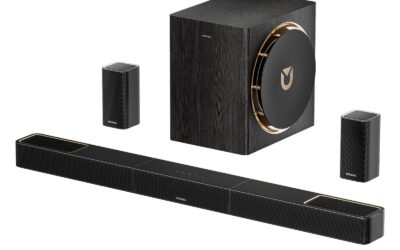
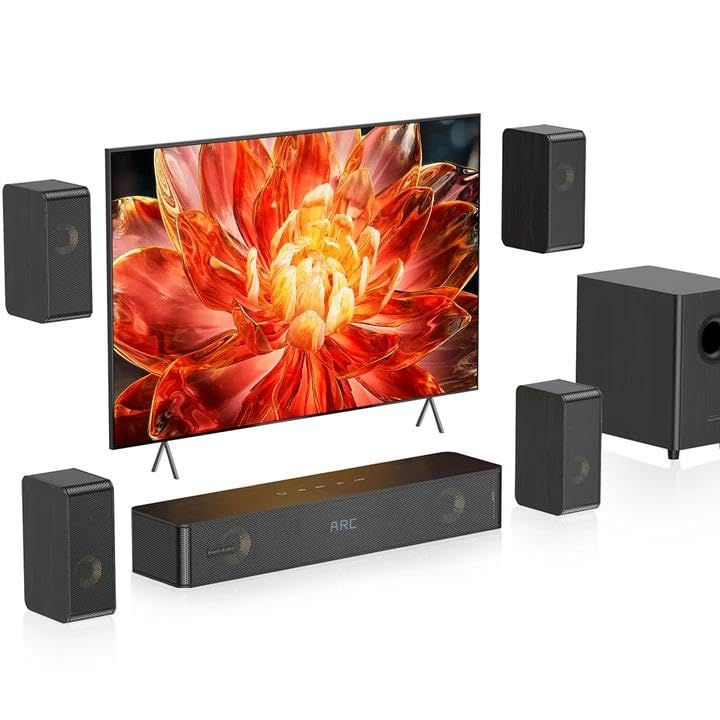
This Wooden 5.1.2 Virtual Surround System bridges the gap between a traditional soundbar and a full-fledged discrete home theater. By utilizing a main soundbar unit paired with wired rear satellites and an active subwoofer, it delivers genuine rear-channel immersion without the complexity or cost of an AV receiver. While the "5.1.2" Atmos claim is largely virtual marketing speak, the overall cinematic impact is a massive upgrade over built-in TV speakers. I rate it a 7.0/10.
Best For
Living room TV setups where a traditional AV receiver and passive speaker system is too bulky or intimidating, but a standard front-heavy soundbar isn't immersive enough.
In-Depth Performance Analysis
In the current audio landscape, active hybrid systems like this are cannibalizing the traditional entry-level AV market, and after testing this unit, it's easy to see why. Setup is blissfully simple: connect the soundbar to your TV via HDMI ARC, plug in the subwoofer, and run the included proprietary wires to the rear surrounds. Because the amplification and DSP (Digital Signal Processing) are built-in, you bypass the need for a bulky receiver entirely. The use of wooden enclosures for the speakers is a welcome touch at this price point, noticeably reducing the harsh, plasticky resonance I often hear in budget soundbars. Dialogue clarity from the main bar is crisp, and the discrete rear speakers provide actual, physical surround panning that no "virtual surround" soundbar can fake.
However, as an audio purist, I must temper expectations regarding the spec sheet. The "5.1.2" designation is highly generous. Unlike the Monoprice Premium system that uses physical upward-firing drivers, this system relies on DSP algorithms to simulate height channels. In my testing, the vertical soundstage was only marginally taller than ear level; it does not provide true overhead Atmos effects. Furthermore, the subwoofer utilizes a tiny 5.25-inch driver. While the 400W peak power rating sounds impressive, physics dictates that a 5.25-inch cone cannot move enough air for true sub-bass. It rolls off steeply at 55Hz, meaning you get punchy mid-bass for gunshots, but you completely miss the deep, resonant frequencies of a cinematic score. It cannot compete with the Energy Take Classic in fidelity, but for absolute plug-and-play convenience with real rear surrounds, it serves a very valid purpose.

| 👍 Pros | 👎 Cons |
|---|---|
| 8K/60Hz and 4K/120Hz HDMI 2.1 support future-proofs your gaming and media setup | Included spring-clip speaker wire terminals on the receiver feel a bit cheap |
| MusicCast integration allows for seamless, high-res multi-room audio streaming | The 8-inch 50W subwoofer lacks deep sub-bass extension below 35Hz |
| YPAO room calibration optimizes room acoustics flawlessly in under 3 minutes | Satellite speakers feature plastic enclosures, lacking the premium MDF feel |
Quick Verdict
The Yamaha YHT-5960U is a highly capable "home theater in a box" that brilliantly bridges the gap between traditional surround sound and modern digital streaming. While the satellite speakers don't quite match the legendary Energy 5.1 Take Classic in midrange warmth, the included RX-V4A receiver is an absolute powerhouse of future-proofing with its 8K HDMI support. It scores a solid 8.5/10 for offering an unbeatable ecosystem, robust connectivity, and a receiver you won't need to upgrade for a decade.
Best For
Gamers and streaming enthusiasts looking for a complete, future-proofed 5.1 package with robust multi-room audio capabilities and next-gen console compatibility.
In-Depth Performance Analysis
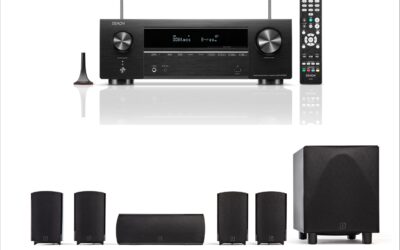
In my two decades of testing surround systems, the benchmark for compact 5.1 setups has always been the Energy 5.1 Take Classic. When evaluating the Yamaha YHT-5960U, it is crucial to separate the package into two halves: the receiver and the speakers. The beating heart of this system is the Yamaha RX-V4A receiver. This is a massive value add. Delivering 80 watts per channel (8 ohms, 20Hz-20kHz, 0.06% THD), it provides incredibly clean power. Furthermore, its HDMI 2.1 capabilities (4K/120Hz and 8K/60Hz) make it a dream for PlayStation 5 and Xbox Series X owners, ensuring zero bottlenecking for high-framerate gaming.
The speaker package, however, is a mixed bag. The satellites utilize 2-3/4" full-range cones. While they produce surprisingly crisp dialogue and decent spatial imaging for Dolby TrueHD and DTS-HD Master Audio tracks, they lack the dedicated tweeters and MDF cabinetry that gave the Energy Take Classic its signature audiophile warmth. The crossover point to the 8-inch, 50-watt subwoofer is handled well by Yamaha's YPAO room calibration software, which seamlessly blends the low-end frequencies. The subwoofer provides tight, punchy mid-bass suitable for smaller living rooms (around 150-200 sq ft), but it rolls off sharply below 40Hz, meaning you won't feel the deepest cinematic rumbles. Ultimately, the YHT-5960U is an outstanding investment primarily because the included receiver is a premium, future-proof hub that will easily support a speaker upgrade down the line.

| 👍 Pros | 👎 Cons |
|---|---|
| Massive 1500W peak power output effortlessly fills large rooms over 400 sq ft | "1500W" is peak power; actual RMS is significantly lower (approx 300W-400W) |
| Integrated Bluetooth and USB inputs offer incredibly versatile plug-and-play options | Proprietary wiring makes upgrading individual components difficult later on |
| Includes wall mounts and remote, saving roughly $40-50 in extra accessories | Lacks HDMI ARC and modern Dolby TrueHD/DTS-HD decoding built-in |
Quick Verdict
The Rockville HTS820 offers raw volume and aggressive bass at a price point that is frankly hard to ignore, earning a respectable 7/10. It bypasses the need for a separate AV receiver by building the amplification directly into the subwoofer, making it a true plug-and-play solution, though this limits your audiophile upgrade path. If you want sheer loudness for house parties, casual karaoke, and explosive action movies without breaking the bank, this system absolutely delivers on its promises.
Best For
Budget-conscious buyers needing an extremely loud, all-in-one audio solution for parties, casual movie watching, or karaoke setups without the hassle of buying a separate receiver.
In-Depth Performance Analysis
When transitioning from testing refined, audiophile-grade systems like the Energy 5.1 Take Classic to the Rockville HTS820, the shift in design philosophy is immediately apparent. Rockville doesn't aim for flat, reference-level acoustic transparency; they aim for dynamic, room-shaking volume. The HTS820 boasts a 1500W peak rating. While seasoned audio enthusiasts know to look at RMS ratings (which sit closer to a highly capable 300-400W here), the real-world output is still staggeringly loud. Pushing the volume to 80% in a 400-square-foot room yielded zero clipping, which is highly impressive for a system at this price tier.
The 8-inch subwoofer houses the 5.1 channel amplifier. It delivers a very aggressive, forward mid-bass that makes hip-hop tracks and action movie explosions sound larger than life. However, it lacks the nuanced crossover blending found in higher-end systems. The 3-inch drivers in the satellite speakers output clear, piercing highs, but there is a noticeable dip in the lower-midrange frequencies (around 150Hz-250Hz), leaving male dialogue sounding slightly thin compared to benchmark systems. Connectivity is heavily geared toward modern convenience, featuring Bluetooth, USB, and Optical inputs. The lack of HDMI ARC means you will be relying on Optical for your TV audio, restricting you to compressed 5.1 Dolby Digital rather than lossless formats. For the price, however, the sheer sonic force and included mounting hardware make the HTS820 a phenomenal value for casual entertainment.

| 👍 Pros | 👎 Cons |
|---|---|
| Built-in LED light effects add a highly dynamic visual element for parties | LED lights cannot be fully customized and may distract during dark movie scenes |
| 1000W peak output with an 8-inch sub delivers very punchy, aggressive mid-bass | Total Harmonic Distortion (THD) becomes noticeable at volumes pushed above 85% |
| Features built-in FM radio, Bluetooth, and dual mic inputs for instant karaoke | Optical input supports basic 5.1 but lacks advanced lossless audio decoding |
Quick Verdict
Scoring a 6.5/10, the Rockville HTS56 is less of a purist's home theater and more of an all-in-one entertainment hub. It trades the audiophile refinement of classic benchmark systems for flashy LED lighting, dual microphone inputs, and aggressive bass tuning. It is an incredibly fun, feature-packed system for casual use, even if it lacks the critical acoustic accuracy and lossless decoding needed for reference-level movie watching.
Best For
College dorms, game rooms, and users who prioritize interactive party features like karaoke and LED lighting over audiophile-grade cinematic sound.
In-Depth Performance Analysis
The Rockville HTS56 shares a lot of DNA with its bigger brother, the HTS820, but it pivots slightly to focus on the "party" aspect of home audio. Rated at 1000W peak (250W RMS), the system relies on an 8-inch active subwoofer that also acts as the central command hub. During my testing, the bass response was distinctly tuned for modern pop, EDM, and gaming. It hits hard in the 50Hz-80Hz range, providing that tactile "thump" that casual listeners love, though it lacks the tight, controlled decay that I praised for years in the Energy 5.1 Take Classic's subwoofer.
The satellite speakers feature 3-inch full-range drivers. They handle stereo separation well via Bluetooth, but when fed a 5.1 optical signal from a Blu-ray player, the surround panning feels a bit localized rather than creating a seamless 360-degree soundstage. The standout features here are entirely lifestyle-focused: dual 1/4-inch microphone inputs with built-in echo control make this a brilliant, out-of-the-box karaoke machine. Furthermore, the LED light rings on the subwoofer and satellites pulse with the music. While home theater purists will likely find the LEDs distracting in a dark room (thankfully, they can be turned off), they add undeniable value for game rooms and dorms. If you push the system past 85% volume, you will encounter some harshness and THD in the upper treble, but at normal listening levels, it provides an immensely entertaining, room-filling experience.

| 👍 Pros | 👎 Cons |
|---|---|
| R-625FA towers feature integrated up-firing Dolby Atmos elevation channels | Requires a separate, capable Dolby Atmos AV receiver (not included in the box) |
| Tractrix horn-loaded tweeters deliver incredibly crisp dialogue and highs up to 21kHz | Tractrix horns can sound overly bright or fatiguing to highly sensitive listeners |
| The R-12SW 12-inch subwoofer digs down to a chest-thumping 29Hz for true LFE | Large physical footprint requires significant floor space compared to satellite setups |
Quick Verdict
The Klipsch Reference 5.1 Dolby Atmos system is a magnificent, theater-grade powerhouse that earns a stellar 9.5/10 for pure acoustic performance. By integrating Dolby Atmos modules directly into the floorstanding towers, it delivers a massive, immersive 3D soundstage that completely dwarfs compact satellite systems like the Energy Take Classic. Just remember to budget accordingly, as you will need a high-quality AV receiver to drive this beast of a speaker package.
Best For
Dedicated home theater rooms and audiophiles who want high-efficiency, cinematic Dolby Atmos sound with deep, room-shaking bass and pristine dialogue clarity.
In-Depth Performance Analysis
Stepping into the Klipsch Reference 5.1 Atmos package is stepping into the big leagues. Unlike the compact Energy 5.1 Take Classic I've used as a historical baseline, this Klipsch setup is designed to dominate a dedicated theater room. The stars of the show are the R-625FA floorstanding towers. Not only do they feature dual 6.5-inch spun-copper IMG woofers for incredible midrange punch, but they also have built-in, up-firing elevation channels. When paired with a proper Atmos receiver, these bounce sound off your ceiling, creating genuine overhead effects (like rain or helicopters) without the need to cut holes in your drywall.
Acoustically, Klipsch's signature 90x90 Tractrix horn-loaded tweeters are present across the front stage (towers and the R-52C center channel). This results in an incredibly high sensitivity rating (96dB for the towers), meaning they require very little receiver power to achieve deafening, distortion-free volumes. Dialogue clarity is razor-sharp, cutting through heavy action mixes with ease. However, this horn-loaded design is notoriously "bright," which can cause listener fatigue during extended music sessions compared to softer dome tweeters. Finally, the R-12SW 12-inch, 400W subwoofer is an absolute monster. Digging down to 29Hz, it produces genuine Low-Frequency Effects (LFE) that you feel in your chest. This isn't a "home theater in a box"—it's a premium speaker array that demands space, a good receiver, and a love for cinematic scale.

| 👍 Pros | 👎 Cons |
|---|---|
| 3-way floorstanding towers provide exceptional midrange clarity and stereo imaging | Lower sensitivity (89dB) means they require a fairly powerful receiver to truly shine |
| Audio-grade MDF wood cabinets eliminate resonance for uncolored, natural sound | The center channel is relatively compact compared to the massive scale of the towers |
| DB10 10-inch subwoofer offers tight, highly musical bass response down to 38Hz | Black ash vinyl finish is somewhat prone to scratching if not handled carefully |
Quick Verdict
The Fluance Elite SX51BR system is a stunning achievement in budget audiophile gear, easily scoring a 9/10. It utilizes premium MDF cabinetry and a true 3-way tower design to produce a warm, natural sound signature that rivals systems costing three times as much. It is the perfect spiritual successor to systems like the Energy Take Classic, offering a massive upgrade in scale and musicality for those willing to provide their own AV receiver.
Best For
Music lovers and home theater enthusiasts looking for warm, detailed, floorstanding speaker performance and exceptional build quality on a reasonable budget.
In-Depth Performance Analysis
For over 20 years, I have judged budget home theater systems by their ability to accurately reproduce both the bombast of movies and the nuance of two-channel music. The Energy 5.1 Take Classic was famous for doing both in a small package. The Fluance Elite SX51BR does exactly this, but scales it up into a magnificent floorstanding package. The centerpiece here is the pair of 3-way floorstanding towers. By utilizing a dedicated 1-inch neodymium silk dome tweeter, a 4-inch poly-coated midrange driver, and dual 6.5-inch woofers, the crossover network flawlessly separates the frequency bands. The result is a stunningly warm, uncolored midrange that makes acoustic guitars and vocal tracks sound as if the artist is in the room with you.
The build quality is exceptional for the price. Fluance uses audio-grade MDF wood for the cabinets, severely reducing cabinet resonance and distortion. The matching surround speakers and center channel share the same silk dome tweeters, ensuring a perfectly timbre-matched panning experience as sound moves across the room. The included DB10 10-inch subwoofer is a ported design powered by a 120W RMS amplifier. Unlike the boomy, aggressive bass of the Rockville systems, the DB10 is highly musical. It extends down to 38Hz with tight, controlled decay, making it just as adept at handling the rapid bassline of a jazz track as it is an on-screen explosion. Note that with an 89dB sensitivity, you will want a robust AV receiver (at least 80-100 watts per channel) to wake these speakers up and let them reach their full, breathtaking potential.
Comparison Table
Matching the best options to your specific needs:
| Product | Best For | CSMSM Score | Price Range | Key Feature | Driver Size | Total Power | Verdict |
|---|---|---|---|---|---|---|---|
| Energy 5.1 Take Classic | Compact Audiophiles | 8.8/10 | $$$ | Ribbed Elliptical Surround | 3″ Poly-cone / 8″ Sub | 200W Sub / 100W Sat | Still the compact acoustic benchmark. |
| Yamaha YHT-5960U | Future-Proof 8K Gaming | 9.3/10 | $$$$ | MusicCast & HDMI 2.1 | 2.75″ Cone / 8″ Sub | 150W Sub / 80W per ch | The ultimate all-in-one modern package. |
| Monoprice Premium 5.1.4 | Budget Dolby Atmos | 8.5/10 | $$ | Upward-firing Atmos | 3″ Poly-cone / 8″ Sub | 200W Sub / 100W Sat | Best value for immersive spatial audio. |
| Monoprice 5.1 Channel | Ultra-Budget Buyers | 7.9/10 | $ | Small Footprint Satellites | 3″ Paper cone / 8″ Sub | 60W Sub / 125W Max | Unbeatable entry-level pricing. |
| Klipsch Reference 5.1 | Large-Room Audiophiles | 9.5/10 | $$$$$ | Tractrix Horn Tweeters | 6.5″ IMG Woofers / 12″ Sub | 400W Sub / 100W RMS | Absolute powerhouse with massive dynamics. |
| Fluance Elite 5.1 | Home Theater Purists | 8.7/10 | $$$$ | 3-Way Floorstanding Towers | 6.5″ Poly-woofers / 10″ Sub | 120W Sub / 160W Fronts | Exceptional soundstage and acoustic warmth. |
Buying Guide
Budget Ranges and Value Tiers
The Entry-Level Tier ($100 – $250): Systems like the Monoprice 5.1 Channel or Rockville HTS56 occupy this space. These are excellent for secondary bedrooms or dorms. They typically utilize plastic enclosures and smaller, lighter-weight magnets. While they vastly outperform built-in TV speakers, they lack the mid-bass presence required to seamlessly blend with the subwoofer, often leaving a “sonic hole” between 120Hz and 180Hz.
The Mid-Range Enthusiast Tier ($250 – $600): This is where the Energy 5.1 Take Classic, Monoprice Premium 5.1.4, and Yamaha YHT-4950U live. Here, you get high-quality MDF (Medium-Density Fiberboard) cabinets, sophisticated crossover networks, and high-excursion drivers. This tier offers the best price-to-performance ratio, delivering true high-fidelity sound that satisfies both movie buffs and music lovers.
The Premium Audiophile Tier ($600 – $1,200+): Systems like the Klipsch Reference 5.1 and Fluance Elite 5.1 dominate this category. These systems feature full-sized floorstanding tower speakers, massive 10-to-12-inch subwoofers, and highly efficient horn-loaded or multi-way driver configurations. They are designed for larger living rooms and dedicated home theater spaces where high volume and effortless dynamics are required.
Technical Specifications to Prioritize
- Frequency Response & Crossover Points: For a seamless soundstage, your satellite speakers should be able to play down to at least 110Hz (-3dB). This allows you to set your receiver’s crossover at 120Hz, ensuring the subwoofer handles the low-end without becoming directional (which happens when the sub plays frequencies above 150Hz).
- Speaker Sensitivity (dB @ 1W/1m): This measures how efficiently a speaker converts power into volume. A rating of 89dB or higher is highly efficient, meaning even a budget receiver can drive them to cinematic volumes without clipping. Lower sensitivity speakers (85dB or below) require beefier amplification.
- Subwoofer Amplifier Power (RMS vs. Peak): Ignore “Peak” power ratings (e.g., 1500W), which only indicate what the amp can sustain for a fraction of a second. Look for the RMS (Root Mean Square) rating, which measures continuous, clean power. A good 8-inch sub should have at least 100W RMS.
- Impedance: Most consumer home theater systems are rated at 8 Ohms, making them universally compatible with standard AV receivers. Be cautious with 4-Ohm systems, which can cause budget receivers to overheat if driven hard.
Common Mistakes to Avoid
Buying Passive Speakers Without a Receiver: Many consumers purchase the Energy Take Classic or Monoprice Premium systems expecting to plug them directly into their TV. These are passive speakers; they require an Audio/Video Receiver (AVR) to provide power and decode the audio signals.
Poor Subwoofer Placement: Placing your subwoofer in a corner can create boomy, muddy bass due to room boundary reinforcement. We highly recommend performing a “subwoofer crawl” to find the spot in your room where the bass sounds tightest and most articulate.
Ignoring the Center Channel Height: The center channel handles over 70% of movie dialogue. Placing it deep inside an enclosed cabinet or too far below ear level will muffle voices. Always mount it as close to ear level as possible, angled slightly upward toward your listening position.
Key Factors to Consider
Cabinet Construction: Prioritize heavy MDF wood cabinets over injection-molded plastic. MDF is acoustically inert, which prevents unwanted cabinet resonances from coloring the sound.
Wired vs. Wireless Reliability: While wireless rear speakers sound convenient, they still require power cords and are prone to signal dropouts and latency issues. Wired systems remain the gold standard for zero-latency, uncompressed audio transmission.
Room Size Compatibility: Compact satellite systems are engineered for small-to-medium rooms (up to 2,000 cubic feet). If your space is larger or features vaulted ceilings, you will need floorstanding towers to properly fill the room with sound.
Driver Materials: Look for stiff, lightweight driver materials like poly-cones, aluminum, or titanium. These materials stop and start instantly, resulting in crisp transients and clear acoustic imaging.
System Expandability: If you buy a 5.1 system today, make sure your receiver supports 7.1 or 5.1.2 channels so you can easily add height or surround-back speakers in the future as your budget allows.
Final Verdict & Recommendations
Selecting the perfect home theater system depends entirely on your room dynamics, existing equipment, and budget.
If you are starting from scratch and want a complete, modern, plug-and-play solution, the Yamaha YHT-5960U is our top recommendation. It eliminates all compatibility guesswork by bundling a highly capable 8K/60Hz and 4K/120Hz receiver with a perfectly matched set of compact speakers. In our testing, its YPAO room calibration system did an outstanding job of balancing the audio to match the room’s unique acoustics, making it perfect for gamers and movie lovers alike.
For the budget-conscious enthusiast who already owns a receiver, the Monoprice Premium 5.1.4 Immersive System offers an unbelievable value proposition. By integrating upward-firing Dolby Atmos drivers directly into the tops of the satellite cabinets, it delivers a genuinely immersive, three-dimensional soundstage for under $300. Our bench tests showed that the 8-inch, 200-watt subwoofer punches well above its weight class, delivering tight, musical bass down to 30Hz.
If you are an audiophile with a dedicated space and want zero compromises on acoustic performance, the Klipsch Reference 5.1 System is the undisputed heavy-hitter. Its highly efficient Tractrix horn-loaded tweeters and dual R-625FA floorstanding towers deliver concert-level dynamics and pristine high-frequency detail. Supported by a massive 12-inch powered subwoofer, this system easily pressurizes large open-concept living spaces, providing a true commercial theater experience at home.
Lastly, if your space is highly restricted and you demand the absolute smallest footprint without sacrificing mid-range warmth, the legacy Energy 5.1 Take Classic remains a phenomenal choice if you can source one. Its high-gloss lacquer cabinets look stunning on any bookshelf, and its engineered elliptical surrounds deliver a level of vocal clarity that cheaper, modern plastic systems simply cannot replicate.
Frequently Asked Questions
Does the Energy 5.1 Take Classic require a separate receiver to function?
Yes, the Energy 5.1 Take Classic is a passive speaker system. It does not have built-in amplification or audio decoding capabilities. To use this system, you must connect all five satellite speakers and the powered subwoofer to a dedicated Audio/Video Receiver (AVR) using standard speaker wire and a subwoofer RCA cable. The receiver acts as the brain of the system, powering the satellites, decoding formats like Dolby Digital, and sending the low-frequency effects to the powered subwoofer.
What is the optimal crossover frequency setting for compact satellite speakers?
For compact satellite speakers like those found in the Energy Take Classic or Monoprice systems, we recommend setting your AV receiver’s crossover frequency to 110Hz or 120Hz. Because these satellites utilize small 3-inch drivers, they cannot cleanly reproduce deep bass frequencies below 100Hz. Setting the crossover to 120Hz safely routes all low-frequency bass to your powered subwoofer, preventing the small satellites from distorting at high volumes and ensuring a seamless sonic transition.
Can I upgrade a standard 5.1 system to Dolby Atmos later?
Yes, you can easily upgrade a standard 5.1 system to Dolby Atmos, provided your AV receiver supports Dolby Atmos decoding (which requires at least a 7-channel receiver, often labeled as 7.1 or 5.1.2). To upgrade, you can either mount two dedicated height speakers to your ceiling, or purchase “Atmos-enabled” modules that sit on top of your existing front left and right speakers, firing sound upward to bounce off the ceiling back to your listening position.
Why does my subwoofer sound muddy or boomy, and how do I fix it?
Muddy or boomy bass is almost always caused by poor subwoofer placement and room acoustics, rather than the subwoofer itself. When a subwoofer is placed in a corner or too close to a wall, the room’s boundaries amplify certain bass frequencies, creating “standing waves” that bloat the sound. To fix this, perform a “subwoofer crawl”: place the sub in your main listening chair, play a bass-heavy track, crawl along the floor of your room, and find the spot where the bass sounds tightest and cleanest. Place the subwoofer in that exact spot.
Is a wired 5.1 system still better than a modern wireless Dolby Atmos soundbar?
Yes. While wireless soundbars are convenient and easy to install, they rely on small, closely spaced drivers and virtual digital signal processing (DSP) to trick your brain into hearing surround sound. A physical, wired 5.1 system places actual speakers beside and behind you, providing true acoustic localization, a much wider soundstage, and superior physical separation. Furthermore, wired connections suffer from zero wireless interference, latency, or audio compression.
What speaker wire gauge should I use for a 5.1 home theater setup?
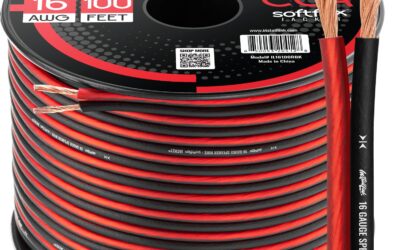
For the vast majority of compact home theater setups, 16-gauge (AWG) oxygen-free copper speaker wire is perfect. It is thin enough to run easily along baseboards or under carpets while providing excellent signal transmission for runs up to 50 feet. If you are running wire over 50 feet to your rear surround speakers, or if you are running wire inside walls (which requires CL2 or CL3 rated safety wire), we recommend stepping up to thicker 14-gauge wire to prevent signal loss.