

Choosing the right power source for your audio system often boils down to one specific question: how many channel amp do i need for 4 speakers? For most standard car or home setups, a 4-channel amplifier is the ideal choice because it provides dedicated power and independent control to each speaker. However, depending on your budget and whether you plan to add a subwoofer, you might also consider a 2-channel or 5-channel configuration.
Key Takeaways: Amplifier Channel Guide
Best for 4 Speakers: A 4-channel amplifier is the most versatile, allowing for individual “Fading” and “Balancing” between front and rear.
Budget Option: A 2-channel amplifier can power 4 speakers if wired in parallel, provided the amp is stable at a 2-ohm load.
Expanding for Bass: If you want 4 speakers and 1 sub, a 5-channel amplifier is the most efficient “all-in-one” solution.
High Speaker Counts: For 6 or 8 speakers, you typically look at high-output 6-channel amps or multi-amp configurations to maintain sound clarity.
Understanding the Basics: What is a Channel?
Before diving into the hardware, you must understand that one “channel” on an amplifier is designed to power one “speaker” or one “component set.” When you ask how many channels do i need for 4 speakers, the simplest answer is 4. This ensures that the Left Front, Right Front, Left Rear, and Right Rear signals remain separated, creating a true “Surround Sound” or “Stereo Image” experience.
In my years of professional audio installation, I have found that skipping channels to save money often leads to a “flat” soundstage. When you hook up two speakers to a single channel (parallel wiring), you lose the ability to adjust the volume of the front speakers independently from the rear.
How Many Channel Amp Do I Need for 4 Speakers?
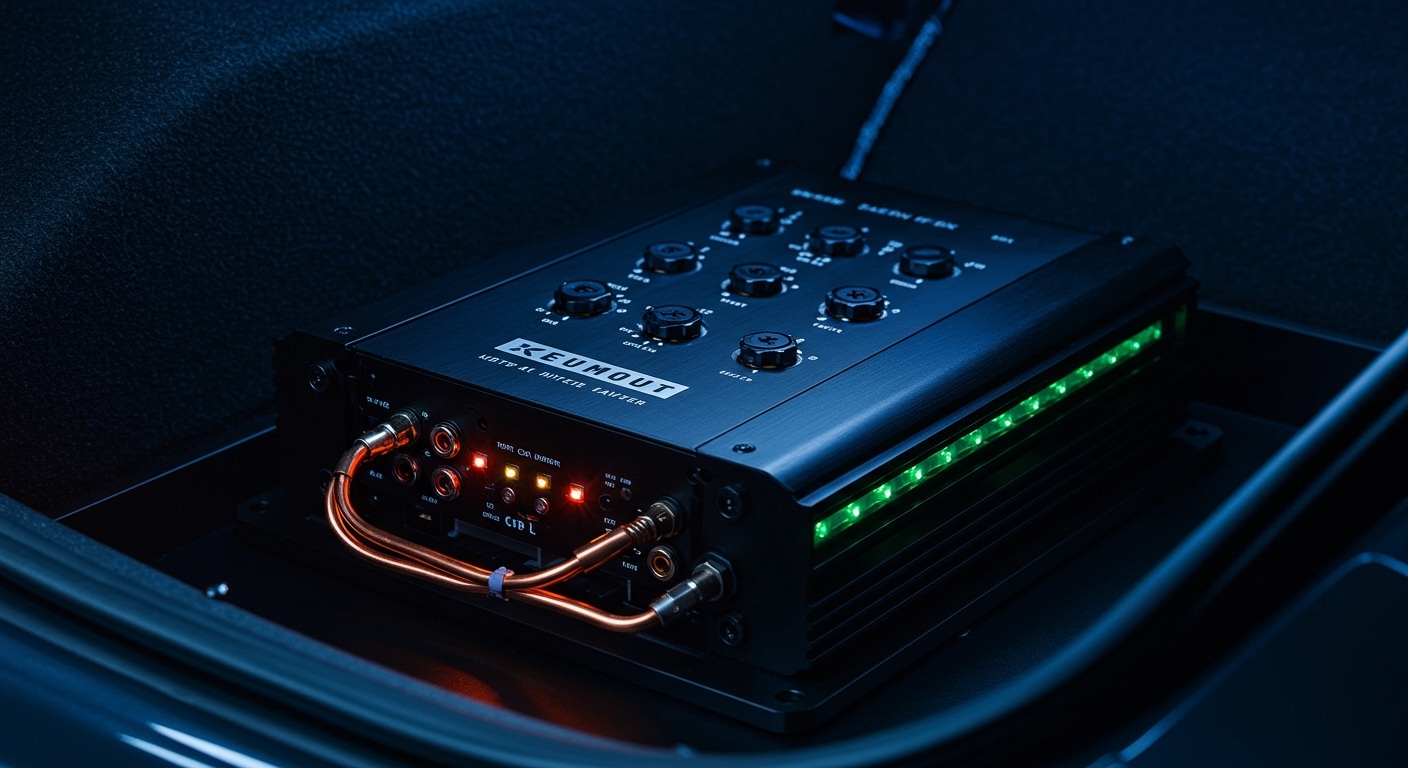
The most common configuration for a high-quality car audio upgrade is the 4-channel amplifier. This setup is specifically designed to handle 4 door speakers with precision.
Option 1: The 4-Channel Amplifier (Recommended)
A 4-channel amp for 4 speakers is the standard for a reason. It provides:
- Discrete Control: Use your head unit to fade sound to the back when the kids are sleeping or to the front for a focused driver experience.
- Power Efficiency: Each speaker gets its own dedicated power supply, reducing the risk of overheating the amp.
- Clarity: Dedicated channels minimize “signal bleed,” ensuring that the mid-range and tweeters perform as intended.
Option 2: The 2-Channel Amplifier (The Budget Hack)
Can you run 4 speakers on a 2-channel amp? Yes, but there is a catch. You must wire them in parallel (joining the wires of the front and rear speakers together).
Warning: This drops the impedance (Ohms). If you have four 4-ohm speakers and wire them in parallel to 2 channels, the amp sees a 2-ohm load.
Requirement: Ensure your amplifier is “2-ohm stable” to prevent it from entering “Protect Mode” or catching fire.
Option 3: The 5-Channel Amplifier (The Future-Proofer)
If you are asking how many channel amp for 4 speakers and 1 sub, the answer is 5. A 5-channel amp is essentially a 4-channel amp with a high-power Class D mono-block attached to it for a subwoofer. This saves space and simplifies your wiring.
Wiring Configurations for Different Speaker Counts
The complexity increases as you add more drivers to your system. Whether you are outfitting a large SUV or a boat, the math changes.
How many channel amp do i need for 6 speakers?
When dealing with 6 speakers, you have two professional paths:
6-Channel Amplifier: This is the cleanest setup. Every speaker has its own terminal.
4-Channel Amplifier with Parallel Wiring: You can put the 4 “main” speakers on channels 1-4 and wire the extra 2 speakers in parallel with the front channels.
Expert Tip: If you use a 4-channel amp for 6 speakers, ensure the front speakers are the same brand and model to maintain consistent RMS power distribution.
How many channel amp do i need for 8 speakers?
For 8 speakers, common in marine audio or luxury coach conversions, the requirements are:
8-Channel Amplifier: Provides the ultimate control but is often expensive and bulky.
Dual 4-Channel Amplifiers: Often more cost-effective. You can hide one under each seat or in separate compartments.
Series-Parallel Wiring: You can use a high-powered 4-channel amp and wire two speakers to each channel. This keeps the impedance at a safe level (4 ohms) but limits your control over individual speaker volume.
Comparison Table: Amplifier Channels vs. Speaker Count
| Number of Speakers | Recommended Amp Type | Pros | Cons |
|---|---|---|---|
| 4 Speakers | 4-Channel | Full Fader/Balance control. | Requires more wiring. |
| 4 Speakers + 1 Sub | 5-Channel | Space-saving, one power wire. | Subwoofer channel may be limited. |
| 6 Speakers | 6-Channel | Maximum clarity for all zones. | Expensive and larger footprint. |
| 8 Speakers | 8-Channel or 2x 4-Ch | Professional grade soundstage. | Complex installation process. |
| 4 Door Speakers | 4-Channel | Perfect OEM replacement upgrade. | None for standard builds. |
Step-by-Step: How to Choose Your Amplifier
Follow these steps to ensure you don’t buy the wrong gear for your 4 speakers or more.
Step 1: Count Your “Voice Coils”
Count every individual speaker location. If you have component speakers (a separate woofer and tweeter with a crossover box), that counts as one channel. If you have 4 door speakers, you need at least 4 channels of output for optimal performance.
Step 2: Match the RMS Power
Never look at “Peak Power” or “Max Power” on the box—these are marketing myths. Look for the RMS (Root Mean Square).
If your speakers are rated for 60W RMS, look for an amp that provides 60W to 75W RMS per channel.
Expert Insight: It is better to have an amp with slightly more power than the speaker needs (Headroom) than to have an underpowered amp that clips and destroys your voice coils.
Step 3: Determine Your Impedance (Ohms)
Most car speakers are 4-ohm. Most home speakers are 8-ohm.
If you are wiring multiple speakers to one channel (how many channel amp for 8 speakers), you must calculate the final load.
Parallel Wiring: 4 ohms + 4 ohms = 2 ohms.
- Series Wiring: 4 ohms + 4 ohms = 8 ohms.
Step 4: Check for “Bridgeable” Features
If you buy a 4-channel amp today but decide to remove the rear speakers later, a “bridgeable” amp allows you to combine channels 1+2 and 3+4 to create a high-power 2-channel setup. This versatility is vital for long-term value.
Tools and Materials Needed for Installation
If you are planning to install your channel amp for 4 speakers yourself, ensure you have these essentials:
| Tool/Material | Purpose | Expert Recommendation |
|---|---|---|
| Amp Wiring Kit | Power and Ground. | Use 100% Oxygen-Free Copper (OFC), not CCA. |
| RCA Cables | Signal from Head Unit. | Shielded cables to prevent engine hum. |
| Speaker Wire | Amp to Speaker connection. | 16-gauge for most door speakers. |
| Multimeter | Testing and Tuning. | Essential for setting Gain correctly. |
| Crimping Tool | Secure connections. | Use heat-shrink connectors for durability. |
Expert Advice: Common Pitfalls to Avoid
- The “Channel Math” Trap: Don’t assume more channels always means more volume. A high-quality 2-channel amp often sounds better than a cheap, “no-name” 4-channel amp.
- Mixing Brands: Try to keep your speakers consistent. If you use different brands for your 4 door speakers, they may have different sensitivities, making one pair much louder than the other.
- Ignoring the Alternator: If you install a massive 8-channel amp setup, your car’s factory alternator might struggle. I always recommend the “Big 3 Upgrade” (upgrading the main power/ground cables under the hood) for systems over 1000W RMS.
- Poor Grounding: 90% of “amp noise” comes from a bad ground. Bolt your ground wire directly to the vehicle’s chassis, scraping away any paint to ensure metal-on-metal contact.
FAQs: Channel Amplifier Needs
How many channels do I need for 4 speakers and a subwoofer?
You need a 5-channel amplifier. Channels 1 through 4 power your door speakers, while the 5th channel (usually a high-output mono channel) powers the subwoofer. Alternatively, you can use a 4-channel amp and bridge the rear channels for a sub, but you would lose your rear speakers.
Can I use a 4-channel amp for 2 speakers?
Yes. You can either leave two channels empty for future upgrades or “bridge” the channels. Bridging combines the power of two channels into one, significantly increasing the wattage sent to your 2 speakers.
Is a 4-channel amp better than a 2-channel for car audio?
For most users, yes. A 4-channel amp allows you to control the front and rear sound independently. This is crucial for creating a balanced “soundstage” where the music feels like it’s coming from the dashboard rather than behind your head.
How many channel amp do I need for 6 speakers in a boat?
A 6-channel marine amplifier is best. Marine environments are loud, and having dedicated power for every speaker ensures the audio can cut through wind and engine noise without distorting.
Can I run 4 speakers off a mono amp?
No. A mono amp is designed for low-frequency signals (subwoofers). Using it for door speakers will result in muffled, poor-quality sound and will likely damage your speakers because it lacks the necessary frequency crossovers.
Final Verdict
on Amplifier Channels
Deciding how many channel amp do i need for 4 speakers is the first step toward audio nirvana. While a 2-channel amp works for budget builds, the 4-channel amplifier is the undisputed king of clarity, control, and customization.
If you plan on adding a subwoofer later, invest in a 5-channel amp now to save money on wiring and installation later. Always prioritize RMS power and Ohm stability over flashy “Peak Power” numbers to ensure your system lasts for years.
Ready to upgrade your sound? Start by checking the RMS rating on your current speakers and match them with a high-quality 4-channel or 5-channel amplifier today!









