

Why Mastering Rear Speaker Installation Changes Everything
Upgrading your audio system and learning how to install car speakers in rear deck locations is the fastest way to transform a “thin” sounding car into a rolling concert hall. To successfully install rear speakers, you must remove the rear seat or parcel shelf, disconnect the factory wiring, and mount the new drivers using compatible brackets or adapters. This process enhances the rear fill and provides a balanced soundstage that factory systems often lack.
Quick Expert Summary (TL;DR)
Difficulty: Moderate (Requires basic hand tools and patience with plastic clips).
Time Required: 2–4 hours depending on vehicle trim complexity.
Key Goal: Improving sound pressure level (SPL) and clarity by replacing low-quality paper cones with composite materials.
Pro Tip: Always use a vehicle-specific wiring harness to avoid cutting factory wires, which preserves resale value and prevents electrical shorts.
Essential Tools and Materials for Success
Before you begin learning how to install rear car speakers, gather your equipment. Having the right tools prevents damage to delicate interior plastics and ensures a professional-grade connection.
| Tool/Material | Purpose | Expert Recommendation |
|---|---|---|
| Trim Removal Tools | Prying up plastic panels without scratching. | Use nylon/plastic sets, never a metal screwdriver. |
| Socket Set (10mm/12mm) | Removing seat bolts and speaker mounting screws. | A ratcheting wrench is vital for tight spaces. |
| Wire Strippers/Crimpers | Connecting speaker wires if not using a harness. | Use heat-shrink butt connectors for durability. |
| Multimeter | Testing for speaker polarity and continuity. | Essential for ensuring speakers are “in phase.” |
| Sound Deadening Mat | Reducing vibrations on the metal rear deck. | Butyl-based sheets (like Dynamat or Kilmat). |
| Philips Screwdriver | Standard mounting for most aftermarket speakers. | Use a short “stubby” driver for rear glass clearance. |
Step 1: Prepare the Vehicle and Safety Check
Disconnect the negative battery terminal before touching any electrical components. This is a non-negotiable step when learning how to install rear speakers in a car to prevent blowing a fuse or damaging the head unit’s internal amplifier.
- Clear the workspace: Remove all items from the back seat and trunk.
- Verify speaker fitment: Ensure your new speakers (usually 6×9 inch or 6.5 inch for rear decks) match the factory cutouts.
- Roll down windows: This prevents you from being locked out if the security system triggers during the battery reconnect.
Step 2: Accessing the Rear Deck (The Critical Phase)
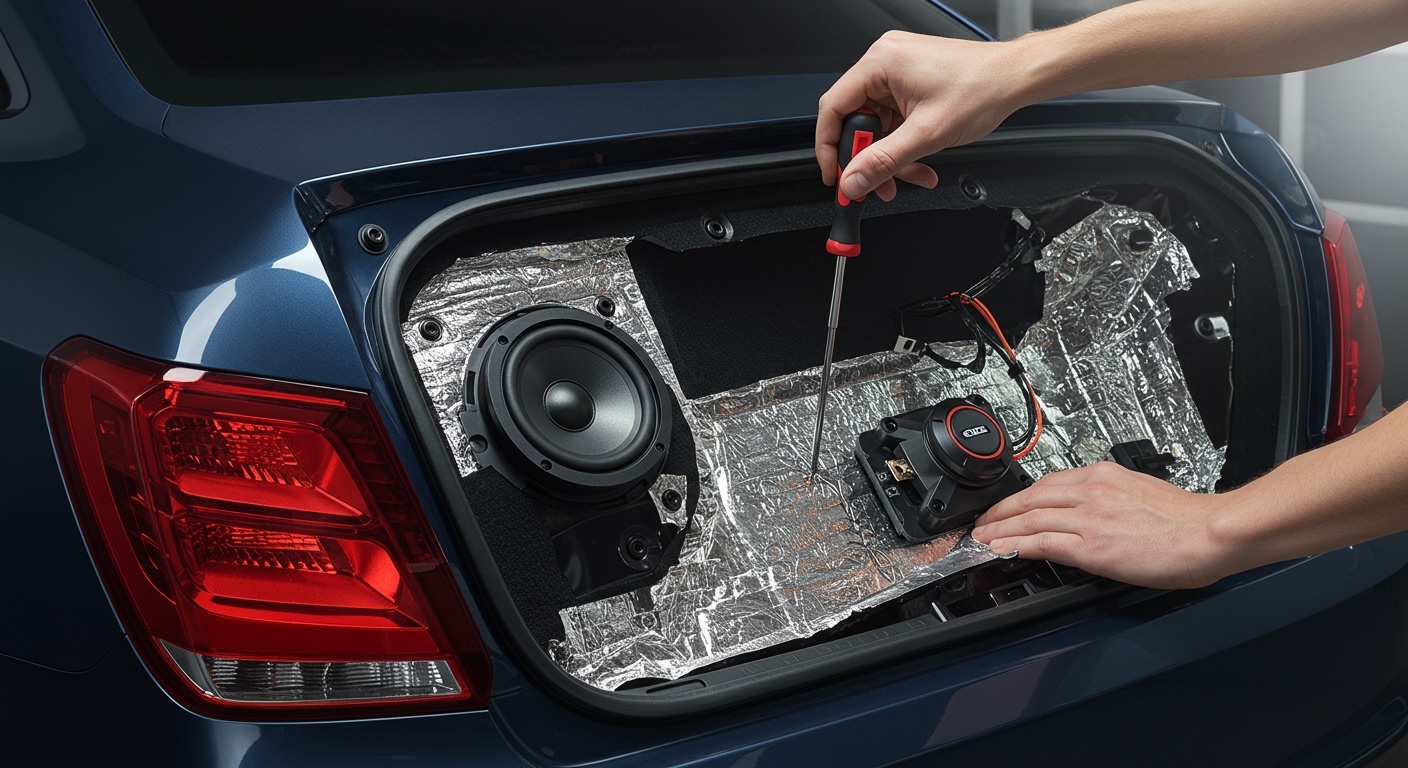
The most challenging part of how to install car speakers in rear deck setups is gaining access to the mounting location. In most sedans, the speakers are sandwiched between the metal frame and the decorative plastic/carpeted parcel shelf.
Removing the Rear Seat
Many modern cars require you to remove the bottom seat cushion and the backrest to reach the shelf clips.
Locate the release tabs: These are usually found under the front edge of the bottom cushion.
Unbolt the backrest: Use your socket set to remove the 10mm or 12mm bolts at the base of the seat back.
Clear the seatbelts: Carefully thread the seatbelts through the slots in the trim.
Pulling the Parcel Shelf
Remove C-pillar panels: The plastic covers running alongside the rear window often overlap the deck. Pop them off gently using trim removal tools.
Unplug the third brake light: If your brake light is mounted on the shelf, reach into the trunk to disconnect the wiring harness before pulling the shelf upward.
Lift and Slide: Pull the shelf toward the front of the car to release the rear friction clips.
Why Mastering Rear Speaker Installation Changes Everything
Upgrading your audio system and learning how to install car speakers in rear deck locations is the fastest way to transform a “thin” sounding car into a rolling concert hall. To successfully install rear speakers, you must remove the rear seat or parcel shelf, disconnect the factory wiring, and mount the new drivers using compatible brackets or adapters. This process enhances the rear fill and provides a balanced soundstage that factory systems often lack.
Quick Expert Summary (TL;DR)
Difficulty: Moderate (Requires basic hand tools and patience with plastic clips).
Time Required: 2–4 hours depending on vehicle trim complexity.
Key Goal: Improving sound pressure level (SPL) and clarity by replacing low-quality paper cones with composite materials.
Pro Tip: Always use a vehicle-specific wiring harness to avoid cutting factory wires, which preserves resale value and prevents electrical shorts.
Essential Tools and Materials for Success
Before you begin learning how to install rear car speakers, gather your equipment. Having the right tools prevents damage to delicate interior plastics and ensures a professional-grade connection.
| Tool/Material | Purpose | Expert Recommendation |
|---|---|---|
| Trim Removal Tools | Prying up plastic panels without scratching. | Use nylon/plastic sets, never a metal screwdriver. |
| Socket Set (10mm/12mm) | Removing seat bolts and speaker mounting screws. | A ratcheting wrench is vital for tight spaces. |
| Wire Strippers/Crimpers | Connecting speaker wires if not using a harness. | Use heat-shrink butt connectors for durability. |
| Multimeter | Testing for speaker polarity and continuity. | Essential for ensuring speakers are “in phase.” |
| Sound Deadening Mat | Reducing vibrations on the metal rear deck. | Butyl-based sheets (like Dynamat or Kilmat). |
| Philips Screwdriver | Standard mounting for most aftermarket speakers. | Use a short “stubby” driver for rear glass clearance. |
Step 1: Prepare the Vehicle and Safety Check
Disconnect the negative battery terminal before touching any electrical components. This is a non-negotiable step when learning how to install rear speakers in a car to prevent blowing a fuse or damaging the head unit’s internal amplifier.
- Clear the workspace: Remove all items from the back seat and trunk.
- Verify speaker fitment: Ensure your new speakers (usually 6×9 inch or 6.5 inch for rear decks) match the factory cutouts.
- Roll down windows: This prevents you from being locked out if the security system triggers during the battery reconnect.
Step 2: Accessing the Rear Deck (The Critical Phase)
The most challenging part of how to install car speakers in rear deck setups is gaining access to the mounting location. In most sedans, the speakers are sandwiched between the metal frame and the decorative plastic/carpeted parcel shelf.
Removing the Rear Seat
Many modern cars require you to remove the bottom seat cushion and the backrest to reach the shelf clips.
Locate the release tabs: These are usually found under the front edge of the bottom cushion.
Unbolt the backrest: Use your socket set to remove the 10mm or 12mm bolts at the base of the seat back.
Clear the seatbelts: Carefully thread the seatbelts through the slots in the trim.
Pulling the Parcel Shelf
Remove C-pillar panels: The plastic covers running alongside the rear window often overlap the deck. Pop them off gently using trim removal tools.
Unplug the third brake light: If your brake light is mounted on the shelf, reach into the trunk to disconnect the wiring harness before pulling the shelf upward.
Lift and Slide: Pull the shelf toward the front of the car to release the rear friction clips.
Step 3: Removing the Factory Speakers
Once the deck is exposed, you will see the factory drivers. Most manufacturers use three or four screws or a “twist-and-lock” plastic bracket.
- Unscrew the mounting hardware: Be careful not to drop screws into the trunk cavity.
- Disconnect the factory plug: Squeeze the plastic tab to release the wiring.
- Clean the mounting surface: Use a damp cloth to remove dust. This is the perfect time to apply sound deadening material to the metal around the hole to prevent future rattles.
Step 4: Wiring and Polarity (Ensuring High Fidelity)
When figuring out how to replace rear deck speakers, wiring is where most DIYers make mistakes. If you wire one speaker backward (positive to negative), the speakers will be “out of phase,” resulting in a total loss of bass.
Using Wiring Harnesses
The easiest method for how to install rear speakers is using a plug-and-play adapter (like those from Metra or Crutchfield).
Plug the adapter into the factory car plug.
Slide the female spade connectors onto the speaker terminals.
Note: The larger terminal is almost always Positive (+).
Manual Splicing
If no harness is available:
Identify the positive wire using a wiring diagram for your specific car model.
Use a soldering iron or high-quality crimp connectors.
Wrap all connections in electrical tape or heat-shrink tubing to prevent oxidation.
Step 5: Mounting the New Speakers
Now it is time for the physical rear speaker installation.
- Drop in the speaker: Align the holes of the speaker basket with the factory holes.
- Use adapter rings if necessary: If your aftermarket speaker is smaller than the factory hole, screw the plastic adapter bracket to the car first, then screw the speaker to the bracket.
- Apply Foam Gaskets: Place a thin foam ring between the speaker and the deck. This creates an airtight seal, significantly improving mid-bass response.
- Tighten in a Star Pattern: Do not over-tighten one side first; tighten them evenly to avoid warping the speaker frame.
Step 6: Testing and Reassembly
Never put the interior back together until you have verified the sound.
Reconnect the battery: Tighten the terminal.
Power on the head unit: Fade the audio completely to the “Rear” to isolate the new speakers.
Check for “Pop”: Listen for clarity. If the bass sounds hollow or “distant,” double-check your wiring polarity.
Reinstall the shelf and seats: Follow the disassembly steps in reverse. Ensure the third brake light is plugged back in.
How to Place Rear Speakers in a Home Theater Setup
While most of this guide focuses on vehicles, many users ask how to set up rear speakers for a 5.1 or 7.1 home cinema system. The logic differs slightly as you are dealing with room acoustics rather than metal decks.
Proper Positioning
Angle: Rear speakers (surrounds) should be placed 90 to 110 degrees to the side of the listener.
Height: Ideally, place them about 2 feet above ear level to create an immersive “diffuse” sound field.
Distance: Use your AV receiver’s calibration microphone (like Audyssey) to time-align the speakers with your front stage.
How to Install Rear Speakers Home Theater Wiring
- Run the wire: Use 16-gauge or 14-gauge oxygen-free copper (OFC) wire.
- Concealment: Use plastic wire channels (raceways) along the baseboards or fish the wires through the wall for a “stealth” look.
- Connection: Use banana plugs for a secure, high-surface-area connection to your receiver.
Expert Tips for Premium Sound
Mind the Impedance: Most car head units are designed for 4-ohm speakers. Installing 2-ohm speakers can cause the internal amp to overheat and fail.
Breaking In: New speakers have stiff “spiders” and surrounds. They will sound better after about 20-40 hours of moderate-volume play.
The “Paper” Test: If you aren’t sure about polarity, briefly touch a 9V battery to the speaker wires. If the cone moves outward, the wire on the positive battery terminal is the positive wire.
Seal the Gaps: Any air leaking between the front of the speaker and the back can cause cancellation. Use weatherstripping foam to bridge the gap between the speaker and the parcel shelf cover.
Common Mistakes to Avoid
Ignoring the Rear Glass: When using a drill to make new holes in the rear deck, be extremely careful. The drill bit can easily skip and shatter the tempered rear windshield.
Overtightening Screws: This can strip the thin sheet metal of the rear deck. If a hole strips, use a speed nut or a larger diameter screw.
Blocking Airflow: If your car has a trunk-mounted subwoofer, ensure the rear deck speakers aren’t being “buffeted” by the sub’s pressure. You may need acoustic foam baffles to protect them.
Frequently Asked Questions
(FAQs)
Can I install 6.5-inch speakers in a 6×9-inch rear deck hole?
Yes, but you will need a mounting adapter plate. These are inexpensive plastic inserts that bridge the gap. Note that you may lose a small amount of bass response when moving to a smaller cone surface area.
Do I need an amplifier to install rear speakers?
Not necessarily. Most aftermarket speakers are more efficient than factory ones and will run fine off a standard head unit. However, if you buy high-end speakers with a high RMS power rating, an external amplifier will unlock their full dynamic range.
How do I know which wire is positive in my car?
The easiest way is to look up a wiring color code chart for your specific year, make, and model. Alternatively, use a multimeter to check for voltage when the music is playing, or use the 9V battery “pop test” mentioned in our expert tips.
Why do my new rear speakers have no bass?
This is usually caused by phase cancellation. If one speaker is wired correctly and the other is flipped (+ to -), their sound waves cancel each other out. Double-check your wiring connections at the rear deck.
Is it worth it to replace rear speakers if I have a subwoofer?
Yes. While the subwoofer handles the low-end frequencies, the rear deck speakers provide spatial cues and mid-range fill that make the music feel like it is “surrounding” you rather than just coming from the dashboard.
Conclusion
Learning how to install car speakers in rear deck areas is a rewarding DIY project that significantly boosts your driving experience. By following a structured approach—preparing your tools, carefully removing trim, and ensuring perfect wiring polarity—you can achieve professional results without the high labor costs of an audio shop.
Whether you are performing a rear speaker installation in a sedan or learning how to place rear speakers for a home theater, the key is attention to detail and high-quality connections. Now that you have the knowledge, grab your trim tools and start your journey toward better sound today!









