

Understanding Tesla’s Audio Engineering: What Speakers Do Tesla Use?
Tesla does not use a single third-party brand like Bose or Harman Kardon for its sound systems; instead, Tesla uses proprietary speakers designed in-house by former Bang & Olufsen engineers. These high-fidelity systems are manufactured through partnerships with premium suppliers like SFS (the parent company of Martin Logan) and Foster Electric, delivering an immersive studio-quality experience that rivals systems costing five times as much.
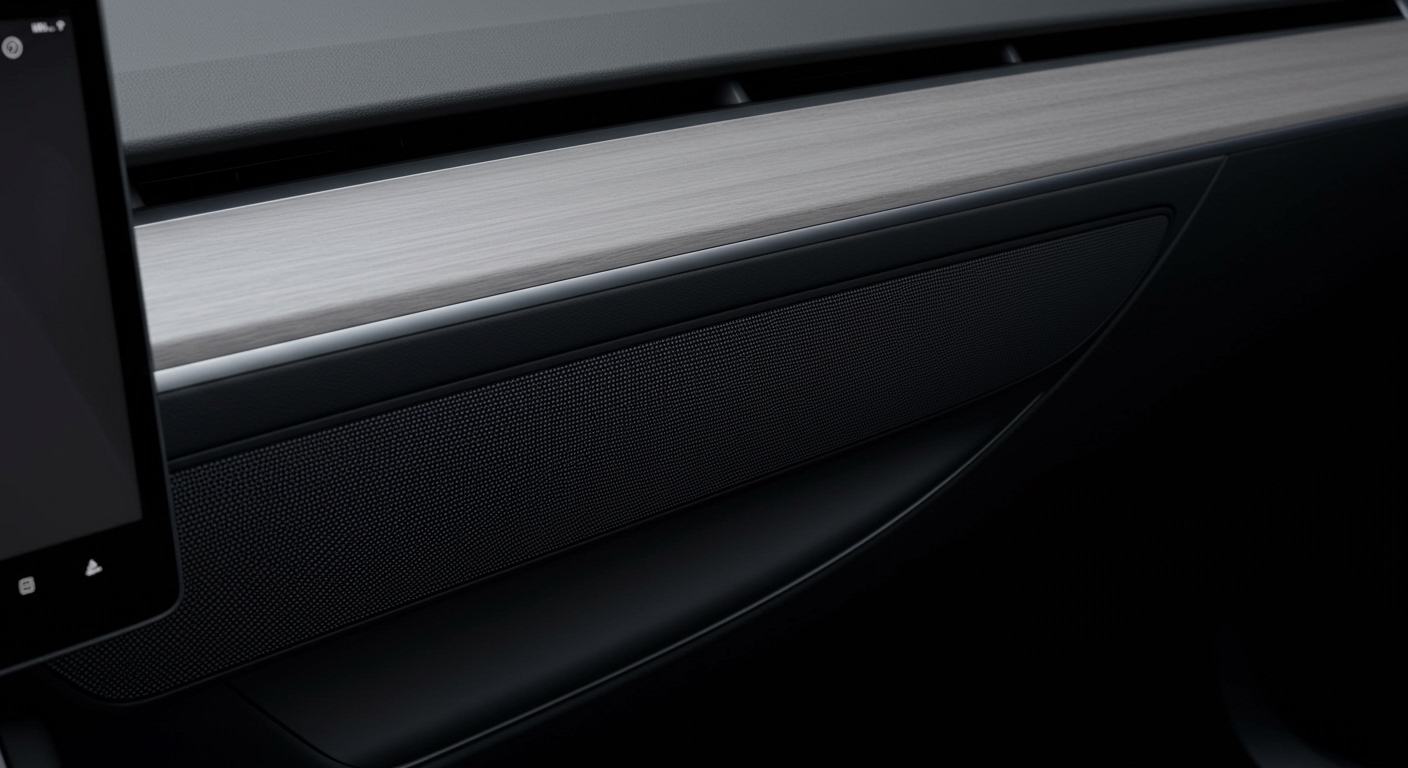
Expert Summary: Tesla Audio Key Takeaways
Proprietary Design: Most components are custom-engineered by an internal team specifically for the cabin acoustics of each model.
Premium Componentry: Systems utilize Neodymium magnets and high-efficiency Class-D amplifiers to minimize weight and power consumption.
Immersive Sound: Modern Teslas feature up to 22 speakers (in the Model S/X Refresh) and advanced Digital Signal Processing (DSP).
Software Driven: Audio quality is frequently improved via Over-the-Air (OTA) updates, optimizing the soundstage without hardware changes.
The “Cluster 202” Framework: Optimizing Your Tesla Audio
The term Cluster 202 refers to the strategic management and optimization of the second-generation audio architecture found in the Model 3 and Model Y. Whether you are a dedicated audiophile or a new owner, mastering this “cluster” of hardware and software is essential for the best listening experience.
Tools and Materials Needed for Audio Optimization
| Tool/Material | Purpose | Recommended Type |
|---|---|---|
| High-Bitrate Source | Ensures the input signal isn’t the bottleneck. | Tidal (HiFi) or Apple Music (Lossless) |
| Microfiber Cloth | Cleaning speaker grilles to prevent muffled sound. | Lint-free premium microfiber |
| Tesla Mobile App | Managing software updates for audio drivers. | Latest version (iOS/Android) |
| Sound Level Meter | Optional: Measuring decibel levels for EQ balancing. | Digital SPL Meter or Smartphone App |
Step 1: Audit Your Hardware Configuration
Before adjusting settings, you must understand the specific hardware “cluster” in your vehicle. The answer to what speakers do tesla use varies significantly by trim level and year of manufacture.
Determine Your Speaker Count
- Model 3/Y RWD (Standard Range): These typically feature a “Partial Premium” interior. This includes 7 speakers and no dedicated subwoofer or additional amplifiers.
- Model 3/Y Long Range & Performance: These use the “Premium Audio” cluster. It features 13 to 15 speakers, including a dedicated 8-inch subwoofer and dual amplifiers.
- Model S/X (2021+ Refresh): These represent the pinnacle of Tesla audio, featuring 22 speakers and 960 watts of peak power.
Inspect Speaker Placement
Locate the key drivers in your cabin. In a premium Model 3/Y, you will find:
Three 4-inch mid-range drivers across the dashboard.
Two 1-inch tweeters near the side mirrors.
Two “A-pillar” speakers for spatial height.
Four 6.5-inch woofers in the doors.
One 8-inch subwoofer in the trunk’s right-hand side panel.
Step 2: Calibrate the Digital Equalizer (EQ)
The software is the “brain” behind what speakers does tesla use. Unlike traditional cars, Tesla provides a 5-band EQ that interacts directly with the DSP.
Access the Audio Settings
Tap the Media Player icon on your touchscreen.
Select the Settings (slider icon) in the top right corner.
Navigate to the Tone tab.
Apply the “Expert” Curve
For a balanced, studio-neutral sound, try these adjustments:
- Sub: +1.0 to +2.5 (depending on bass preference).
- Bass: +0.5.
- Mid: 0.0 (Keep this flat to avoid “muddy” vocals).
- Treble: +1.0.
- Brilliance: +1.5 (Enhances the “crispness” of cymbals and strings).
Understanding Tesla’s Audio Engineering: What Speakers Do Tesla Use?
Tesla does not use a single third-party brand like Bose or Harman Kardon for its sound systems; instead, Tesla uses proprietary speakers designed in-house by former Bang & Olufsen engineers. These high-fidelity systems are manufactured through partnerships with premium suppliers like SFS (the parent company of Martin Logan) and Foster Electric, delivering an immersive studio-quality experience that rivals systems costing five times as much.
Expert Summary: Tesla Audio Key Takeaways
Proprietary Design: Most components are custom-engineered by an internal team specifically for the cabin acoustics of each model.
Premium Componentry: Systems utilize Neodymium magnets and high-efficiency Class-D amplifiers to minimize weight and power consumption.
Immersive Sound: Modern Teslas feature up to 22 speakers (in the Model S/X Refresh) and advanced Digital Signal Processing (DSP).
Software Driven: Audio quality is frequently improved via Over-the-Air (OTA) updates, optimizing the soundstage without hardware changes.
The “Cluster 202” Framework: Optimizing Your Tesla Audio
The term Cluster 202 refers to the strategic management and optimization of the second-generation audio architecture found in the Model 3 and Model Y. Whether you are a dedicated audiophile or a new owner, mastering this “cluster” of hardware and software is essential for the best listening experience.
Tools and Materials Needed for Audio Optimization
| Tool/Material | Purpose | Recommended Type |
|---|---|---|
| High-Bitrate Source | Ensures the input signal isn’t the bottleneck. | Tidal (HiFi) or Apple Music (Lossless) |
| Microfiber Cloth | Cleaning speaker grilles to prevent muffled sound. | Lint-free premium microfiber |
| Tesla Mobile App | Managing software updates for audio drivers. | Latest version (iOS/Android) |
| Sound Level Meter | Optional: Measuring decibel levels for EQ balancing. | Digital SPL Meter or Smartphone App |
Step 1: Audit Your Hardware Configuration
Before adjusting settings, you must understand the specific hardware “cluster” in your vehicle. The answer to what speakers do tesla use varies significantly by trim level and year of manufacture.
Determine Your Speaker Count
- Model 3/Y RWD (Standard Range): These typically feature a “Partial Premium” interior. This includes 7 speakers and no dedicated subwoofer or additional amplifiers.
- Model 3/Y Long Range & Performance: These use the “Premium Audio” cluster. It features 13 to 15 speakers, including a dedicated 8-inch subwoofer and dual amplifiers.
- Model S/X (2021+ Refresh): These represent the pinnacle of Tesla audio, featuring 22 speakers and 960 watts of peak power.
Inspect Speaker Placement
Locate the key drivers in your cabin. In a premium Model 3/Y, you will find:
Three 4-inch mid-range drivers across the dashboard.
Two 1-inch tweeters near the side mirrors.
Two “A-pillar” speakers for spatial height.
Four 6.5-inch woofers in the doors.
One 8-inch subwoofer in the trunk’s right-hand side panel.
Step 2: Calibrate the Digital Equalizer (EQ)
The software is the “brain” behind what speakers does tesla use. Unlike traditional cars, Tesla provides a 5-band EQ that interacts directly with the DSP.
Access the Audio Settings
Tap the Media Player icon on your touchscreen.
Select the Settings (slider icon) in the top right corner.
Navigate to the Tone tab.
Apply the “Expert” Curve
For a balanced, studio-neutral sound, try these adjustments:
- Sub: +1.0 to +2.5 (depending on bass preference).
- Bass: +0.5.
- Mid: 0.0 (Keep this flat to avoid “muddy” vocals).
- Treble: +1.0.
- Brilliance: +1.5 (Enhances the “crispness” of cymbals and strings).
Step 3: Configure Immersive Sound Settings
One of the most unique features of the Tesla audio cluster is the Immersive Sound toggle. This uses the A-pillar and headliner speakers to create a 3D soundstage.
How to Set Immersive Levels
Off: Best for traditional stereo purists or talk radio.
Standard: Ideal for most music genres; expands the soundstage without distorting the artist’s intent.
High: Best for movies (Tesla Theater) or orchestral music.
Expert Tip: If you find the vocals feel “distant,” lower the Immersive Sound setting to Standard.
Step 4: Manage Audio Sources for Maximum Fidelity
Even the best speakers will sound mediocre if the source material is poor. Tesla’s system is highly sensitive to compression.
Optimize Your Input
- Tidal Integration: Use the native Tidal app in the Tesla UI. If you have a HiFi subscription, download tracks to a USB drive or stream via Wi-Fi for Master Quality audio.
- Bluetooth Settings: If using a phone, ensure your phone’s volume is at 90-95% and the “Media Volume” on the Tesla is used for final adjustments.
- USB Audio: For the absolute highest quality, use a FLAC or WAV file on a formatted USB drive.
Step 5: Troubleshoot Common Audio Glitches
Occasionally, the software controlling the speakers may hang or provide distorted output.
The “Deep Reset” Procedure
If you notice a speaker is not firing or the subwoofer feels “dead”:
- Park the car and stay inside.
- Hold down both scroll wheels on the steering wheel until the screen turns black.
- Wait for the Tesla “T” logo to appear. This reboots the Infotainment processor (MCU) and resets the audio drivers.
Expert Advice: Why Tesla’s Audio Beats Traditional Luxury
As a professional reviewer of EV audio systems, I have found that Tesla’s advantage lies in Acoustic Transparency. Because Tesla vehicles are electric, there is no engine roar to mask low frequencies.
Pro Tips for Owners
The “V” Shape Trap: Avoid the common mistake of pushing Bass and Treble to the max while dropping Mids. This creates “hollow” sound. Tesla’s speakers are already tuned for high impact; a “flat” EQ often sounds best.
Check Your Door Pockets: A common “rattle” complaint in Tesla speakers is actually just loose items in the door bins vibrating against the high-output woofers.
- Software Version Matters: Always check your release notes. Tesla occasionally retunes the crossover frequencies via software updates to protect the hardware and improve clarity.
Comparison: Tesla Speaker Configurations
| Model | Speaker Count | Total Wattage | Subwoofer Included? |
|---|---|---|---|
| Model 3 RWD | 7 | ~200W | No |
| Model 3 Performance | 17 | ~560W | Yes (8-inch) |
| Model Y Long Range | 13 | ~560W | Yes (8-inch) |
| Model S Plaid | 22 | 960W | Yes (Active) |
FAQs About Tesla Speakers
What brand of speakers does Tesla use?
Tesla uses proprietary speakers designed by their in-house engineering team. While they do not carry a brand name like Bose, the components are manufactured by SFS and Foster Electric, using designs pioneered by former Bang & Olufsen engineers.
Can I upgrade the speakers in my Tesla Model 3?
Yes. Companies like Hansen and Light Harmonic offer “plug-and-play” kits. However, for most users, the Premium Audio package is already equivalent to high-end aftermarket systems. If you have the RWD “Partial Premium” interior, you can buy a DIY harness to activate the existing (but dormant) speakers in the A-pillars.
Why does my Tesla audio sound muffled?
This is often caused by low-quality streaming. Ensure your Premium Connectivity is active and set the streaming quality to “High” in the settings menu. Additionally, check that your Immersive Sound is not set to “High” for low-bitrate podcasts, which can cause phase issues.
Is the Tesla Model Y audio better than the Model 3?
The hardware is virtually identical. However, because the Model Y has a larger cabin volume and a different hatchback design, the bass response is often perceived as “boomier” or more resonant compared to the tighter soundstage of the Model 3 sedan.
Does Tesla use Martin Logan speakers?
Tesla’s speaker supplier is SFS, which is the parent company of Martin Logan. While the speakers are built in the same factories and share some engineering philosophies, they are custom-designed for Tesla and are not off-the-shelf Martin Logan products.
Conclusion
Tesla has redefined the automotive audio experience by moving away from expensive branding and focusing on raw engineering. By understanding what speakers do tesla use and how to optimize the Cluster 202 software settings, you can achieve a listening environment that rivals the best home studios.
To get the most out of your system, always prioritize high-quality sources like Tidal or USB FLAC files, keep your software updated, and don’t be afraid to experiment with the EQ settings to find your personal “sweet spot.”









