Understanding the Global Reach of the French Language
To answer the most pressing question immediately: France is currently what country has the most french speakers, with approximately 66 million people using the language daily. However, the demographic center of the Francophone world is shifting rapidly toward the Democratic Republic of the Congo (DRC), which currently holds the second spot with over 48 million speakers.
If you are looking for which continent has the most french speakers, the answer is Africa. With over 60% of the world’s daily French speakers residing there, Africa has surpassed Europe as the primary engine for the language’s growth. Understanding these shifts is crucial for international business, education, and cultural exchange in the 21st century.
Expert Summary: Key Takeaways
Top Country: France remains #1, but the DRC is expected to overtake it by 2050.
Leading Continent: Africa is the powerhouse of the Francophone world, hosting more speakers than any other region.
Growth Driver: High birth rates and expanded access to education in Sub-Saharan Africa are the primary reasons for the language’s expansion.
Total Speakers: There are approximately 321 million French speakers worldwide as of the latest OIF (Organisation Internationale de la Francophonie) reports.
Linguistic Status: French is the 5th most spoken language globally and the 4th most used language on the internet.
Step-by-Step Guide to Identifying French Speaking Populations
Navigating global demographics requires a structured approach to distinguish between “native speakers,” “daily users,” and “learners.” Follow these steps to accurately assess what country has the most french speakers and where the language is most influential.
Step 1: Analyze Official Data from the OIF
The first step in any demographic research is to consult the Organisation Internationale de la Francophonie (OIF). This organization releases a comprehensive report every four years titled “La langue française dans le monde.”
Action: Access the latest OIF report to find verified statistics on speaker counts.
Focus: Look for the distinction between “Francophones” (those who use it daily) and “French learners.”
Insight: Data shows that while France has the highest concentration of native speakers, the DRC has the highest potential for growth due to its youthful population.
Step 2: Distinguish Between Native and Secondary Speakers
When asking which country has the most french speakers, you must define what “speaker” means. In many African nations, French is an official language used in government and education, even if it isn’t the person’s first native tongue.
France: Nearly 97% of the population are native speakers.
DRC: Many citizens speak a local language (like Lingala or Swahili) at home but use French for all professional and academic interactions.
Algeria: While not an official member of the OIF, Algeria has a massive French-speaking population (estimated at 15 million), primarily as a second language.
Step 3: Evaluate Regional Dominance by Continent
To determine what continent has the most french speakers, you must look at the macro-trends across the five major regions where French is spoken.
| Continent | Est. French Speakers | Key Driving Countries |
|---|---|---|
| Africa | Over 160 Million | DRC, Algeria, Morocco, Ivory Coast |
| Europe | Approx. 80 Million | France, Belgium, Switzerland, Luxembourg |
| Americas | Approx. 15 Million | Canada (Quebec), Haiti, French Guiana |
| Middle East | Approx. 5 Million | Lebanon |
| Oceania | Under 1 Million | New Caledonia, Vanuatu |
Step 4: Map the Growth in Sub-Saharan Africa
Understanding the future of the language requires focusing on the Gulf of Guinea and the Congo Basin. This is where the demographic explosion is happening.
Identify hubs: Focus on cities like Kinshasa and Abidjan.
Kinshasa is now the largest French-speaking city in the world, surpassing Paris in total population.
Educational Impact: French is the primary language of instruction in these regions, ensuring that every new generation is fluent.
Step 5: Factor in the “Francophonie” Beyond Borders
Finally, recognize that French is a “transversal” language. It is used as a lingua franca for trade between countries that have different local dialects.
Business Impact: Companies targeting the “Next Eleven” economies often find that French is the most effective medium for communication in West Africa.
Digital Presence: Monitor the growth of French-language content on social media platforms in Senegal and Cameroon to see real-time usage.
Essential Resources for Tracking French Demographics
To accurately monitor which country has the most french speakers, you should utilize these specific tools and data sources.
| Category | Resource Name | Purpose |
|---|---|---|
| Official Data | OIF (Organisation Internationale de la Francophonie) | The gold standard for global French statistics. |
| Demographics | INED (French National Institute for Demographic Studies) | Detailed breakdowns of European French speakers. |
| Education | UNESCO Institute for Statistics | Tracks literacy and French-language schooling in Africa. |
| Digital Trends | Internet World Stats | Monitors how many people use French online by region. |
Pro Tips for Understanding Francophone Markets
As an expert who has worked in international communications across Brussels, Paris, and Kinshasa, I have observed several nuances that raw data often misses.
Don’t ignore the “Invisible” Speakers: Countries like Morocco and Tunisia have very high French proficiency (over 30-50% of the population), even though it is not the primary official language.
Focus on Kinshasa: If you are a content creator or marketer, Kinshasa is your most important audience. It is the cultural heartbeat of the modern Francophone world.
Language Evolution: Be aware that “African French” is developing its own unique vocabulary and syntax. If you want to be effective, you must adapt to local idioms used in Abidjan or Dakar.
The Quebec Factor: While Canada has fewer speakers than the DRC, Quebec remains a massive economic and cultural powerhouse for the language in the Western Hemisphere.
Common Mistakes to Avoid
- Assuming France is the only hub: Thinking that French culture starts and ends in Paris is a major strategic error.
- Confusing “Official Language” with “Spoken Language”: Some countries list French as official, but actual daily usage might be lower than in countries where it isn’t official (like Lebanon).
- Ignoring the Youth Bulge: Africa’s population is the youngest in the world. This means the number of French speakers will continue to rise there while stagnating in Europe.
Expert Insights: Why Africa is the Future of French
When we look at which continent has the most french speakers, the dominance of Africa is not just a statistical fluke; it is the result of specific historical and systemic factors.
The Educational Pipeline
In many African nations, the school system is the primary driver of the language. Unlike in Europe, where French is often a native “home” language, in Africa, it is the language of upward mobility. To get a high-paying job in Senegal or Ivory Coast, fluency in French is non-negotiable.
Urbanization and the Lingua Franca
As people move from rural villages to mega-cities like Kinshasa, they often leave behind local tribal languages to communicate in French. This “urban melting pot” effect accelerates the number of daily speakers far faster than natural birth rates alone.
Frequently Asked Questions
(FAQs)
What country has the most French speakers in 2024?
France currently holds the top spot with approximately 66 million speakers. However, the Democratic Republic of the Congo is a close second with over 48 million and is growing at a much faster rate.
Which continent has the most French speakers overall?
Africa is the continent with the most French speakers. It accounts for over 50% of the world’s total Francophone population, a number expected to reach 85% by the year 2050.
Is French still a growing language?
Yes, French is one of the fastest-growing languages in the world. This growth is almost entirely driven by the demographic boom in Sub-Saharan Africa, where French is the primary language of education and government.
What is the largest French-speaking city?
Kinshasa, the capital of the Democratic Republic of the Congo, is the largest French-speaking city in the world by population, having surpassed Paris several years ago.
How many people speak French globally?
According to the OIF, there are approximately 321 million French speakers worldwide. This includes both native speakers and those who use it as a second or third language.
Conclusion: The Shifting Tides of the Francophonie
In summary, while France is currently what country has the most french speakers, the center of gravity is moving south. If you are planning for the future—whether for business, travel, or academic research—you must look toward Africa. It is the continent that has the most french speakers and will continue to define the evolution of the language for decades to come.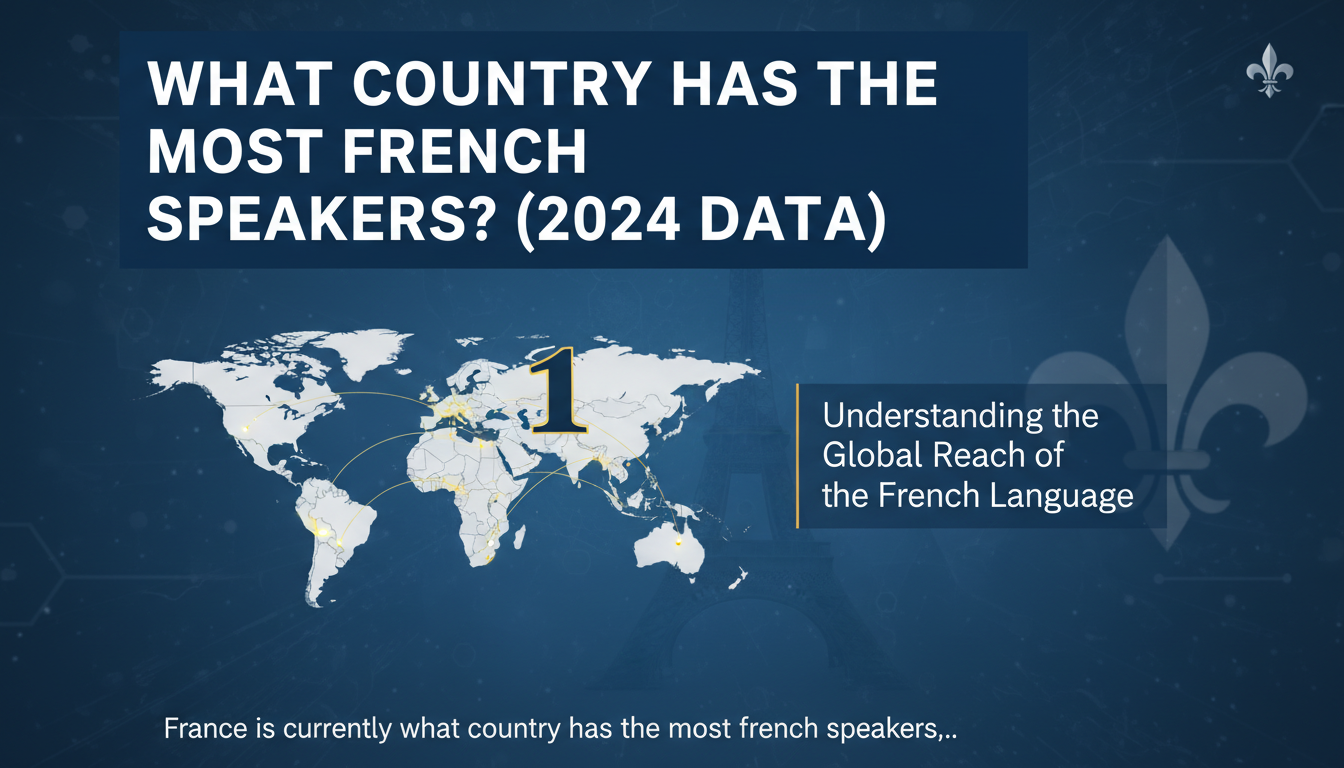
The “Francophonie” is no longer a European-centric entity; it is a global, vibrant, and predominantly African community. By understanding these demographic shifts, you can better position yourself to engage with one of the world’s most influential linguistic groups.
Ready to dive deeper into global linguistics? Explore our other guides on emerging markets and international communication strategies to stay ahead of the curve.