

How Many Speakers Are in the Las Vegas Sphere? The Ultimate Audio Guide
The Las Vegas Sphere features exactly 167,000 speaker drivers integrated into its massive interior structure. This revolutionary sound system, known as Sphere Immersive Sound, utilizes Holoplot’s X1 Matrix Array technology to deliver crystal-clear, studio-quality audio to every seat in the house. Unlike traditional concert venues where sound bounces off walls, the MSG Sphere uses 3D Beamforming and Wave Field Synthesis to “beam” specific audio directly to individual listeners.
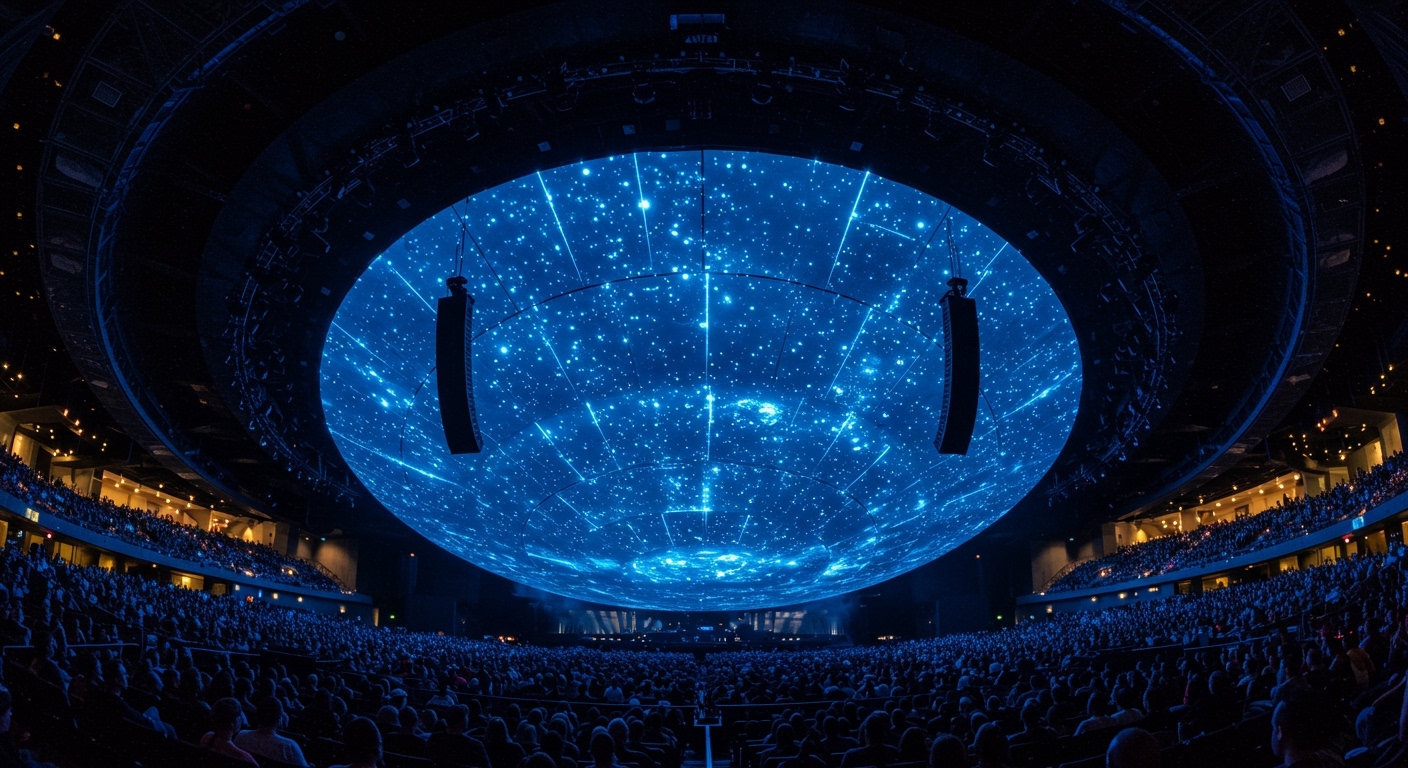
Key Takeaways: Sphere Immersive Sound At-A-Glance
If you are looking for a quick summary of the technological marvel inside the Las Vegas Sphere, here are the vital statistics:
Total Speaker Drivers: 167,000 individual drivers.
Technology Provider: Holoplot (Berlin-based audio experts).
Audio Channels: Approximately 160,000 channels of simultaneous audio.
Sound Processing: Wave Field Synthesis (WFS) for spatial localization.
Haptic Integration: 10,000 haptic seats that vibrate in sync with the low-end frequencies.
Clarity Level: Consistent audio quality from the front row to the very back of the 17,500-seat bowl.
Step 1: Discover the Architecture of 167,000 Speakers
To understand how many speakers are in the Las Vegas Sphere, you must first look behind the 16K LED screen. The speakers are not visible to the naked eye because they are hidden behind the massive interior display plane.
The Holoplot X1 Matrix Array
The backbone of the system is the Holoplot X1 Matrix Array. This isn’t just a collection of boxes; it is a sophisticated network of speaker modules that can manipulate sound waves like light.
Modular Design: The system consists of hundreds of X1 modules, each containing multiple drivers.
Hidden Installation: The speakers are mounted behind the Acoustically Transparent LED panels.
Frequency Range: The system covers the full human hearing spectrum, supplemented by massive infrasound subwoofers.
Wave Field Synthesis (WFS)
Traditional speakers function as “point sources,” where sound spreads out in a circle. The Sphere in Vegas uses Wave Field Synthesis. This allows engineers to create “virtual sound objects.”
For example, a bird chirping can sound like it is sitting exactly two inches from your left ear, even though the 167,000 speakers are dozens of feet away.
Step 2: Experience 3D Beamforming Technology
Knowing how many speakers are in the sphere in vegas is only half the story; the real magic is how they are used. 3D Beamforming allows the venue to send different audio streams to different sections of the audience.
How Beamforming Works in the Sphere
- Direct Sound: The system calculates the exact time alignment for all 167,000 drivers.
- Targeted Delivery: Sound is aimed at specific seating blocks with laser precision.
- Volume Consistency: Because of the beamforming, the volume at the back of the room is nearly identical to the volume at the front.
- Language Isolation: Theoretically, the Sphere can beam English audio to one section and Spanish to another without any “bleed” or interference.
Audio Technical Specifications Table
| Feature | Specification Detail |
|---|---|
| Total Drivers | 167,000 |
| Manufacturer | Holoplot |
| Sound Distribution | 3D Beamforming |
| Haptic Seats | 10,000 (Infrared/Vibration) |
| Display Resolution | 16K x 16K |
| Latency | Near-zero (optimized for live performance) |
Step 3: Utilize the Haptic Seating System
While there are 167,000 speakers providing the highs and mids, your body experiences the “feeling” of the sound through the haptic seats. This is a critical component of the Sphere experience.
Engaging the Infrasound
Vibrational Feedback: 10,000 of the seats are equipped with an infrasound haptic system.
Tactile Audio: When an explosion occurs on the 16K screen, you don’t just hear it; your seat physically kicks.
Sensory Synergy: This creates a “4D” experience where the how many speakers in the sphere vegas question becomes irrelevant compared to how the sound feels in your chest.
Step 4: Compare the Sphere to Standard Venues
To appreciate how many speakers are in the sphere las vegas, you have to compare it to a standard stadium or arena. Most world-class arenas use “line arrays”—the hanging stacks of speakers you see at concerts.
Sphere vs. Traditional Arena Audio
Reflection Control: Traditional arenas suffer from “echo” and “reverb” as sound bounces off hard surfaces. The Sphere uses its 167,000 drivers to cancel out reflections.
Sweet Spots: In a normal venue, only the “sound booth” area gets perfect audio. In the Sphere, the “sweet spot” is the entire building.
Audio Localization: In a stadium, sound comes from the stage. In the Sphere, sound can come from the floor, the ceiling, or appear to move through the audience.
Expert Tips for the Best Audio Experience at the Sphere
As someone who has analyzed high-end audio installations, I recommend the following to get the most out of the 167,000 speakers:
Sit in the 300 or 400 Levels: While the 100 level is close to the stage, the spatial audio effects from the Holoplot system are most immersive in the middle and upper tiers.
Avoid the Overhang: Some seats in the back of the 100 level are underneath the 200-level balcony. This can slightly muffle the “overhead” sound effects from the dome.
Listen for “Movement”: During the Postcard from Earth film or a U2 concert, pay attention to how a single instrument might “travel” around the room. This is the Wave Field Synthesis at work.
- Don’t Wear Heavy Earplugs: The Sphere is designed for clarity, not just raw volume. Unless you have sensitive hearing, the audio is often “cleaner” and less damaging than a traditional distorted rock concert.
Common Mistakes to Avoid
- Assuming More is Just Louder: Don’t think how many speakers are there in the sphere equates to hearing damage. The system is designed for fidelity, not just decibels.
- Focusing Only on the Screen: It is easy to get distracted by the LED display, but the audio is arguably more technologically advanced. Close your eyes for a moment to feel the spatial positioning.
- Ignoring the “Director’s Seat”: If you are an audiophile, try to find seats near the center of the bowl (Sections 306-307) for the most balanced “phantom center” image.
Tools & Materials for Your Visit
| Category | Requirement | Why it Matters |
|---|---|---|
| Tickets | Sphere Experience or Live Residency | Different shows utilize the 167,000 speakers differently. |
| Seating | Center Sections (200-400) | Provides the most accurate 3D soundstage. |
| Ear Protection | High-Fidelity Earplugs | If you must use them, use “musician plugs” to maintain the frequency response. |
FAQs: Everything You Need to Know About Sphere Speakers
How many speakers does the sphere in las vegas have exactly?
The Las Vegas Sphere contains 167,000 speaker drivers. These are arranged in modules throughout the interior of the dome to create a fully immersive 360-degree sound field.
Who built the sound system for the Las Vegas Sphere?
The system was developed by Holoplot, a German audio technology company, in collaboration with MSG Entertainment. It uses their proprietary X1 Matrix Array technology.
Is the sound in the Sphere too loud?
Actually, the Sphere is known for being “comfortably loud.” Because of the 3D beamforming, the audio doesn’t have to be cranked to reaching the back rows, which reduces the overall “noise” and ear fatigue commonly found at concerts.
Can you see the speakers inside the Sphere?
No, you cannot see them. The how many speakers in sphere vegas question often surprises people because all 167,000 drivers are hidden behind the acoustically transparent LED panels that make up the interior screen.
Do the speakers move?
The speakers themselves are stationary, but the sound waves they produce are “steered” digitally. By changing the timing of when each driver fires, the system can move a sound beam across the room without any moving parts.
How Many Speakers Are in the Las Vegas Sphere? The Ultimate Audio Guide
The Las Vegas Sphere features exactly 167,000 speaker drivers integrated into its massive interior structure. This revolutionary sound system, known as Sphere Immersive Sound, utilizes Holoplot’s X1 Matrix Array technology to deliver crystal-clear, studio-quality audio to every seat in the house. Unlike traditional concert venues where sound bounces off walls, the MSG Sphere uses 3D Beamforming and Wave Field Synthesis to “beam” specific audio directly to individual listeners.
Key Takeaways: Sphere Immersive Sound At-A-Glance
If you are looking for a quick summary of the technological marvel inside the Las Vegas Sphere, here are the vital statistics:
Total Speaker Drivers: 167,000 individual drivers.
Technology Provider: Holoplot (Berlin-based audio experts).
Audio Channels: Approximately 160,000 channels of simultaneous audio.
Sound Processing: Wave Field Synthesis (WFS) for spatial localization.
Haptic Integration: 10,000 haptic seats that vibrate in sync with the low-end frequencies.
Clarity Level: Consistent audio quality from the front row to the very back of the 17,500-seat bowl.
Step 1: Discover the Architecture of 167,000 Speakers
To understand how many speakers are in the Las Vegas Sphere, you must first look behind the 16K LED screen. The speakers are not visible to the naked eye because they are hidden behind the massive interior display plane.
The Holoplot X1 Matrix Array
The backbone of the system is the Holoplot X1 Matrix Array. This isn’t just a collection of boxes; it is a sophisticated network of speaker modules that can manipulate sound waves like light.
Modular Design: The system consists of hundreds of X1 modules, each containing multiple drivers.
Hidden Installation: The speakers are mounted behind the Acoustically Transparent LED panels.
Frequency Range: The system covers the full human hearing spectrum, supplemented by massive infrasound subwoofers.
Wave Field Synthesis (WFS)
Traditional speakers function as “point sources,” where sound spreads out in a circle. The Sphere in Vegas uses Wave Field Synthesis. This allows engineers to create “virtual sound objects.”
For example, a bird chirping can sound like it is sitting exactly two inches from your left ear, even though the 167,000 speakers are dozens of feet away.
Step 2: Experience 3D Beamforming Technology
Knowing how many speakers are in the sphere in vegas is only half the story; the real magic is how they are used. 3D Beamforming allows the venue to send different audio streams to different sections of the audience.
How Beamforming Works in the Sphere
- Direct Sound: The system calculates the exact time alignment for all 167,000 drivers.
- Targeted Delivery: Sound is aimed at specific seating blocks with laser precision.
- Volume Consistency: Because of the beamforming, the volume at the back of the room is nearly identical to the volume at the front.
- Language Isolation: Theoretically, the Sphere can beam English audio to one section and Spanish to another without any “bleed” or interference.
Audio Technical Specifications Table
| Feature | Specification Detail |
|---|---|
| Total Drivers | 167,000 |
| Manufacturer | Holoplot |
| Sound Distribution | 3D Beamforming |
| Haptic Seats | 10,000 (Infrared/Vibration) |
| Display Resolution | 16K x 16K |
| Latency | Near-zero (optimized for live performance) |
Step 3: Utilize the Haptic Seating System
While there are 167,000 speakers providing the highs and mids, your body experiences the “feeling” of the sound through the haptic seats. This is a critical component of the Sphere experience.
Engaging the Infrasound
Vibrational Feedback: 10,000 of the seats are equipped with an infrasound haptic system.
Tactile Audio: When an explosion occurs on the 16K screen, you don’t just hear it; your seat physically kicks.
Sensory Synergy: This creates a “4D” experience where the how many speakers in the sphere vegas question becomes irrelevant compared to how the sound feels in your chest.
Step 4: Compare the Sphere to Standard Venues
To appreciate how many speakers are in the sphere las vegas, you have to compare it to a standard stadium or arena. Most world-class arenas use “line arrays”—the hanging stacks of speakers you see at concerts.
Sphere vs. Traditional Arena Audio
Reflection Control: Traditional arenas suffer from “echo” and “reverb” as sound bounces off hard surfaces. The Sphere uses its 167,000 drivers to cancel out reflections.
Sweet Spots: In a normal venue, only the “sound booth” area gets perfect audio. In the Sphere, the “sweet spot” is the entire building.
Audio Localization: In a stadium, sound comes from the stage. In the Sphere, sound can come from the floor, the ceiling, or appear to move through the audience.
Expert Tips for the Best Audio Experience at the Sphere
As someone who has analyzed high-end audio installations, I recommend the following to get the most out of the 167,000 speakers:
Sit in the 300 or 400 Levels: While the 100 level is close to the stage, the spatial audio effects from the Holoplot system are most immersive in the middle and upper tiers.
Avoid the Overhang: Some seats in the back of the 100 level are underneath the 200-level balcony. This can slightly muffle the “overhead” sound effects from the dome.
Listen for “Movement”: During the Postcard from Earth film or a U2 concert, pay attention to how a single instrument might “travel” around the room. This is the Wave Field Synthesis at work.
- Don’t Wear Heavy Earplugs: The Sphere is designed for clarity, not just raw volume. Unless you have sensitive hearing, the audio is often “cleaner” and less damaging than a traditional distorted rock concert.
Common Mistakes to Avoid
- Assuming More is Just Louder: Don’t think how many speakers are there in the sphere equates to hearing damage. The system is designed for fidelity, not just decibels.
- Focusing Only on the Screen: It is easy to get distracted by the LED display, but the audio is arguably more technologically advanced. Close your eyes for a moment to feel the spatial positioning.
- Ignoring the “Director’s Seat”: If you are an audiophile, try to find seats near the center of the bowl (Sections 306-307) for the most balanced “phantom center” image.
Tools & Materials for Your Visit
| Category | Requirement | Why it Matters |
|---|---|---|
| Tickets | Sphere Experience or Live Residency | Different shows utilize the 167,000 speakers differently. |
| Seating | Center Sections (200-400) | Provides the most accurate 3D soundstage. |
| Ear Protection | High-Fidelity Earplugs | If you must use them, use “musician plugs” to maintain the frequency response. |
FAQs: Everything You Need to Know About Sphere Speakers
How many speakers does the sphere in las vegas have exactly?
The Las Vegas Sphere contains 167,000 speaker drivers. These are arranged in modules throughout the interior of the dome to create a fully immersive 360-degree sound field.
Who built the sound system for the Las Vegas Sphere?
The system was developed by Holoplot, a German audio technology company, in collaboration with MSG Entertainment. It uses their proprietary X1 Matrix Array technology.
Is the sound in the Sphere too loud?
Actually, the Sphere is known for being “comfortably loud.” Because of the 3D beamforming, the audio doesn’t have to be cranked to reaching the back rows, which reduces the overall “noise” and ear fatigue commonly found at concerts.
Can you see the speakers inside the Sphere?
No, you cannot see them. The how many speakers in sphere vegas question often surprises people because all 167,000 drivers are hidden behind the acoustically transparent LED panels that make up the interior screen.
Do the speakers move?
The speakers themselves are stationary, but the sound waves they produce are “steered” digitally. By changing the timing of when each driver fires, the system can move a sound beam across the room without any moving parts.
Conclusion: The New Standard for Live Sound
The answer to how many speakers are in the las vegas sphere—167,000—is a testament to the future of entertainment. This isn’t just a “big speaker”; it is a computational audio engine that treats sound like a physical object. By combining Holoplot X1 technology with 10,000 haptic seats, the Sphere has effectively solved the “bad acoustics” problem that has plagued large-scale venues for decades.
Whether you are attending a residency like U2 or Phish, or watching a film like Postcard from Earth, the sheer density of the 167,000 speakers ensures that you aren’t just watching a show—you are standing inside of it.
Ready to hear the future? Book your tickets for the Sphere Experience and make sure to choose a seat in the 300-level for the absolute best acoustic immersion!









