Finding the Perfect Match for Your Car’s Audio System
Upgrading your factory audio starts with one frustrating question: how do i know what speakers fit my car? Buying a high-end set of component speakers only to realize they are too deep for your door cavity is a common and expensive mistake. To ensure a perfect fit, you must identify your vehicle’s specific speaker dimensions, mounting depth, and wiring harness requirements using online compatibility databases or manual measurements.
This guide provides a professional roadmap to navigating car audio compatibility. Whether you are looking for how to tell what size speakers your car has or wondering will these speakers fit my car, we have the data-backed answers you need to shop with confidence.
🚀 Key Takeaways: Expert Summary
Use Online Databases: Tools like Crutchfield or Metra Online are the fastest ways to find your vehicle’s specific speaker locations and sizes.
Measure Three Dimensions: Don’t just look at the diameter; mounting depth and magnet diameter are critical for window clearance.
Check the Impedance: Most factory systems use 4-ohm or 2-ohm speakers; matching this is vital for your amplifier’s health.
Brackets are Your Friend: Many modern cars use proprietary shapes, meaning you’ll likely need aftermarket mounting brackets and wiring adapters.
Step 1: Research Your Vehicle’s Specific Configuration
Before you pick up a screwdriver, you need to gather data. Knowing how to find out what speakers are in my car starts with digital research. Vehicle manufacturers often change speaker sizes mid-generation or based on premium trim levels (like Bose or Harman Kardon systems).
Use a Vehicle Compatibility Database
The most reliable way to answer how to know what size speakers fit into a vehicle is to use an industry-standard database. These companies physically tear down cars to measure every millimeter of space.
- Visit a reputable car audio site: Enter your year, make, model, and trim level.
- Identify the “Package”: Specify if you have a base 4-speaker system or a premium 10-speaker amplified system.
- Note the locations: Your car likely has different sizes in the front doors, rear deck, and dash.
Consult Your Owner’s Manual or Service Guide
While owner’s manuals rarely list the physical dimensions, they often list the speaker wattage and impedance. For precise physical specs, search for “Service Manual” or “Wiring Diagram” PDFs online for your specific model.
Step 2: Measure the Factory Speakers Manually
If you have a rare or vintage vehicle, online databases might fail you. In this case, learning how to tell what size speakers your car has requires a hands-on approach.
Remove the Door Panel or Speaker Grille
To get an accurate measurement, you must see the speaker in its “natural habitat.”
Locate hidden screws: Check behind door handles and inside armrest pulls.
Use pry tools: Use plastic trim removal tools to avoid scratching your interior.
Disconnect wiring: Carefully unplug the factory harness.
Take Precise Measurements
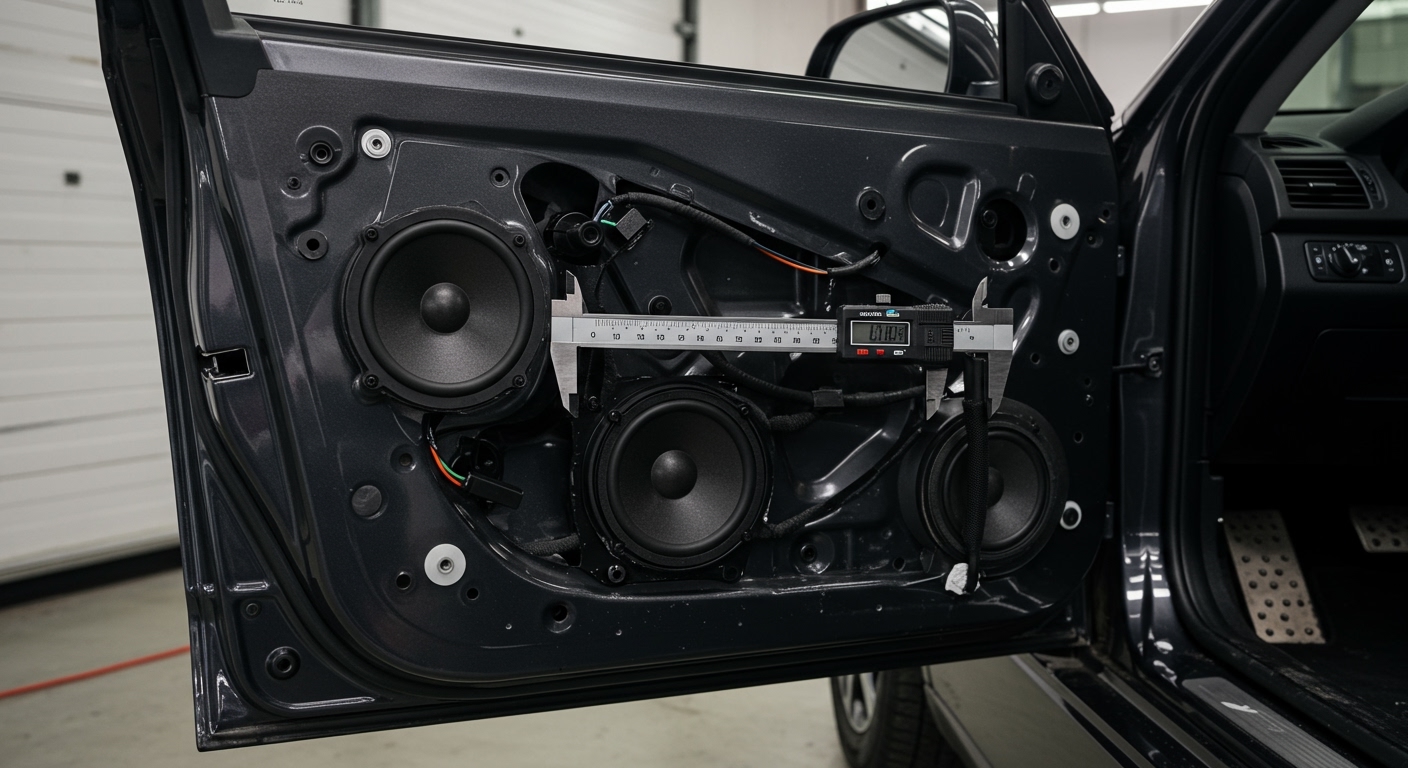
When measuring to see how to know if speakers will fit in your car, follow this Measurement Checklist:
| Measurement Type | What to Measure | Why it Matters |
|---|---|---|
| Frame Diameter | Distance across the widest part of the speaker frame. | Determines if the speaker fits the factory hole. |
| Mounting Depth | Distance from the mounting flange to the bottom of the magnet. | Ensures the speaker doesn’t hit the window glass when rolled down. |
| Cutout Diameter | The actual hole size in the door metal. | Determines if the basket of the new speaker will seat properly. |
| Protrusion Height | How far the tweeter sticks out past the frame. | Ensures the factory door panel can be reinstalled without hitting the speaker. |
Step 3: Understand Standard Car Speaker Sizes
Most vehicles use “standardized” sizes, but these can be deceptive. A 6.5-inch speaker from one brand might have a slightly different mounting pattern than another.
Common Speaker Sizes and Their Uses
3.5-inch to 4-inch: Usually found in the dashboard or pillars for high frequencies.
5.25-inch: Common in older European cars and smaller sedan doors.
6.5-inch & 6.75-inch: The industry standard for most modern front doors.
6×9-inch: Typically found in rear decks or front doors of trucks (like Ford F-150 or Ram 1500) for better bass response.
4×6-inch and 5×7/6×8-inch: Common in older GM, Ford, and Mazda vehicles.
Dealing with Oversized or “S” Sizes
You may see speakers labeled as 6.5S or shallow mount. These are specifically designed for vehicles with extremely limited mounting depth. If your database says “Shallow Mount Required,” do not ignore it, or your window glass will shatter against the speaker magnet.
Step 4: Verify Mounting Depth and Clearances
This is the most critical technical step in answering will these speakers fit my car. A speaker can have the perfect diameter but still fail to fit if the magnet is too large.
The Window Test
- Roll the window down completely before measuring.
- Measure the distance from the mounting surface to the window track.
- Compare this to the Top-Mount Depth listed in the speaker’s technical specifications.
Magnet Diameter and Basket Shape
Some high-performance speakers have massive magnets. If your car’s speaker hole is tapered or has a plastic “rain shield” behind it, a large magnet might not seat fully. You may need to trim the plastic or use a spacer ring to move the speaker forward.
Step 5: Essential Tools and Materials
To successfully execute a car speaker fit project, you need more than just a screwdriver.
| Tool | Purpose | Expert Tip |
|---|---|---|
| Plastic Trim Tools | Removing door panels. | Never use a metal screwdriver; it will mar your plastic. |
| Digital Caliper | Measuring exact diameters. | Essential for custom bracket fabrication. |
| Wiring Harness Adapters | Connecting to factory plugs. | Avoid cutting factory wires to preserve resale value. |
| Speaker Brackets | Adapting sizes (e.g., 6.5″ into 6×9″). | Use ABS plastic brackets rather than wood for moisture resistance. |
| Sound Deadening (Butyl) | Reducing vibrations. | Apply a small square behind the speaker to improve mid-bass. |
Step 6: Choosing Between Coaxial and Component Speakers
When asking how do i know what speakers fit my car, you must also consider the type of speaker.
Coaxial (Full-Range) Speakers
These contain the woofer and tweeter in one unit. They are the easiest to fit because they usually drop directly into the factory location.
Best for: Rear doors and budget-friendly upgrades.
Component Speaker Systems
These feature a separate woofer, tweeter, and crossover network.
The Fit Challenge: You must find a place to mount the separate tweeter (often in the dash or “A” pillar) and hide the crossover box inside the door panel.
Expert Advice: If your car came with factory tweeters in the dash, a component set will provide the best “soundstage,” but requires more effort to fit.
Finding the Perfect Match for Your Car’s Audio System
Upgrading your factory audio starts with one frustrating question: how do i know what speakers fit my car? Buying a high-end set of component speakers only to realize they are too deep for your door cavity is a common and expensive mistake. To ensure a perfect fit, you must identify your vehicle’s specific speaker dimensions, mounting depth, and wiring harness requirements using online compatibility databases or manual measurements.
This guide provides a professional roadmap to navigating car audio compatibility. Whether you are looking for how to tell what size speakers your car has or wondering will these speakers fit my car, we have the data-backed answers you need to shop with confidence.
🚀 Key Takeaways: Expert Summary
Use Online Databases: Tools like Crutchfield or Metra Online are the fastest ways to find your vehicle’s specific speaker locations and sizes.
Measure Three Dimensions: Don’t just look at the diameter; mounting depth and magnet diameter are critical for window clearance.
Check the Impedance: Most factory systems use 4-ohm or 2-ohm speakers; matching this is vital for your amplifier’s health.
Brackets are Your Friend: Many modern cars use proprietary shapes, meaning you’ll likely need aftermarket mounting brackets and wiring adapters.
Step 1: Research Your Vehicle’s Specific Configuration
Before you pick up a screwdriver, you need to gather data. Knowing how to find out what speakers are in my car starts with digital research. Vehicle manufacturers often change speaker sizes mid-generation or based on premium trim levels (like Bose or Harman Kardon systems).
Use a Vehicle Compatibility Database
The most reliable way to answer how to know what size speakers fit into a vehicle is to use an industry-standard database. These companies physically tear down cars to measure every millimeter of space.
- Visit a reputable car audio site: Enter your year, make, model, and trim level.
- Identify the “Package”: Specify if you have a base 4-speaker system or a premium 10-speaker amplified system.
- Note the locations: Your car likely has different sizes in the front doors, rear deck, and dash.
Consult Your Owner’s Manual or Service Guide
While owner’s manuals rarely list the physical dimensions, they often list the speaker wattage and impedance. For precise physical specs, search for “Service Manual” or “Wiring Diagram” PDFs online for your specific model.
Step 2: Measure the Factory Speakers Manually
If you have a rare or vintage vehicle, online databases might fail you. In this case, learning how to tell what size speakers your car has requires a hands-on approach.
Remove the Door Panel or Speaker Grille
To get an accurate measurement, you must see the speaker in its “natural habitat.”
Locate hidden screws: Check behind door handles and inside armrest pulls.
Use pry tools: Use plastic trim removal tools to avoid scratching your interior.
Disconnect wiring: Carefully unplug the factory harness.
Take Precise Measurements
When measuring to see how to know if speakers will fit in your car, follow this Measurement Checklist:
| Measurement Type | What to Measure | Why it Matters |
|---|---|---|
| Frame Diameter | Distance across the widest part of the speaker frame. | Determines if the speaker fits the factory hole. |
| Mounting Depth | Distance from the mounting flange to the bottom of the magnet. | Ensures the speaker doesn’t hit the window glass when rolled down. |
| Cutout Diameter | The actual hole size in the door metal. | Determines if the basket of the new speaker will seat properly. |
| Protrusion Height | How far the tweeter sticks out past the frame. | Ensures the factory door panel can be reinstalled without hitting the speaker. |
Step 3: Understand Standard Car Speaker Sizes
Most vehicles use “standardized” sizes, but these can be deceptive. A 6.5-inch speaker from one brand might have a slightly different mounting pattern than another.
Common Speaker Sizes and Their Uses
3.5-inch to 4-inch: Usually found in the dashboard or pillars for high frequencies.
5.25-inch: Common in older European cars and smaller sedan doors.
6.5-inch & 6.75-inch: The industry standard for most modern front doors.
6×9-inch: Typically found in rear decks or front doors of trucks (like Ford F-150 or Ram 1500) for better bass response.
4×6-inch and 5×7/6×8-inch: Common in older GM, Ford, and Mazda vehicles.
Dealing with Oversized or “S” Sizes
You may see speakers labeled as 6.5S or shallow mount. These are specifically designed for vehicles with extremely limited mounting depth. If your database says “Shallow Mount Required,” do not ignore it, or your window glass will shatter against the speaker magnet.
Step 4: Verify Mounting Depth and Clearances
This is the most critical technical step in answering will these speakers fit my car. A speaker can have the perfect diameter but still fail to fit if the magnet is too large.
The Window Test
- Roll the window down completely before measuring.
- Measure the distance from the mounting surface to the window track.
- Compare this to the Top-Mount Depth listed in the speaker’s technical specifications.
Magnet Diameter and Basket Shape
Some high-performance speakers have massive magnets. If your car’s speaker hole is tapered or has a plastic “rain shield” behind it, a large magnet might not seat fully. You may need to trim the plastic or use a spacer ring to move the speaker forward.
Step 5: Essential Tools and Materials
To successfully execute a car speaker fit project, you need more than just a screwdriver.
| Tool | Purpose | Expert Tip |
|---|---|---|
| Plastic Trim Tools | Removing door panels. | Never use a metal screwdriver; it will mar your plastic. |
| Digital Caliper | Measuring exact diameters. | Essential for custom bracket fabrication. |
| Wiring Harness Adapters | Connecting to factory plugs. | Avoid cutting factory wires to preserve resale value. |
| Speaker Brackets | Adapting sizes (e.g., 6.5″ into 6×9″). | Use ABS plastic brackets rather than wood for moisture resistance. |
| Sound Deadening (Butyl) | Reducing vibrations. | Apply a small square behind the speaker to improve mid-bass. |
Step 6: Choosing Between Coaxial and Component Speakers
When asking how do i know what speakers fit my car, you must also consider the type of speaker.
Coaxial (Full-Range) Speakers
These contain the woofer and tweeter in one unit. They are the easiest to fit because they usually drop directly into the factory location.
Best for: Rear doors and budget-friendly upgrades.
Component Speaker Systems
These feature a separate woofer, tweeter, and crossover network.
The Fit Challenge: You must find a place to mount the separate tweeter (often in the dash or “A” pillar) and hide the crossover box inside the door panel.
Expert Advice: If your car came with factory tweeters in the dash, a component set will provide the best “soundstage,” but requires more effort to fit.
Pro Tips for a Professional Fit
Check the “True” Impedance: Many modern JBL or Infinity speakers are rated at 3-ohms. They are designed to work safely with factory 4-ohm head units while extracting a bit more power.
Don’t Forget the Foam: Use foam acoustic rings (like Fast Rings) to seal the gap between the speaker and the door panel. This directs all the sound into the cabin rather than letting it leak into the door cavity.
Phase Check: If the bass sounds “thin” after installation, you might have the wires reversed on one speaker. This causes phase cancellation.
Common Mistakes to Avoid
- Ignoring the Tweeter Protrusion: On some cars, the door grille is very close to the speaker. A “High-mount” tweeter might hit the grille, causing rattles.
- Forcing the Fit: If the screw holes don’t line up perfectly, don’t force them. Use a universal adapter bracket. Forcing a screw can warp the speaker frame, leading to voice coil rub.
- Cutting the Moisture Barrier: Most doors have a plastic film to keep water out. If you must cut it to fit a larger magnet, reseal it with waterproof tape.
FAQs: Car Speaker Fitment
How do I know if a 6.5 speaker will fit in a 6×8 opening?
You cannot screw a 6.5-inch speaker directly into a 6×8-inch hole. However, you can use a 6×8 to 6.5-inch adapter bracket. These are widely available and often provide better sound quality because 6.5-inch speakers usually have superior build quality compared to oval sizes.
Can I put 6×9 speakers in my front doors?
If your car factory-equipped with 6x9s (common in Toyota, Dodge, and Ford), then yes. If your car has 6.5-inch holes, you generally cannot fit 6x9s without significant metal cutting, which we do not recommend for beginners.
Does the brand of speaker affect the fit?
Yes. Some brands, like Kicker or Rockford Fosgate, offer “Slim” or “Thin” versions of their speakers specifically for tight fits. Always check the spec sheet for “Mounting Depth” rather than relying on the brand name alone.
How do I find out what speakers are in my car without taking it apart?
The most accurate non-invasive way is to enter your VIN into a parts website like RockAuto or a car audio specialist site like Crutchfield. They can often tell you the exact speaker configuration based on your vehicle’s build sheet.
Conclusion: Get the Sound You Deserve
Finding out how do i know what speakers fit my car is the most technical part of the DIY audio journey. By combining online database research with physical measurements of mounting depth and diameter, you eliminate the guesswork. Remember to always prioritize window clearance and use wiring adapters to keep your installation clean and professional.
Ready to upgrade? Start by measuring your current setup and comparing it to the high-quality coaxial or component options available today. A perfectly fitted speaker doesn’t just sound better—it protects your vehicle’s integrity and ensures years of high-fidelity listening.