

Understanding the Core: How Passive Speakers Work
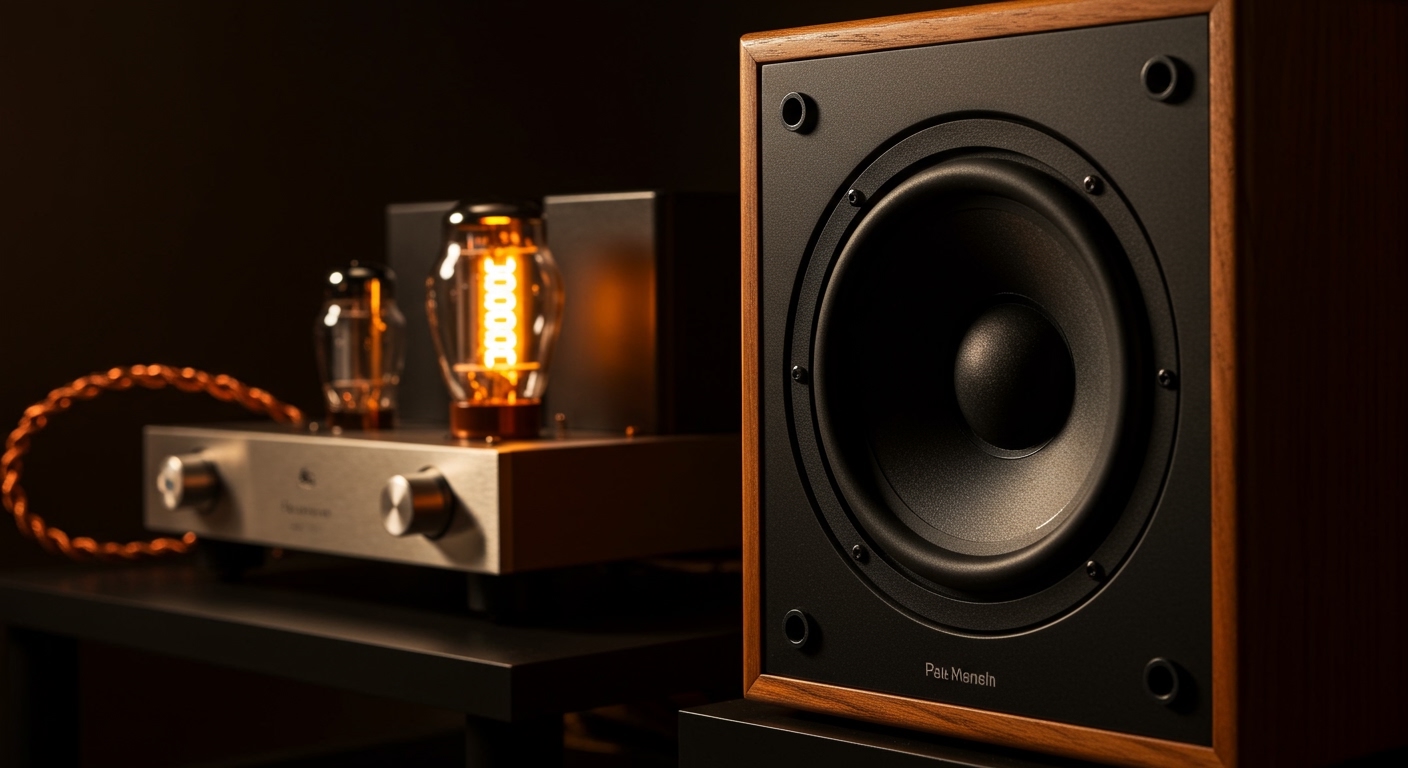
How passive speakers work is fundamentally simple: they require an external power source to produce sound because they do not have a built-in amplifier. Unlike active speakers that plug into a wall, passive speakers receive an amplified electrical signal through speaker wire, which then vibrates the internal drivers to create audio waves.
🚀 Quick Summary: Key Takeaways
External Power Required: Passive speakers must be connected to an integrated amplifier or an AV receiver to function.
Signal Path: The audio starts at the source, moves to the amp for boosting, and travels through speaker wires to the speaker’s crossover.
Customization: They offer superior flexibility, allowing you to mix and match different amplifiers and speakers for a specific “sound signature.”
Durability: Because they lack internal electronics that generate heat, passive speakers often last decades longer than active counterparts.
What You Need for a Passive Speaker Setup
Before you start, you must gather the right components. Unlike “all-in-one” Bluetooth speakers, a passive system is modular.
| Component | Purpose | Recommended Spec |
|---|---|---|
| Passive Speakers | The output device that produces sound. | Match the Impedance (Ohms) to your amp. |
| Amplifier / Receiver | Boosts the low-level signal to a powerful current. | Look for RMS Power, not just “Peak Power.” |
| Speaker Wire | Transmits the electrical signal between units. | 14-gauge or 16-gauge oxygen-free copper. |
| Audio Source | Where the music comes from (Turntable, DAC, Phone). | High-quality digital or analog output. |
| Banana Plugs | Connectors for the ends of the wires. | Gold-plated for better conductivity and ease of use. |
Step 1: Matching Your Amplifier and Speakers
The most critical part of understanding how to use passive speakers is ensuring your amplifier can safely drive them. If you mismatch the power or impedance, you risk “clipping” (distorting the sound) or blowing the voice coils.
Check the Impedance (Ohms)
Most home audio speakers are rated at 8 Ohms, while some high-end models are 4 Ohms. Ensure your amplifier is rated to handle the specific Ohm load of your speakers. Using a 4-Ohm speaker on an amp only rated for 8 Ohms can cause the amp to overheat.
Understand Power Handling (Watts)
Look for the RMS (Root Mean Square) rating rather than the “Peak” rating. If your speakers are rated for 50-100 Watts RMS, your amplifier should ideally provide about 1.5x that power (150 Watts) to provide “headroom,” ensuring clean sound at high volumes.
Understanding the Core: How Passive Speakers Work
How passive speakers work is fundamentally simple: they require an external power source to produce sound because they do not have a built-in amplifier. Unlike active speakers that plug into a wall, passive speakers receive an amplified electrical signal through speaker wire, which then vibrates the internal drivers to create audio waves.
🚀 Quick Summary: Key Takeaways
External Power Required: Passive speakers must be connected to an integrated amplifier or an AV receiver to function.
Signal Path: The audio starts at the source, moves to the amp for boosting, and travels through speaker wires to the speaker’s crossover.
Customization: They offer superior flexibility, allowing you to mix and match different amplifiers and speakers for a specific “sound signature.”
Durability: Because they lack internal electronics that generate heat, passive speakers often last decades longer than active counterparts.
What You Need for a Passive Speaker Setup
Before you start, you must gather the right components. Unlike “all-in-one” Bluetooth speakers, a passive system is modular.
| Component | Purpose | Recommended Spec |
|---|---|---|
| Passive Speakers | The output device that produces sound. | Match the Impedance (Ohms) to your amp. |
| Amplifier / Receiver | Boosts the low-level signal to a powerful current. | Look for RMS Power, not just “Peak Power.” |
| Speaker Wire | Transmits the electrical signal between units. | 14-gauge or 16-gauge oxygen-free copper. |
| Audio Source | Where the music comes from (Turntable, DAC, Phone). | High-quality digital or analog output. |
| Banana Plugs | Connectors for the ends of the wires. | Gold-plated for better conductivity and ease of use. |
Step 1: Matching Your Amplifier and Speakers
The most critical part of understanding how to use passive speakers is ensuring your amplifier can safely drive them. If you mismatch the power or impedance, you risk “clipping” (distorting the sound) or blowing the voice coils.
Check the Impedance (Ohms)
Most home audio speakers are rated at 8 Ohms, while some high-end models are 4 Ohms. Ensure your amplifier is rated to handle the specific Ohm load of your speakers. Using a 4-Ohm speaker on an amp only rated for 8 Ohms can cause the amp to overheat.
Understand Power Handling (Watts)
Look for the RMS (Root Mean Square) rating rather than the “Peak” rating. If your speakers are rated for 50-100 Watts RMS, your amplifier should ideally provide about 1.5x that power (150 Watts) to provide “headroom,” ensuring clean sound at high volumes.
Step 2: Preparing the Speaker Wire
To understand what do you need for passive speakers, you must focus on the “veins” of the system: the wiring. High-quality wire ensures the signal arrives without resistance or interference.
- Measure the distance: Calculate the distance from the amp to each speaker. Keep both wires the same length to ensure perfectly timed signals.
- Strip the insulation: Use a wire stripper to remove about 1/2 inch of the plastic jacket from each end.
- Twist the strands: Tightly twist the copper strands so there are no “frays” that could cause a short circuit.
- Attach connectors: While bare wire works, using Banana Plugs or Spade Lugs provides a much more secure and professional connection.
Step 3: Connecting the Components
Now that you have the hardware, it is time to complete the circuit. This is where you see exactly how passive speakers work as a synchronized system.
Identify Polarity
Every speaker wire has a Positive (+) and Negative (-) side. Usually, the positive wire has a red stripe or text on the casing.
Connect the Red terminal on the amplifier to the Red terminal on the speaker.
Connect the Black terminal on the amplifier to the Black terminal on the speaker.
Secure the Terminals
If using binding posts, unscrew the cap, insert the wire or banana plug, and tighten it firmly. Ensure no stray copper strands are touching the neighboring terminal, as this will trigger the amplifier’s “Protection Mode” or cause a permanent hardware failure.
Step 4: Configuring the Audio Source
Passive speakers are used for everything from high-fidelity vinyl listening to professional stage monitoring. Your source determines the final “flavor” of the audio.
For Home Theater: Connect your TV or Blu-ray player to an AV Receiver via HDMI (ARC/eARC).
For Hi-Fi Music: Connect a DAC (Digital-to-Analog Converter) or a Turntable (with a phono preamp) to the “Line In” or “CD” RCA ports on your amplifier.
For Pro Audio: If you are asking what are passive PA speakers, these are used in live venues. You will likely use Speakon cables and a rack-mounted power amplifier to drive these large-format drivers.
Step 5: Positioning for Optimal Soundstage
Even the best setup will sound poor if the speakers are placed incorrectly. Passive speakers rely heavily on room acoustics.
- The Equilateral Triangle: Place your two speakers and your main listening chair in a perfect triangle.
- Ear Level: Ensure the Tweeters (the small high-frequency drivers) are at the same height as your ears when sitting.
- Wall Clearance: Avoid placing speakers directly against a wall. Give them at least 6-12 inches of space to prevent “boomy” or muddy bass.
The Science: What Does Passive Mean in Speakers?
When people ask what does passive mean in speakers, they are referring to the lack of an internal power source. In an active speaker, the crossover happens before the amplification. In a passive speaker, the sequence is reversed.
The Role of the Crossover
Inside every passive cabinet is a Crossover Network. This is a circuit made of capacitors, inductors, and resistors. Its job is to “split” the incoming electrical signal:
High frequencies are sent to the Tweeter.
Low frequencies are sent to the Woofer.
Mid-range frequencies (in 3-way speakers) go to the Mid-range driver.
Electromagnetic Induction
The amplified signal flows into a voice coil attached to the speaker cone. This coil sits inside a permanent magnet. As the electricity fluctuates, it creates a varying magnetic field that pushes and pulls the cone, moving the air and creating the sound waves you hear.
Expert Tips for Passive Speaker Success
Based on years of testing high-end audio gear like Bowers & Wilkins and SVS, here are the “pro” secrets to getting the most out of your system:
Don’t overspend on cables: While you need decent oxygen-free copper, $1,000 “audiophile” cables rarely provide a measurable difference over standard 14-AWG wire.
Check for “Out of Phase”: If your bass sounds thin or the vocals seem to come from “nowhere,” you likely swapped the (+) and (-) wires on one speaker.
Bi-Wiring vs. Single Wiring: Some passive speakers have four terminals instead of two. Unless you have a very high-end amp, keep the “bridge plates” on and use a single pair of wires.
The “Knuckle Test”: Tap the side of your speaker cabinet. If it sounds hollow or “ringy,” consider adding acoustic foam to your room to dampen reflections.
Common Mistakes to Avoid
- Underpowering Speakers: Surprisingly, a weak amp is more likely to damage a speaker than a powerful one. A weak amp “clips” when pushed, sending a distorted square wave that can melt a tweeter’s voice coil.
- Using Thin Wire: For runs longer than 50 feet, avoid 18-gauge wire. The resistance will cause a drop in high-frequency response.
- Ignoring the Room: A $5,000 speaker in a room with bare tile floors and glass walls will sound worse than a $500 speaker in a treated room.
Frequently Asked Questions
(FAQs)
What are passive speakers used for?
Passive speakers are used for high-fidelity home audio, custom home theaters, and professional live sound (PA systems). They are preferred by enthusiasts who want to upgrade their amplifier and speakers independently to achieve a specific sound quality.
What do I need for passive speakers to work?
You need three primary components: an external amplifier (or receiver), speaker cables, and an audio source. Unlike active speakers, they cannot produce sound if plugged directly into a phone or computer via a 3.5mm jack.
What are passive PA speakers?
Passive PA (Public Address) speakers are large, high-output speakers designed for concerts, churches, or events. They are built for durability and high volume. They require heavy-duty external power amps and are often connected via Speakon or 1/4-inch TS cables.
Can I connect passive speakers to my PC?
Not directly. You must connect your PC to a DAC or Amp, and then connect the amp to the passive speakers. Small “Desktop Amps” (Class D) from brands like Fosi Audio or SMSL are perfect for this setup.
Is passive better than active?
It depends on your goal. Passive systems offer more longevity and customization. Active systems (like studio monitors) are more convenient and have internal crossovers perfectly tuned to the drivers.
Conclusion
Understanding how passive speakers work opens the door to the world of “True Hi-Fi.” By separating the power source from the speaker cabinet, you gain total control over your audio’s texture, power, and clarity. Whether you are building a vintage vinyl station or a modern 7.1.2 Dolby Atmos theater, the principles remain the same: match your impedance, use quality wire, and let the external amp do the heavy lifting.
Ready to build your dream system? Start by selecting an amplifier that provides at least 20% more power than your speakers’ RMS rating for the cleanest possible sound!









