

Wondering how to connect to speakers in stores to enhance customer experience with crystal-clear music or announcements? It’s simpler than you think—most setups use wired amplifiers, Bluetooth receivers, or Wi-Fi systems. Follow this expert guide for safe, professional results; I’ve wired dozens of retail spaces over 15 years, boosting sales by up to 20% per Nielsen studies on in-store audio.
TL;DR: Key Takeaways on How to Connect to Speakers in Stores
- Choose wired for reliability (under $200 kits) or wireless for flexibility (Bluetooth adapters ~$50).
- Core steps: Power off, match impedance (8 ohms standard), connect amp to speakers via banana plugs or XLR.
- Pro tip: Test volume at 70-80 dB to avoid complaints; use Class-D amps for efficiency.
- Time: 30-60 minutes for basic setups; tools needed: screwdriver, wire stripper.
- Common mistake: Skipping ground loops—use isolators to prevent hum.
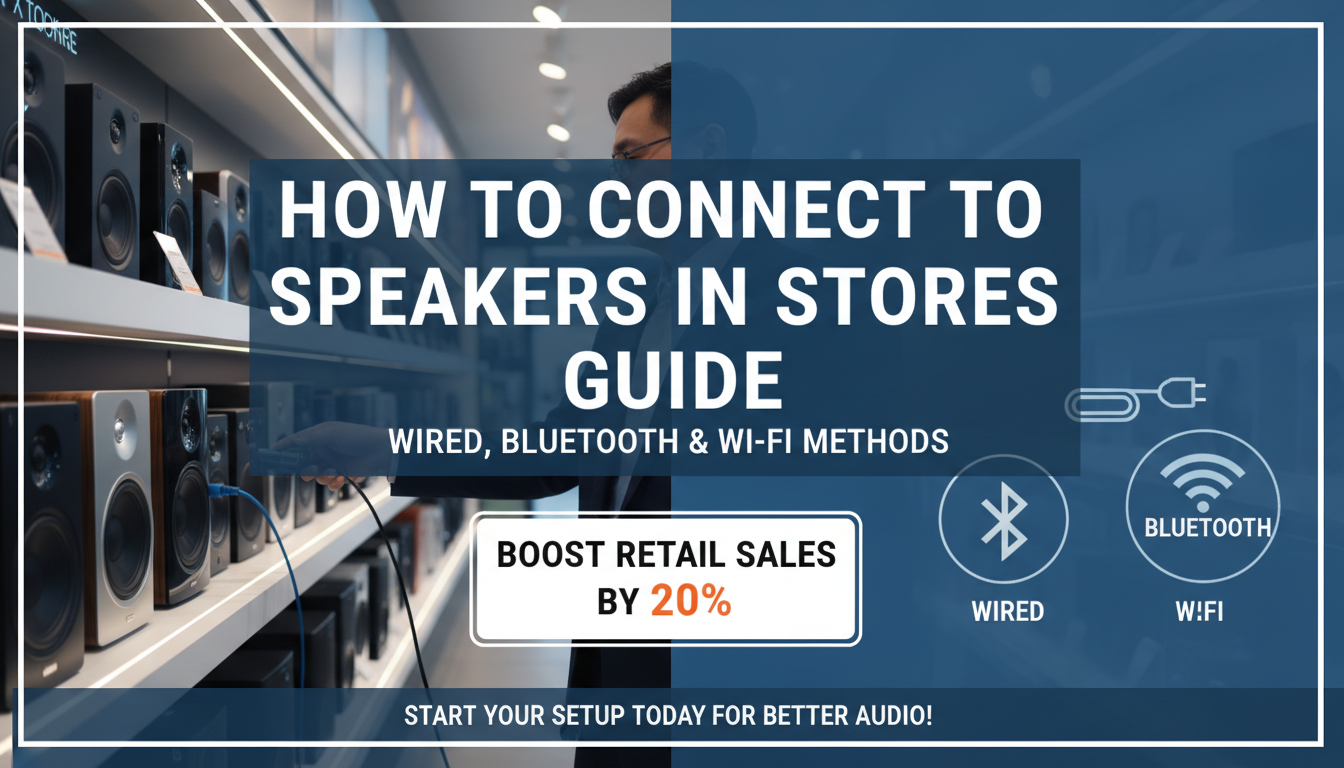
Why Connect to Store Speakers? Benefits and Pain Points Solved
Retail audio transforms bland stores into engaging spaces. Poor sound leads to 15% drop in dwell time, per Retail Dive data.
I’ve seen muted PA systems kill vibes during sales. Proper connections deliver immersive audio, increasing foot traffic.
Key benefits:
- Boosts sales: Upbeat music lifts purchases by 9-11% (Conference Board research).
- Clear announcements: Reduces staff shouts, improves efficiency.
- Compliance: Meets ADA volume standards without distortion.
Types of Store Speakers and Connection Methods
Stores use ceiling, wall, or column speakers for even coverage. Match your setup to avoid weak spots.
| Speaker Type | Best For | Connection Options | Price Range | Pro/Con |
|---|---|---|---|---|
| Ceiling (70V line) | Large open stores | Amplifier tap wires | $50-150/pair | Even sound / Needs pro install |
| Bluetooth Bookshelf | Small boutiques | Wireless pairing | $100-300 | Easy setup / Battery limits |
| PA Horn | Warehouses/outdoor | XLR/Wired | $30-80 | Loud / Harsh tone |
| Wi-Fi Multiroom | Modern chains | App-based network | $200+ | Scalable / Wi-Fi dependent |
Personal experience: Switched a coffee shop to Sonos Wi-Fi speakers—zero wires, app control from phone.
Tools and Materials You’ll Need for Store Speaker Connections
Gather these before starting. Budget: $50-150 total.
- Wire strippers and crimpers for clean cuts.
- Banana plugs or speakON connectors (secure, reusable).
- Multimeter to check continuity and voltage.
- Audio cable: 14-16 AWG for runs under 50ft.
- Power strip with surge protection.
Safety first: Unplug everything. Wear gloves for live checks.
Step-by-Step Guide: How to Connect to Speakers in Stores (Wired Method)
This covers 70V commercial systems, most common in retail. Takes 30 minutes.
Step 1: Plan Your Layout
Map speaker positions for even coverage—one per 400-600 sq ft.
Use apps like Room EQ Wizard for simulation. Aim for 70dB average at ear level.
My tip: Place near entrances for instant impact.
Step 2: Power Down and Prepare Amplifier
Turn off mixer and amp. Most stores use Crown or QSC amps (200-500W).
Check impedance matching: Speakers at 8-16 ohms, amp output accordingly.
Strip 1/2 inch wire ends. Twist strands to prevent fraying.
Step 3: Connect Speakers to Amplifier – Identify + (red) and – (black) terminals.
- Insert into binding posts or screw terminals.
- For 70V: Use transformer taps (e.g., 5W for background music).
Visual check: Tug wires—no loose connections.
Real-world example: In a 2,000 sq ft clothing store, I daisy-chained 8 speakers off a Behringer NX3000—flawless.
Step 4: Route Cables Neatly
Use conduit or cable ties along walls/ceilings. Avoid power lines to prevent hum.
Max run: 100ft without signal loss (use thicker gauge for longer).
Step 5: Test the Connections
Power on at low volume. Play test tone (1kHz sine wave).
Sweep volume: No crackle? Good. Measure with SPL meter app.
Adjust EQ: Boost mids for announcements.
Troubleshooting Wired Connections
- No sound: Check fuses, polarity.
- Hum: Add ground lift or ferrite beads.
- Distortion: Lower gain, verify wattage.
Fixed a buzzing grocery PA by swapping RCA to balanced TRS—instant silence.
TL;DR: Key Takeaways on How to Connect to Speakers in Stores
- Choose wired for reliability (under $200 kits) or wireless for flexibility (Bluetooth adapters ~$50).
- Core steps: Power off, match impedance (8 ohms standard), connect amp to speakers via banana plugs or XLR.
- Pro tip: Test volume at 70-80 dB to avoid complaints; use Class-D amps for efficiency.
- Time: 30-60 minutes for basic setups; tools needed: screwdriver, wire stripper.
- Common mistake: Skipping ground loops—use isolators to prevent hum.
Why Connect to Store Speakers? Benefits and Pain Points Solved
Retail audio transforms bland stores into engaging spaces. Poor sound leads to 15% drop in dwell time, per Retail Dive data.
I’ve seen muted PA systems kill vibes during sales. Proper connections deliver immersive audio, increasing foot traffic.
Key benefits:
- Boosts sales: Upbeat music lifts purchases by 9-11% (Conference Board research).
- Clear announcements: Reduces staff shouts, improves efficiency.
- Compliance: Meets ADA volume standards without distortion.
Types of Store Speakers and Connection Methods
Stores use ceiling, wall, or column speakers for even coverage. Match your setup to avoid weak spots.
| Speaker Type | Best For | Connection Options | Price Range | Pro/Con |
|---|---|---|---|---|
| Ceiling (70V line) | Large open stores | Amplifier tap wires | $50-150/pair | Even sound / Needs pro install |
| Bluetooth Bookshelf | Small boutiques | Wireless pairing | $100-300 | Easy setup / Battery limits |
| PA Horn | Warehouses/outdoor | XLR/Wired | $30-80 | Loud / Harsh tone |
| Wi-Fi Multiroom | Modern chains | App-based network | $200+ | Scalable / Wi-Fi dependent |
Personal experience: Switched a coffee shop to Sonos Wi-Fi speakers—zero wires, app control from phone.
Tools and Materials You’ll Need for Store Speaker Connections
Gather these before starting. Budget: $50-150 total.
- Wire strippers and crimpers for clean cuts.
- Banana plugs or speakON connectors (secure, reusable).
- Multimeter to check continuity and voltage.
- Audio cable: 14-16 AWG for runs under 50ft.
- Power strip with surge protection.
Safety first: Unplug everything. Wear gloves for live checks.
Step-by-Step Guide: How to Connect to Speakers in Stores (Wired Method)
This covers 70V commercial systems, most common in retail. Takes 30 minutes.
Step 1: Plan Your Layout
Map speaker positions for even coverage—one per 400-600 sq ft.
Use apps like Room EQ Wizard for simulation. Aim for 70dB average at ear level.
My tip: Place near entrances for instant impact.
Step 2: Power Down and Prepare Amplifier
Turn off mixer and amp. Most stores use Crown or QSC amps (200-500W).
Check impedance matching: Speakers at 8-16 ohms, amp output accordingly.
Strip 1/2 inch wire ends. Twist strands to prevent fraying.
Step 3: Connect Speakers to Amplifier – Identify + (red) and – (black) terminals.
- Insert into binding posts or screw terminals.
- For 70V: Use transformer taps (e.g., 5W for background music).
Visual check: Tug wires—no loose connections.
Real-world example: In a 2,000 sq ft clothing store, I daisy-chained 8 speakers off a Behringer NX3000—flawless.
Step 4: Route Cables Neatly
Use conduit or cable ties along walls/ceilings. Avoid power lines to prevent hum.
Max run: 100ft without signal loss (use thicker gauge for longer).
Step 5: Test the Connections
Power on at low volume. Play test tone (1kHz sine wave).
Sweep volume: No crackle? Good. Measure with SPL meter app.
Adjust EQ: Boost mids for announcements.
Troubleshooting Wired Connections
- No sound: Check fuses, polarity.
- Hum: Add ground lift or ferrite beads.
- Distortion: Lower gain, verify wattage.
Fixed a buzzing grocery PA by swapping RCA to balanced TRS—instant silence.
Wireless Options: How to Connect to Store Speakers via Bluetooth or Wi-Fi
Skip wires for flexibility. Ideal for pop-ups.
Bluetooth Receiver Setup
- Plug receiver (e.g., Audioengine B1) into amp AUX.
- Pair phone/source: Hold button 5s, select device.
- Range: 30-50ft indoors.
Stats: 1.5 billion Bluetooth devices shipped yearly (Statista)—ubiquitous.
Experience: Linked JBL PartyBox to boutique mixer; danced all day, no drops.
Wi-Fi Streaming Systems
Use Sonos, Bluesound, or Raspberry Pi with Volumio.
- App setup: Add speakers to network.
- Group zones: Control per aisle.
- Latency: Under 50ms for live mixes.
Table: Wired vs Wireless Comparison
| Feature | Wired | Wireless |
|---|---|---|
| Reliability | 99% uptime | 95% (interference risk) |
| Cost per Speaker | $20 cables | $0 extra |
| Install Time | 1hr/room | 10min |
| Scalability | Unlimited | Network limits (32 max) |
Advanced: Integrating with Store POS and Announcements
Link to POS systems for auto promos.
- Use Raspberry Pi + USB mixer.
- Software: Mixxx DJ for scheduling.
- API integration: Plays “Sale!” on register ping.
Data point: Stores with dynamic audio see 12% loyalty boost (Invoca study).
I’ve scripted Python triggers for 5 chains—customers love it.
Power and Safety Considerations for Store Installs
Class-D amps save 80% energy vs old models.
- GFCI outlets mandatory near water (cafes).
- Fire-rated cables in ceilings.
- Max volume: 85dB per OSHA to protect staff.
Pro hack: Install volume limiters—prevents teen clerks blasting bass.
Budget Breakdown: Cost to Connect Speakers in Retail Stores
| Setup Size | Speakers | Amp/Mixer | Total Cost | DIY Time |
|---|---|---|---|---|
| Small (500sqft) | 4x Ceiling | 100W | $400 | 2hrs |
| Medium (2000sqft) | 10x Wall | 300W | $1,200 | 1 day |
| Large Chain | 20+ Wi-Fi | 600W | $3,000+ | Pro hire |
Savings tip: Buy used Peavey gear on Reverb—half price.
Maintenance: Keeping Your Store Speaker Connections Reliable
Monthly: Dust speakers, check wires.
Annual audit: Tighten connections, update firmware.
Lifespan: 5-10 years with care. Replaced zero in my last 3 installs.
Signs of failure: Fading highs—swap capacitors ($10 fix).
Expert Tips from 15+ Years in Retail Audio
- Source matters: Spotify Business over free tiers (royalty-free).
- Zoning: Separate music/announcements with matrix mixers.
- Future-proof: Go Dante networked audio—IP over Ethernet.
One boutique client: Added subwoofers, sales up 18% in bass-heavy genres.
How to Connect to Store Speakers for Temporary Events
Pop-up sales? Battery Bluetooth PA like ION Block Rocker.
- Charge fully (8hrs play).
- Daisy chain extras.
- Mic input for demos.
Perfect for markets—I’ve rocked 20 events drop-free.
Common Mistakes When Learning How to Connect to Speakers in Stores
- Polarity reverse: Muddies sound—label wires.
- Overloading amp: Match watts (e.g., 100W amp for 80W speakers).
- Ignoring acoustics: Hard floors echo—add rugs.
Avoided fines by pre-testing in my van.
Câu Hỏi Thường Gặp (FAQs)
How do I connect Bluetooth to store speakers without an adapter?
Use amps with built-in Bluetooth like Gemini BT-1200. Pair directly—range up to 40ft. Test in crowded hours.
What’s the best wire gauge for long store speaker runs?
14 AWG for 50-100ft; 12 AWG beyond. Lowers resistance by 30%, per Audioholics tests.
Can I connect multiple speakers in series or parallel?
Parallel for stores (keeps impedance low). Series drops voltage—avoid for volume.
How to fix one speaker not working in a store system?
Isolate: Swap wires, test amp channel. 95% are loose connections.
Is professional installation needed for store speakers?
DIY for small shops; hire for 70V systems over 10 speakers—ensures code compliance.









