

Deciding if You Should Install Surround Speakers in the Ceiling
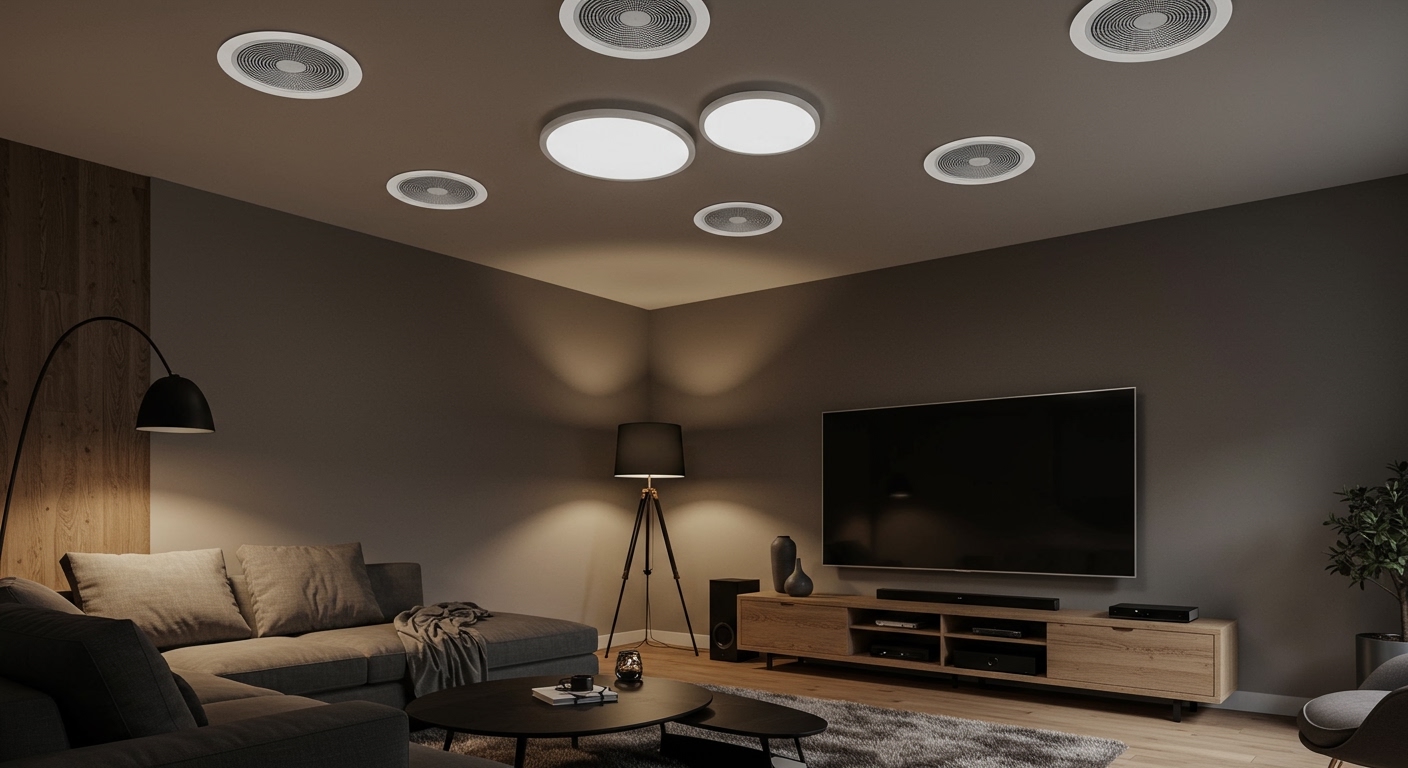
Yes, can i put surround speakers in ceiling? The short answer is yes, you can absolutely install surround speakers in the ceiling to create a clean, wire-free home theater environment. While traditional layouts place speakers at ear level, modern in-ceiling technology and angled baffles allow you to achieve an immersive experience without cluttering your floor space.
🚀 Expert Summary: Key Takeaways
Aesthetics vs. Performance: In-ceiling setups offer a “stealth” look but require pivoting tweeters to direct sound toward the listener.
Wiring Safety: Always use CL2 or CL3-rated speaker wire for in-wall and in-ceiling installations to meet fire safety codes.
Placement Strategy: For 5.1 systems, rear surround speakers in ceiling should be placed slightly behind the seating area, angled toward the “sweet spot.”
Dolby Atmos Conflict: If you plan on a Dolby Atmos setup, avoid putting your primary surrounds in the ceiling, as Atmos relies on the separation between floor-level and ceiling-level audio.
Understanding the “All-In-Ceiling” Surround Sound Strategy
Many homeowners ask, “can i have surround sound speakers just in my ceiling?” because they want to avoid bulky floor-standing towers. While purists argue that sound should come from the direction of the action on screen, high-quality in-ceiling speakers can mimic this effect effectively.
When you mount surround speakers on the ceiling, the primary challenge is “localization.” This happens when your brain realizes the sound is coming from above rather than behind you. To fix this, experts recommend speakers with an angled woofer (usually 15 to 30 degrees) to “throw” the sound toward your ears.
Comparison: In-Ceiling vs. Traditional Surround Placement
| Feature | In-Ceiling Speakers | Traditional (Bookshelf/On-Wall) |
|---|---|---|
| Visual Impact | Nearly invisible; flush-mount grilles. | Highly visible; requires stands or mounts. |
| Soundstage | Can feel “elevated” without proper angling. | Accurate ear-level imaging. |
| Installation | Difficult; requires cutting drywall and fishing wire. | Easy; plug-and-play. |
| Space Saving | 10/10 – Zero floor footprint. | 4/10 – Takes up floor or wall space. |
| Best For | Minimalist living rooms/multi-purpose spaces. | Dedicated home theater rooms. |
Essential Tools and Materials for Installation
Before you begin learning how to set up surround sound speakers in ceiling, gather these professional-grade tools. Having the right equipment prevents “wall-fishing” nightmares and ensures a clean finish.
| Category | Item Needed | Purpose |
|---|---|---|
| Hardware | In-ceiling speakers | Look for “pivoting tweeter” or “angled” models. |
| Cabling | 14/2 or 16/2 CL3 Wire | Fire-rated wire for in-wall safety. |
| Cutting | Drywall Saw | For manual, precise circular cuts. |
| Planning | Stud Finder | To avoid ceiling joists and electrical conduits. |
| Fishing | Fish Tape or Glow Rods | To pull wire through the ceiling cavity. |
| Finishing | Painter’s Tape | To mark the template without damaging paint. |
Step-by-Step Guide: How to Set Up Surround Sound Speakers in Ceiling
If you have decided that can surround sound speakers be placed in the ceiling is the right move for your home, follow this professional installation workflow.
Step 1: Map Your Speaker Placement
The biggest mistake is placing speakers directly over the listener’s head. For a 5.1 setup, can rear surround speakers be in ceiling? Yes, but they should be positioned roughly 2 to 3 feet behind the main seating area.
- Measure the distance from the screen to the couch.
- Mark the ceiling spots so the speakers are spread apart at an angle of 110–120 degrees from the center of the seating position.
- Ensure there is at least 12 inches of clearance from any walls to prevent bass “boominess.”
Step 2: Check for Obstructions
Use a high-quality stud finder with “Deep Scan” mode. You need to ensure the space between the joists is wide enough for the speaker basket.
Pro Tip: Use a small “pilot bit” to drill a hole and poke a bent coat hanger inside. Spin it around to ensure no hidden pipes or wires are in the way before you cut a large 8-inch hole.
Step 3: Cut the Drywall
Most in-ceiling speakers come with a cardboard template.
- Tape the template to the ceiling using Painter’s Tape.
- Trace the circle with a pencil.
- Use a drywall saw to cut at a 90-degree angle.
- Expert Advice: Wear goggles and a mask; ceiling insulation and drywall dust are irritants.
Step 4: Run the CL3-Rated Speaker Wire
This is the most labor-intensive part of the process. You must run the wire from your AV Receiver (AVR) location, up through the wall, and across the ceiling joists.
If your joists run parallel to the wire path, use glow rods to slide the wire through.
- If joists are perpendicular, you may need to cut small “access holes” or use a long flexible drill bit to create passage holes.
Step 5: Connect and Secure the Speakers
Strip about half an inch of insulation from the speaker wire.
- Connect the positive (+) and negative (-) leads to the spring-loaded terminals on the speaker.
- Insert the speaker into the hole.
- Tighten the “dog-leg” brackets using a screwdriver. These brackets flip out and sandwich the drywall to hold the speaker in place.
- Warning: Do not over-tighten with a power drill, as you can crack the drywall or the plastic speaker frame.
Step 6: Calibrate the Audio System
Once installed, your surround speakers in the ceiling will naturally sound different than floor speakers.
- Use your receiver’s Auto-Calibration (like Audyssey, YPAO, or Dirac Live).
- The system will use a microphone to adjust the “Delay” and “Level” to compensate for the height of the speakers.
- Manually aim the pivoting tweeters toward the ears of the listeners.
Deciding if You Should Install Surround Speakers in the Ceiling
Yes, can i put surround speakers in ceiling? The short answer is yes, you can absolutely install surround speakers in the ceiling to create a clean, wire-free home theater environment. While traditional layouts place speakers at ear level, modern in-ceiling technology and angled baffles allow you to achieve an immersive experience without cluttering your floor space.
🚀 Expert Summary: Key Takeaways
Aesthetics vs. Performance: In-ceiling setups offer a “stealth” look but require pivoting tweeters to direct sound toward the listener.
Wiring Safety: Always use CL2 or CL3-rated speaker wire for in-wall and in-ceiling installations to meet fire safety codes.
Placement Strategy: For 5.1 systems, rear surround speakers in ceiling should be placed slightly behind the seating area, angled toward the “sweet spot.”
Dolby Atmos Conflict: If you plan on a Dolby Atmos setup, avoid putting your primary surrounds in the ceiling, as Atmos relies on the separation between floor-level and ceiling-level audio.
Understanding the “All-In-Ceiling” Surround Sound Strategy
Many homeowners ask, “can i have surround sound speakers just in my ceiling?” because they want to avoid bulky floor-standing towers. While purists argue that sound should come from the direction of the action on screen, high-quality in-ceiling speakers can mimic this effect effectively.
When you mount surround speakers on the ceiling, the primary challenge is “localization.” This happens when your brain realizes the sound is coming from above rather than behind you. To fix this, experts recommend speakers with an angled woofer (usually 15 to 30 degrees) to “throw” the sound toward your ears.
Comparison: In-Ceiling vs. Traditional Surround Placement
| Feature | In-Ceiling Speakers | Traditional (Bookshelf/On-Wall) |
|---|---|---|
| Visual Impact | Nearly invisible; flush-mount grilles. | Highly visible; requires stands or mounts. |
| Soundstage | Can feel “elevated” without proper angling. | Accurate ear-level imaging. |
| Installation | Difficult; requires cutting drywall and fishing wire. | Easy; plug-and-play. |
| Space Saving | 10/10 – Zero floor footprint. | 4/10 – Takes up floor or wall space. |
| Best For | Minimalist living rooms/multi-purpose spaces. | Dedicated home theater rooms. |
Essential Tools and Materials for Installation
Before you begin learning how to set up surround sound speakers in ceiling, gather these professional-grade tools. Having the right equipment prevents “wall-fishing” nightmares and ensures a clean finish.
| Category | Item Needed | Purpose |
|---|---|---|
| Hardware | In-ceiling speakers | Look for “pivoting tweeter” or “angled” models. |
| Cabling | 14/2 or 16/2 CL3 Wire | Fire-rated wire for in-wall safety. |
| Cutting | Drywall Saw | For manual, precise circular cuts. |
| Planning | Stud Finder | To avoid ceiling joists and electrical conduits. |
| Fishing | Fish Tape or Glow Rods | To pull wire through the ceiling cavity. |
| Finishing | Painter’s Tape | To mark the template without damaging paint. |
Step-by-Step Guide: How to Set Up Surround Sound Speakers in Ceiling
If you have decided that can surround sound speakers be placed in the ceiling is the right move for your home, follow this professional installation workflow.
Step 1: Map Your Speaker Placement
The biggest mistake is placing speakers directly over the listener’s head. For a 5.1 setup, can rear surround speakers be in ceiling? Yes, but they should be positioned roughly 2 to 3 feet behind the main seating area.
- Measure the distance from the screen to the couch.
- Mark the ceiling spots so the speakers are spread apart at an angle of 110–120 degrees from the center of the seating position.
- Ensure there is at least 12 inches of clearance from any walls to prevent bass “boominess.”
Step 2: Check for Obstructions
Use a high-quality stud finder with “Deep Scan” mode. You need to ensure the space between the joists is wide enough for the speaker basket.
Pro Tip: Use a small “pilot bit” to drill a hole and poke a bent coat hanger inside. Spin it around to ensure no hidden pipes or wires are in the way before you cut a large 8-inch hole.
Step 3: Cut the Drywall
Most in-ceiling speakers come with a cardboard template.
- Tape the template to the ceiling using Painter’s Tape.
- Trace the circle with a pencil.
- Use a drywall saw to cut at a 90-degree angle.
- Expert Advice: Wear goggles and a mask; ceiling insulation and drywall dust are irritants.
Step 4: Run the CL3-Rated Speaker Wire
This is the most labor-intensive part of the process. You must run the wire from your AV Receiver (AVR) location, up through the wall, and across the ceiling joists.
If your joists run parallel to the wire path, use glow rods to slide the wire through.
- If joists are perpendicular, you may need to cut small “access holes” or use a long flexible drill bit to create passage holes.
Step 5: Connect and Secure the Speakers
Strip about half an inch of insulation from the speaker wire.
- Connect the positive (+) and negative (-) leads to the spring-loaded terminals on the speaker.
- Insert the speaker into the hole.
- Tighten the “dog-leg” brackets using a screwdriver. These brackets flip out and sandwich the drywall to hold the speaker in place.
- Warning: Do not over-tighten with a power drill, as you can crack the drywall or the plastic speaker frame.
Step 6: Calibrate the Audio System
Once installed, your surround speakers in the ceiling will naturally sound different than floor speakers.
- Use your receiver’s Auto-Calibration (like Audyssey, YPAO, or Dirac Live).
- The system will use a microphone to adjust the “Delay” and “Level” to compensate for the height of the speakers.
- Manually aim the pivoting tweeters toward the ears of the listeners.
Expert Advice: Avoiding Common Pitfalls
When homeowners ask “can you put surround sound speakers in the ceiling,” they often overlook the physics of sound. Here are three professional tips to ensure your system doesn’t sound “hollow.”
Use Back Boxes for Sound Containment
In-ceiling speakers use the attic or ceiling cavity as their “box.” This can cause sound to leak into the rooms above. Installing a Back Box or a specialized acoustic hood improves bass response and provides soundproofing for the rest of the house.
The “Angled Baffle” Secret
If you must use rear surround speakers ceiling mounted, look for speakers where the entire woofer is mounted at a permanent 15-degree angle. This directs the “mid-range” frequencies toward the listener, which is crucial for hearing movie dialogue and directional cues.
Don’t Mix Ceiling Surrounds with Atmos
If you are building a Dolby Atmos system, the “Atmos” speakers go in the ceiling to provide height effects (like rain or a helicopter). If your surround speakers are also in the ceiling, you lose the “layering” effect. For Atmos, try to keep your surrounds at ear level or on the wall.
Frequently Asked Questions
(FAQs)
Can I use in-ceiling speakers for my front LCR (Left, Center, Right) channels?
While you can put my surround speakers in the ceiling, using them for the front channels is less ideal because the sound will feel like it’s coming from “the sky” rather than the actors’ mouths. If you must do this, use high-end angled speakers specifically designed for “LCR” in-ceiling use.
Can rear speakers be in ceiling for a 7.1 setup?
Yes, in a 7.1 configuration, you have side surrounds and back surrounds. You can i place my rear surround speakers in ceiling effectively, provided you maintain proper distance between the side and rear channels to preserve the 360-degree soundstage.
Is it hard to wire surround speakers into an existing ceiling?
It depends on the access. If you have an attic above the room, it is relatively easy. If there is a second floor above, you will likely need to cut and patch small sections of drywall to “fish” the wires through the joists.
What gauge wire should I use for ceiling speakers?
For most home theater runs under 50 feet, 16-gauge CL3 wire is sufficient. For runs over 50 feet, upgrade to 14-gauge wire to prevent signal loss and ensure the best audio quality.
Final Verdict: Is In-Ceiling Right for You?
So, can you place home theater speakers in the ceiling? Absolutely. It is the gold standard for homeowners who prioritize a clean, modern aesthetic without sacrificing the “wow” factor of surround sound. By choosing speakers with pivoting tweeters, using fire-rated CL3 wire, and following a strategic placement map, you can create a cinematic experience that is heard but not seen.
Ready to upgrade your audio? Start by measuring your room and selecting a pair of 8-inch in-ceiling speakers with at least a 15-degree angled baffle for the best results.









