

Expert Summary: How to Disconnect Car Speakers Efficiently
Learning how to disconnect car speakers is the first step toward transforming your vehicle’s audio experience. While the process varies slightly between a rugged truck and a sleek sedan, the core principles of panel removal and electrical safety remain constant. By following a structured approach, you can avoid the common pitfalls of broken plastic clips or short-circuited electrical systems.
Key Takeaways (TL;DR)
Safety First: Always disconnect the negative battery terminal before touching any electrical components to prevent fuses from blowing.
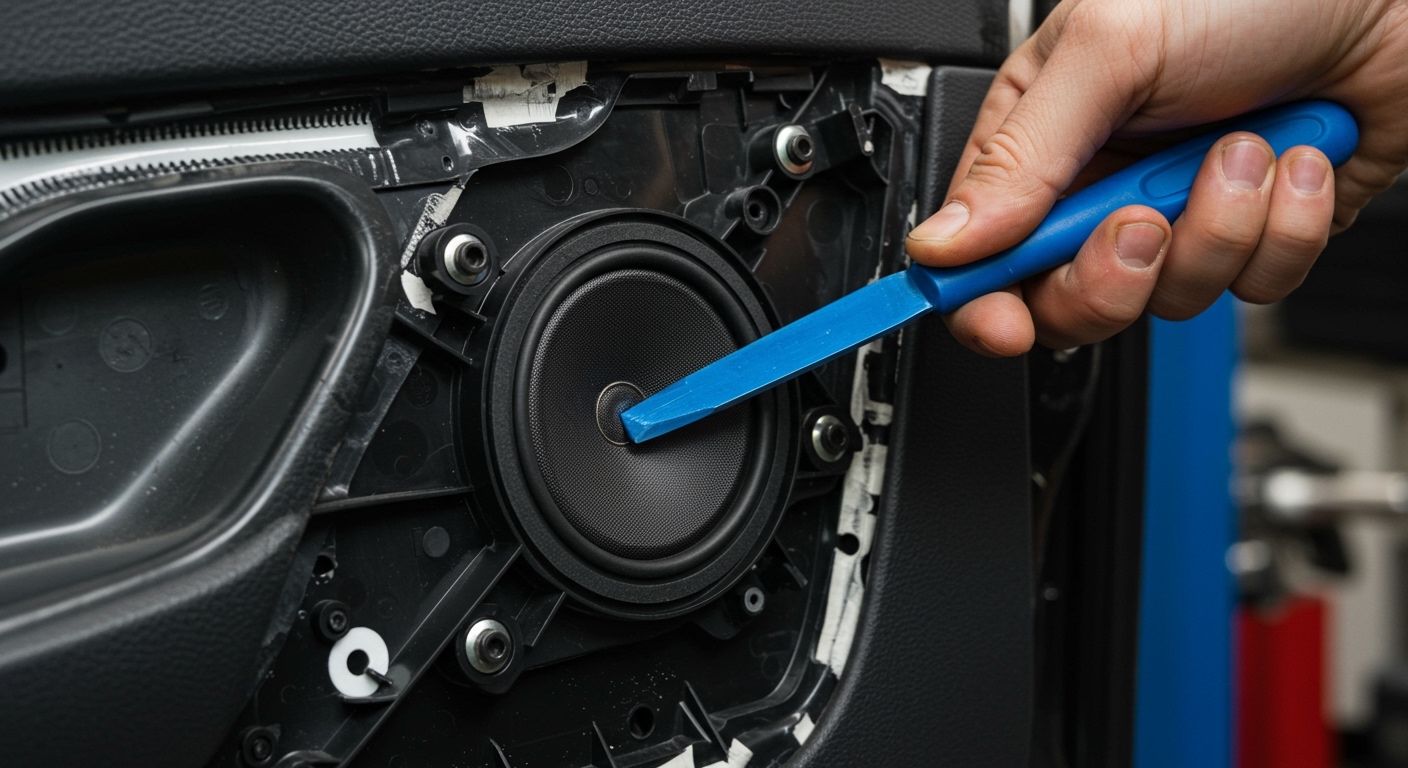
Essential Tools: A set of nylon panel removal tools is non-negotiable to prevent scratching your interior plastics.
Technique: Most speakers are held by 3-4 screws (Phillips or Torx) and a single plastic wiring harness that requires a firm press on a release tab.
Expert Tip: Keep a magnetic tray nearby to organize the various small screws you will encounter behind door handles and armrests.
Essential Tools and Materials for Car Speaker Removal
Before you begin learning how to remove car speakers, you must gather the right equipment. Using the wrong tool, like a flathead screwdriver instead of a pry bar, is the fastest way to ruin your car’s resale value with unsightly gouges.
| Tool Name | Purpose | Importance |
|---|---|---|
| Nylon Panel Tools | Prying off door panels and trim pieces without scratching. | Critical |
| Phillips Screwdriver | Removing standard mounting screws found in 90% of cars. | High |
| Torx Bit Set (T15/T20) | Common for European and newer American vehicles. | Moderate |
| Socket Wrench Set | Necessary for removing seat bolts or large panel anchors. | Moderate |
| Magnetic Parts Tray | Keeps tiny screws from disappearing into the carpet. | Recommended |
| Work Light/Headlamp | Essential for seeing into dark door cavities. | High |
Expert Summary: How to Disconnect Car Speakers Efficiently
Learning how to disconnect car speakers is the first step toward transforming your vehicle’s audio experience. While the process varies slightly between a rugged truck and a sleek sedan, the core principles of panel removal and electrical safety remain constant. By following a structured approach, you can avoid the common pitfalls of broken plastic clips or short-circuited electrical systems.
Key Takeaways (TL;DR)
Safety First: Always disconnect the negative battery terminal before touching any electrical components to prevent fuses from blowing.
Essential Tools: A set of nylon panel removal tools is non-negotiable to prevent scratching your interior plastics.
Technique: Most speakers are held by 3-4 screws (Phillips or Torx) and a single plastic wiring harness that requires a firm press on a release tab.
Expert Tip: Keep a magnetic tray nearby to organize the various small screws you will encounter behind door handles and armrests.
Essential Tools and Materials for Car Speaker Removal
Before you begin learning how to remove car speakers, you must gather the right equipment. Using the wrong tool, like a flathead screwdriver instead of a pry bar, is the fastest way to ruin your car’s resale value with unsightly gouges.
| Tool Name | Purpose | Importance |
|---|---|---|
| Nylon Panel Tools | Prying off door panels and trim pieces without scratching. | Critical |
| Phillips Screwdriver | Removing standard mounting screws found in 90% of cars. | High |
| Torx Bit Set (T15/T20) | Common for European and newer American vehicles. | Moderate |
| Socket Wrench Set | Necessary for removing seat bolts or large panel anchors. | Moderate |
| Magnetic Parts Tray | Keeps tiny screws from disappearing into the carpet. | Recommended |
| Work Light/Headlamp | Essential for seeing into dark door cavities. | High |
Safety First: Preparing Your Vehicle for Audio Work
To safely master how to disconnect car speakers, you must treat your car like a live electrical environment. Even though speaker wires carry low voltage, a slip of a screwdriver can cause a spark if the system is live.
- Park on a level surface and engage the parking brake.
- Disconnect the negative battery cable using a 10mm wrench. This ensures no power is running to the head unit or amplifiers.
- Wait 5-10 minutes to allow any capacitors in the audio system to discharge fully.
How to Remove Door Speakers: A Step-by-Step Guide
The majority of factory speakers are located in the front and rear doors. Understanding how to remove speakers from car door panels requires patience and a “feel” for how plastic fasteners behave.
Step 1: Locate and Remove Hidden Screws
Most door panels are secured by a combination of visible screws and hidden anchors. Check behind the door release handle, inside the armrest pull cup, and along the bottom edge of the door. Use a small pick or flathead to pop off the plastic covers hiding these screws.
Step 2: Pry the Door Panel
Insert your nylon pry tool between the door panel and the metal frame, starting at a bottom corner. Gently apply outward pressure until you hear the “pop” of the plastic clips. Work your way around the perimeter of the door until the panel is hanging only by the top window channel.
Step 3: Disconnect Secondary Cables
Before pulling the panel away entirely, reach behind it to disconnect the power window switches and the door latch cable. These usually have simple squeeze-and-pull connectors. Once free, lift the panel up and off the door.
Step 4: Unscrew the Speaker Housing
Now that the speaker is exposed, use your screwdriver or socket to remove the mounting screws. In many modern vehicles, you might find the speaker is integrated into a plastic bracket. Remove the screws holding the bracket to the metal door skin.
Step 5: Disconnect the Wiring Harness
This is the core of how to disconnect car speakers. Locate the plastic plug on the back or side of the speaker. Press the release tab firmly with your thumb and pull the connector away from the speaker terminal. If the connector is stuck, a small wiggle while pressing the tab usually does the trick.
How to Remove Rear Speakers from the Deck or Parcel Shelf
Learning how to remove rear car speakers is often more labor-intensive than door speakers because it frequently involves the back seat. In sedans, these speakers are usually mounted under the “parcel shelf” behind the headrests.
Step 1: Access the Rear Deck
In many vehicles, you must first remove the rear seat cushions. Usually, the bottom cushion pulls up with a firm tug, while the backrest may require unbolting from the trunk side.
Step 2: Remove the C-Pillar Trim
The plastic panels running alongside the rear window (C-pillars) often overlap the rear deck cover. Use your panel removal tool to pop these loose. Be careful of any integrated airbag components in newer luxury vehicles.
Step 3: Lift the Rear Shelf Cover
Pop the plastic “Christmas tree” fasteners holding the carpeted shelf in place. Lift the shelf toward the front of the car. You should now see the top of the rear speakers through the metal frame.
Step 4: Unbolt from Above or Below
Depending on the car’s design, you will either unscrew the speakers from inside the cabin or unbolt them from inside the trunk. Once the screws are out, follow the same process of disconnecting the wiring harness by pressing the locking tab.
Expert Tips for Taking Speakers Out of a Car
Having performed hundreds of audio upgrades, I’ve learned that the “book way” isn’t always the easiest way. Here are some professional insights to help you take speakers out of a car without frustration:
Warm the Plastic: If you are working in cold weather, run the car’s heater for 15 minutes. Cold plastic is brittle and much more likely to snap when prying.
The “Pop” Sound is Normal: When prying door panels, the loud “crack” sound is usually just the plastic clip releasing from the metal. Don’t panic unless you see shards of plastic falling.
Label Everything: Use a piece of masking tape to label which screws came from the door handle versus the bottom of the door. They are often different lengths.
Check for Rivets: Some manufacturers (like VW or Rivian) use rivets instead of screws. If you don’t see a screw head, you may need a power drill to carefully drill out the center of the rivet to release the speaker.
Common Mistakes to Avoid
Even if you know how to remove door speakers in theory, these common errors can turn a 30-minute job into a weekend-long headache.
- Forcing the Panel: If a panel won’t budge, there is almost certainly a hidden screw you missed. Check behind the tweeter sail panel or the side-view mirror cover.
- Stripping the Screws: Factory screws are often installed with thread-locker. Use a screwdriver with a high-quality grip and apply significant downward pressure to prevent the bit from slipping and rounding out the head.
- Tearing the Vapor Barrier: Behind the door panel is a plastic sheet (the vapor barrier). Do not rip this. Carefully peel the adhesive (butyl rope) back so you can reseal it later. This prevents water from leaking into your cabin.
- Dropping Screws into the Door: If a screw falls into the bottom of the door cavity, it will rattle forever. Use a telescoping magnet to retrieve it immediately.
Frequently Asked Questions
(FAQs)
Do I need to cut wires to disconnect my car speakers?
No, you should almost never cut the factory wires. Most vehicles use a modular wiring harness. Simply press the release tab on the plastic connector to unplug it. If you are installing new speakers, buy a vehicle-specific wiring adapter so you can plug the new speaker directly into the factory clip without cutting.
Can I remove my car speakers without removing the whole door panel?
In 95% of modern cars, the answer is no. While some older vehicles had removable speaker grilles that snapped off from the front, modern designs integrate the speaker behind the entire interior door card for a cleaner look and better structural integrity.
How do I know if my car speaker is blown before I remove it?
Before you learn how to take speakers out of a car, test them with a multimeter. Set the meter to Ohms (Ω). A healthy speaker usually reads between 2 and 8 Ohms. If the meter reads “OL” (Open Loop) or 0, the voice coil is damaged, and the speaker needs to be replaced.
What should I do if the plastic clips break during removal?
Broken clips are extremely common. You can purchase a “universal door clip assortment” at any auto parts store or online. Simply slide the broken clip out of the door panel slot and slide a new one in before reinstallation.
Conclusion: Ready for Your Audio Upgrade
Mastering how to disconnect car speakers is an empowering DIY skill that saves you hundreds of dollars in labor costs. By using the right nylon tools, staying organized with a magnetic tray, and following the step-by-step process of removing panels and harnesses, you ensure your vehicle stays in pristine condition.
Whether you are removing rear speakers to shed weight or swapping out front door drivers for high-fidelity components, the key is patience. Now that you have the knowledge, grab your toolkit and start upgrading your ride today!
Ready to install your new gear? Check out our guide on “How to Wire New Car Speakers” to finish the job!









