

Finding Your Perfect Fit: How Big Are the Speakers in My Car?
Determining how big are the speakers in my car is the first and most critical step before upgrading your vehicle’s audio system. You can find your speaker size by using an online vehicle fitment database, checking your owner’s manual, or manually measuring the diameter and mounting depth of the existing units. Most modern vehicles utilize standard sizes like 6.5-inch or 6×9-inch speakers, but specific mounting brackets often vary by manufacturer.
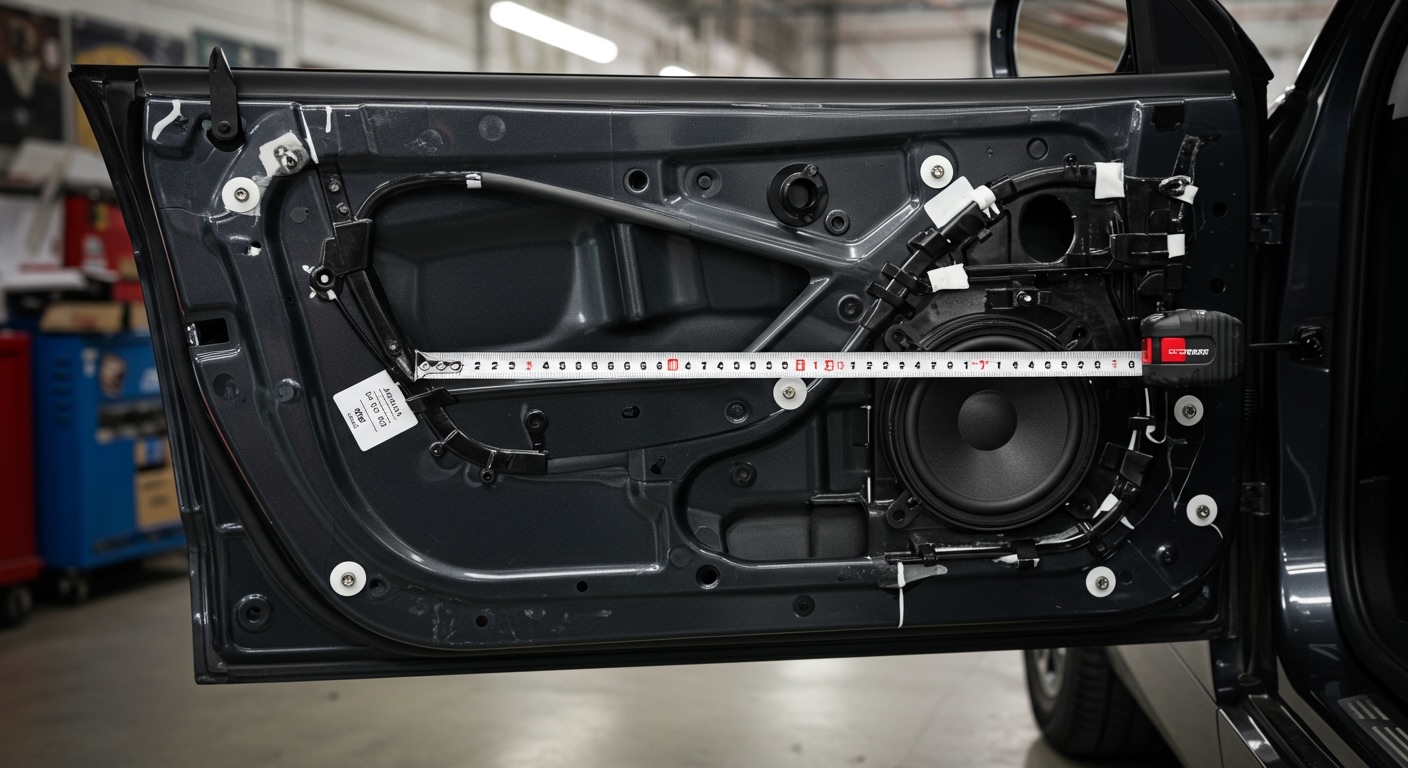
Buying the wrong size leads to frustrating returns or “hack-job” installations that rattle and sound poor. This guide provides the exact roadmap to identifying your speaker dimensions with professional accuracy.
🚀 Key Takeaways: Expert Summary
Most Common Sizes: The majority of cars use 6.5-inch circular or 6×9-inch oval speakers for doors and rear decks.
Don’t Guess: Always verify your specific make, model, and trim level, as premium audio packages (like Bose or Harman Kardon) often use non-standard sizes.
Depth Matters: Knowing the mounting depth is just as important as the diameter to ensure your window glass doesn’t hit the speaker magnet.
Pro Tool: Use the Crutchfield Vehicle Selector for the most reliable database of factory speaker dimensions.
The “Adapter” Hack: If you want to install a smaller, higher-quality speaker (like a 5.25″) into a larger factory hole (like a 6×9″), you can use mounting brackets.
🛠️ Tools and Materials Needed for Measurement
If you decide to measure manually rather than relying on a database, you will need the following tools to access and document your speakers.
| Tool | Purpose | Importance |
|---|---|---|
| Nylon Trim Removal Tools | Prying off door panels without scratching plastic. | High |
| Phillips Head Screwdriver | Removing standard door and speaker screws. | High |
| Tape Measure / Caliper | Measuring diameter and mounting depth. | Essential |
| Socket Set (10mm common) | Removing bolts hidden behind door handles. | Medium |
| Flashlight | Seeing into the dark recesses of the door cavity. | Medium |
| Smartphone | Taking photos of the factory plug and mounting holes. | High |
Method 1: The Fast Track – Using Online Databases
Before you start tearing apart your interior, the easiest way to answer what size speakers does my car have is to leverage industry databases.
Use the Crutchfield Vehicle Selector
Crutchfield is the “gold standard” for car audio fitment. Their team physically tears down thousands of vehicles to document every dimension.
Enter your Year, Make, and Model.
Select your specific Body Style (e.g., Sedan vs. Coupe).
Specify your Factory Sound System (Base vs. Premium).
The system will list exactly what size speakers will fit in my car for every location (Dash, Front Door, Rear Door, Rear Deck).
Check Manufacturer Forums
For enthusiasts, forums like TundraSolutions, CivicX, or Bimmerpost are gold mines. Owners often post “Build Threads” showing exactly what size car speakers do I have and providing photos of the installation process. This is particularly helpful for identifying if you need special wiring harnesses or spacer rings.
Finding Your Perfect Fit: How Big Are the Speakers in My Car?
Determining how big are the speakers in my car is the first and most critical step before upgrading your vehicle’s audio system. You can find your speaker size by using an online vehicle fitment database, checking your owner’s manual, or manually measuring the diameter and mounting depth of the existing units. Most modern vehicles utilize standard sizes like 6.5-inch or 6×9-inch speakers, but specific mounting brackets often vary by manufacturer.
Buying the wrong size leads to frustrating returns or “hack-job” installations that rattle and sound poor. This guide provides the exact roadmap to identifying your speaker dimensions with professional accuracy.
🚀 Key Takeaways: Expert Summary
Most Common Sizes: The majority of cars use 6.5-inch circular or 6×9-inch oval speakers for doors and rear decks.
Don’t Guess: Always verify your specific make, model, and trim level, as premium audio packages (like Bose or Harman Kardon) often use non-standard sizes.
Depth Matters: Knowing the mounting depth is just as important as the diameter to ensure your window glass doesn’t hit the speaker magnet.
Pro Tool: Use the Crutchfield Vehicle Selector for the most reliable database of factory speaker dimensions.
The “Adapter” Hack: If you want to install a smaller, higher-quality speaker (like a 5.25″) into a larger factory hole (like a 6×9″), you can use mounting brackets.
🛠️ Tools and Materials Needed for Measurement
If you decide to measure manually rather than relying on a database, you will need the following tools to access and document your speakers.
| Tool | Purpose | Importance |
|---|---|---|
| Nylon Trim Removal Tools | Prying off door panels without scratching plastic. | High |
| Phillips Head Screwdriver | Removing standard door and speaker screws. | High |
| Tape Measure / Caliper | Measuring diameter and mounting depth. | Essential |
| Socket Set (10mm common) | Removing bolts hidden behind door handles. | Medium |
| Flashlight | Seeing into the dark recesses of the door cavity. | Medium |
| Smartphone | Taking photos of the factory plug and mounting holes. | High |
Method 1: The Fast Track – Using Online Databases
Before you start tearing apart your interior, the easiest way to answer what size speakers does my car have is to leverage industry databases.
Use the Crutchfield Vehicle Selector
Crutchfield is the “gold standard” for car audio fitment. Their team physically tears down thousands of vehicles to document every dimension.
Enter your Year, Make, and Model.
Select your specific Body Style (e.g., Sedan vs. Coupe).
Specify your Factory Sound System (Base vs. Premium).
The system will list exactly what size speakers will fit in my car for every location (Dash, Front Door, Rear Door, Rear Deck).
Check Manufacturer Forums
For enthusiasts, forums like TundraSolutions, CivicX, or Bimmerpost are gold mines. Owners often post “Build Threads” showing exactly what size car speakers do I have and providing photos of the installation process. This is particularly helpful for identifying if you need special wiring harnesses or spacer rings.
Method 2: Manual Measurement – What Size Speakers Do I Have?
If you have a rare or modified vehicle, you must measure manually. This ensures 100% accuracy regarding what size speakers go in my car.
Step 1: Remove the Door Panel or Speaker Grille
Most modern cars require the entire door panel to be removed.
Locate Hidden Screws: Check behind the door handle, inside the armrest pull-cup, and along the bottom edge of the panel.
Pop the Clips: Use your nylon pry tool to gently release the plastic “Christmas tree” clips holding the panel to the metal frame.
Disconnect Cables: Unplug the window switches and door latch cables before setting the panel aside.
Step 2: Measure the Speaker Diameter
When asking how big are the speakers in my car, people usually refer to the “standard size” category.
Measure across the frame: Measure from one bolt hole to the opposite bolt hole.
Identify the shape: Is it a perfect circle (usually 5.25″, 6.5″, or 6.75″) or an oval (usually 4×6″, 5×7″, or 6×9″)?
Note the Bolt Pattern: Some speakers (especially in Toyota and GM vehicles) use a triangular 3-bolt pattern rather than the standard 4-bolt square.
Step 3: Check the Mounting Depth
This is the most common mistake DIYers make. Mounting depth is the distance from the back of the speaker flange to the bottom of the magnet.
Roll the window down: Measure the distance from the mounting surface to the window glass.
The Gap: Your new speaker’s magnet must be shallower than this distance. If it’s too deep, your window will shatter or get stuck when you roll it down.
Common Car Speaker Sizes Explained
Understanding the industry standards helps you narrow down what size speakers will fit my car.
5-Inch Speakers (The Industry Standard)
The 6.5-inch speaker is the most common size found in front doors. It offers a perfect balance between mid-bass response and fitment versatility. Many 6.75-inch factory openings can also accept 6.5-inch speakers with a simple adapter bracket.
x9-Inch Speakers (The Bass Kings)
Commonly found in the rear deck of sedans or the front doors of trucks (like the Ram 1500 or Ford F-150). Because of their larger surface area, they produce significantly more bass than circular speakers. If you are wondering what size rear speakers are in my car, a 6×9 is a very likely candidate for sedans.
25-Inch Speakers
Often found in older vehicles, Jeeps, or as rear-fill speakers in smaller compact cars. While they lack deep bass, they often provide excellent clarity in the midrange frequencies.
5-Inch and Tweeters
These are typically located in the dash or the A-pillars. Tweeters handle high frequencies (treble), while 3.5-inch speakers are “mid-high” drivers often found in luxury vehicles with center-channel audio.
📈 Comparison Table: Common Speaker Sizes and Characteristics
| Size | Shape | Common Location | Bass Response | Ease of Install |
|---|---|---|---|---|
| 3.5″ | Round | Dash / Upper Door | Low | Moderate |
| 4″ | Round | Dash / Rear Pillar | Low | Easy |
| 5.25″ | Round | Rear Doors / Kick Panels | Moderate | Easy |
| 6.5″ | Round | Front/Rear Doors | Good | Easy (w/ Adapter) |
| 6×8″ | Oval | Ford / Mazda Doors | High | Direct Fit |
| 6×9″ | Oval | Front Doors / Rear Deck | Very High | Direct Fit |
💡 Expert Pro-Tips for a Perfect Fit
After 15 years of installing car audio, I’ve learned that “fitting” and “performing” are two different things. Follow these expert tips to ensure your upgrade is successful.
Always Buy Brackets: Even if a speaker is “6.5 inches,” the factory hole is rarely a perfect match for aftermarket screw holes. Metra or Scosche brackets make the job “plug-and-play.”
Don’t Forget the Wiring Harness: Avoid cutting your factory wires. Buy a vehicle-specific wiring adapter. This preserves your factory warranty and makes it easy to revert to stock when you sell the car.
Use Foam Baffles (Fast Rings): These foam rings sit between the speaker and the door panel. They direct all the sound through the grille rather than letting it “leak” into the door cavity, significantly improving mid-bass punch.
Check for Tweeter Clearance: If you are buying Coaxial speakers (where the tweeter protrudes from the center), make sure it doesn’t hit the factory speaker grille once the door panel is reinstalled.
Sound Deadening is Essential: While you have the door panels off to check how big are the speakers in my car, apply a few sheets of Butyl rubber sound deadener (like Dynamat or Noico). It stops metal vibrations and makes a $50 speaker sound like a $150 speaker.
⚠️ Common Mistakes to Avoid
- Ignoring the “Premium” Factor: If your car has a JBL, Bose, or Infinity logo on the speaker grilles, the speakers are often 2-ohm impedance. Most aftermarket speakers are 4-ohm. Installing 4-ohm speakers on a 2-ohm factory amp will result in much lower volume levels.
- Forcing the Fit: If the speaker doesn’t sit flush, do not force the screws. This can warp the speaker frame, causing the voice coil to rub and eventually fail.
- Neglecting Water Protection: Car doors are “wet environments.” Water leaks past window seals by design. Ensure your new speakers have a plastic rain shield or are made of water-resistant materials like polypropylene.
🙋 Frequently Asked Questions (FAQs)
Can I put larger speakers in my car than the factory size?
Yes, but it usually requires custom fabrication or mounting spacers. For example, many people fit 6.5-inch speakers into 5.25-inch holes by using a spacer that moves the speaker further out from the door metal, provided there is enough clearance behind the door panel.
Are front and rear speakers usually the same size?
Not always. Many sedans use 6.5-inch speakers in the front doors and 6×9-inch speakers in the rear deck for better bass. Always verify both locations separately when asking what size speakers go in my car.
Does the brand of the car determine the speaker size?
To an extent, yes. Toyota and Honda heavily favor 6.5-inch and 6.75-inch speakers. Ford and Mazda historically used 5×7 or 6×8 ovals. However, modern designs are shifting toward more standardized 6.5-inch rounds across all brands.
How do I know if I need a component or coaxial speaker?
Look at your door. If you see a large speaker at the bottom and a tiny “tweeter” up high near the mirror or on the dash, you have a Component System. If you only see one speaker grille, you likely need a Coaxial (All-in-one) speaker.
Conclusion: Ready to Upgrade?
Knowing how big are the speakers in my car is the foundation of any great mobile audio build. By using online databases like Crutchfield, verifying your mounting depth, and using the correct adapter brackets, you can avoid the headache of ill-fitting parts.
Remember, the best-sounding system isn’t just about the brand of the speaker—it’s about the quality of the fit. Take the time to measure twice, buy the necessary wiring harnesses, and consider adding sound-deadening material while the panels are off. Your ears (and your car) will thank you.
Ready to start shopping? Grab your VIN number, head to a fitment database, and find the high-fidelity speakers your car deserves!









