

Understanding Speaker Voltage: A Complete Guide for Clean Sound
Ever wondered why your audio sounds distorted or why a speaker suddenly “pops” and dies? The answer usually lies in the electrical signal. Specifically, users often ask how many volts do speakers use to ensure they are matching their amplifiers correctly without causing damage.
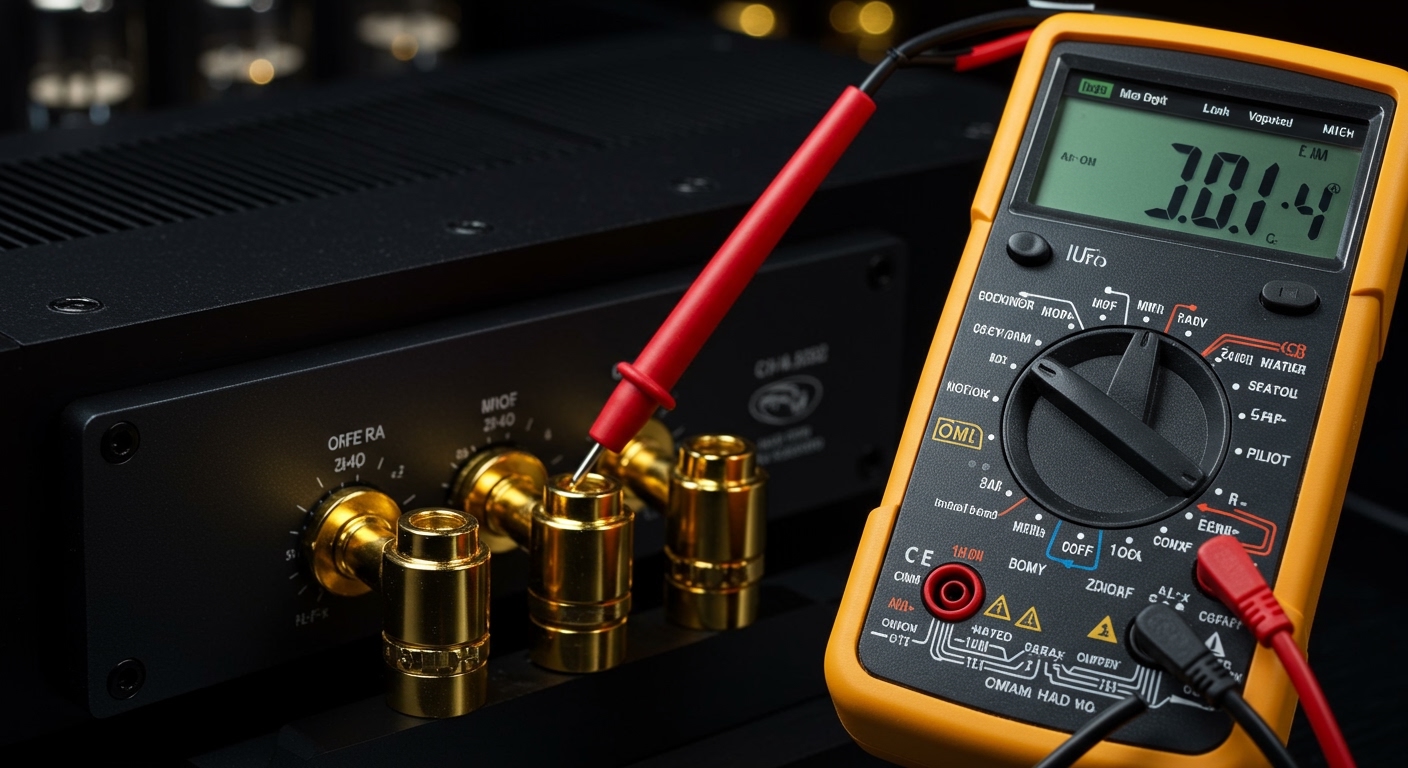
Calculating the correct voltage is the difference between a high-fidelity listening experience and a costly repair bill. Unlike light bulbs that use a constant 110V or 220V, speakers use a dynamic range of Alternating Current (AC) voltage that fluctuates with every beat and note.
Key Takeaways: Expert Summary
Dynamic Range: Most consumer speakers operate between 1V and 35V AC, depending on the volume level.
The Formula: Use Ohm’s Law ($Voltage = sqrt{Power times Impedance}$) to find your target voltage.
Car vs. Home: What voltage do car speakers use? Usually 10V to 20V, whereas high-end home theater towers can exceed 50V.
Safety First: Always measure voltage at the amplifier terminals using a Digital Multimeter set to AC Volts.
What Voltage Do Speakers Run At?
To understand what voltage are speakers using, you must first distinguish between DC (Direct Current) and AC (Alternating Current). Your car battery or wall outlet provides power, but your amplifier converts that into an AC signal. This signal is what moves the speaker cone back and forth to create sound.
The voltage do speakers run at is never a single fixed number. It is a “swinging” value. When the music is quiet, the voltage might be less than 1 volt. When you crank the volume to the max, the voltage “swings” much higher to push the heavy magnets inside the driver.
Typical Voltage Ranges by Speaker Type
| Speaker Type | Typical Impedance | Common Voltage Range (RMS) |
|---|---|---|
| Smartphone/Laptop | 4 – 8 Ohms | 0.5V – 2.0V |
| Car Door Speakers | 4 Ohms | 5V – 15V |
| Home Bookshelf Speakers | 8 Ohms | 10V – 25V |
| Subwoofers (High Power) | 2 – 4 Ohms | 30V – 80V+ |
| Pro Audio/PA Systems | 8 Ohms | 50V – 100V+ |
Step 1: Identify Your Speaker’s Impedance and Power Rating
Before calculating how many volts do speakers use, you need two specific numbers from the back of your speaker cabinet or the owner’s manual.
- Impedance (Ohms): Most speakers are rated at 4Ω, 8Ω, or 16Ω. This is the electrical resistance the speaker offers.
- Continuous Power (Watts RMS): Do not use the “Peak” or “Max” power rating. Always look for RMS (Root Mean Square), which represents the power the speaker can handle long-term.
Expert Tip: If you are unsure about the impedance, you can measure it with a multimeter. A speaker labeled 8 ohms will usually read around 6.2 to 7 ohms on a DC resistance test.
Step 2: Calculate the Target Voltage
To find out what voltage do speakers use for your specific setup, we use the formula derived from Ohm’s Law. This calculation helps you set your amplifier gain correctly to avoid clipping.
The Calculation Steps:
- Multiply the RMS Watts by the Ohms.
- Take the Square Root of that result.
- The final number is the Target AC Voltage.
Example: You have a Rockford Fosgate car speaker rated at 50W RMS with a 4-ohm impedance.
$50 times 4 = 200$
$sqrt{200} = 14.14$
Result: Your speaker uses 14.14 Volts AC at its maximum safe volume.
Step 3: Measuring What Voltage Goes to Speakers
Once you have your math ready, it is time to see what voltage goes to speakers in real-time. This is how professional installers tune systems like JL Audio or Alpine setups.
Tools Needed for Testing
| Tool | Purpose |
|---|---|
| Digital Multimeter | Measures the AC voltage output from the amp. |
| Test Tone (Sines) | A steady 50Hz (for subs) or 1kHz (for mids) tone. |
| Insulated Screwdriver | To adjust the gain/level on the amplifier. |
How to Measure:
- Disconnect the speakers: Do not measure with the speakers connected to avoid hearing the loud test tones.
- Play a Test Tone: Use a clean 0dB or -5dB test tone from a reliable source.
- Set Multimeter to AC Volts: Ensure you are not on the DC setting.
- Probe the Terminals: Place the probes on the positive and negative output terminals of the amplifier.
- Turn up the Volume: Increase the volume until the multimeter shows your calculated Target Voltage.
Step 4: Adjusting for Car Audio Specifics
If you are asking what voltage do car speakers use, the environment is slightly different. Car charging systems operate on 12.6V to 14.4V DC, but the amplifier “steps up” this voltage internally.
In a car, the voltage do speakers use is often limited by the size of the amplifier’s power supply. If you try to push a 4-ohm speaker to 30V on a small head unit, the signal will “flat-line” or clip. This produces heat and can melt the voice coil of your speaker.
Standard Head Units: Usually output 8V to 12V AC.
External Car Amps: Can output anywhere from 20V to 60V AC for subwoofers.
Step 5: Avoiding Common Voltage Mistakes
Knowing how many volts do speakers use is only half the battle. You must also avoid these common pitfalls that I have seen ruin many high-end systems:
Mixing Up AC and DC: Never apply DC voltage (like a battery) directly to a speaker for more than a split second. It will “lock” the cone in one position and burn it out.
Ignoring Voltage Drop: Using thin speaker wires causes voltage drop. If your amp sends 20V but your wire is too thin, only 18V might reach the speaker, resulting in weak bass.
Chasing Peak Numbers: Always tune your voltage based on RMS. Tuning to “Peak” voltage is the fastest way to blow a tweeter.
Pro Tips for Managing Speaker Voltage
Use an Oscilloscope: If you want to be 100% precise, an oscilloscope shows you the actual “wave” of the voltage. This allows you to see exactly when the voltage starts to clip.
Check Your Ground: In car audio, a poor ground connection limits the current, which in turn causes the voltage do speakers run at to become unstable under heavy loads.
- Match Impedance: Lowering impedance (e.g., wiring two 4-ohm speakers in parallel to get 2 ohms) increases the current draw, which can pull more voltage from the amp but also creates more heat.
Frequently Asked Questions
(FAQs)
Can a 12V battery power a speaker directly?
No. While a 12V battery provides DC voltage, speakers require AC voltage to move back and forth. Connecting a battery directly will simply push the speaker cone out and hold it there, eventually burning the voice coil.
How many volts do car speakers use compared to home speakers?
Car speakers typically operate at lower voltages (10V-20V) because they usually have lower impedance (4 ohms). Home speakers often have higher impedance (8 ohms) and require higher voltage (20V-40V) to achieve the same wattage.
What happens if I send too much voltage to my speakers?
Sending too much voltage causes the amplifier to clip the signal, turning the smooth sound waves into “square waves.” This creates excessive heat and mechanical stress, leading to a blown speaker.
Does higher voltage mean louder sound?
Generally, yes. Since Power = Voltage² / Resistance, increasing the voltage exponentially increases the power (wattage), which results in higher Sound Pressure Level (SPL).
How do I know what voltage my amplifier is putting out?
The easiest way is to use a Digital Multimeter set to the AC Voltage (V~) setting. Play a steady sine wave test tone and measure the output at the speaker terminals.
Understanding Speaker Voltage: A Complete Guide for Clean Sound
Ever wondered why your audio sounds distorted or why a speaker suddenly “pops” and dies? The answer usually lies in the electrical signal. Specifically, users often ask how many volts do speakers use to ensure they are matching their amplifiers correctly without causing damage.
Calculating the correct voltage is the difference between a high-fidelity listening experience and a costly repair bill. Unlike light bulbs that use a constant 110V or 220V, speakers use a dynamic range of Alternating Current (AC) voltage that fluctuates with every beat and note.
Key Takeaways: Expert Summary
Dynamic Range: Most consumer speakers operate between 1V and 35V AC, depending on the volume level.
The Formula: Use Ohm’s Law ($Voltage = sqrt{Power times Impedance}$) to find your target voltage.
Car vs. Home: What voltage do car speakers use? Usually 10V to 20V, whereas high-end home theater towers can exceed 50V.
Safety First: Always measure voltage at the amplifier terminals using a Digital Multimeter set to AC Volts.
What Voltage Do Speakers Run At?
To understand what voltage are speakers using, you must first distinguish between DC (Direct Current) and AC (Alternating Current). Your car battery or wall outlet provides power, but your amplifier converts that into an AC signal. This signal is what moves the speaker cone back and forth to create sound.
The voltage do speakers run at is never a single fixed number. It is a “swinging” value. When the music is quiet, the voltage might be less than 1 volt. When you crank the volume to the max, the voltage “swings” much higher to push the heavy magnets inside the driver.
Typical Voltage Ranges by Speaker Type
| Speaker Type | Typical Impedance | Common Voltage Range (RMS) |
|---|---|---|
| Smartphone/Laptop | 4 – 8 Ohms | 0.5V – 2.0V |
| Car Door Speakers | 4 Ohms | 5V – 15V |
| Home Bookshelf Speakers | 8 Ohms | 10V – 25V |
| Subwoofers (High Power) | 2 – 4 Ohms | 30V – 80V+ |
| Pro Audio/PA Systems | 8 Ohms | 50V – 100V+ |
Step 1: Identify Your Speaker’s Impedance and Power Rating
Before calculating how many volts do speakers use, you need two specific numbers from the back of your speaker cabinet or the owner’s manual.
- Impedance (Ohms): Most speakers are rated at 4Ω, 8Ω, or 16Ω. This is the electrical resistance the speaker offers.
- Continuous Power (Watts RMS): Do not use the “Peak” or “Max” power rating. Always look for RMS (Root Mean Square), which represents the power the speaker can handle long-term.
Expert Tip: If you are unsure about the impedance, you can measure it with a multimeter. A speaker labeled 8 ohms will usually read around 6.2 to 7 ohms on a DC resistance test.
Step 2: Calculate the Target Voltage
To find out what voltage do speakers use for your specific setup, we use the formula derived from Ohm’s Law. This calculation helps you set your amplifier gain correctly to avoid clipping.
The Calculation Steps:
- Multiply the RMS Watts by the Ohms.
- Take the Square Root of that result.
- The final number is the Target AC Voltage.
Example: You have a Rockford Fosgate car speaker rated at 50W RMS with a 4-ohm impedance.
$50 times 4 = 200$
$sqrt{200} = 14.14$
Result: Your speaker uses 14.14 Volts AC at its maximum safe volume.
Step 3: Measuring What Voltage Goes to Speakers
Once you have your math ready, it is time to see what voltage goes to speakers in real-time. This is how professional installers tune systems like JL Audio or Alpine setups.
Tools Needed for Testing
| Tool | Purpose |
|---|---|
| Digital Multimeter | Measures the AC voltage output from the amp. |
| Test Tone (Sines) | A steady 50Hz (for subs) or 1kHz (for mids) tone. |
| Insulated Screwdriver | To adjust the gain/level on the amplifier. |
How to Measure:
- Disconnect the speakers: Do not measure with the speakers connected to avoid hearing the loud test tones.
- Play a Test Tone: Use a clean 0dB or -5dB test tone from a reliable source.
- Set Multimeter to AC Volts: Ensure you are not on the DC setting.
- Probe the Terminals: Place the probes on the positive and negative output terminals of the amplifier.
- Turn up the Volume: Increase the volume until the multimeter shows your calculated Target Voltage.
Step 4: Adjusting for Car Audio Specifics
If you are asking what voltage do car speakers use, the environment is slightly different. Car charging systems operate on 12.6V to 14.4V DC, but the amplifier “steps up” this voltage internally.
In a car, the voltage do speakers use is often limited by the size of the amplifier’s power supply. If you try to push a 4-ohm speaker to 30V on a small head unit, the signal will “flat-line” or clip. This produces heat and can melt the voice coil of your speaker.
Standard Head Units: Usually output 8V to 12V AC.
External Car Amps: Can output anywhere from 20V to 60V AC for subwoofers.
Step 5: Avoiding Common Voltage Mistakes
Knowing how many volts do speakers use is only half the battle. You must also avoid these common pitfalls that I have seen ruin many high-end systems:
Mixing Up AC and DC: Never apply DC voltage (like a battery) directly to a speaker for more than a split second. It will “lock” the cone in one position and burn it out.
Ignoring Voltage Drop: Using thin speaker wires causes voltage drop. If your amp sends 20V but your wire is too thin, only 18V might reach the speaker, resulting in weak bass.
Chasing Peak Numbers: Always tune your voltage based on RMS. Tuning to “Peak” voltage is the fastest way to blow a tweeter.
Pro Tips for Managing Speaker Voltage
Use an Oscilloscope: If you want to be 100% precise, an oscilloscope shows you the actual “wave” of the voltage. This allows you to see exactly when the voltage starts to clip.
Check Your Ground: In car audio, a poor ground connection limits the current, which in turn causes the voltage do speakers run at to become unstable under heavy loads.
- Match Impedance: Lowering impedance (e.g., wiring two 4-ohm speakers in parallel to get 2 ohms) increases the current draw, which can pull more voltage from the amp but also creates more heat.
Frequently Asked Questions
(FAQs)
Can a 12V battery power a speaker directly?
No. While a 12V battery provides DC voltage, speakers require AC voltage to move back and forth. Connecting a battery directly will simply push the speaker cone out and hold it there, eventually burning the voice coil.
How many volts do car speakers use compared to home speakers?
Car speakers typically operate at lower voltages (10V-20V) because they usually have lower impedance (4 ohms). Home speakers often have higher impedance (8 ohms) and require higher voltage (20V-40V) to achieve the same wattage.
What happens if I send too much voltage to my speakers?
Sending too much voltage causes the amplifier to clip the signal, turning the smooth sound waves into “square waves.” This creates excessive heat and mechanical stress, leading to a blown speaker.
Does higher voltage mean louder sound?
Generally, yes. Since Power = Voltage² / Resistance, increasing the voltage exponentially increases the power (wattage), which results in higher Sound Pressure Level (SPL).
How do I know what voltage my amplifier is putting out?
The easiest way is to use a Digital Multimeter set to the AC Voltage (V~) setting. Play a steady sine wave test tone and measure the output at the speaker terminals.
Conclusion: Mastering Your Audio Signal
Understanding how many volts do speakers use is the key to unlocking professional-grade sound. By using Ohm’s Law and a simple multimeter, you can ensure your speakers are receiving a clean, powerful signal without the risk of clipping or overheating.
Whether you are curious about what voltage do car speakers use or you are setting up a massive home cinema, remember that voltage is the pressure that drives your music. Keep it within the rated RMS limits of your hardware, use high-quality wiring to prevent voltage drops, and always prioritize signal clarity over raw volume.
Ready to optimize your sound? Grab a multimeter and start measuring your amp’s output today to hear your music exactly as the artist intended!









