

Is Your Car Audio Sounding Lifeless? Here’s How to Fix It
Tired of that flat, muddy sound coming from your factory car stereo? You’re not alone. Most stock speakers are made with cheap paper cones and weak magnets, delivering a listening experience that’s anything but inspiring. The good news is that learning how to change door speakers is one of the most impactful and affordable DIY upgrades you can make. It’s a project that can dramatically improve sound clarity, detail, and overall enjoyment on every drive, and it’s easier than you might think.
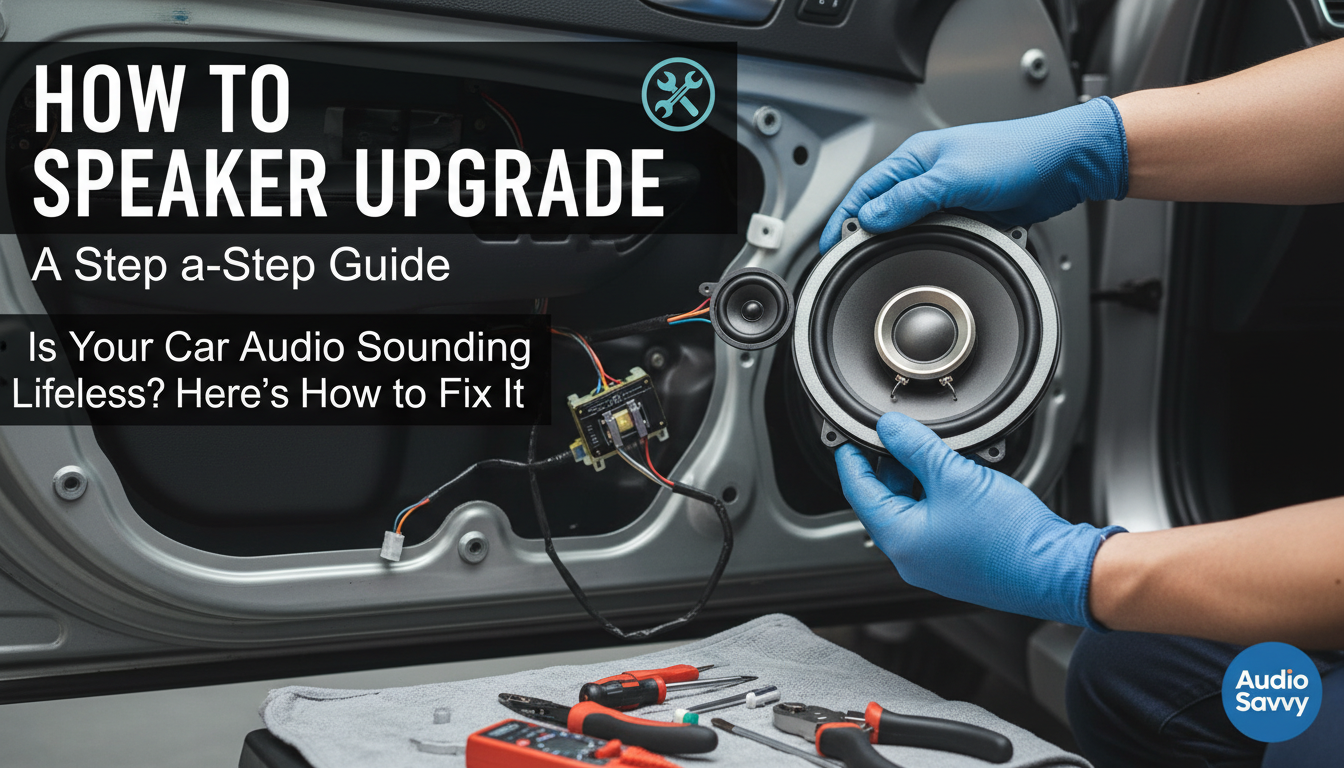
Key Takeaways: Upgrading Your Door Speakers
- Biggest Impact: Swapping factory speakers is the single best “bang-for-your-buck” audio upgrade.
- Essential Tools: You’ll need a basic screwdriver set, a socket set, and a plastic trim removal tool kit to avoid scratching your door panels.
- Make it Easy: Use speaker wiring harnesses and mounting brackets specific to your vehicle. This makes the installation plug-and-play and avoids cutting any factory wires.
- Pro-Tip: Adding sound deadening material like Kilmat or Dynamat behind the speaker reduces rattles and significantly improves mid-bass response.
- Safety First: Always disconnect the negative terminal of your car battery before starting any electrical work.
Why You Should Upgrade Your Car’s Door Speakers
The speakers that come with your car from the factory are typically an afterthought, built to a very low price point. Upgrading them provides an immediate and noticeable improvement in sound quality for several key reasons.
First, aftermarket speakers use superior materials. Instead of flimsy paper, you’ll find cones made from materials like polypropylene, kevlar, or carbon fiber. These materials are stiffer and more durable, which means they can reproduce sound more accurately without distorting at higher volumes.
Second, the overall design is vastly better. Aftermarket speakers have more robust voice coils and larger magnets, allowing them to handle more power and produce a wider range of frequencies. This translates directly to crisper highs, more detailed mids, and punchier, more defined bass. This is the first step in learning how to upgrade speakers for a premium sound experience.
Pre-Installation Checklist: Tools and Parts You’ll Need
Having the right gear on hand before you start is the secret to a smooth, frustration-free installation. I’ve done dozens of these installs, and nothing is worse than having to stop mid-project for a run to the auto parts store.
Choosing the Right Speakers for Your Car
Before you buy anything, you need to know what fits your vehicle. Websites like Crutchfield are invaluable resources; you can input your car’s make, model, and year, and it will show you exactly which speaker sizes fit your front and rear doors. The most common sizes are 6.5″, 6.75″, and 6×9″.
You’ll also need to choose between two main types of speakers: coaxial and component.
| Feature | Coaxial Speakers | Component Speakers |
|---|---|---|
| Design | Tweeter is mounted in the center of the woofer. | Woofer and tweeter are separate units. |
| Installation | Simple, drop-in replacement for factory speakers. | More complex; requires mounting the tweeter separately. |
| Sound Quality | Good to great; a huge upgrade over stock. | Excellent; offers superior sound staging and imaging. |
| Cost | More affordable. | More expensive. |
| Best For | Most DIY installers looking for a simple, effective upgrade. | Audio enthusiasts seeking the best possible sound quality. |
For most people, a high-quality set of coaxial speakers is the perfect choice for a first-time speaker upgrade.
Essential Tools for the Job
You likely have many of these in your garage already. The one non-negotiable item is a plastic trim removal kit. Do not use a flathead screwdriver to pry on your door panels—you will absolutely scratch or break them.
- Plastic Trim Removal Tool Kit
- Phillips Head Screwdriver (multiple sizes)
- Flat Head Screwdriver (for prying small clips)
- Socket Set with ratchet and extensions
- Wire Strippers / Crimpers
- Electrical Tape
Recommended Parts for a Clean, Professional Install
These parts are technically optional, but I consider them essential. They make the job faster, easier, and completely reversible if you ever sell the car.
- Speaker Wiring Harnesses: These small adapters plug directly into your car’s factory speaker connector on one end and have simple slide-on terminals for your new speaker on the other. No cutting, no splicing.
- Speaker Mounting Brackets: Most factory speakers have unique, oversized mounting tabs. These plastic brackets adapt the standard screw pattern of your new speaker to the factory mounting holes in your door.
- Sound Deadening Material: A small 12″x12″ square of a product like Dynamat or Kilmat applied to the metal door panel directly behind the speaker will work wonders. It absorbs vibrations and eliminates rattles, resulting in much tighter mid-bass.
Is Your Car Audio Sounding Lifeless? Here’s How to Fix It
Tired of that flat, muddy sound coming from your factory car stereo? You’re not alone. Most stock speakers are made with cheap paper cones and weak magnets, delivering a listening experience that’s anything but inspiring. The good news is that learning how to change door speakers is one of the most impactful and affordable DIY upgrades you can make. It’s a project that can dramatically improve sound clarity, detail, and overall enjoyment on every drive, and it’s easier than you might think.
Key Takeaways: Upgrading Your Door Speakers
- Biggest Impact: Swapping factory speakers is the single best “bang-for-your-buck” audio upgrade.
- Essential Tools: You’ll need a basic screwdriver set, a socket set, and a plastic trim removal tool kit to avoid scratching your door panels.
- Make it Easy: Use speaker wiring harnesses and mounting brackets specific to your vehicle. This makes the installation plug-and-play and avoids cutting any factory wires.
- Pro-Tip: Adding sound deadening material like Kilmat or Dynamat behind the speaker reduces rattles and significantly improves mid-bass response.
- Safety First: Always disconnect the negative terminal of your car battery before starting any electrical work.
Why You Should Upgrade Your Car’s Door Speakers
The speakers that come with your car from the factory are typically an afterthought, built to a very low price point. Upgrading them provides an immediate and noticeable improvement in sound quality for several key reasons.
First, aftermarket speakers use superior materials. Instead of flimsy paper, you’ll find cones made from materials like polypropylene, kevlar, or carbon fiber. These materials are stiffer and more durable, which means they can reproduce sound more accurately without distorting at higher volumes.
Second, the overall design is vastly better. Aftermarket speakers have more robust voice coils and larger magnets, allowing them to handle more power and produce a wider range of frequencies. This translates directly to crisper highs, more detailed mids, and punchier, more defined bass. This is the first step in learning how to upgrade speakers for a premium sound experience.
Pre-Installation Checklist: Tools and Parts You’ll Need
Having the right gear on hand before you start is the secret to a smooth, frustration-free installation. I’ve done dozens of these installs, and nothing is worse than having to stop mid-project for a run to the auto parts store.
Choosing the Right Speakers for Your Car
Before you buy anything, you need to know what fits your vehicle. Websites like Crutchfield are invaluable resources; you can input your car’s make, model, and year, and it will show you exactly which speaker sizes fit your front and rear doors. The most common sizes are 6.5″, 6.75″, and 6×9″.
You’ll also need to choose between two main types of speakers: coaxial and component.
| Feature | Coaxial Speakers | Component Speakers |
|---|---|---|
| Design | Tweeter is mounted in the center of the woofer. | Woofer and tweeter are separate units. |
| Installation | Simple, drop-in replacement for factory speakers. | More complex; requires mounting the tweeter separately. |
| Sound Quality | Good to great; a huge upgrade over stock. | Excellent; offers superior sound staging and imaging. |
| Cost | More affordable. | More expensive. |
| Best For | Most DIY installers looking for a simple, effective upgrade. | Audio enthusiasts seeking the best possible sound quality. |
For most people, a high-quality set of coaxial speakers is the perfect choice for a first-time speaker upgrade.
Essential Tools for the Job
You likely have many of these in your garage already. The one non-negotiable item is a plastic trim removal kit. Do not use a flathead screwdriver to pry on your door panels—you will absolutely scratch or break them.
- Plastic Trim Removal Tool Kit
- Phillips Head Screwdriver (multiple sizes)
- Flat Head Screwdriver (for prying small clips)
- Socket Set with ratchet and extensions
- Wire Strippers / Crimpers
- Electrical Tape
Recommended Parts for a Clean, Professional Install
These parts are technically optional, but I consider them essential. They make the job faster, easier, and completely reversible if you ever sell the car.
- Speaker Wiring Harnesses: These small adapters plug directly into your car’s factory speaker connector on one end and have simple slide-on terminals for your new speaker on the other. No cutting, no splicing.
- Speaker Mounting Brackets: Most factory speakers have unique, oversized mounting tabs. These plastic brackets adapt the standard screw pattern of your new speaker to the factory mounting holes in your door.
- Sound Deadening Material: A small 12″x12″ square of a product like Dynamat or Kilmat applied to the metal door panel directly behind the speaker will work wonders. It absorbs vibrations and eliminates rattles, resulting in much tighter mid-bass.
The Step-by-Step Guide: How to Change Door Speakers
With your tools and parts gathered, it’s time for the fun part. We’ll walk through the process one step at a time. This process is generally the same for most vehicles, but the exact location of screws and clips will vary. A quick YouTube search for your specific model can be a great help.
Step 1: Safety First – Disconnect the Battery
Before you touch any wiring, open the hood and use a socket wrench (usually 10mm) to loosen the nut on the negative (-) terminal of your car battery. Slide the cable off the terminal and tuck it to the side so it can’t accidentally make contact. This prevents any electrical shorts that could damage your car’s electronics.
Step 2: Carefully Remove the Door Panel
This is often the most intimidating step, but it’s simple if you’re patient.
- Find the Screws: Look for screws hidden inside the door handle cup, the armrest pull, and sometimes along the bottom edge of the panel. They are often concealed behind small plastic covers that you can pop off with a small flathead screwdriver.
- Pry the Panel: Once all screws are removed, take your plastic trim tool and slide it between the door panel and the metal door frame. Start at the bottom and work your way around, gently prying until you hear the plastic clips pop loose.
- Lift and Disconnect: With all the clips released, lift the door panel straight up to unhook it from the window sill. Do not pull it away yet! The panel is still connected by wires and cables.
- Unplug Connectors: Carefully support the panel and look behind it. You’ll see electrical connectors for your window switches, door locks, and mirror controls. Press the release tab on each connector and pull it out. You may also need to unhook the cable for the interior door handle.
Step 3: Remove the Old Factory Speaker
Now you’ll see the factory speaker, which is usually held in by three or four screws.
- Use your screwdriver or a socket to remove the mounting screws.
- Gently pull the speaker out of the door.
- Press the tab on the wiring connector attached to the speaker and unplug it. Your old speaker is now free.
Step 4: Prepare and Install the New Speaker
This is where your preparation pays off and you’ll see how to switch speakers with ease.
- Apply Sound Deadening: If you’re using it, now is the time to apply a square of sound deadening material to the outer door skin, directly behind where the speaker will sit.
- Attach the Bracket: Screw your new speaker onto the plastic mounting bracket adapter.
- Connect the Harness: Take your speaker wiring harness adapter. Plug the plastic end into the factory wiring connector you unplugged from the old speaker. Connect the positive (+) and negative (-) spade connectors to the corresponding terminals on your new speaker.
- Mount the New Speaker: Position the new speaker and bracket assembly over the mounting hole and secure it using the screws you removed from the factory speaker.
Step 5: Test Everything Before Reassembly
Before you put the door panel back on, it’s crucial to test your work.
- Temporarily reconnect the master window switch connector to the door panel.
- Carefully reconnect the negative battery terminal.
- Turn on your car and your stereo. Use the balance and fader controls to isolate the new speaker and confirm it’s producing sound. Play a familiar song to check the quality.
Step 6: Reassemble the Door Panel
If everything sounds good, it’s time to put it all back together. Disconnect the battery again for safety.
- Reconnect any remaining electrical connectors and the door handle cable to the back of the door panel.
- Hook the top of the panel over the window sill first.
- Align the plastic clips with the holes in the door and give the panel a firm push or tap with the heel of your hand to pop them back into place.
- Re-install all the screws you removed earlier.
- Finally, reconnect your battery terminal for good. Repeat the entire process for the other side!
Pro Tips for Achieving the Best Sound Quality
Simply swapping the speakers will make a huge difference, but a few extra steps can elevate your system from “good” to “great.”
The Power of an Amplifier
Your factory head unit typically outputs a modest 10-15 watts per channel. While this is enough to power your new speakers, they will truly come alive with more power. An external amplifier provides clean power that allows your speakers to play louder without distortion and with much better dynamic range. This is often the next logical step after a speaker upgrade.
Basic EQ and Audio Settings
Once installed, take a moment to adjust your stereo’s settings. This is how to change sound to speakers to match their new capabilities. Start by setting the bass, mid, and treble controls to flat (or “0”). Play a high-quality music source and make small adjustments until it sounds balanced and clear to your ears. Avoid excessive bass boost, as this can introduce distortion.
Frequently Asked Questions (FAQ)
How long does it take to change door speakers?
For a first-timer, I would budget about 1 to 1.5 hours per door. An experienced installer can often do it in 30-45 minutes per door. The most time-consuming









