

A Quick Answer: How Much Are Computer Speakers?
Computer speakers can cost anywhere from $20 for a basic set to over $1,000 for audiophile-grade equipment. For a great all-around experience with good audio quality for music, gaming, and movies, most people should expect to spend between $80 and $250. This price range typically gets you a quality 2.1 system (two speakers and a subwoofer) with excellent sound and useful features.
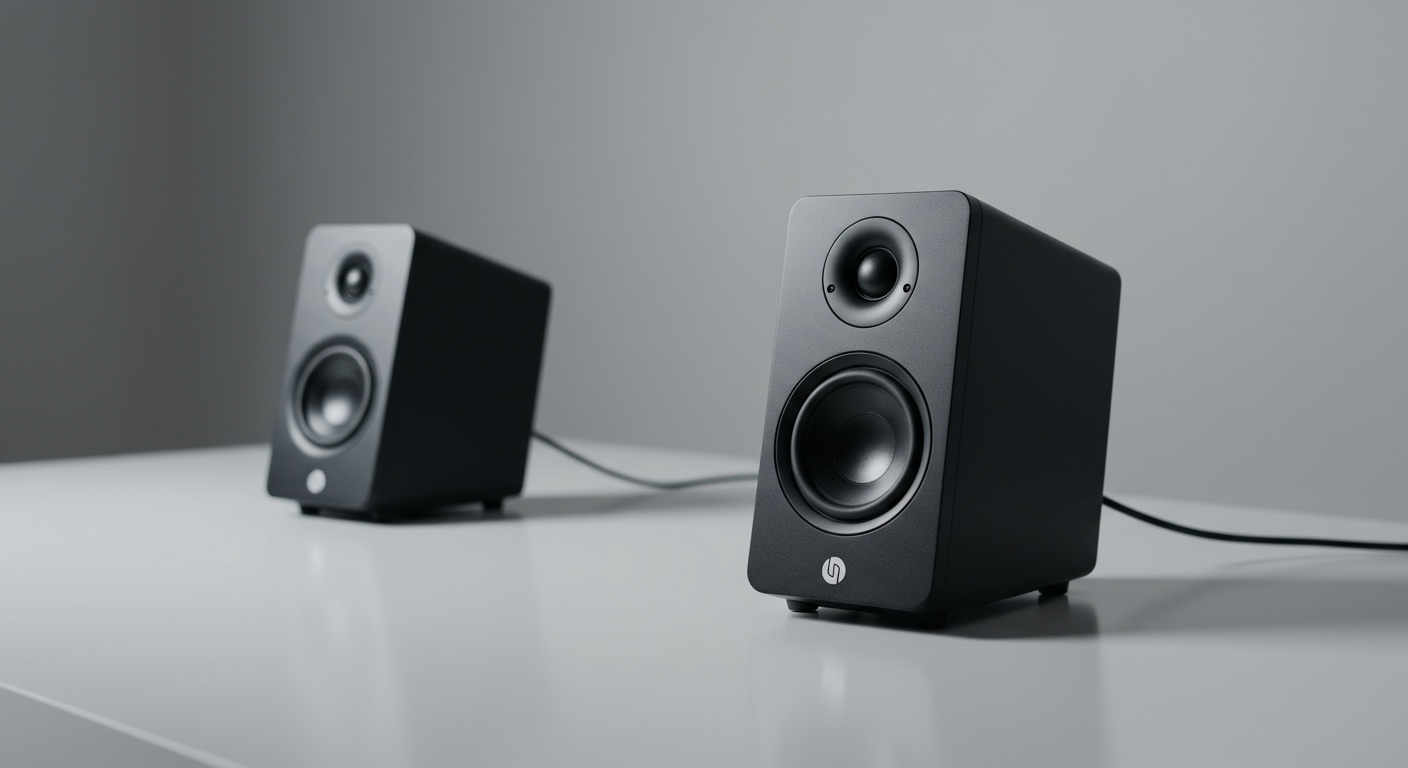
Tired of the tinny, lifeless sound coming from your monitor’s built-in speakers? You’re not alone. A good set of computer speakers is one of the most impactful upgrades you can make to your setup, transforming everything from video calls to epic gaming sessions. But with a vast range of prices, figuring out how much computer speakers are and which ones are right for you can be confusing. As someone who has tested dozens of speaker systems over the years, I’m here to demystify the costs and help you find the perfect sound for your budget.
TL;DR: Key Takeaways on Computer Speaker Costs
- Budget (Under $50): Basic functionality. Suitable for voice calls and background audio, but lacks bass and clarity for music or gaming.
- Sweet Spot ($80 – $250): The best value for most users. This range offers powerful 2.1 systems with dedicated subwoofers or high-quality 2.0 bookshelf speakers, providing a rich, immersive audio experience.
- Mid-Range ($250 – $500): For enthusiasts and creators. Expect superior build quality, more accurate sound reproduction (ideal for music production), and premium features like high-fidelity Bluetooth and built-in DACs.
- High-End ($500+): Audiophile and professional territory. This includes studio-grade monitors and premium sound systems that deliver pristine, uncolored audio for critical listening and professional work.
Decoding Computer Speaker Costs: A Detailed Price Breakdown
The price of computer speakers is directly tied to their components, features, and audio fidelity. Let’s break down what you can realistically expect to get at each major price point. From my experience, the jump in quality from the budget tier to the entry-level sweet spot is the most significant.
Budget Tier: Under $50
In this price range, you’re looking at the most basic audio upgrade. These are typically small, plastic, USB-powered 2.0 (two-speaker) systems.
- What You Get: Low-wattage speakers, simple plug-and-play setup, and minimal controls (usually just a volume knob). Don’t expect deep bass or crisp highs.
- My Take: While they serve a purpose, I find the sound is often hollow and unsatisfying for music or gaming. If your budget is tight, they are a functional choice, but I strongly recommend saving up just a little more.
- Popular Models: Logitech S120, Creative Pebble V2.
Entry-Level Sweet Spot: $50 – $250
This is where the magic happens for most users. This range is how much speakers for computer should cost for a genuinely transformative audio experience. You’ll find excellent 2.1 systems and high-quality 2.0 bookshelf-style speakers.
- What You Get: A dedicated subwoofer for impactful bass, significantly more power (watts), clearer highs and mids, and features like Bluetooth connectivity or a separate control pod.
- Who It’s For: Gamers, movie enthusiasts, and anyone who regularly listens to music at their desk.
- My Take: I consider this the best value-for-money category. A system like the Logitech Z407 or the legendary Klipsch ProMedia 2.1 THX provides an immersive, powerful sound that makes every activity more enjoyable.
- Popular Models: Logitech Z407, Creative T100, Klipsch ProMedia 2.1 THX.
Mid-Range Performers: $250 – $500
Stepping into this tier brings you closer to audiophile-level quality. The focus shifts from raw power to audio fidelity, accuracy, and premium build materials.
- What You Get: Studio-monitor-inspired designs, larger drivers made from superior materials (like glass fiber or silk domes), MDF wood cabinets instead of plastic, and often a built-in DAC (Digital-to-Analog Converter) for cleaner sound from a USB source.
- Who It’s For: Aspiring music producers, content creators, and discerning listeners who want to hear their music as the artist intended.
- Popular Models: Audioengine A2+, Kanto YU4, PreSonus Eris E4.5.
High-End & Audiophile Grade: $500+
This is the realm of professional studio monitors and high-fidelity speaker systems. The price can go well into the thousands, but for desktop use, the $500-$1,000 range is where you’ll find exceptional quality.
- What You Get: Uncolored, “flat” frequency response for accurate audio mixing. Premium components, bi-amplified designs (separate amps for woofer and tweeter), and extensive acoustic tuning options.
- Who It’s For: Professional music producers, sound engineers, and serious audiophiles who demand the absolute best in audio reproduction.
- My Take: These speakers are less about “fun” sound with booming bass and more about surgical precision. They reveal every flaw and nuance in a recording, which is essential for professional work but can be less forgiving for casual listening.
- Popular Models: KRK ROKIT 5 G4, Yamaha HS5, KEF LSX II.
What Factors Influence How Much Computer Speakers Cost?
Understanding how much do computer speakers cost requires looking at the specific components and features that drive the price up. It’s not just about brand names; it’s about the technology inside.
Speaker Configuration (2.0 vs. 2.1 vs. 5.1)**
The number of speakers in a set is the most obvious cost factor. More speakers mean more materials, more amplifiers, and a higher price tag.
| Speaker System | Description | Typical Price Range | Best For |
|---|---|---|---|
| 2.0 System | Two stereo speakers (satellites) with no separate subwoofer. | $20 – $400+ | Music, podcasts, general use. |
| 2.1 System | Two stereo speakers and one dedicated subwoofer for low-frequency bass. | $50 – $500 | Gaming, movies, bass-heavy music. |
| 5.1 System | Five speakers and one subwoofer for true surround sound. | $100 – $800+ | Immersive home-theater style gaming/movies. |
In my testing, a high-quality 2.0 system can often sound better than a cheap 2.1 system. However, for that cinematic rumble and punch in games, a dedicated subwoofer is hard to beat.
Audio Quality & Components**
The guts of the speaker are where your money really goes.
- Driver Size & Material: The “driver” is the part of the speaker that actually produces sound. Larger drivers can move more air, creating richer, fuller sound. Materials also matter immensely; a woven glass fiber driver will produce a much tighter and more accurate sound than a simple paper cone.
- Power Output (Watts): Power is measured in RMS (Root Mean Square), which indicates continuous power handling. Higher RMS wattage generally means the speakers can get louder without distorting. Don’t be fooled by “Peak Power” ratings, which are often inflated marketing numbers. For a typical desk setup, 20-40 watts RMS is plenty.
- Frequency Response: This is the range of sound frequencies a speaker can reproduce, measured in Hertz (Hz). A wider range (e.g., 35Hz – 20kHz) means the speaker can produce deeper bass and higher treble, resulting in a more detailed sound.
Connectivity & Features**
Modern speakers come with a host of convenience features that add to the cost.
- Wired vs. Wireless: A standard 3.5mm audio jack is the most basic connection. Higher-end speakers may offer USB, Optical, or RCA inputs for higher-fidelity audio.
- Bluetooth: The convenience of wirelessly streaming from your phone or laptop adds to the price. Look for support for codecs like aptX or AAC for better wireless sound quality.
- Built-in DAC: A Digital-to-Analog Converter turns the digital 1s and









