

How to Buy Car Speakers: A Step-by-Step Guide
Tired of that muddy, lifeless sound coming from your factory car stereo? You’re not alone. A speaker upgrade is the single most effective way to transform your in-car listening experience, but navigating the options can feel overwhelming. This guide breaks down exactly how to buy car speakers, simplifying the technical jargon and focusing on what truly matters for incredible sound. We’ll walk you through everything from speaker types and sizes to power handling and materials, ensuring you make a confident, informed choice.
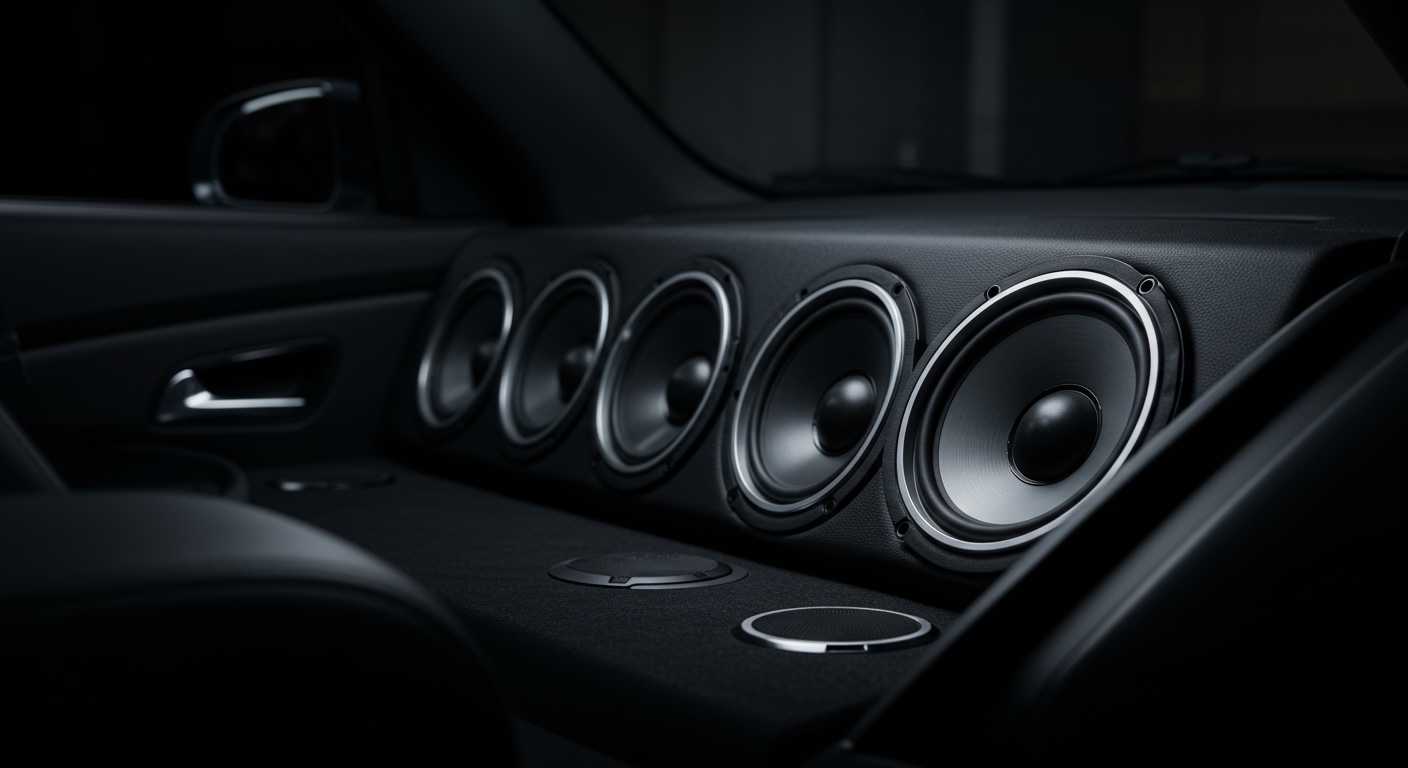
Key Takeaways: Buying Car Speakers
- Identify Your Type: Choose between Coaxial speakers (all-in-one, easy to install) for a simple upgrade or Component speakers (separate woofer/tweeter) for superior sound quality and imaging.
- Ensure a Perfect Fit: Use an online vehicle fit guide to find the exact speaker sizes for your car’s front doors, rear doors, and dash. Pay close attention to mounting depth and height.
- Match Power Correctly: For factory stereos, prioritize speakers with high sensitivity (90 dB or more). If you have an aftermarket amplifier, match the speaker’s RMS power handling to the amp’s output.
- Materials Matter: Woofer materials like polypropylene offer durability, while tweeter materials like silk provide smooth sound. The materials directly impact the sound signature and longevity.
- Start with the Front: If your budget is limited, invest in a high-quality set of speakers for your front doors first. This is where you’ll notice the biggest improvement in sound staging and clarity.
Understanding the Basics: What to Look for When Buying Car Speakers
Before diving into specific steps, it’s essential to grasp the core concepts. When I first started upgrading car audio systems, I learned that focusing on a few key specifications makes the entire process much easier. Think of these as the foundation of your decision.
First, you have speaker type. This is your choice between a simple, all-in-one design or a more complex system with separate parts. Next is configuration, which refers to how many drivers are in the speaker (e.g., 2-way or 3-way).
Then come the technical specs, which tell you how the speaker will perform.
- Power Handling (RMS): How much continuous power a speaker can handle.
- Sensitivity: How efficiently a speaker converts power into volume.
- Frequency Response: The range of sounds the speaker can reproduce.
- Impedance: The electrical resistance of the speaker, measured in ohms.
Understanding these four specs is the most critical part of knowing what to look for when buying speakers for your car.
Step 1: Determine Your Speaker Type (Coaxial vs. Component)
Your first major decision is choosing between coaxial and component speaker systems. There is no single “best” choice; it depends entirely on your budget, installation comfort level, and audio goals.
Coaxial Speakers (The All-in-One Solution)
Coaxial speakers are the most common type of aftermarket speaker. They package all the necessary elements—typically a woofer for low frequencies and a tweeter for high frequencies—into a single, easy-to-install unit.
- Simple Installation: They are designed to drop directly into your car’s factory speaker locations.
- Cost-Effective: Coaxials generally offer the best performance for the price, making them an excellent starting point.
- Good for All Locations: They work well in both front and rear door locations.
From my experience, a high-quality set of coaxial speakers from a reputable brand like JBL, Kicker, or Rockford Fosgate will be a massive improvement over any stock paper-cone speakers.
Component Speakers (The Audiophile’s Choice)
Component speaker systems take sound quality to the next level. They separate the drivers into individual parts: a pair of woofers, a pair of tweeters, and a pair of external crossovers.
- Superior Sound Staging: By mounting the tweeter separately (often on the dash or A-pillar), you can raise the soundstage to ear level. This creates a more immersive and realistic listening experience, as if the band were playing on your dashboard.
- Higher Quality Components: The individual drivers and crossovers are typically built with better materials, resulting in more accurate and detailed sound reproduction.
- More Complex Installation: Installing component systems requires more work, as you’ll need to find a place to mount the separate tweeters and crossovers.
If you’re serious about sound quality and comfortable with a more involved installation, a component system is the way to go. We always recommend them for the front of the vehicle, where sound imaging is most critical.
| Feature | Coaxial Speakers | Component Speakers |
|---|---|---|
| Design | All-in-one (Woofer + Tweeter) | Separate Woofer, Tweeter, Crossover |
| Installation | Easy (Drop-in replacement) | Complex (Requires custom mounting) |
| Sound Quality | Good to Very Good | Excellent / Superior |
| Sound Imaging | Good | Excellent (Raised soundstage) |
| Cost | $50 – $200 | $150 – $500+ |
| Best For | Easy factory upgrades, rear fill | Front stage, serious audiophiles |
Step 2: How to Buy Car Speakers That Fit Your Vehicle
Nothing is more frustrating than buying new gear only to find it doesn’t fit. In car audio, size is everything. You need to ensure the speakers you buy are the correct diameter and, just as importantly, the correct depth for your vehicle’s mounting locations.
Finding Your Speaker Size
The easiest way to do this is to use an online vehicle selector tool. Websites like Crutchfield and Sonic Electronix have databases where you can input your car’s make, model, and year, and they will show you exactly which speaker sizes fit in which locations (front doors, rear deck, etc.).
Common car speaker sizes include:
- 6.5″: The most common size for car doors.
- 6×9″: Often found in the rear deck of sedans, great for bass response.
- 5.25″: Another common door size.
- 4″ and 3.5″: Typically found in dashboards or smaller door locations.
Don’t Forget Mounting Depth and Tweeter Height
Beyond the diameter, two other measurements are critical:
- Mounting Depth: This is the distance from the speaker’s mounting flange to the back of its magnet. If the speaker is too deep, the magnet will hit the window mechanism inside the door panel. Always check the maximum mounting depth for your vehicle.
- Tweeter Protrusion: On coaxial speakers, the tweeter sticks out from the center of the woofer. If it protrudes too much, it can interfere with the factory speaker grille.
I once tried to install a set of 6.5″ speakers with a large magnet into a compact car without checking the depth. The window wouldn’t roll down all the way. It was a frustrating lesson in the importance of measuring twice!
Step 3: Matching Speakers to Your Power Source (Head Unit vs. Amplifier)
This is the most technical—and most important—step in our car speakers buying guide. Matching your speakers to your power source is the key to getting clean, loud, and distortion-free sound.
Powering Speakers with a Factory or Aftermarket Stereo
If you plan to power your new speakers directly from your car’s built-in stereo (often called a head unit), you need to focus on one key specification: sensitivity.
- Sensitivity: Measured in decibels (dB), this rating tells you how much volume a speaker produces from a given amount of power. Factory stereos typically output very little power (around 10-15 watts RMS per channel).
- What to Look For: Choose speakers with a high sensitivity rating of 90 dB or higher. These speakers don’t need a lot of power to get loud, making them a perfect match for a low-powered head unit.
Powering Speakers with an External Amplifier
If you have an aftermarket amplifier or plan to install one, your focus shifts from sensitivity to power handling.
- Power Handling (RMS): Look for the speaker’s RMS (Root Mean Square) rating, not the “peak” or “max” power. RMS represents the continuous power a speaker can safely handle.
- What to Look For: Match the speaker’s RMS rating as closely as possible to your amplifier’s RMS output per channel. For example, if your amp provides 75 watts RMS per channel, look for speakers rated to handle between 60 and 90 watts RMS.
Underpowering a speaker is just as bad as overpowering it. Sending a weak, distorted signal from a struggling head unit at high volume can damage a speaker more easily than sending it clean power from a well-matched amp.
Step 4: Speaker Materials and What They Mean for Sound Quality
The materials used to construct a speaker have a direct impact on its sound signature and its ability to withstand the harsh automotive environment (extreme temperatures, moisture, vibration). This is a key area to explore when you shop for car speakers.
Woofer Cone Materials
The woofer cone is responsible for producing mid-range and bass frequencies. The ideal material is lightweight for responsiveness but stiff to prevent distortion at high volumes.
- Polypropylene: The most common material. It’s affordable, durable, and resistant to moisture. It provides a well-balanced, punchy sound.
- Woven Fabrics (Kevlar/Carbon Fiber): Found in higher-end speakers. These materials are extremely light and stiff, resulting in very accurate and tight bass response.
- Paper: Often treated or coated, paper cones can produce a very warm and natural sound. However, they are more susceptible to moisture and humidity.
Tweeter Materials
The tweeter handles the high frequencies (cymbals, vocals, etc.). Its material significantly affects the “brightness” or “warmth” of the sound.
- Textiles (Silk, Tetoron): These are known as “soft domes.” They produce a smooth, warm, and refined sound that is less likely to sound harsh at high volumes. I personally prefer silk dome tweeters for their non-fatiguing sound.
- Metals (Aluminum, Titanium): These are “hard domes.” They are very light and efficient, producing a bright, crisp, and detailed sound. They can sometimes sound harsh depending on the recording and a user’s preference.
Surround Materials
The surround is the flexible ring that connects the woofer cone to the speaker basket. Its job is to allow the cone to move freely.
- Rubber: The best choice for longevity and performance. Butyl rubber surrounds last for years and allow for long cone excursion, which helps produce better bass.
- Foam: Cheaper and lighter than rubber, but it can deteriorate and crumble over time, especially with exposure to UV light.
- Cloth: Often found in pro-audio speakers, it’s durable but may not offer the same level of control as rubber.
Step 5: Consider Your Budget and Long-Term Goals
Setting a realistic budget is crucial. You can find decent speaker upgrades at almost any price point, but it’s helpful to know what to expect.
- Entry-Level ($50 – $100 per pair): At this price, you’ll find excellent coaxial speakers from brands like **Kicker









