

Tired of your car’s muddy, lifeless factory sound system? You know there’s a better audio experience out there, but the world of car audio is filled with confusing terms. If you’re looking to achieve crystal-clear highs, detailed vocals, and impactful mid-bass, the answer lies in a component speaker system. I’ve spent over 15 years designing and installing high-fidelity car audio systems, and I can tell you that upgrading to a quality component set is the single most significant improvement you can make. This guide will demystify the process and show you exactly how to choose and install the perfect set for your vehicle.
Key Takeaways
- Superior Sound Quality: The best component speakers offer unmatched clarity and detail because they use separate drivers (woofer, tweeter) and a crossover to direct frequencies precisely.
- The “Best” is Subjective: The ideal speakers depend on your budget, musical preferences, and vehicle. There is no single “best” for everyone.
- Amplification is Non-Negotiable: To get the performance you’re paying for, component speakers must be powered by an external amplifier, not your factory head unit.
- Installation Matters: Proper installation, including tweeter placement and sound deadening, is just as important as the quality of the speakers themselves.
- Top Brands: Industry leaders like Focal, Morel, Hertz, and JL Audio consistently produce some of the best-performing component speakers on the market.
Understanding What Makes Component Speakers the Best Choice
Before you can find what is the best component speakers for your setup, it’s crucial to understand why they are the top choice for anyone serious about sound quality. They aren’t just another speaker; they are a purpose-built system designed for audio fidelity.
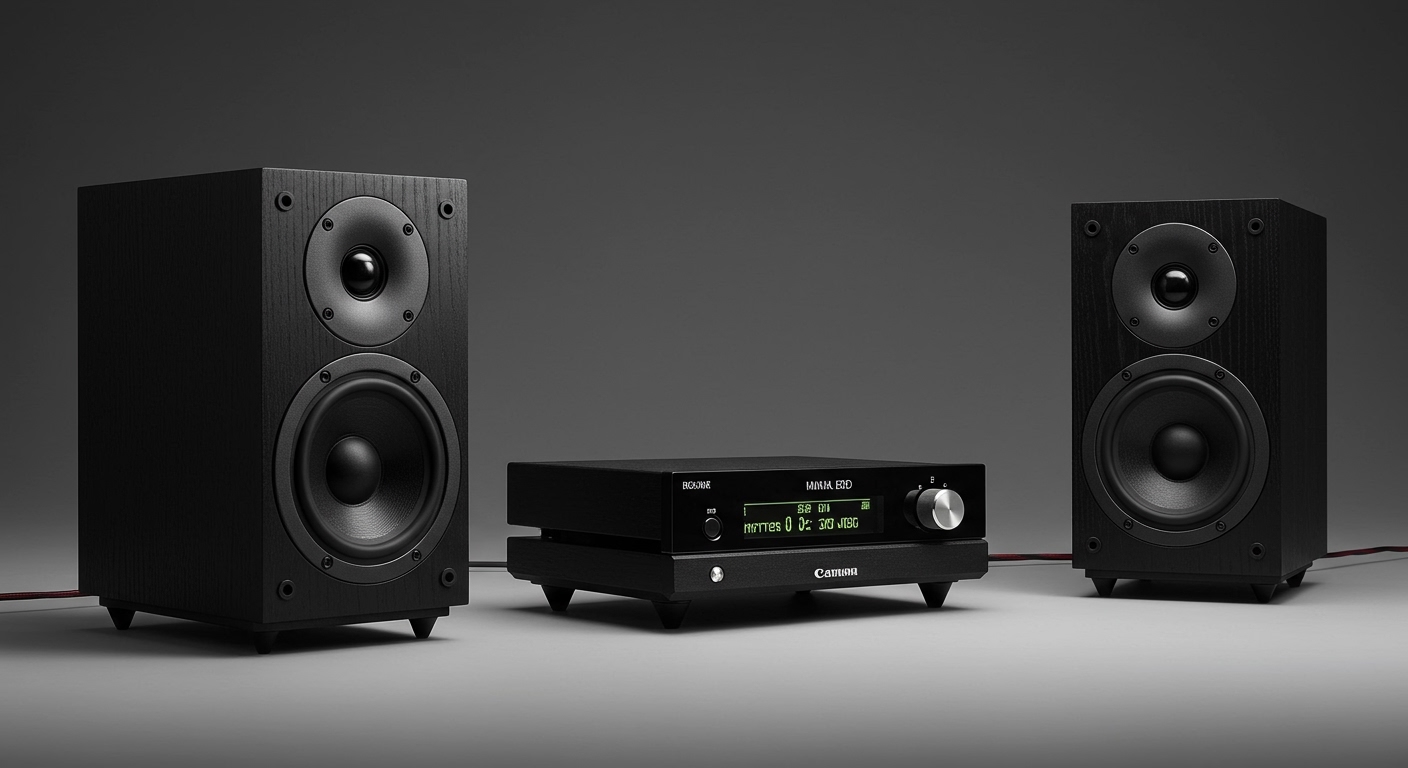
What Are Component Speakers? A Simple Breakdown
A component speaker system is a multi-piece set designed to reproduce sound with maximum accuracy. Unlike a standard “coaxial” speaker that crams all the parts into one unit, a component system separates them for better performance.
- Woofer: This is the largest driver, typically 6.5 inches or 5.25 inches. Its job is to handle the low and mid-range frequencies—think bass guitar, kick drums, and the lower registers of vocals.
- Tweeter: This is a small driver, usually about 1 inch in diameter. It is dedicated to reproducing high-frequency sounds like cymbals, hi-hats, and the “s” sounds in vocals.
- Crossover: This is the electronic “brain” of the system. It’s a small box with circuits that receives the full-range signal from your amplifier and intelligently splits it, sending only low/mid frequencies to the woofer and only high frequencies to the tweeter.
Why They Sound So Much Better: The Crossover Advantage
The external crossover is the secret weapon of a component set. By precisely filtering which frequencies go to which speaker, it prevents the drivers from trying to reproduce sounds they weren’t designed for.
This separation results in:
- Drastically Improved Clarity: Vocals and instruments sound distinct and don’t blend into a muddy mess.
- Reduced Distortion: Each driver operates in its optimal frequency range, allowing you to play music louder without it sounding harsh or strained.
- Better Power Handling: The system can handle more power from an amplifier efficiently and safely.
The Power of Separation: Tweeter Placement and Soundstaging
The single biggest audio advantage of component speakers is the ability to mount the tweeter separately from the woofer. In my experience, this is what transforms car audio from just “sound” into an immersive experience.
By placing the tweeters up high on your A-pillars or sail panels (the small triangular panel where your mirror is mounted), you raise the soundstage. Instead of the music sounding like it’s coming from your feet, it sounds like the band is playing on a stage right on top of your dashboard. This creates a wide, deep, and realistic audio image that coaxial speakers simply cannot replicate.
How to Find What is the Best Component Speakers for Your Car
Now for the practical part. Finding what is the best component speakers for car audio involves a logical process of matching your needs, budget, and vehicle with the right product. Let’s walk through it step-by-step.
Step 1: Define Your Budget and Goals
Your budget is the most important starting point. You can find good component speakers at various price points, but what you get for your money changes significantly.
- Entry-Level ($100 – $300): This is a massive upgrade over factory speakers. You’ll get durable materials like polypropylene cones and simple but effective external crossovers. Brands like Morel Maximo Ultra or JL Audio C2 series are fantastic performers here.
- Mid-Range ($300 – $700): This is the sweet spot for most enthusiasts. Here, you’ll find speakers with more advanced materials (e.g., carbon fiber, glass fiber cones), more sophisticated crossovers with tweeter level adjustments, and overall better detail and power handling. Look at series like Focal Flax Evo or Hertz Cento Pro.
- High-End / Audiophile ($700+): For those seeking the absolute best. These systems use exotic materials, feature reference-grade crossovers, and deliver breathtaking accuracy and realism. Sets from Focal K2 Power, Morel Virtus, or JL Audio C7 series live in this space.
Step 2: Match Speakers to Your Music Taste
Different speakers have different “sound signatures.” The best set for a classical music lover might not be the best for a hip-hop fan.
- For Rock, Pop & Metal: You want a dynamic speaker with a strong mid-bass punch and detailed highs that aren’t overly harsh. I’ve found that speakers from Hertz and Audison often have an exciting, energetic sound that complements these genres perfectly.
- For Hip-Hop & EDM: The focus here is on bass authority and crisp, clear highs. A speaker with a robust woofer that can handle low frequencies without distortion is key. JL Audio and Rockford Fosgate build their reputation on this type of powerful, impactful sound.
- For Jazz, Classical & Acoustic: Accuracy, detail, and a neutral, natural sound are paramount. You want to hear every nuance of the recording. This is where brands like Focal and Morel truly shine, offering a smooth, detailed, and highly accurate presentation.
Step 3: Check Your Vehicle’s Speaker Sizes and Mounting Depths
This is a critical, and often overlooked, technical step. You must ensure the speakers you buy will physically fit in your car.
- Determine the Size: The most common size for front door woofers is 6.5 inches, but many vehicles use 6×9 inch, 5.25 inch, or other non-standard sizes.
- Use an Online Tool: The easiest way to









