

Understanding Speaker Power: Watts vs. Decibels (dB)
Trying to figure out how loud is 30 watts speakers can feel confusing. You see the number “30W” on the box, but what does that actually mean for your listening experience? Will it be loud enough for your desk, your living room, or a small party? The truth is, wattage is only half the story.
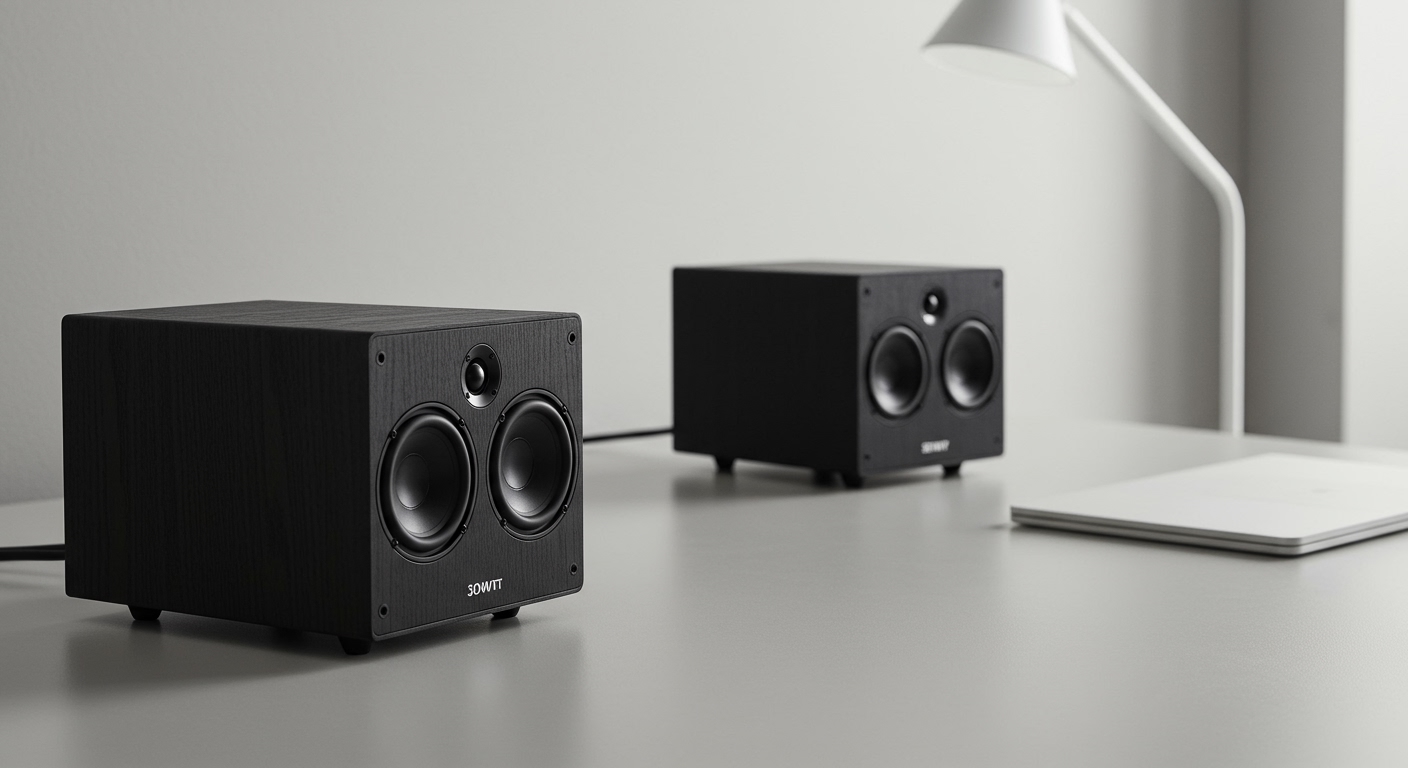
The most common misconception I see is that more watts automatically means more volume. While related, it’s not a direct one-to-one relationship. Think of it this way: wattage is the power sent from an amplifier to the speaker, while decibels (dB) are the measurement of the actual sound level you hear.
Key Takeaways / TL;DR
- How Loud is 30W? A 30-watt speaker can produce sound levels around 100-105 decibels (dB), which is comparable to a power lawnmower or a live rock concert from a moderate distance.
- Is it Loud Enough? For most indoor applications like desktop use, bedroom listening, or background music in a small to medium-sized room (up to 200 sq. ft.), 30 watts is plenty loud.
- The Key Factor: Speaker Sensitivity is more important than wattage for determining loudness. A high-sensitivity speaker will be much louder with 30 watts than a low-sensitivity one.
- Best Use Cases: Ideal for PC gaming setups, bookshelf audio systems, small apartment living rooms, and background music for intimate gatherings.
- Not Ideal For: Large open-plan living rooms, outdoor parties, or as main speakers in a serious home theater setup where high dynamic range is needed.
The Real Difference Between Watts and Decibels
Let’s break this down simply.
- Watts (W): This measures the electrical power an amplifier sends to a speaker. It’s the “engine” of your sound system. More watts provide more potential power and, crucially, more headroom—the ability to handle sudden loud peaks in music or movies without distortion.
- Decibels (dB SPL): This stands for Sound Pressure Level and measures the actual loudness of the soundwaves traveling through the air. The decibel scale is logarithmic, which is a fancy way of saying our ears perceive loudness in a specific way.
Here’s a critical rule of thumb to remember:
- To make a sound seem twice as loud, you need a 10 dB increase.
- To achieve a 3 dB increase in volume, you need to double the amplifier power (watts).
This means going from a 30W speaker to a 60W speaker doesn’t double the loudness; it only provides a 3 dB increase, which is a noticeable but not dramatic jump in volume. This is why a speaker’s efficiency is so important.
So, How Loud is 30 Watts Speakers in Real-World Terms?
A typical 30-watt speaker can reach sound levels of 100-105 dB, depending on its efficiency. To give you context, this is seriously loud. Prolonged exposure to sound levels above 85 dB can cause permanent hearing damage.
From my experience testing audio equipment, a 30W system in a standard bedroom can easily become uncomfortably loud long before you hit the maximum volume. It’s more than enough to fill the space for personal listening and even annoy the neighbors.
To help you visualize this, here’s how a 30-watt speaker compares to everyday sounds.
Sound Level Comparison Table
| Decibel Level (dB) | Common Sound Source Example | Perceived Loudness | Is 30W Speaker in this Range? |
|---|---|---|---|
| 30 dB | A quiet whisper | Very Faint | Yes (at very low volume) |
| 60 dB | Normal conversation | Moderate | Yes (at comfortable volume) |
| 85 dB | City traffic from inside a car | Loud | Yes (at high volume) |
| 100-105 dB | Power lawnmower, approaching subway train | Very Loud | Yes (at or near max volume) |
| 110 dB | A live rock concert (front rows) | Extremely Loud | Unlikely, needs more power |
| 120 dB | Jet engine at takeoff (100m away) | Painfully Loud | No |
As you can see, 30 watts speakers are loud enough to compete with some very noisy environments. The question isn’t just about raw volume, but about the quality of that volume and whether it’s right for your specific needs.
The Secret Ingredient: Why Speaker Sensitivity is Crucial
If you take away only one thing from this guide, let it be this: speaker sensitivity is the most important specification for determining how loud a speaker can get.
Speaker Sensitivity (or efficiency) is a measurement of how effectively a speaker converts power (watts) into sound (decibels). It’s typically measured as a dB rating at 1 watt of power from 1 meter away (dB @ 1W/1m).
- Low Sensitivity: Around 84-87 dB
- Average Sensitivity: Around 88-90 dB
- High Sensitivity: 91 dB and above
Let’s see how this plays out with 30 watts of power. We can use a simple formula to estimate the maximum SPL:
Max SPL ≈ Sensitivity + 10 * log10(Power in Watts)
Here’s a practical comparison:
- Speaker A (Low Sensitivity): 86 dB @ 1W/1m
- **Speaker B









