

What Are Sub Speakers and Why Do They Matter?
A subwoofer, often called a “sub,” is a specialized speaker designed to reproduce only the lowest-frequency audio signals, typically between 20-200 Hz. These are the deep, rumbling sounds—the bass—that you feel more than you hear. Think of the chest-thumping explosion in an action movie or the deep bassline in your favorite song. Standard speakers often struggle to produce these sounds accurately, leaving your audio experience feeling thin and incomplete.
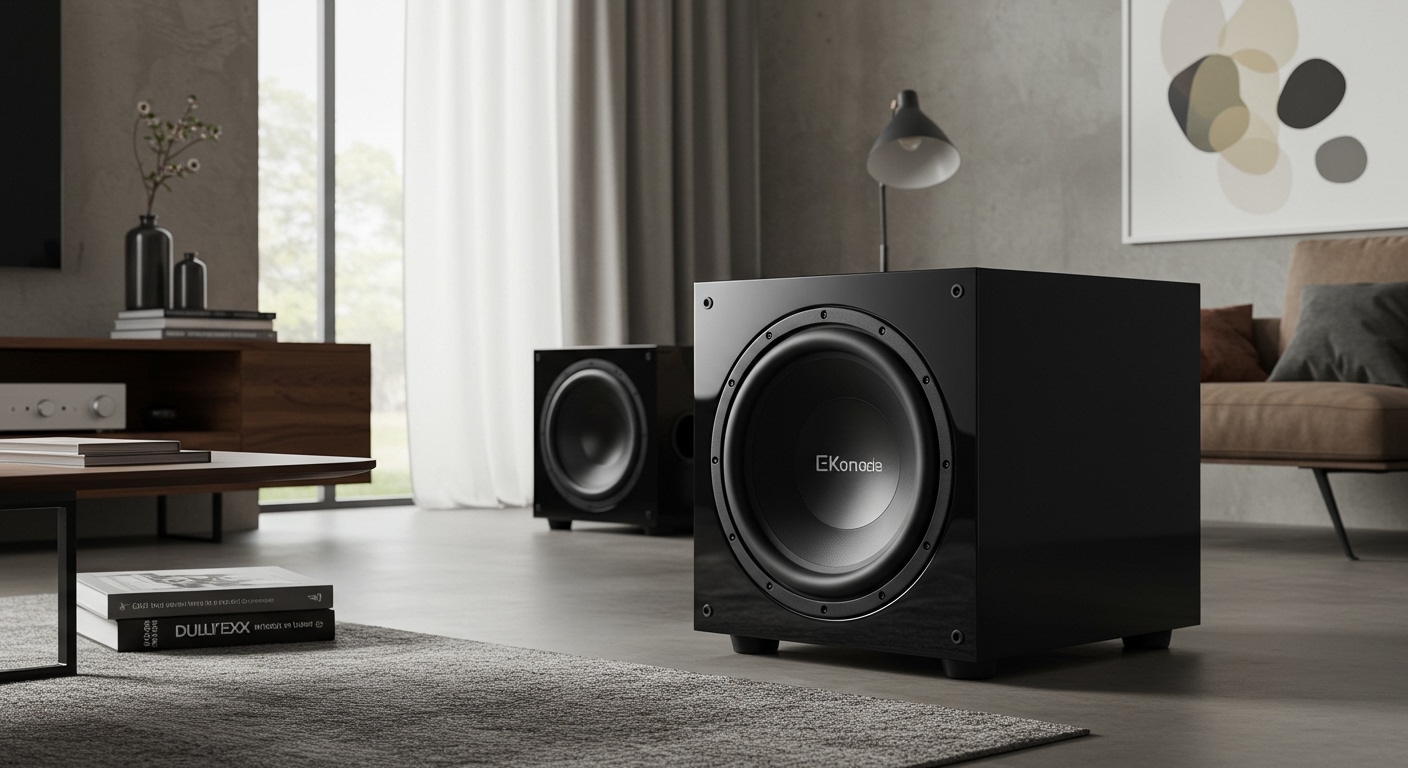
From my own experience setting up dozens of home and car audio systems, adding a quality subwoofer is the single most significant upgrade you can make. The first time I integrated a proper sub into my home theater, the difference was astounding. Suddenly, movies had weight and impact, and music felt richer and more immersive. It’s not about being loud; it’s about adding a foundational layer of sound that brings everything to life.
How Much Are Sub Speakers? A Detailed Price Breakdown
The cost of a subwoofer is influenced by its size, power, design, and brand. To give you a clear picture, I’ve broken down the typical price ranges you’ll encounter. While you can find options under $100, the sweet spot for performance and value for most people begins around the $200-$300 mark.
| Price Tier | Price Range | Best For | Key Features |
|---|---|---|---|
| Entry-Level | $100 – $300 | Small rooms, budget setups, beginners | 8-10 inch drivers, 50-150W RMS power |
| Mid-Range | $300 – $800 | Most home theaters, music lovers | 10-12 inch drivers, 200-500W RMS, better accuracy |
| High-End | $800 – $2,000+ | Large rooms, audiophiles, dedicated theaters | 12-15+ inch drivers, 500W+ RMS, advanced DSP |
Entry-Level Subwoofers (Under $300)
For those just starting or equipping a smaller room, an entry-level subwoofer is a fantastic choice. These models provide a significant upgrade over the bass from standard TV or bookshelf speakers without breaking the bank.
- Who they’re for: Beginners, apartment dwellers, or those on a tight budget.
- What to expect: You’ll get noticeable low-end rumble for movies and a fuller sound for music. They may lack the precision and ultra-low depth of more expensive models.
- Popular Models: Polk Audio PSW10, Dayton Audio SUB-1000.
Mid-Range Subwoofers ($300 – $800)
This is the category where I believe most people find the perfect balance of price and performance. Subwoofers in this range offer powerful, accurate, and deep bass that can fill a medium to large-sized room. The jump in quality from the entry-level tier is significant.
- Who they’re for: Serious movie watchers, music enthusiasts, and anyone building a quality home theater.
- What to expect: Tighter, more controlled bass that is both powerful and musical. Features often include better amplification, higher-quality drivers, and more robust cabinets.
- Popular Models: SVS SB-1000 Pro, Klipsch R-121SW.
High-End & Audiophile Subwoofers ($800+)
When you demand the absolute best in low-frequency reproduction, you enter the high-end tier. These subwoofers are engineered for ultimate performance, capable of producing incredibly deep, powerful, and nuanced bass that can shake a room without distortion.
- Who they’re for: Dedicated audiophiles, owners of large home theaters, and those who want uncompromising performance.
- What to expect: Flawless, distortion-free bass even at high volumes. They often feature massive drivers (13 inches or more), powerful amplifiers (1000+ watts), and sophisticated Digital Signal Processing (DSP) for fine-tuning the sound to your specific room.
- Popular Models: SVS PB-3000, REL Acoustics HT/1205 MKII.
Key Factors That Determine Sub Speaker Cost
Understanding how much sub speakers are involves looking at the components and design choices that affect the final price. Four main factors drive the cost up or down.
Subwoofer Size (Driver Diameter)
The “driver” is the cone-shaped part of the speaker that moves to create sound. In general, a larger driver can move more air, resulting in deeper and louder bass.
- 8-inch: Great for small rooms or for adding subtle bass to a music-focused system.
- 10-inch: A versatile size that works well in small to medium-sized rooms.
- 12-inch: The most popular size for home theater, offering a great combination of depth and impact.
- 15-inch and larger: Reserved for very large rooms and enthusiasts seeking maximum low-frequency output.
Power Rating (Watts)
A subwoofer’s built-in amplifier provides the power needed to move the driver. The key number to look for is RMS (Root Mean Square) power, which measures continuous power output.
- Under 150W RMS: Suitable for small rooms and moderate listening levels.
- 150W – 500W RMS: The sweet spot for most home applications, providing plenty of power for an impactful experience.
- 500W+ RMS: High-performance territory, needed for large spaces and reference-level volume.
Enclosure Type: Sealed vs. Ported
The cabinet, or enclosure, that houses the driver plays a huge role in the sound and cost.
- Sealed Enclosures: These are airtight boxes. They are known for producing tight, accurate, and articulate bass. I personally prefer a sealed sub like the SVS SB-2000 Pro for my two-channel music setup because of its speed and precision. They are often smaller than their ported counterparts.
- Ported Enclosures: These have a port or hole that allows air to escape, reinforcing the lowest frequencies. This design is generally more efficient, producing louder, “boomier” bass, which is fantastic for home theater and movie effects. They are typically larger and can be more complex to manufacture.
Brand Reputation and Build Quality
Established brands like SVS, Klipsch, REL, Polk Audio, and JL Audio (for car audio) invest heavily in research, engineering, and quality materials. A higher price often reflects:
- Durable driver materials (e.g., aluminum, composite cones).
- Rigid, well-braced cabinets that don’t vibrate or color the sound.
- Advanced, high-efficiency amplifiers.
- Better warranty and customer support.
How Much Are Subs Speakers for a Car?
Car audio is a different beast with its own pricing structure. Unlike most home subwoofers that come with a built-in amp and enclosure, car subwoofers are often sold as individual components, giving you more flexibility.
Here’s a breakdown of the costs you can expect for a car audio setup:
| Component | Budget Range | Mid-Range Range | Purpose |
|---|---|---|---|
| Subwoofer Driver | $50 – $150 | $150 – $400+ | The speaker itself. |
| Amplifier | $100 – $250 | $250 – $600+ | Powers the passive subwoofer. |
| Enclosure (Box) | $50 – $100 | $100 – $250+ | Houses the driver; can be pre-made or custom. |
| Wiring Kit | $25 – $50 | $50 – $100+ | Provides power and signal to the amp. |
| Installation | $150 – $300 | $300 – $500+ | Professional labor cost; can be $0 if you DIY. |
| Total Estimated Cost | $375 – $850 | $850 – $1,850+ | Complete system cost. |
Powered Subwoofers for cars









