

Understanding How to Use Speed Clips for Speakers
Struggling with a speaker installation that feels clumsy and slow? Fumbling with nuts, bolts, and washers in tight spaces can turn a simple upgrade into a frustrating ordeal. You need a mounting solution that is fast, secure, and reliable without requiring a toolbox full of specialized equipment. This is where speed clips become an installer’s best friend. They simplify the process dramatically, providing a secure threaded anchor on thin materials where traditional methods fail.
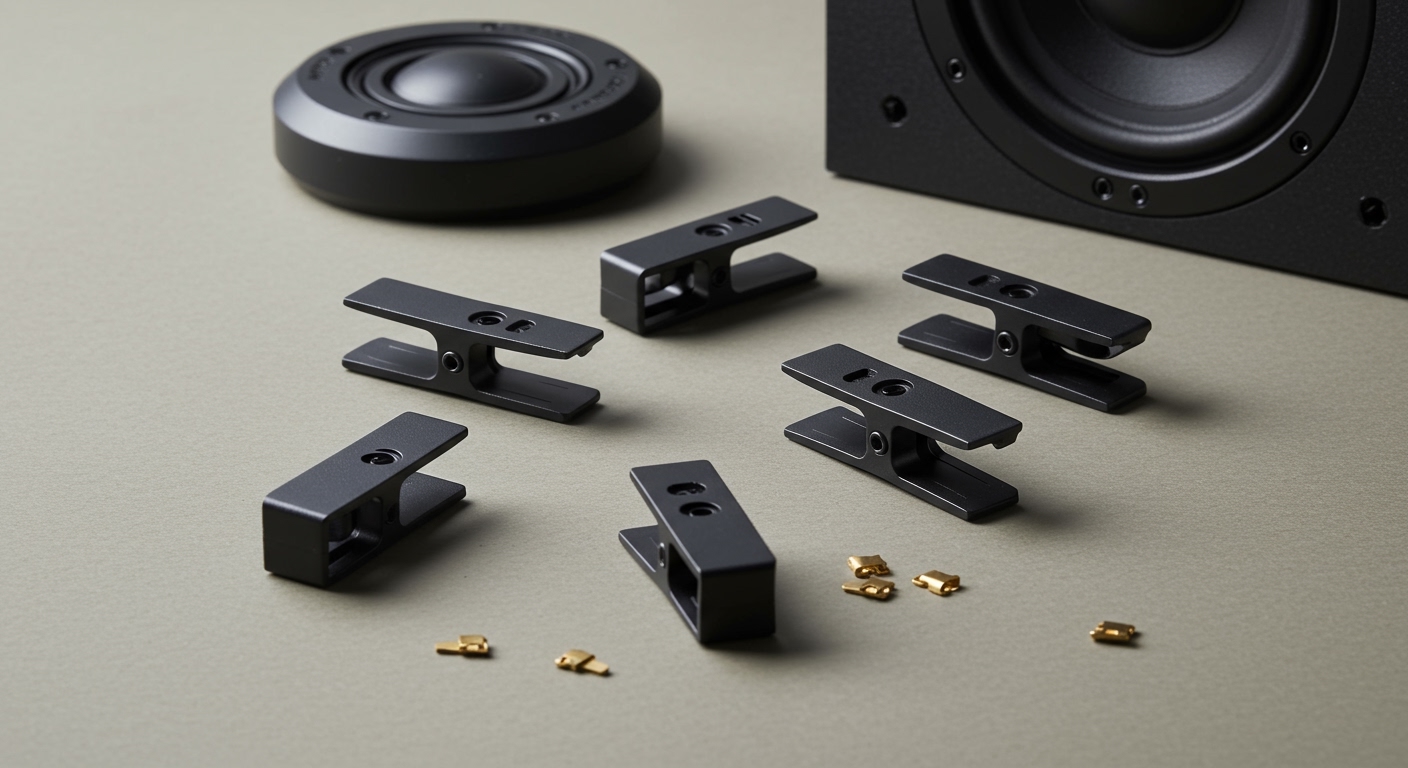
In my years of installing car and home audio systems, I’ve found that mastering the use of speed clips is a non-negotiable skill. They not only save a tremendous amount of time but also provide a professional-grade, rattle-free finish that clients appreciate. This guide will walk you through everything you need to know, from selection to final tightening.
Key Takeaways: Using Speaker Speed Clips
- What They Are: Speed clips, also known as Tinnerman nuts or U-nuts, are one-piece, self-retaining fasteners that clip onto the edge of a panel or into a pre-drilled hole, providing a secure threaded anchor.
- Primary Benefit: They dramatically speed up installation by eliminating the need for a separate nut and washer, especially in hard-to-reach areas.
- Proper Installation: The key is to ensure the clip is fully seated and flush against the mounting surface before inserting the screw. This prevents cross-threading and ensures maximum clamping force.
- Common Mistake: Overtightening is the most frequent error. This can strip the clip’s threads or damage the mounting panel. Use a hand screwdriver for the final turns to feel the tension.
- Best Use Cases: Ideal for mounting speakers to thin materials like car door panels, plastic trim, thin MDF, or sheet metal.
What Are Speed Clips for Speakers, Exactly?
Before we dive into the “how-to,” it’s crucial to understand what speed clips for speakers are and why they are so effective. Think of a speed clip as a clever combination of a nut and a spring-loaded clamp in one single piece of metal.
A typical speed clip (or U-nut) is made from a single piece of spring steel. It’s bent into a “U” shape with two legs.
- One leg is typically longer and flat, designed to sit behind the panel.
- The other leg has an extruded, threaded hole that aligns with your mounting hole.
When you push the clip over the edge of a panel or into a rectangular hole, the spring tension of the metal holds it firmly in place. This creates a stationary, threaded anchor point, ready to accept a screw. You no longer need to hold a nut in place behind the speaker while you tighten a bolt from the front.
The Anatomy of a Speed Clip
To really appreciate their design, let’s break down the parts:
- The Body: The main U-shaped structure that provides the spring tension.
- The Legs: The two parallel parts of the “U”. The difference in their length and design helps with installation.
- The Threaded Barrel: The raised, threaded section that accepts the screw. This is the “nut” part of the fastener.
- The Lead-in: The opening of the “U” is often flared slightly to make it easier to slide onto a panel.
From my experience, the quality of the spring steel is paramount. Cheaper clips can lose their tension or have poorly formed threads, leading to installation headaches. It’s always worth investing in quality hardware from a reputable supplier.
A Detailed Guide on How to Use Speed Clips for Speakers
Using speed clips is a straightforward process, but precision is key to a secure, professional result. I’ve broken down the entire process I use for every installation into clear, actionable steps.
Step 1: Gather Your Tools and Materials
Preparation is half the battle. Having everything ready before you start prevents interruptions and ensures a smooth workflow.
Essential Tools & Supplies:
- Speakers: The speakers you intend to install.
- Speed Clips & Screws: Ensure they are the correct size and thread pitch for your speakers. Most 6.5″ car speakers use a #8 or #10 screw.
- Drill with Drill Bits: A set of bits is essential for drilling pilot holes if none exist.
- Screwdriver: A Phillips head screwdriver is most common. I recommend a set with multiple lengths for accessing tight spots.
- Marking Tool: A fine-tip marker or a center punch to mark your hole locations.
- Measuring Tape or Ruler: For accurate placement.
- Panel Removal Tool (for Car Audio): A set of plastic pry tools to safely remove door panels without scratching them.
Step 2: Prepare the Mounting Surface
Whether you’re working on a car door or a custom speaker box, the surface needs to be ready.
- Remove Obstructions: If installing in a car, carefully remove the door panel or any trim covering the speaker location. Use your plastic pry tools to avoid damage.
- Test Fit the Speaker: Place the speaker in the mounting location to check for clearance. Ensure the magnet and basket don’t interfere with any window mechanisms or wiring behind the panel.
- Mark Your Mounting Holes: Use the speaker itself or its included template to mark where the screw holes need to be. A fine-tip marker works well on most surfaces. For metal, a center punch creates a small indent that prevents the drill bit from “walking.”
Step 3: Drill the Pilot Holes (If Necessary)
If you are not using pre-existing factory holes, you’ll need to create them. This is a critical step.
- Select the Right Drill Bit: The pilot hole for the screw needs to be large enough for the screw to pass through but small enough that the threads have material to bite into. Check the screw packaging for the recommended pilot hole size.
- Drill Carefully: Keep the drill straight and apply steady, even pressure. If drilling into metal, using a bit of cutting oil can make the process smoother. For plastic, a slower drill speed can prevent melting.
Step 4: Install the Speed Clips
This is the core of the process. Proper installation here guarantees a secure fit.
- Align the Clip: Hold the speed clip with the threaded barrel facing you (on the side the screw will enter).
- Position Over the Hole: Slide the clip over the edge of the mounting material so that the threaded barrel on one leg aligns perfectly with the pilot hole you drilled. The longer, flatter leg of the clip should be on the backside of the panel.
- Push to Seat: Push the clip firmly until it snaps into place. You should feel a distinct click as it seats. The back of the clip should be flush against the edge of the panel.
- Verify Alignment: Look through the pilot hole to ensure the threaded barrel is perfectly centered. If it’s off-center, the screw will cross-thread. Wiggle it slightly until it’s perfectly aligned.
Pro Tip: In my installations, if a clip feels loose, I sometimes use a pair of pliers to gently squeeze it, increasing its tension before sliding it onto the panel. This ensures it won’t shift during speaker mounting.
Step 5: Mount the Speaker
With your speed clips securely in place, mounting the speaker is incredibly simple.
- Position the Speaker: Place the speaker over the mounting hole, aligning its screw holes with the now-threaded speed clips.
- Start All Screws by Hand: Insert each screw and turn it by hand for the first few threads. This is crucial to prevent cross-threading. If you feel resistance, back the screw out and try again.
- Tighten in a Star Pattern: Do not tighten one screw all the way down at once. Tighten them gradually in a star or crisscross pattern, similar to how you would tighten lug nuts on a car wheel. This ensures the speaker frame sits evenly and doesn’t warp.
- Final Snug: Use your screwdriver for the final turns. Tighten until the screw is snug. Do not overtighten! Overtightening can strip the threads in the speed clip or crack the plastic speaker frame. The goal is “snug,” not “cranked.”
Step 6: Test for Rattles and Security
The final step is to ensure your work is solid.
- Gently Tug the Speaker: The speaker should feel completely solid with no movement.
- Reconnect and Play Music: Connect the speaker wiring and play a track with a good amount of bass at a moderate volume.
- Listen Carefully: Listen for any buzzing, rattling, or vibrations from the mounting points. A secure installation will be silent. If you hear a rattle, one of the screws may be loose, or a clip may not be fully seated.
Why Speed Clips Are a Superior Choice for Speaker Installation
Understanding how to use speed clips for speakers is one thing, but appreciating why they are often the best choice provides deeper insight. They offer a unique combination of benefits that other fastening methods can’t match, especially in common installation scenarios.
Speed and Efficiency
The name says it all. In a professional setting, time is money. I can personally attest that using speed clips can reduce the mounting time for a pair of door speakers by 15-20 minutes compared to using traditional nuts and bolts. There’s no fumbling with a wrench behind a panel; it’s a simple, one-sided operation.
Unmatched Serviceability
Speakers may need to be removed later for upgrades or repairs.
- With speed clips, removal is as simple as unscrewing the screws. The clip stays in place, ready for reinstallation.
- With wood screws, each removal and reinstallation cycle weakens the wood, leading to stripped holes.
- With nuts and bolts, you risk dropping the nut inside a door panel, leading to a frustrating search-and-rescue mission.
Vibration Damping and Security
The spring steel construction of a speed clip has an inherent tension. This tension acts as a form of thread-locking, preventing screws from backing out due to the constant vibration a speaker produces. This results in a more secure, long-lasting, and rattle-free installation.
Speed Clips vs. Other Mounting Methods: A Comparison
To give you a clearer picture, let’s compare speed clips against other common fasteners used for speaker installation. I’ve used all of these methods extensively, and each has its place.
| Fastener Type | Best Use Case | Pros | Cons |
|---|---|---|---|
| Speed Clips | Thin panels (car doors, sheet metal, plastic) | Extremely fast, self-retaining, good vibration resistance, easily serviceable. | Can be stripped if overtightened, requires a panel edge or specific hole. |
| T-Nuts | Wooden baffles (MDF, plywood) | Extremely strong, provides machine threads, resists stripping, flush mount. | Requires access to the back of the panel for installation, can fall out. |
| Wood Screws | Thick wooden enclosures, first-time installs. | Simple to use, requires only a pilot hole. | Can easily strip the wood, loses holding power with re-use. |
| Nuts & Bolts | High-power subwoofer installs, thick baffles. | Maximum clamping force and strength. | Slowest method, requires access to both sides, nuts can be dropped easily. |
As you can see, for the vast majority of car audio component speaker and coaxial speaker installations, speed clips offer the best balance of speed,









