

What Are 5 Way Speakers? A Deep Dive for Better Car Audio
Staring at a wall of car speakers can feel overwhelming. You see terms like “2-way,” “3-way,” and the impressive-sounding “5 way speakers,” and it’s easy to get lost in the jargon. You just want better sound, but the numbers game makes you wonder if more is always better. As someone who has spent countless hours in the garage installing and tuning car audio systems, I’m here to cut through the marketing noise and explain exactly what 5 way speakers are and if they’re the right choice for your vehicle.
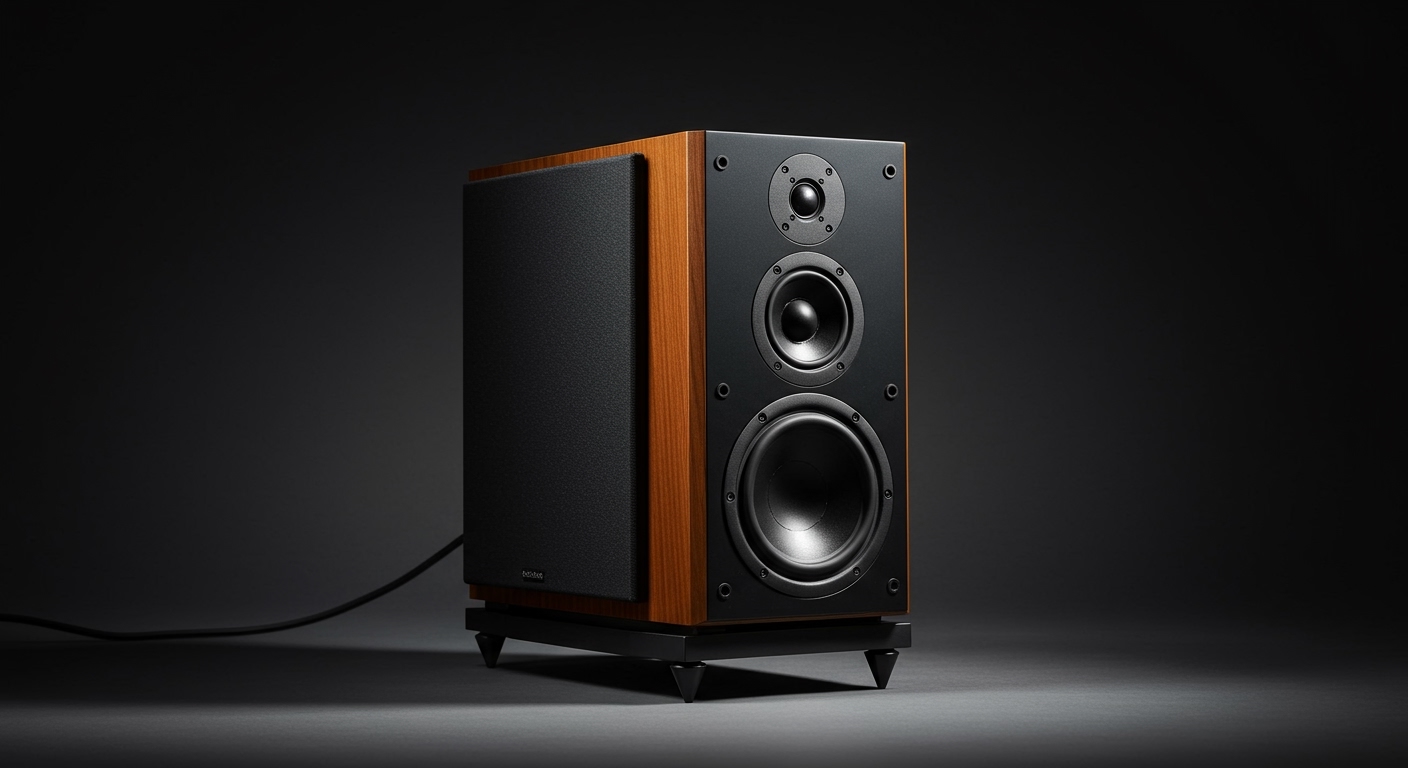
This guide will demystify the technology, compare them to other options, and give you the practical knowledge to make an informed decision. We’ll break down the components, discuss the pros and cons, and reveal the truth about whether “more ways” truly equals better sound.
Key Takeaways: Understanding 5 Way Speakers
- Definition: A 5 way speaker is a single speaker unit that contains five individual sound drivers designed to reproduce different frequency ranges.
- Typical Components: This usually includes one large woofer for bass, one midrange driver for vocals, and three smaller tweeters or super tweeters for high-frequency sounds.
- All-in-One Design: They are almost always coaxial speakers, meaning all five drivers are mounted on the same chassis for easy, drop-in installation into a factory speaker location.
- Quality vs. Quantity: While they offer a full range of sound in one package, a high-quality 2-way or 3-way component system (with separate drivers) will often provide superior sound clarity and imaging.
- Best Use Case: They are an excellent and simple upgrade over basic, single-driver factory speakers, especially for listeners who want more detail without a complex installation.
What Are 5 Way Speakers, Exactly? The Core Concept
A 5 way speaker is a full-range speaker system where five separate drivers are built into a single frame. The primary goal is to dedicate specialized drivers to specific parts of the audio spectrum—the lows, a-mids, and highs—to create a more detailed and richer sound than a basic, single-cone speaker ever could.
Think of it like a team of specialists. Instead of one person trying to do five different jobs, you have five experts each handling their own task. In a speaker, this division of labor is managed by a small, built-in circuit called a passive crossover. This crossover acts like a traffic cop for audio signals, directing the low-frequency bass notes to the woofer, the mid-frequency vocals to the midrange driver, and the high-frequency cymbal crashes to the various tweeters.
A common configuration you’ll find in a 5 way speaker includes:
- 1x Woofer: The largest cone, responsible for producing bass and low-end frequencies.
- 1x Midrange: A smaller driver, often a dome or small cone, that handles the crucial middle frequencies where vocals and most instruments live.
- 3x Tweeters/Super Tweeters: Very small drivers, typically piezoelectric or dome types, dedicated to reproducing the highest frequencies, adding “sparkle” and “air” to the music.
This all-in-one design makes them a popular choice for easy factory speaker replacement.
How 5 Way Speakers Work: Deconstructing the Sound
To truly understand what does 5 way speakers mean, you need to understand how sound frequencies work. The range of human hearing is roughly from 20 Hertz (Hz), a deep rumble, to 20,000 Hz (or 20 kHz), a piercingly high-pitched sound. A single speaker cone struggles to accurately reproduce this entire range at once. This is where multiple drivers become essential.
The Role of Each Driver
Each driver in a 5-way system is optimized for a specific job based on its size, material, and design. The built-in crossover network ensures each driver only receives the frequencies it’s best equipped to handle.
| Driver Type | Typical Frequency Range | Sounds It Produces |
|---|---|---|
| Woofer | 30 Hz – 1,000 Hz | Kick drums, bass guitar, deep synth notes |
| Midrange | 500 Hz – 5,000 Hz | Vocals, guitars, piano, snare drums |
| Tweeter | 3,000 Hz – 20,000 Hz | Cymbals, hi-hats, vocal sibilance (“s” sounds) |
| Super Tweeter | 10,000 Hz – 20,000+ Hz | “Air,” “sizzle,” and the finest harmonic details |
In a 5-way setup, the extra tweeters are often marketed as “super tweeters.” They are typically very small piezoelectric tweeters, which are inexpensive to produce and can create very high frequencies. Their goal is to add that extra layer of crispness to the sound.
The Truth About “More Ways”: Are 5 Way Speakers a Gimmick?
This is the question I get asked most often in the shop. Is a 5-way speaker automatically better than a 3-way or 4-way? The honest answer is no, not necessarily. The number of drivers is often used as a marketing tool, and the quality of the components is far more important than the quantity.
The Argument FOR 5-Way Speakers
- Convenience: Their biggest advantage is being a simple, all-in-one, drop-in replacement for your car’s stock speakers. The installation is straightforward.
- Full-Range Sound: Compared to a single-cone factory speaker, a 5-way speaker provides a significantly fuller and more detailed sound right out of the box. You’ll immediately notice clearer highs and more defined mids.
- Cost-Effective Upgrade: They offer a noticeable improvement in sound for a relatively low investment, without needing a complex, multi-component setup.
The Expert’s Take: The Argument AGAINST 5-Way Speakers
From an audio purist’s perspective, and based on my own A/B testing of hundreds of systems, 5-way coaxial speakers have some inherent limitations.
- Quality Over Quantity: A well-engineered 2-way component system with a high-quality woofer, a silk dome tweeter, and a sophisticated external crossover will almost always sound more accurate and balanced than a 5-way coaxial speaker. The materials and crossover design are simply superior.
- Crossover Limitations: The built-in crossovers on coaxial speakers are, by necessity, very simple. Often, it’s just a single capacitor on the tweeter to block low frequencies









