

What Are Big Speakers Called? A Pro Audio Explainer
Ever stood in front of a colossal stack of speakers at a concert, feeling the bass in your chest, and wondered, “What are those things actually called?” You’re not alone. The world of large-scale audio can seem intimidating, but the terminology is simpler than you think. The names for big speakers change depending on where you see them and what they’re used for. This guide will demystify the jargon and turn you into a knowledgeable audio enthusiast.
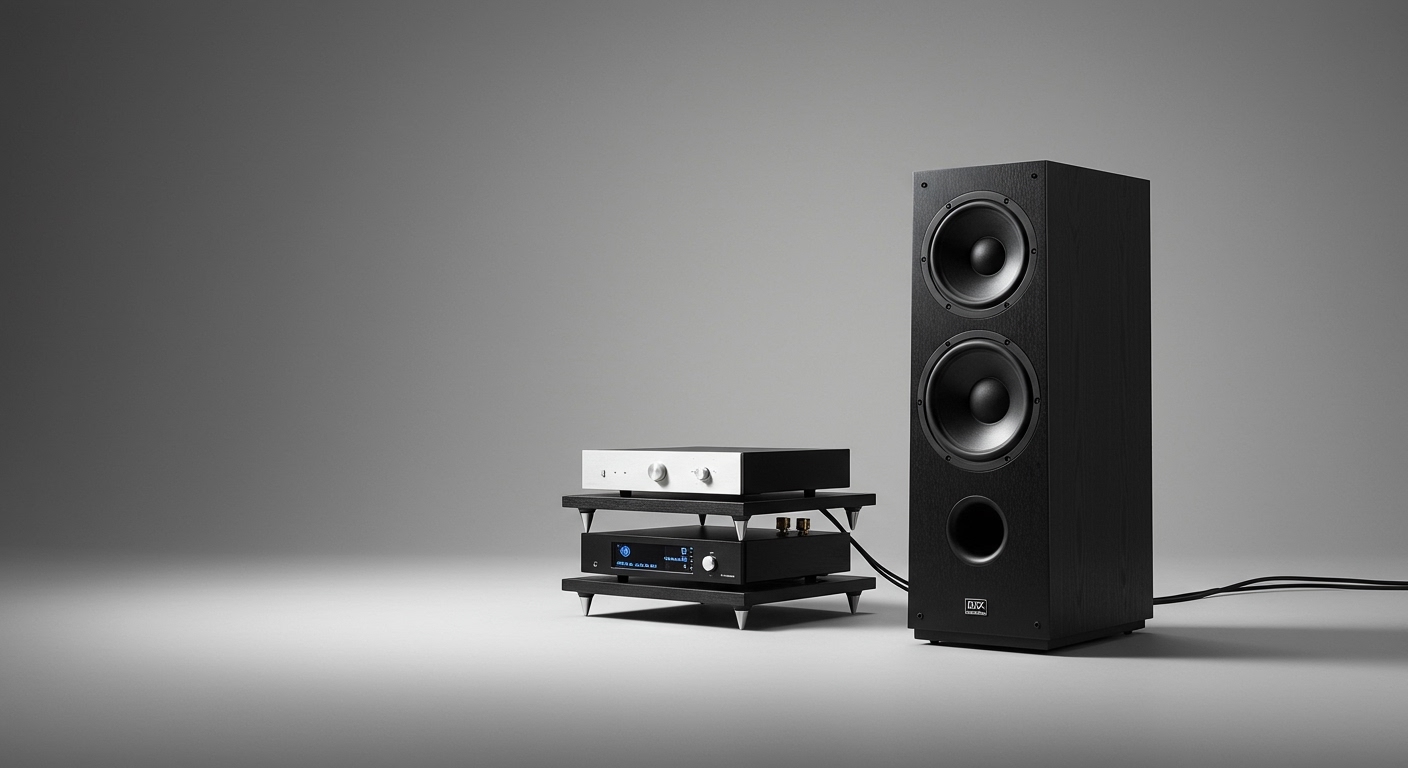
We’ll break down the different types of big speakers, from the massive arrays at music festivals to the elegant towers in a high-end home theater. You’ll learn what makes them work, why size matters for sound quality, and how to choose the right ones for your own needs.
Key Takeaways: What Are Big Speakers Called?
- For Live Events: Big speakers used for concerts and public events are most often called PA (Public Address) systems, line arrays, or sound reinforcement speakers. The big boxes that produce bass are called subwoofers.
- For Home Audio: In a living room or home theater, large, freestanding speakers are called tower speakers or floorstanding speakers.
- For Recording Studios: The largest, most accurate speakers in a professional studio are known as main monitors.
- Key Components: Regardless of the name, all big speakers use components called drivers (like woofers for bass and tweeters for treble) to create sound.
Decoding the Names: What Big Speakers Are Called in Different Settings
The term “big speaker” is a catch-all. The specific name a speaker gets depends entirely on its job. As someone who has set up audio for both live events and critical listening rooms, I can tell you the design philosophy for each is wildly different.
For Live Concerts & Events: The World of PA Systems
When you need to deliver sound to hundreds or thousands of people, you enter the realm of sound reinforcement or Public Address (PA). This is where speakers are designed for maximum power, coverage, and durability.
- PA (Public Address) Speakers: This is the most general term. A PA system is any collection of speakers, microphones, and amplifiers used to project sound to a large audience. The main speakers pointed at the crowd are often called “mains” or “front of house” (FOH) speakers.
- Line Array Speakers: These are the long, curved columns of speakers you see hanging on either side of a large stage at a festival or arena show. They are the answer to what are the big speakers called at major events. A line array works by using multiple speaker cabinets stacked together. This allows sound engineers to precisely control the sound dispersion, sending clear audio to the front row and the back of the venue without deafening anyone. Brands like L-Acoustics, d&b audiotechnik, and JBL are leaders in this space.
- Subwoofers: These are the large, often boxy speakers you’ll see stacked on the ground. Their sole purpose is to reproduce very low-frequency sounds—the deep, vibrating bass you feel in your body. A PA system’s mains handle the mids and highs, while the subwoofers (or “subs”) handle the earth-shaking lows.
- Stage Monitors: Ever see smaller, wedge-shaped speakers on the stage floor pointing back at the musicians? Those are called stage monitors or wedges. They allow performers to hear themselves and the rest of the band clearly over the noise of the crowd.
For High-Fidelity Home Audio: Tower & Floorstanding Speakers
When the goal is creating an immersive, high-quality listening experience in your home, the terminology shifts from power to precision.
- Tower Speakers / Floorstanding Speakers: These terms are used interchangeably. They refer to tall, cabinet-style speakers that stand directly on the floor. In a home setting, these are the answer to what are big speakers called. They typically contain multiple drivers to reproduce the full spectrum of sound, from deep bass to crisp highs, providing a much richer and more dynamic experience than smaller bookshelf speakers.
- High-End Audiophile Speakers: This is a sub-category of tower speakers where craftsmanship, exotic materials, and advanced acoustic engineering are pushed to the limit. Brands like Bowers & Wilkins, Klipsch (especially their Klipschorn series), MartinLogan (known for electrostatic panels), and Focal produce large, statement-piece speakers that are as much works of art as they are audio devices.
In the Recording Studio: Main Monitors
In a professional recording studio, accuracy is king. Engineers need to hear every single detail of a recording, warts and all.
- Main Monitors: While studios use smaller “nearfield” monitors for close-up work, the largest speakers are called main monitors. These are often built directly into the wall in front of the mixing console (a technique called “soffit-mounting”). They are incredibly powerful and have a flat frequency response, meaning they don’t color the sound. This allows producers and engineers to make critical mixing decisions, knowing that what they hear is a true representation of the audio.
The Anatomy of a Big Speaker: What’s Inside?
Understanding what big speakers are called is one thing; knowing what makes them work is another. The size of the cabinet allows for larger, more specialized components that are essential for producing powerful, full-range sound.
The Cabinet (Enclosure)
The box itself is a critical component. It’s not just there to hold the drivers; it’s an acoustic tool. The cabinet, or enclosure, is engineered to manage the sound waves generated by the rear of the drivers, preventing them from canceling out the sound waves from the front. Materials like dense MDF (Medium-Density Fiberboard) are common because they resist vibration and resonance.
The Drivers: The Heart of the Sound
Drivers are the parts of the speaker that actually move to create sound waves. Different drivers are designed to handle specific frequency ranges. A large tower speaker might have three or more types:
- Woofers & Subwoofers: These are the largest drivers, responsible for low-frequency sounds (bass). Their large surface area allows them to move a lot of air, which is necessary to reproduce deep notes.
- Mid-Range Drivers: These smaller drivers handle the middle of the frequency spectrum, where most vocals and instruments lie. They are designed for clarity and detail.
- Tweeters: These are the smallest drivers, dedicated to high-frequency sounds (treble), like cymbals, hi-hats, and vocal sibilance. They are designed to be fast and precise.
- Compression Drivers & Horns: You’ll find these almost exclusively in PA speakers. A compression driver creates sound that is then amplified and directed by a specially shaped horn. This combination is extremely efficient, allowing it to produce very high volume levels with relatively little power, which is perfect for covering large areas.
The Crossover Network
You can’t just send a full-range audio signal to all the drivers at once. The crossover is an electronic filter circuit inside the speaker cabinet. Its job is to split the audio signal into different frequency bands and send the right frequencies to the right driver—bass to the woofer, mids to the mid-range, and treble to the tweeter. A well-designed crossover is crucial for a smooth, cohesive sound.
Why Size Matters: The Benefits of Big Speakers
In my experience testing hundreds of speakers, from tiny Bluetooth units to massive PA rigs, I can confirm that when it comes to high-quality audio reproduction, size genuinely matters. Physics is hard to beat.
- Full-Range Frequency Response: Bigger cabinets and larger woofers can simply move more air. This allows them to produce deeper, more impactful bass frequencies without struggle. A large tower speaker can reproduce the low rumble of a pipe organ or the thump of a kick drum with an authority that a small speaker simply cannot match.
- Greater Dynamic Range & Headroom: Dynamic range is the difference between the quietest and loudest sounds a speaker can produce. Big speakers have more headroom, meaning they can play very loud without the sound breaking up or distorting. This creates a more realistic and effortless listening experience, especially with complex music or movie soundtracks.
- Higher Efficiency & Sensitivity: Speaker sensitivity is a measure of how loud it will play (in decibels, or dB) with a single watt of amplifier power, measured from one meter away. Larger speakers, particularly horn-loaded designs like those from Klipsch, are often very efficient. This means they don’t require a massive, expensive amplifier to get loud, delivering powerful sound with less effort.
- Superior Dispersion & Coverage: This is especially true for line arrays. Their design allows them to create a wide, evenly-distributed field of sound. This ensures that whether you are in the front row or the back of a venue, you’re getting a similar high-quality audio experience.
A Practical Guide to Choosing Your Big Speakers
Ready to invest in some larger-than-life sound? Here’s a step-by-step approach to making the right choice.









