

What Are Loud Speakers? A Simple Explanation
A loud speaker is an electroacoustic transducer that converts an electrical audio signal into a corresponding sound. In simpler terms, it’s the device that takes the silent electrical language from your amplifier, phone, or TV and translates it into the audible music, dialogue, and sound effects that fill your room.
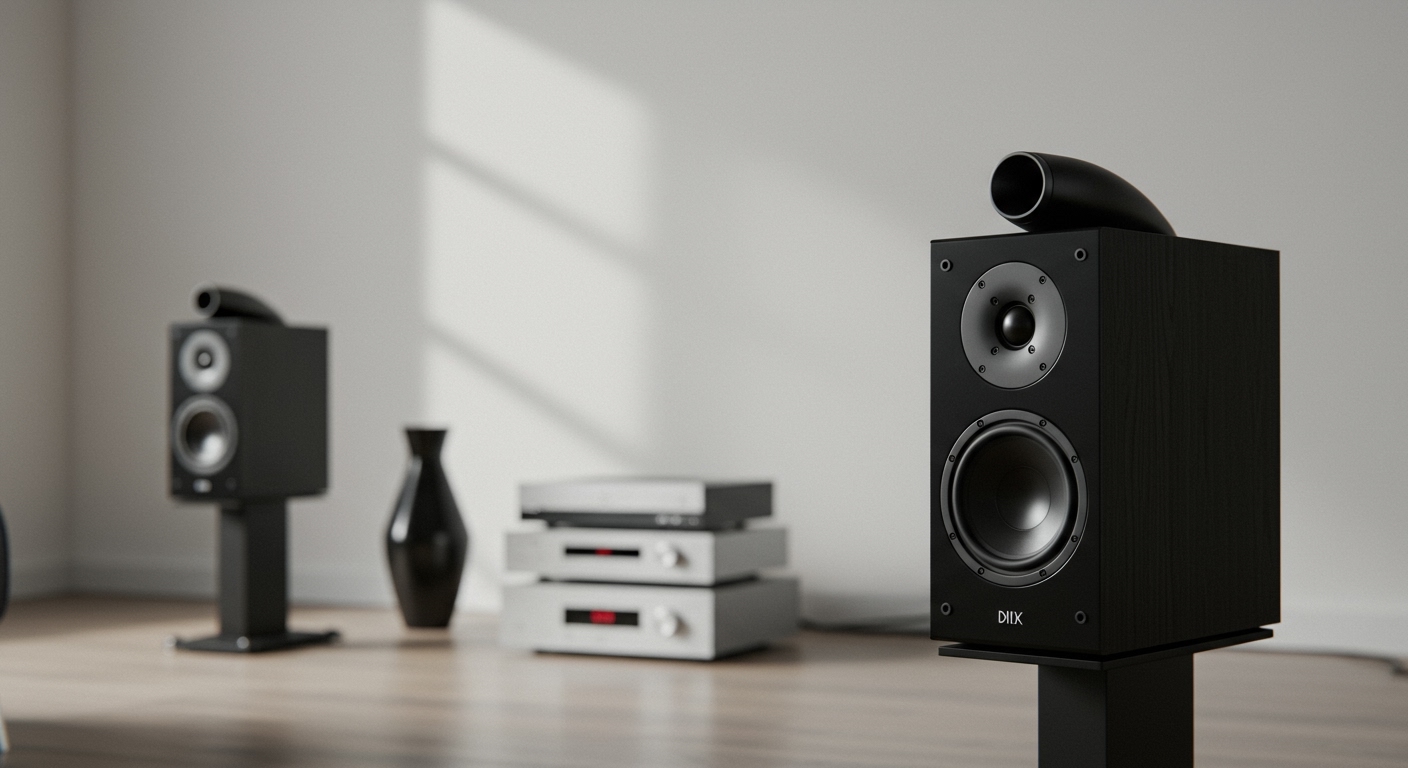
For years, I’ve helped people design audio systems, and the most common point of confusion is the speaker itself. Think of it as the final and most crucial link in your audio chain. Without a quality loud speaker, even the best audio signal from a high-end turntable or streaming service will sound flat and lifeless.
Key Takeaways
- What they are: Devices that turn electrical signals into sound waves we can hear.
- How they work: An electromagnet (voice coil) moves a cone back and forth rapidly, creating pressure waves in the air (sound).
- Main Components: The driver (creates sound), the enclosure (shapes sound), and the crossover (directs frequencies).
- Common Types: Include bookshelf, floor-standing (tower), in-wall/in-ceiling, and specialized speakers like subwoofers.
- Key Specs: Look at frequency response (Hz), impedance (Ohms), sensitivity (dB), and power handling (Watts) when choosing.
How Do Loud Speakers Actually Work?
The magic of a loud speaker is rooted in basic physics. While the technology can get complex, the fundamental process is straightforward and has remained largely unchanged for a century.
Here is a step-by-step breakdown of how an electrical signal becomes the sound of your favorite song:
- The Source Signal: Your audio system (like an amplifier or receiver) sends a fluctuating electrical current down a speaker wire. This current is an exact electrical copy of the original sound wave.
- Energizing the Voice Coil: The signal enters the speaker and flows into the voice coil, which is a coil of wire attached to the back of the speaker’s cone. This coil is suspended in a powerful magnetic field created by a permanent magnet.
- Electromagnetism in Action: When the electrical current flows through the voice coil, it becomes a temporary electromagnet. The polarity of this electromagnet changes thousands of times per second, mirroring the audio signal.
- Push and Pull: This rapidly changing magnetic field on the voice coil interacts with the field of the permanent magnet. It causes the voice coil to be rapidly pushed and pulled, moving back and forth.
- Moving the Cone: Since the voice coil is attached to the larger, lightweight diaphragm (or cone), the cone moves with it. It vibrates in and out, precisely in time with the original audio signal.
- Creating Sound Waves: This vibration pushes and pulls the air in front of it, creating waves of pressure. These pressure waves are sound waves, which travel through the air to your ears, where your brain interprets them as sound.
Essentially, a speaker is an incredibly precise motor that converts electrical energy into mechanical energy (the moving cone) to produce acoustic energy (sound waves).
The Core Components of a Modern Loud Speaker
While the principle is simple, a high-quality loud speaker is a carefully engineered system of parts working in harmony. Understanding these components helps you understand why some speakers sound dramatically different than others.
The Driver: The Heart of the Speaker
The driver is the part of the speaker that actually produces the sound. Most speakers use multiple specialized drivers to handle different parts of the sound spectrum for better clarity.
- Woofer: A large driver designed to reproduce low-frequency sounds, like the beat of a kick drum or the rumble of an explosion. Its large size is necessary to move the large amount of air required for bass notes.
- Tweeter: A small, lightweight driver that handles high-frequency sounds, such as cymbals, violins, and sibilance in vocals. Its small size allows it to vibrate extremely quickly.
- Midrange Driver: Found in 3-way speakers, this driver is dedicated to the middle frequencies, where most vocals and instruments reside. This specialization can lead to a more natural and clear sound.
Some speakers, particularly smaller or more budget-oriented ones, may use a single full-range driver to attempt to cover the entire frequency spectrum.
The Enclosure (Cabinet): Shaping the Sound
The box that the drivers are mounted in is called the enclosure or cabinet. Its role is far more than just cosmetic; it has a massive impact on the speaker’s final sound. The enclosure’s primary job is to prevent the sound waves from the back of the driver from canceling out the sound waves from the front.
From my own A/B testing, the difference between a well-braced MDF cabinet and a flimsy plastic one is night and day.
- Sealed (Acoustic Suspension) Enclosures: These are airtight boxes. They produce very tight, accurate, and controlled bass, but they can be less efficient and may not go as deep as ported designs.
- Ported (Bass Reflex) Enclosures: These have a hole or “port” that allows air to move in and out. This design uses the rearward energy from the woofer to reinforce the low frequencies, resulting in deeper, more powerful bass from a smaller cabinet. The trade-off can sometimes be slightly less “tight” bass compared to a sealed design.
- Cabinet Material: The material and internal bracing are critical. Most quality speakers use Medium-Density Fiberboard (MDF) because it’s dense and acoustically inert, meaning it doesn’t vibrate or color the sound. Cheaper speakers might use particleboard or plastic.
The Crossover: The Traffic Cop for Frequencies
In a speaker with multiple drivers (like a woofer and a tweeter), something needs to direct the right frequencies to the right driver. This is the job of the crossover network, an electronic circuit inside the cabinet.
It acts like a traffic cop, taking the full-range audio signal from the amplifier and splitting it up:
- Low frequencies are sent to the woofer.
- High frequencies are sent to the tweeter.
- Mid-range frequencies are sent to the midrange driver (in a 3-way speaker).
Without a crossover, all drivers would try to reproduce all frequencies, resulting in distorted, muddy sound and potential damage to the drivers.
What Are Some Loud Speakers? Exploring the Main Types
When people ask “what are some loud speakers,” they’re usually asking about the different form factors available. The type you choose depends heavily on your room, budget, and primary use case.
Bookshelf Speakers
These are compact speakers designed to be placed on a shelf, stand, or desk. Despite their name, I always recommend placing them on dedicated speaker stands for the best performance, as this isolates them from vibrations.
- Best For: Small to medium-sized rooms, stereo music listening, or as surround speakers in a home theater.
- Pros: Small footprint, often provide excellent detail and imaging, generally more affordable than tower speakers.
- Cons: Limited bass response compared to larger speakers; often benefit from being paired with a subwoofer.
Floor-Standing (Tower) Speakers
These are large, standalone speakers that sit directly on the floor. Their larger cabinet size allows for more and/or larger drivers, which translates to a fuller sound with deeper bass.
- Best For: Medium to large rooms, primary front speakers for home theater, and serious two-channel music listening.
- Pros: Full-range sound with deep bass, high power handling, create a large and immersive soundstage.
- Cons: Require significant floor space, can be more expensive, can overwhelm a small room with too much bass.
In-Wall / In-Ceiling Speakers
These speakers are designed to be mounted flush within your walls or ceiling, offering a completely hidden audio solution. They are popular for home theater surround channels and whole-home audio systems.
- Best For: Minimalist aesthetics, home theater surround sound, ambient background music.
- Pros: Zero footprint, clean and unobtrusive look.
- Cons: Installation is more complex and permanent, sound quality can be compromised by wall cavity characteristics, typically don’t match the performance of a traditional box speaker at the same price.
Subwoofers
A subwoofer is a specialized loud speaker designed to reproduce only the lowest frequencies, typically from 20Hz to around 120Hz. It handles the deep rumble and impact that other speakers can’t. Most are “active,” meaning they have their own built-in amplifier.
- Best For: Adding deep bass and impact to any music or home theater system.
- Pros: Provides foundational low-end punch, frees up your main speakers to focus on mids and highs.
- Cons: Can be large and difficult to place, poor setup can result in boomy, one-note bass.
Speaker Type Comparison Table
| Speaker Type | Best For | Typical Size | Price Range (Pair) | Key Advantage |
| :— | :— | :— | :









