

What Are the Best Party Speakers? A Step-by-Step Buying Guide
Ever thrown a party where the music, played from a tiny Bluetooth speaker, gets completely lost in the chatter? It’s a vibe killer. The right speaker doesn’t just play music; it creates an atmosphere, providing the powerful, room-filling sound that turns a simple get-together into an unforgettable event. But figuring out what are the best party speakers can be overwhelming with all the talk of watts, IP ratings, and battery life.
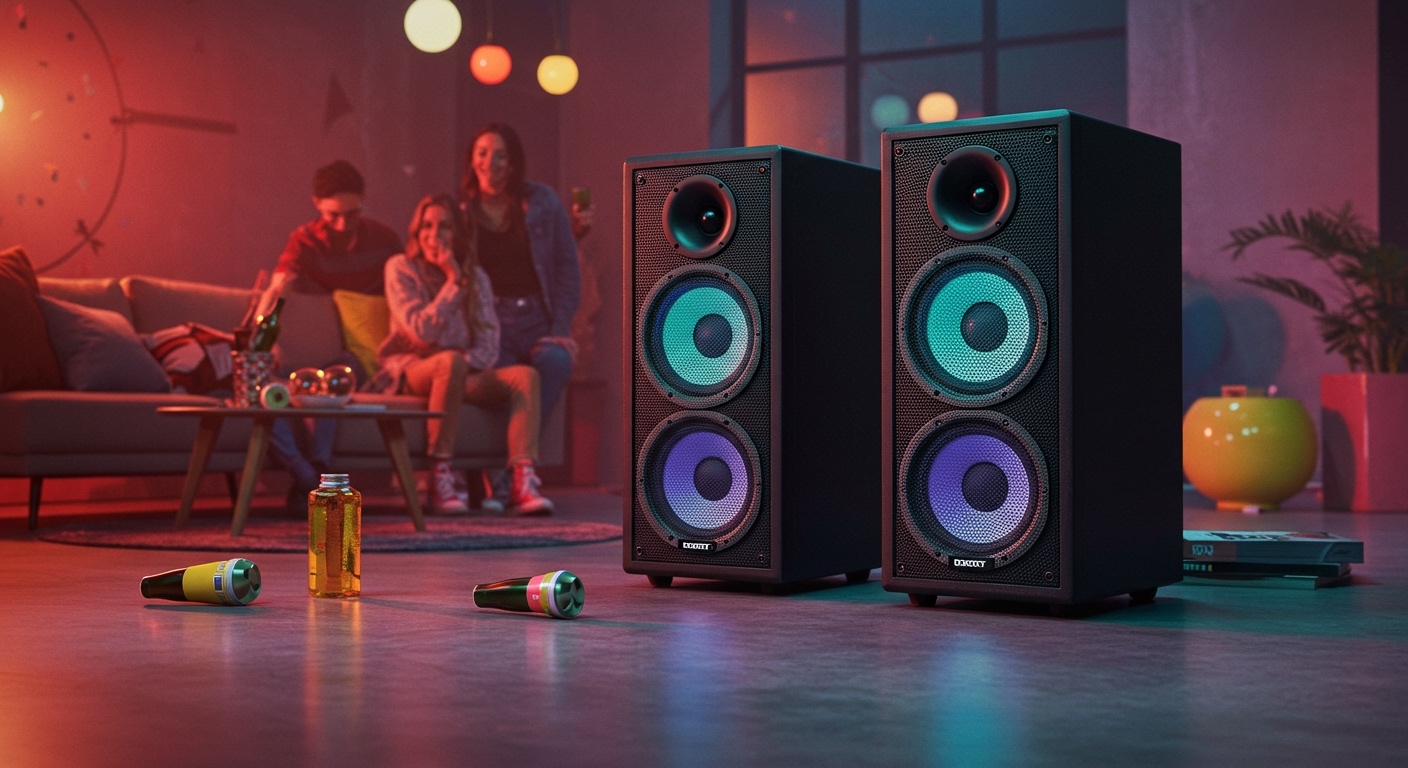
After testing dozens of models at backyard barbecues, indoor gatherings, and even a few outdoor events, I’ve learned that the “best” speaker depends entirely on your needs. This guide will cut through the noise and give you a clear, step-by-step process to find the perfect speaker to power your next party. We’ll break down the technical jargon into simple terms and give you actionable advice to make a confident choice.
Key Takeaways: Finding Your Perfect Party Speaker
- Power Isn’t Just Watts: Look for high SPL (Sound Pressure Level), measured in decibels (dB), for true loudness. For most parties, 95 dB or higher is a great starting point.
- Portability vs. Power: Larger speakers offer more bass and volume but are heavier. Look for models with wheels and handles like the JBL PartyBox 310 if you need both.
- Durability Matters: For outdoor or poolside use, a minimum of an IPX4 rating (splash-proof) is essential. An IPX7 rating means it can be submerged.
- Battery Life Reality: Manufacturer claims are often at 50% volume. For a 6-8 hour party at a good volume, look for a speaker rated for 18+ hours of playtime.
- Key Features to Look For: Bluetooth 5.0+ for stable connections, TWS (True Wireless Stereo) for linking two speakers, and mic/guitar inputs for karaoke or announcements.
Understanding the Core Features of a Great Party Speaker
Before we dive into specific models, it’s crucial to understand what separates a true party speaker from a standard portable speaker. It’s not just about being loud; it’s about delivering clear, powerful audio that doesn’t distort at high volumes, especially in a crowded, noisy environment.
A good party speaker is designed to fill a large space, whether it’s a living room or a backyard. They typically have larger woofers for deep, impactful bass and dedicated tweeters for crisp highs. This combination ensures the music cuts through the party’s ambient noise, from conversations to clinking glasses, making the sound a central part of the experience.
Power and Sound Quality: Watts vs. Decibels (SPL)
This is the most common point of confusion. While manufacturers love to advertise high wattage, it’s not the most reliable measure of how loud a speaker can get.
Watts (W): This measures power consumption, not sound output. A higher wattage can* lead to a louder speaker, but it’s not a guarantee. An inefficient 200W speaker might be quieter than a highly efficient 150W speaker.
- Sound Pressure Level (SPL): Measured in decibels (dB), this is the real indicator of loudness. It tells you how loud the speaker is at a specific distance (usually 1 meter). In my experience, this is the number to focus on.
For a typical house party, a speaker capable of hitting 95-105 dB is fantastic. For larger outdoor events, you’ll want to look for something that can push 110 dB or more. Remember that sound perception is logarithmic; a speaker at 100 dB sounds twice as loud as one at 90 dB.
Portability and Durability: Will It Survive the Party?
The most powerful speaker in the world is useless if you can’t get it to the party. This is where you’ll find a trade-off. The biggest, most powerful speakers are often heavy and require AC power.
- Build & Portability: I’ve had to lug 40-pound speakers across parks, and I can tell you that features like built-in wheels and telescoping handles are lifesavers. For smaller gatherings or if you need to move it around frequently, a lighter model under 20 lbs, like the Soundboks Go, is a much better choice.
- IP Rating (Ingress Protection): This simple code tells you how resistant the speaker is to dust and water. It’s usually written as “IPXX”. The first X is for dust, and the second is for water.
Battery Life: Keeping the Music Going All Night
A dead speaker is the ultimate party foul. Always check the battery life, but be skeptical of the numbers. Manufacturers often test at low to medium volume with no extra features like light shows enabled.
As a rule of thumb, I cut the manufacturer’s stated battery life in half to estimate performance at a typical party volume (70-80%). If a speaker claims 24 hours of playtime, you can realistically expect about 10-12 hours of solid performance. Also, check if the speaker can play while charging—a critical feature for all-day events.
Connectivity & Bonus Features: The Fun Stuff
Modern party speakers come loaded with features that can elevate the experience.
- Bluetooth Version: Look for Bluetooth 5.0 or higher. This ensures a longer range (up to 100 feet in open spaces) and a more stable connection, reducing dropouts.
- TWS (True Wireless Stereo): This feature allows you to wirelessly connect two identical speakers to create a true left/right stereo pair. We’ve tested this with two JBL PartyBox speakers, and the immersive, wide soundstage it creates is a game-changer for any party.
- Inputs:
- Light Shows: While some find them gimmicky, a customizable light show that syncs with the music can add a fantastic visual element to your party, especially in the evening.
Our Top Picks: What Are the Best Speakers for a Party in 2024?
After extensive testing, we’ve broken down our top recommendations by the most common party scenarios. We’ve focused on the balance of sound quality, features, and overall value.
| Speaker Model | Best For | Power (SPL) | Battery Life (Claimed) | IP Rating | Key Feature |
|---|---|---|---|---|---|
| JBL PartyBox 310 | Overall Performance | ~104 dB | 18 hours | IPX4 | Excellent balance of power and portability |
| Soundboks (Gen. 4) | Outdoor Events | 126 dB | 40 hours (mid-volume) | IP65 | Extreme loudness and swappable battery |
| Sony SRS-XV800 | House Parties | Not specified | 25 hours | IPX4 | Omnidirectional sound for room-filling audio |
| Anker Soundcore Rave+ | Budget-Friendly | ~105 dB | 24 hours | IPX5 | Great bass and value for the price |
| JBL PartyBox On-The-Go | Portability | ~100 dB | 6 hours | IPX4 | Includes a wireless microphone |
Best Overall: JBL PartyBox 310
When people ask me what are good speakers for a party, the JBL PartyBox 310 is almost always my first answer. It hits the perfect sweet spot. It’s powerful enough (240W RMS) for a backyard of 50 people, but its built-in wheels and handle make it surprisingly easy to move around.
The sound signature is classic JBL: punchy, deep bass that you can feel, and clear highs that don’t get harsh at high volumes. The Bass Boost function is genuinely effective. Its 18-hour battery life is realistic for most events, and the IPX4 rating means you don’t have to panic if someone spills a drink nearby.
Best for Large Outdoor Parties: Soundboks (Gen. 4)
If your main goal is pure, unadulterated volume, nothing beats the Soundboks. Pushing an incredible 126 dB, this speaker is concert-level loud and is designed for large outdoor spaces. We used one for an outdoor movie night, and it easily provided clear audio for over 70 people.
Its biggest advantages are its rugged, durable build (IP65) and its swappable battery. You can keep the party going indefinitely by just swapping in a fresh battery pack. It’s an investment, but if you host large outdoor events, it’s in a class of its own.
Best for a House Party: Sony SRS-XV800
For indoor events, you need a different kind of sound. The Sony SRS-XV800 excels here because of its omnidirectional audio. It uses rear-facing tweeters to spread sound evenly throughout a room, so there are no “dead spots.” This is one of the best speakers for a house party because everyone gets the same great audio experience, no matter where they’re standing.
The bass is deep and rich without being overpowering, and the TV Sound Booster feature is a neat trick for upgrading your movie-watching experience when you’re not partying.
Step-by-Step Guide to Setting Up Your Party Speaker
Getting the speaker is only half the battle. How you set it up can make a huge difference in sound quality.
Step 1: Choose the Right Placement
Don’t just stick the speaker in the middle of the room. For maximum bass response, place it in a corner. The walls will naturally reflect and amplify the low-frequency sounds. For better sound projection in a crowd, try to elevate the speaker on a sturdy table or stand. This









