

What Are Tower Speakers and Why Are They a Great Choice?
Struggling to get that immersive, room-filling sound from your tiny Bluetooth speaker or soundbar? You’re not alone. The search for powerful, detailed audio can be overwhelming, but tower speakers are often the ultimate destination for both music lovers and home theater enthusiasts. This guide will demystify the process, helping you understand exactly what to look for and how to find the best tower speakers for your specific needs, room, and budget.
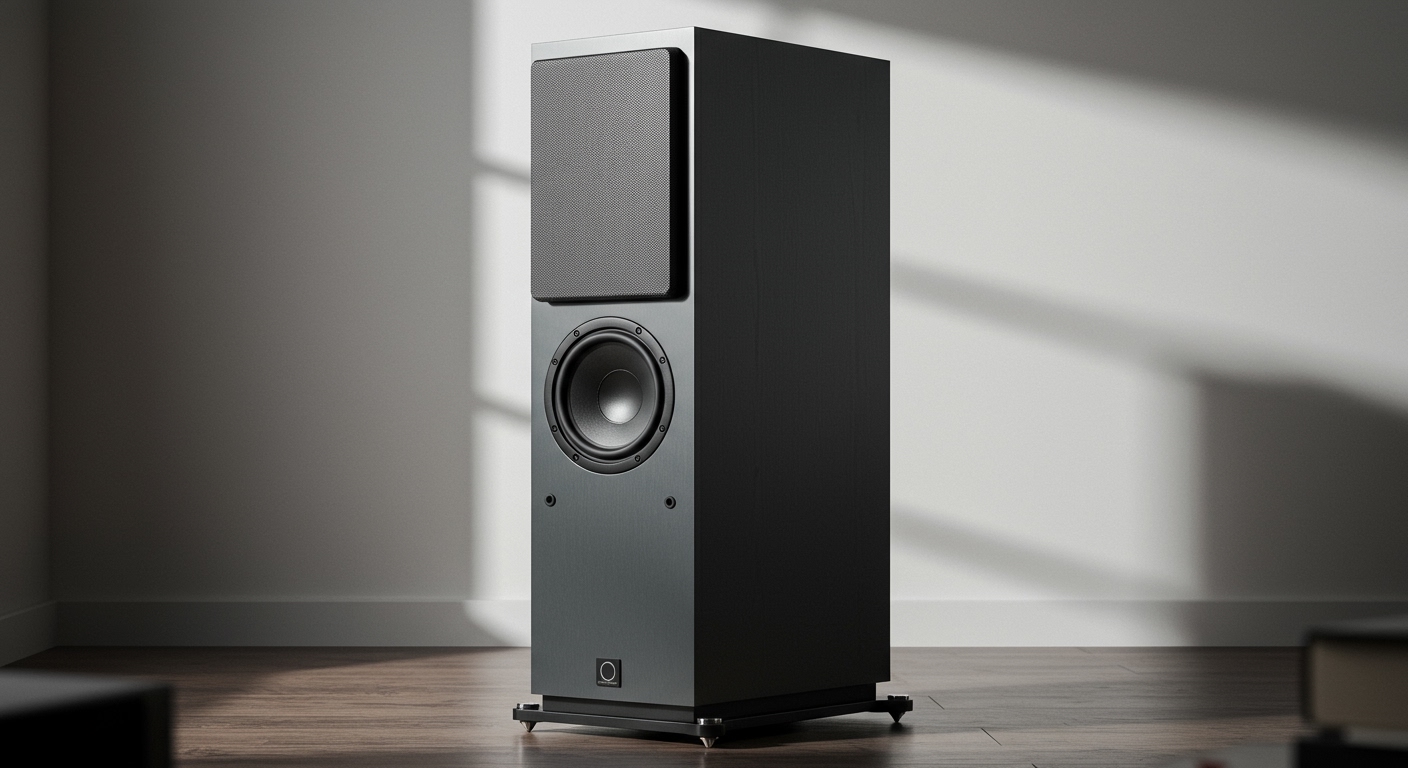
We’ve spent years testing, setting up, and listening to countless floor-standing speakers. We’ll cut through the technical jargon and give you the practical, actionable advice you need to make a confident choice and transform your listening experience.
Key Takeaways: Finding Your Perfect Tower Speakers
- Define Your Use: The best speakers for epic movie explosions might differ from those best for delicate classical music. Decide if your priority is home theater or two-channel music.
- Room Size Matters: Large speakers in a small room can sound boomy and overwhelming. Match the speaker’s output to your space for balanced audio.
- Power Matching is Crucial: Ensure your AV receiver or amplifier has enough power to drive the speakers properly. Check the speaker’s sensitivity and impedance ratings.
- Listen Before You Buy: If possible, audition speakers with music you know well. Specs only tell part of the story; your ears are the final judge.
- Placement is Everything: Proper setup, including distance from walls and the listening position, can make a bigger difference than spending hundreds more on speakers.
Understanding What Makes Tower Speakers the Best Choice for Audio
Before diving into specs, let’s clarify what tower speakers are. Also known as floor-standing speakers, they are tall, cabinet-style speakers designed to sit directly on the floor. Their large size isn’t just for show; it allows for multiple, larger drivers (the components that create sound) and a cabinet volume that can produce deep, impactful bass without necessarily needing a separate subwoofer.
Here’s why they are often considered the pinnacle for a home audio setup:
- Full-Range Sound: They can reproduce a wider range of frequencies, from the deepest bass notes in an action movie to the highest cymbal crashes in a jazz recording.
- Powerful Bass Response: The larger woofers and cabinet volume move more air, creating a rich, powerful low-end that smaller bookshelf speakers simply cannot replicate on their own.
- Superior Stereo Imaging: Because of their size and driver placement, tower speakers create a broad, deep soundstage. This means you can pinpoint the location of instruments and sounds in a recording, creating a more realistic, three-dimensional listening experience.
- High Dynamic Range: They can play both very quiet and very loud passages with clarity and without distortion, making them ideal for dynamic movie soundtracks and complex musical pieces.
In my experience, the leap from a soundbar or small bookshelf speakers to a quality pair of tower speakers is one of the most significant upgrades you can make to your audio system. The sense of scale and effortless power is immediately noticeable.
How to Find the Best Tower Speakers for Your Setup: A Step-by-Step Guide
Finding the “best” tower speakers is not about finding one universally perfect model. It’s about finding the model that is perfect for you. Follow these steps to narrow down the vast field of options.
Step 1: Define Your Primary Use (Music vs. Home Theater)
How you plan to use your speakers is the most important factor.
- For Music Lovers (2-Channel Stereo): If your focus is primarily on listening to music, you’ll want speakers that prioritize accuracy, detail, and tonal balance. Look for models praised for their midrange clarity and smooth high-frequency response. Brands like KEF, Wharfedale, and Monitor Audio are often celebrated for their musicality.
- For Home Theater Enthusiasts: Movie soundtracks demand a different set of skills. You’ll want speakers that are dynamic, impactful, and can handle high volumes without strain. Horn-loaded designs, like those from Klipsch, are famous for their efficiency and “live” sound, which brings action scenes to life.
Of course, many speakers excel at both! But knowing your priority helps you focus on reviews and brands that align with your listening style.
Step 2: Consider Your Room Size and Acoustics
A speaker’s performance is intrinsically linked to the room it’s in.
- Small Rooms (Under 150 sq. ft.): Large, powerful tower speakers can easily overwhelm a small space, creating “boomy” or muddy bass. Consider more compact towers or high-quality bookshelf speakers with a small subwoofer.
- Medium to Large Rooms (150-300+ sq. ft.): This is where tower speakers truly shine. They have the power to fill the space with sound effortlessly. Look for speakers with larger woofers (6.5 inches or more) to move enough air.
Remember that soft surfaces like carpets, curtains, and upholstered furniture absorb sound and can tame reflections, while hard surfaces like hardwood floors and bare walls can make a room sound bright and harsh.
Step 3: Match Speakers to Your Amplifier or Receiver
Your speakers and amplifier are a team. An underpowered amplifier can’t properly control the speaker drivers, leading to distorted sound, especially at higher volumes.
Look at two key specifications:
- Sensitivity (or Efficiency): Measured in decibels (dB), this tells you how loud a speaker will play with a single watt of power from one meter away. A higher number (e.g., 90 dB or more) means the speaker is more efficient and easier to drive, making it a good match for lower-powered amplifiers.
- Impedance: Measured in ohms (Ω), this represents the electrical resistance the speaker presents to the amplifier. Most speakers are rated at 8 ohms, which is compatible with nearly all receivers. Some high-end speakers dip to 4 ohms, which requires a more powerful, stable amplifier. Always check your receiver’s manual to see what impedance it can handle.
Step 4: Set a Realistic Budget
Tower speakers can range from a few hundred dollars to the price of a new car. Here’s a general breakdown of what to expect:
| Budget Tier | Price Range (Pair) | What to Expect |
|---|---|---|
| Entry-Level | $300 – $800 | Solid performance, good for starting a system. Basic cabinet construction. |
| Mid-Range | $800 – $2,500 | Excellent sound quality, better drivers, superior cabinet bracing, nicer finishes. |
| High-End | $2,500+ | Premium materials, advanced driver technology, exceptional detail and realism. |
My advice is to allocate the largest portion of your audio budget to your speakers. They have the most significant impact on the overall sound quality of your system.
Decoding the Specs: Key Features of the Best Tower Speakers
When you browse product pages, you’ll be hit with a lot of technical terms. Here are the ones that actually matter.
Driver Configuration: The Heart of the Sound
Drivers are the individual speaker cones responsible for producing different frequencies.
- Tweeters (High Frequencies): Produce high-pitched sounds like cymbals and female vocals. Common types are soft-dome (smooth sound) and metal-dome (detailed sound).
- Midrange Drivers (Mid Frequencies): Crucial for vocals and most instruments. This is arguably the most important driver for overall clarity.
- Woofers (Low Frequencies): The largest drivers, responsible for producing bass and mid-bass. Their size (e.g., 5.25″, 6.5″, 8″) is a key indicator of a speaker’s bass potential.
You’ll see speakers described as 2-way, 2.5-way, or 3-way. A 3-way design, with dedicated drivers for highs, mids, and lows (like the SVS Prime Pinnacle), is often considered ideal as it allows each driver to be optimized for a specific job.
Frequency Response: The Full Spectrum of Sound
This spec tells you the range of sound the speaker can reproduce, measured in Hertz (Hz). For example, a range of 35Hz – 25kHz is typical.
The first number (35Hz) indicates how deep the bass can go (lower is deeper). The second number (25kHz) indicates how high the treble extends. While the human ear technically only hears up to 20kHz, a higher extension can contribute to a sense of “air” and openness.
Cabinet Construction and Materials
A speaker cabinet shouldn’t vibrate or color the sound. The best tower speakers use dense, well-braced materials like Medium-Density Fiberboard (MDF) to create an inert enclosure. When we test speakers, we often do a simple “knock test” on the cabinet. A solid, dead “thud” is a sign of good construction, while a hollow, resonant sound suggests a cheaper build that can negatively impact sound quality.
Our Process for Testing and Recommending Tower Speakers
To provide trustworthy recommendations, we don’t just read spec sheets. We bring speakers into our dedicated listening room and put them through a rigorous evaluation process.
- Controlled Environment: We use a room with known acoustics and high-quality source components and amplification to ensure we’re judging the speaker, not the system or the room.
- Critical Music Listening: We use a playlist of reference tracks we know intimately. This includes everything from well-recorded female vocals (Norah Jones, “Come Away With Me”) to complex rock (Pink Floyd, “Dark Side of the Moon”) and dynamic classical pieces to test detail, imaging, and tonal balance.
- Home Theater Torture Tests: We play iconic movie scenes with









