

Which Cars Have Speakers in the Headrest? A Definitive List
Several cars have speakers in the headrest, most notably the Mazda MX-5 Miata and various Nissan models like the Kicks and Z, which feature the Bose Personal Plus audio system. These systems are designed to create an immersive, personal sound bubble for the driver and passenger, enhancing clarity and the sense of space.
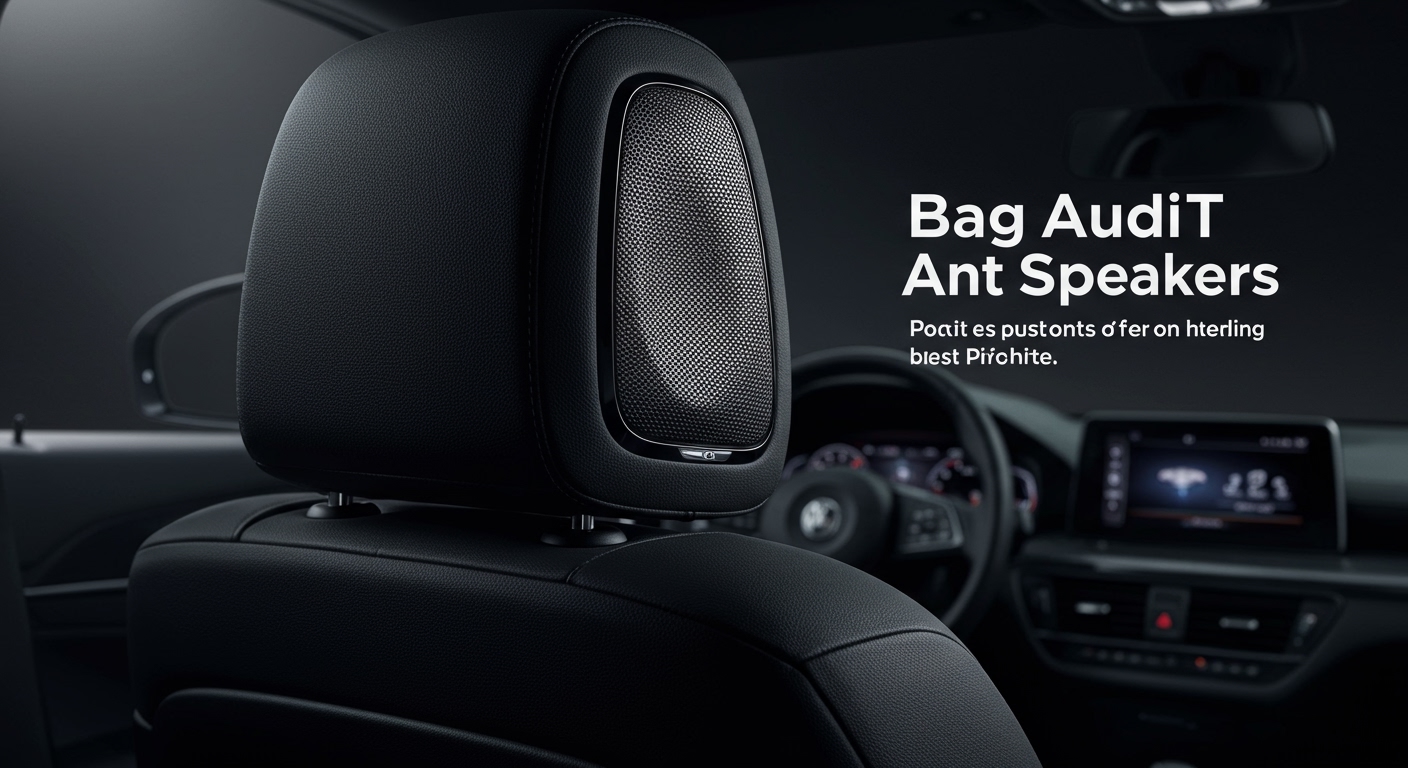
Have you ever cranked up your car stereo only to have the sound turn into a muddy mess? Or maybe you drive a convertible and struggle to hear your music clearly on the highway with the top down. This is a common frustration, and it’s precisely the problem that headrest speakers were designed to solve. They move the sound source closer to your ears, creating a personal, high-fidelity experience that a traditional door-speaker setup just can’t match.
In this guide, we’ll dive deep into exactly what car has speakers in the headrest, why this technology is a game-changer, and what you should listen for when you test drive one.
Key Takeaways
- Primary Examples: The most common cars with factory headrest speakers are the Mazda MX-5 Miata and Nissans equipped with the Bose Personal Plus system (e.g., Nissan Kicks, Z, and Micra in some markets).
- Main Benefit: They create an immersive 3D soundstage, making music feel like it’s happening all around you, not just coming from the doors.
- Key Technology: These systems use near-field speakers combined with advanced Digital Signal Processing (DSP) to control the sound.
- Practical Use: They are especially effective in convertibles for clear audio with the top down and in any car for detailed sound at lower volumes.
A Closer Look at What Car Has Speakers in the Headrest
While not a widespread feature, a select group of manufacturers has embraced headrest audio to deliver a premium experience. From my experience testing these systems, the goal is always the same: to create a soundstage that feels wider and more detailed than the car’s interior.
Mazda MX-5 Miata: The Convertible King
The Mazda MX-5 Miata is arguably the most famous example. Since the third-generation (NC) model, Mazda has worked with Bose to perfect the top-down listening experience.
- Why it’s essential: In a convertible, traditional speakers have to fight against wind and road noise. Placing speakers in the headrest ensures the sound is delivered directly to your ears, maintaining clarity even at highway speeds.
- The System: The current ND-generation Miata features a 9-speaker Bose system. This includes a pair of 2-inch (50mm) speakers in each headrest.
- My Experience: I’ve driven Miatas extensively, and the headrest speakers are a revelation. With the top down, you can hold a conversation or listen to a podcast without blasting the volume. The system’s DSP cleverly adjusts the equalization (EQ) based on whether the top is up or down.
Nissan’s Bose Personal Plus System
Nissan has made this technology more accessible by including it in affordable models. Their Bose Personal Plus system is a masterclass in creating a big sound in a small space.
- Featured Models: You can find this system in the Nissan Kicks, the new Nissan Z, and the Nissan Micra (in certain regions).
- The Technology: It uses a pair of lightweight 2.5-inch (60mm) Bose UltraNearfield™ speakers in the driver’s headrest. What’s fascinating is that it relies on signal processing to create a virtual 3D experience for the passenger, even without speakers in their headrest.
- Adjustable Immersion: A key feature I love is the PersonalSpace Control. You can adjust the soundstage from a narrow, forward-focused sound to a wide, fully immersive experience. It’s a tangible difference you can feel instantly.
High-End Luxury and Historical Examples
While Mazda and Nissan are the current champions, other brands have used this tech.
- Mercedes-Maybach: Top-tier models like the Maybach S-Class use what they call “sound resonators” or speakers in the seats and headrests as part of their 4D Burmester audio system. Here, the goal is not just music but also creating personal sound zones and delivering tactile feedback.
- Acura/Honda: The iconic Honda S2000 had speakers mounted in its headrest hoops, an early precursor to modern systems. The first-generation Acura NSX also featured a headrest-mounted stereo setup.
Car Headrest Speaker System Comparison
| Vehicle Model | Audio System Brand | Key Feature | Best For |
|---|---|---|---|
| Mazda MX-5 Miata | Bose | 9-speaker system with speakers in both headrests | Unbeatable top-down audio clarity |
| Nissan Kicks / Z | Bose Personal Plus | Driver-side headrest speakers with DSP | Adjustable 3D sound immersion |
| Mercedes-Maybach S-Class | Burmester 4D Surround | Integrated seat/headrest speakers | Ultimate luxury, personal sound zones |
| Honda S2000 (Historic) | Panasonic / Alpine | Speakers in roll hoop structure | Pioneering open-air audio |
The Science: Why Your Next Car Should Have Speakers in the Headrest
So, why go to all the trouble of engineering speakers into a headrest? It’s all about acoustics and psychoacoustics—the science of how we perceive sound.
Creating a Near-Field Soundstage
In a home audio setup, you can place speakers an ideal distance apart to create a perfect stereo “sweet spot.” In a car, this is impossible. You’re sitting way off to one side.
- The Solution: Headrest speakers are a form of near-field listening. By placing the speakers just inches from your ears, they bypass many of the car cabin’s acoustic problems, like reflections off glass and plastic.
- The Result: You get incredibly clear and detailed sound. It feels like you’re wearing a great pair of headphones, but without anything actually on your head. This allows you to hear subtle details in your music even at very low volumes.
Immersive 3D Audio and DSP
Modern systems don’t just play stereo sound. They use Digital Signal Processing (DSP) to manipulate the audio signals sent to each speaker.
- Time Alignment: The DSP delays the sound from closer speakers so that audio from all speakers arrives at your ears at the same time.
- Equalization (EQ): It adjusts frequencies to compensate for the car’s interior materials.
- 3D Processing: It creates “virtual” speakers, making it seem like sound is coming from in front of you (like a concert stage) or all around you. The Bose Personal Plus system is a prime example of this processing power.
Factory vs. Aftermarket Headrest Speakers
If your car didn’t come with this feature, you might be wondering if you can add it. While possible, it’s important to understand the significant differences between a factory-integrated system and an aftermarket solution.
Factory Integrated Systems
When a car is designed with headrest speakers from the start, the entire audio system is built around them.
- Pros:
- Cons:
From my professional experience, replicating the seamless processing of a factory Bose or Burmester system with aftermarket parts is incredibly difficult and expensive. The real magic is in the software, not just the speakers themselves.
Aftermarket Solutions
Several companies offer aftermarket kits or components that allow you to add speakers to your headrests.
- Pros:
- Cons:
How to Properly Test a Headrest Speaker System
If you’re test-driving a car that has speakers in the headrest, don’t just turn on the radio. Follow these steps to truly understand what the system can do.
- Bring a High-Quality Source: Connect your phone and play a well-recorded track you know intimately. Streaming from Spotify or Apple Music on their highest quality setting is perfect.
- Start with a Flat EQ: Before you do anything, find the audio settings and set the bass, mid, and treble to zero or “flat.” This gives you a true baseline.
- Play with the Special Features: Look for the unique system controls. In a Nissan Kicks, find the Bose PersonalSpace setting. Cycle it from narrow to wide and listen to how the soundstage opens up.
- Listen for Separation: Close your eyes. Can you pinpoint where the different instruments are? A good headrest system will create a distinct sense of space, with vocals in front of you and instruments to the sides.
- The Low-Volume Test: Turn the volume down very low. Can you still hear the details and vocals clearly? This is a key benefit of near-field speakers.
- The Convertible Test: If it’s a Miata, put the top down and get up to about 40-50 mph. The music should remain clear and present, not get washed out by wind noise.
Frequently Asked Questions About Headrest Speakers
Are headrest speakers worth it?
Absolutely, especially if you are an audiophile or drive a convertible. They provide a level of audio clarity and immersion that traditional car audio systems can’t replicate, particularly at low volumes or in noisy environments.
Can you add speakers to any car headrest?
Technically, it’s possible to add aftermarket speakers to most headrests with posts. However, it requires professional installation, including custom upholstery work, wiring, and amplification. It’s a complex job that can also have safety implications if not done correctly.
What was the first car with speakers in the headrest?
The concept has been around for decades, but one of the most notable early adopters was the Pontiac Fiero in 1984, which offered the P-Option “Sound Stage” with two speakers in each headrest. The first-generation Acura NSX also famously featured this technology.
Do headrest speakers cause ear fatigue?
No, when properly tuned, they often reduce fatigue. Because the sound is so clear and close, you don’t need to turn the volume up as high to hear details. This lower overall sound pressure level is easier on your ears during long drives.









