

What Does Power Handling Mean for Speakers? A Complete Guide
Have you ever cranked up the volume on your favorite song, only to be paralyzed by the fear of hearing that dreaded pop? You’re not alone. The anxiety of blowing expensive speakers is real, and it all comes down to a poorly understood concept: power handling. In simple terms, what does power handling mean for speakers is a measurement of how much electrical power, measured in watts, a speaker can handle from an amplifier before it gets damaged. It’s the single most important specification for ensuring your audio equipment lives a long, happy life and sounds its best.
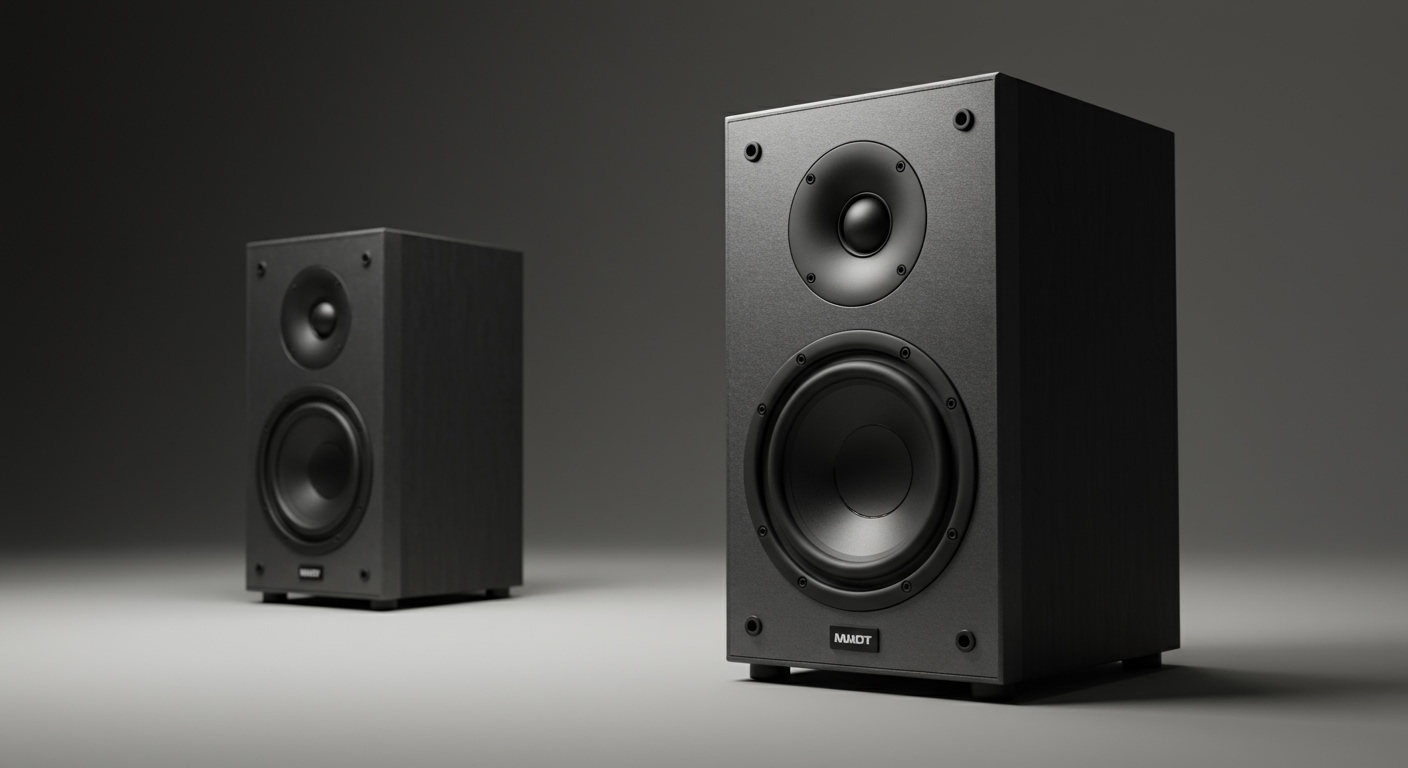
Understanding this isn’t just about avoiding damage; it’s about unlocking the full potential of your sound system. This guide will demystify the numbers and technical jargon. We’ll explore the critical difference between RMS and Peak power, the hidden dangers of underpowering your speakers, and provide a step-by-step method to perfectly match your speakers to your amplifier.
Key Takeaways & TL;DR
- Power Handling Definition: It’s the maximum electrical power (in watts) a speaker can safely handle from an amplifier without sustaining damage.
- RMS (Continuous) Power: This is the most crucial rating. It represents the amount of power a speaker can handle continuously over long periods. Always use the RMS rating when matching an amplifier.
- Peak Power: This is the maximum power a speaker can handle in very short, instantaneous bursts (like a drum hit). It’s often an inflated marketing number and is less reliable than RMS.
- Danger of Underpowering: An underpowered amplifier pushed too hard will “clip,” sending a distorted square wave signal that can quickly overheat and destroy your speaker’s voice coil, especially the tweeter.
- The Matching Goal: Aim for an amplifier that provides 80% to 150% of your speaker’s continuous (RMS) power rating at the same impedance (ohms). This provides enough clean power (headroom) to avoid clipping.
The Core Concept: What Power Handling in Speakers Really Is
At its heart, a speaker is a transducer—it converts electrical energy from your amplifier into mechanical energy (the cone moving back and forth) to create sound waves. Power handling is the specification that tells you the limits of that electrical-to-mechanical conversion process.
Think of it like lifting weights.
- The weight you can comfortably lift for 10-12 repetitions is your continuous (RMS) power. It’s sustainable and represents your true working strength.
- The absolute maximum weight you can lift just once is your peak power. It’s impressive but not sustainable, and trying to do it repeatedly will lead to injury.
Feeding a speaker too much continuous power is like trying to make a marathon runner sprint the entire 26.2 miles. Eventually, they will overheat and collapse. Similarly, a speaker’s components will overheat and fail.
The Two Critical Speaker Power Handling Ratings You Must Know
When you look at a speaker’s spec sheet, you’ll almost always see two power handling numbers. Marketers love to plaster the bigger number on the box, but the smaller one is the one you absolutely need to pay attention to.
RMS (Continuous) Power: The Gold Standard
RMS, which stands for Root Mean Square, is a complex-sounding term for a simple concept: it’s the effective, continuous power a speaker can handle for extended periods without damage. You will also see this listed as “Continuous Power Handling” or sometimes “Nominal Power.”
This is the number that matters. It reflects the speaker’s ability to dissipate heat generated by the electrical current flowing through its voice coil during normal use, like listening to a full album or watching a movie.
From my personal experience testing and setting up hundreds of audio systems, the RMS rating is the only number I trust for long-term reliability and for matching components. It’s a standardized, realistic measurement of a speaker’s endurance. A speaker rated for 100 watts RMS can safely and consistently handle a clean 100-watt signal from an amplifier.
Peak (Dynamic) Power: The Short Bursts
Peak Power, sometimes called “Dynamic Power” or “Max Power,” represents the absolute maximum power level a speaker can handle for a very brief instant. We’re talking milliseconds. This rating is meant to account for the sharp, sudden transients in music, like a cymbal crash or a powerful kick drum hit.
While not useless, this number should be taken with a large grain of salt. There is less standardization around measuring peak power, and it often becomes an inflated marketing tool. I’ve seen speakers with a massive “2000W Peak” rating fail with a 300W continuous signal. Never use the peak power rating to choose an amplifier. It’s a recipe for disaster.
RMS vs. Peak Power Handling: A Clear Comparison
To make this crystal clear, here is a table breaking down the key differences. This is fundamental to understanding what power handling means for speakers.
| Feature | RMS (Continuous) Power | Peak (Dynamic) Power |
|---|---|---|
| Definition | The amount of power a speaker can handle continuously over time without overheating. | The maximum power a speaker can handle for a very short, instantaneous burst. |
| Primary Use | Critically important for matching amplifiers and ensuring long-term system reliability. | Understanding a speaker’s ability to handle sudden, loud musical peaks without distortion. |
| Reliability | High. It’s a standardized, trustworthy measurement based on thermal limits. | Low to Medium. Often inflated for marketing and can be misleading. |
| Analogy | A marathon runner’s steady, sustainable pace. |









