

The Disappearance of a Legend: What Happened to Mirage Speakers?
If you’ve ever wondered what happened to Mirage speakers, you’re not alone. For years, as an audio enthusiast and custom installer, I recommended Mirage for their unique, room-filling sound. Then, they simply vanished from store shelves. The short answer is that Mirage Speakers was acquired by Klipsch Group, Inc. in 2006, and the brand was gradually phased out and ultimately discontinued as Klipsch chose to focus on its core brands. This left a significant void in the market for those of us who cherished their innovative speaker designs.
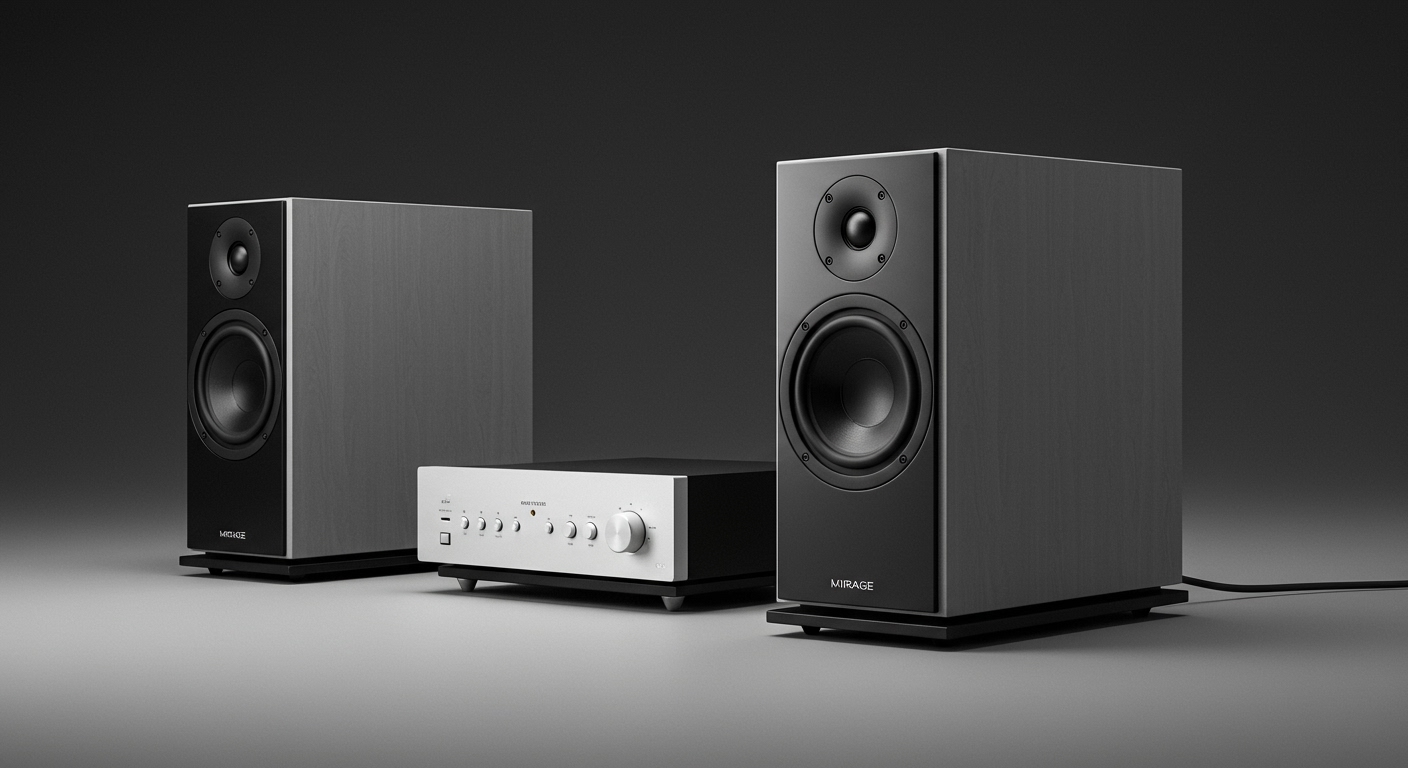
This guide explains the full story behind their disappearance, explores the groundbreaking technology that made them special, and provides a step-by-step plan for current owners on how to maintain, repair, or even replace their beloved Mirage system. We’ll dive into practical advice that I’ve gathered from years of working on these fantastic speakers.
Key Takeaways: The Mirage Speakers Story
- Acquisition & Discontinuation: Mirage, a Canadian brand, was acquired by Klipsch in 2006. Klipsch later discontinued the brand to streamline its product lines, effectively ending new production.
- Signature Technology: Mirage was famous for its Omnipolar and Bipolar speaker technology, which used forward- and rear-firing drivers to create an incredibly spacious, 360-degree soundstage.
- Current Status: No new Mirage speakers are being manufactured. The brand exists only in the second-hand market.
- For Owners: Your speakers are not obsolete! Common issues like foam surround deterioration are repairable. You can find parts and service information to keep them performing for years.
- Modern Alternatives: While no one perfectly replicates the Mirage sound, brands like Definitive Technology, Ohm Acoustics, and PSB offer speakers with wide-dispersion characteristics that provide a similar listening experience.
The Full Story of What Happened to Mirage Speakers
To truly understand why Mirage disappeared, we need to look at their history and the business decisions that led to their end. It’s a classic story of a niche, innovative company being absorbed by a corporate giant.
A Canadian Audio Pioneer
Mirage Loudspeakers was founded in Canada in the late 1970s. From the beginning, they were not content with building conventional “box” speakers. Their mission was to replicate the experience of live music, which doesn’t just come from one direction but reflects off all the surfaces in a room.
This philosophy led them to pioneer bipolar speaker designs.
- Conventional Speakers: Direct-radiating speakers fire sound directly at the listener. This creates a very precise “sweet spot” but can sound two-dimensional.
- Bipolar Speakers: Mirage’s early designs, like the legendary M-1, featured drivers on both the front and back of the cabinet, firing in phase. This created a huge, immersive soundstage that was less dependent on listener position.
I remember my first time hearing a pair of Mirage M-3si speakers. The sound didn’t seem to come from the speakers themselves; it just existed in the room. This was the Mirage magic.
The Rise of Omnipolar Technology
The ultimate evolution of this concept was Omnipolar technology. This was the brand’s defining innovation, featured in their popular OM Design series (OM-5, OM-7, OM-9) and later their compact Omnisat satellite speakers.
How did it work?
- Driver Placement: An Omnipolar speaker typically places its midrange driver and tweeter firing upwards into a “dispersion saucer” or lens.
- Sound Dispersion: This lens radiates the sound in a full 360-degree pattern.
- The Result: This creates a 70/30 ratio of reflected-to-direct sound, closely mimicking how we hear sound in a real-world concert hall. It results in a massive, airy soundstage where the speakers themselves sonically disappear.
This technology was perfect for home theater, as it created a seamless, enveloping surround sound field that was incredibly forgiving of room placement. The Mirage OMD-28 and OMD-15 floor-standing speakers were, in my opinion, the pinnacle of this design.
The Klipsch Acquisition and the End of an Era
In 2006, Klipsch Group, Inc., a company famous for its high-efficiency horn-loaded speakers, acquired Audio Products International (API), the parent company of Mirage, Energy, and Athena. This move was part of a larger industry consolidation.
Initially, Klipsch continued to produce Mirage speakers. However, their market strategy was fundamentally different.
- Klipsch: Focused on high-impact, dynamic, direct-radiating horn speakers. Their brand is built on power and efficiency.
- Mirage: Focused on diffuse, spacious, room-filling sound. Their brand was built on immersion and a unique acoustic philosophy.
Over time, it became clear that the Mirage brand didn’t fit neatly into Klipsch’s portfolio. The market was also shifting towards soundbars and smaller, more lifestyle-friendly audio systems. The complex, and likely more expensive to manufacture, Omnipolar designs became a niche product. Klipsch gradually wound down production, and by the early 2010s, new Mirage speakers were no longer available.
A Practical Guide for Current Mirage Speaker Owners
So, you own a pair of Mirage speakers. The great news is that their build quality was generally excellent. With a little care, they can continue to provide incredible sound for decades. Here’s what happened to Mirage speakers owners’ guide to keeping them alive.
Step 1: Assess the Condition of Your Speakers
Before doing any work, give your speakers a thorough inspection.
- Listen Carefully: Play a piece of music you know well. Do you hear any buzzing, rattling, or distortion, especially in the bass? This is a key sign of a problem.
- Visual Inspection (Woofers): Gently remove the speaker grilles. Look at the edge of the cone on the main woofers. The flexible ring connecting the cone to the metal basket is the foam surround. Is it cracked, brittle, or crumbling to the dust when you touch it? This is foam rot, the most common issue.
- Visual Inspection (Tweeters): Look at the tweeters (the small high-frequency drivers). Are the domes dented or pushed in? While a small dent might not affect the sound, a major one will.
Step 2: Fixing the Most Common Problem: Foam Rot
The polyurethane foam surrounds used on most Mirage woofers from the 80s, 90s, and 2000s have a lifespan of about 15-25 years. They will inevitably disintegrate. This is normal and, thankfully, 100% fixable.
Do NOT play your speakers if the foam is gone! Doing so can cause the voice coil to become misaligned and permanently damage the driver.
You have two main options for repair:
- DIY Refoaming: This is the most cost-effective method. It seems intimidating, but it’s a very manageable project.
- Professional Repair: If you’re not comfortable with the DIY route, you can send the woofers to a professional repair service or find a local electronics repair shop that does speaker work. This is more expensive but guarantees a professional result.
Step 3: Sourcing Replacement Parts
What if a driver has failed completely? Finding original parts is tricky but not impossible. The person who now makes Mirage speakers parts is, well, nobody. You’re looking for used or new-old-stock (NOS) parts.
- eBay: This is your best bet. Set up saved searches for your specific speaker model (e.g., “Mirage OM-9 tweeter” or “Mirage FRx-5 woofer”). Be patient; parts pop up regularly.
- Audio Forums: Websites like Canuck Audio Mart (since Mirage is Canadian), Audiogon, and USA Audio Mart have dedicated for-sale sections where you might find parts or even whole “for parts” speakers.
- Authorized Repair Centers: Some long-standing Klipsch-authorized repair centers may have a backstock of old Mirage parts. It’s a long shot, but worth a few phone calls.
Finding Modern Speakers with a Mirage-Like Sound
If repair isn’t an option or you’re looking to upgrade, you’ll want to find speakers that replicate that spacious, immersive sound. While no one does Omnipolar exactly like Mirage did, these brands share a similar design philosophy of wide sound dispersion.
| Brand | Key Technology | Best For | My Experience |
|---|---|---|---|
| Definitive Technology | Bipolar Driver Arrays | Home Theater, Dynamic Music | Their BP9000 series towers have forward and rear-firing driver arrays, very similar to Mirage’s bipolar M-series. They deliver a huge, powerful soundstage. |
| Ohm Acoustics | Walsh Driver (Coherent Line Source) | Critical Music Listening, Room-Filling Sound | The Ohm Walsh series uses a unique, downward-firing driver that radiates sound in 360 degrees. This is the closest modern tech to Omnipolar and sounds incredible. |
| PSB Speakers | Wide Dispersion Design | Accurate, Natural Sound | Founder Paul Barton conducts research at Canada’s NRC (just as Mirage did). His speakers, like the Imagine series, are known for their smooth, off-axis response, creating a wide and deep soundstage. |









