

What is the Difference Between Bluetooth and Wireless Speakers? A Definitive Guide
Staring at a wall of speakers, you see the words “Bluetooth” and “Wireless” used almost interchangeably. It’s a common point of confusion, leaving you wondering if there’s even a real distinction. The truth is, while all Bluetooth speakers are wireless, not all wireless speakers use Bluetooth, and choosing the wrong one can completely change your listening experience.
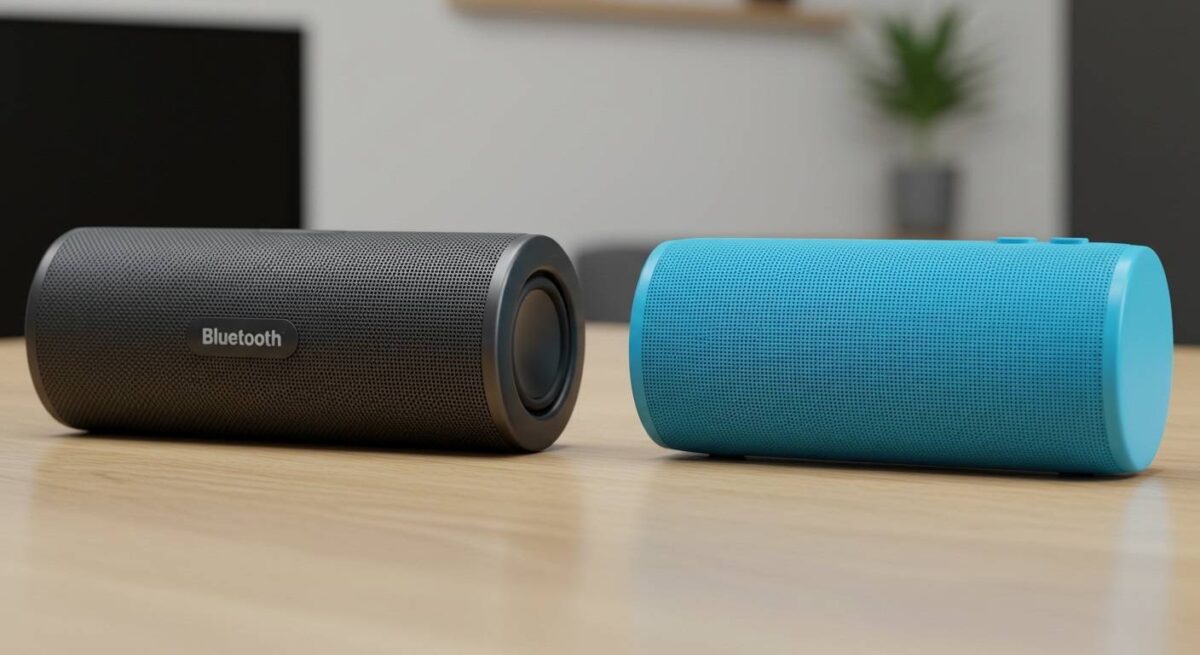
The fundamental difference between Bluetooth and wireless speakers lies in their connection method. Bluetooth speakers create a direct, short-range connection to a single source device like your phone. Wireless (Wi-Fi) speakers connect to your home internet network, allowing for higher-quality audio, greater range, and multi-room setups. This guide will demystify these technologies, helping you confidently select the perfect speaker for your needs.
Key Takeaways: Bluetooth vs. Wireless Speakers
- Connection Method: Bluetooth pairs directly with your device (phone, laptop). Wi-Fi speakers connect to your home network router.
- Best Use Case: Bluetooth is ideal for portability and on-the-go listening. Wi-Fi is superior for in-home, multi-room audio systems.
- Audio Quality: Wi-Fi offers significantly higher, often lossless, audio quality due to its greater bandwidth. Bluetooth compresses audio, which can reduce fidelity.
- Range: Bluetooth is limited to about 30-100 feet. Wi-Fi’s range is as far as your home network reaches.
- Convenience: Bluetooth is simpler for quick, temporary connections. Wi-Fi is better for a permanent home setup as it isn’t interrupted by phone calls or notifications.
A Deep Dive into Bluetooth Speakers: The King of Portability
Bluetooth speakers are the most common type of portable audio device on the market today. They are the grab-and-go solution for bringing music to the park, the beach, or just another room in the house without worrying about wires or networks.
How Do Bluetooth Speakers Work?
Bluetooth technology uses short-range radio waves to create a direct connection between two devices. Think of it as a private, invisible cord between your phone and your speaker. This process, called pairing, creates a small, personal network (a “piconet”) dedicated solely to streaming your audio.
Modern Bluetooth versions, like Bluetooth 5.0 and 5.2, have significantly improved this connection’s stability, range, and efficiency. They can maintain a more robust link even at a distance and use less battery power on both your speaker and your phone.
The Pros of Choosing Bluetooth
- Ultimate Portability: This is Bluetooth’s biggest advantage. Since they don’t need an internet connection, you can use them anywhere. From my own experience, I never go on a camping trip without my JBL Charge 5; it’s rugged, waterproof, and sets up in seconds, no matter how remote we are.
- Universal Compatibility: Virtually every smartphone, tablet, and laptop made in the last decade has built-in Bluetooth. You can be sure your devices will connect to any Bluetooth speaker you buy.
- Simplicity and Ease of Use: Pairing a Bluetooth speaker is incredibly straightforward. You just turn on the speaker, find it in your phone’s Bluetooth menu, and tap to connect. It rarely takes more than 30 seconds.
- Energy Efficiency: Bluetooth Low Energy (BLE) protocols ensure that both your source device and speaker use minimal power, leading to longer battery life for portable speakers.
The Cons You Need to Consider
- Limited Range: The typical range for Bluetooth is around 30 feet (10 meters). While newer versions can reach further in open spaces, walls and other obstacles will drastically reduce this. If you walk to another room with your phone, the music will likely stutter and stop.
- Audio Quality Compression: To send audio data over its limited bandwidth, Bluetooth has to compress the signal. While high-quality codecs like aptX HD and LDAC have vastly improved this, a purist audiophile might notice a slight loss of detail compared to a Wi-Fi connection. Standard codecs like SBC are noticeably lower in quality.
- One-to-One Connection: In most cases, a Bluetooth speaker can only be connected to one source device at a time. While some models like the Ultimate Ears WONDERBOOM 3 allow you to pair two speakers for a stereo sound, you cannot create a true multi-room system.
- Interruptions: Because the speaker is directly mirrored to your phone, any audio from your phone will play through it. This means phone calls, text notifications, and game sounds will interrupt your music.
Understanding Wi-Fi Speakers: The Heart of Home Audio
Wi-Fi speakers, often just called “wireless speakers,” represent a more permanent, high-fidelity solution for home audio. Instead of connecting to your phone, they connect to the internet router you already have in your home.
How Do Wi-Fi Speakers Work?
A Wi-Fi speaker joins your home’s Local Area Network (LAN), just like your laptop or smart TV. When you want to play music, your phone or computer acts as a remote control, telling the speaker which stream to pull directly from the internet (like from Spotify or Apple Music) or from a local server.
The audio doesn’t stream from your phone to the speaker. Instead, your phone tells the speaker what to play, and the speaker fetches the data itself via the router. This is a critical distinction that enables its biggest advantages.
The Major Advantages of Wi-Fi Audio
- Superior Audio Quality: Wi-Fi has a much wider bandwidth than Bluetooth. This allows it to stream uncompressed, high-resolution audio files without data loss. For anyone serious about sound quality, the difference is night and day. A 24-bit/192kHz high-res track sounds breathtaking on a Wi-Fi system like the Sonos Era 300, a level of detail Bluetooth simply cannot match.
- Multi-Room Audio: This is the killer feature for Wi-Fi systems. You can place speakers in different rooms and have them all play the same music in perfect sync, or play different music in each room. From a single app, I can have a podcast playing on my Sonos One in the kitchen while my family listens to a playlist on the Sonos Arc soundbar in the living room.
- Greater Range: Your listening range is limited only by the reach of your Wi-Fi network. You can control the music from anywhere in your house (or even your backyard) without fear of the signal dropping.
- No Interruptions: Since your phone is just a remote, you can take calls, watch videos, or leave the house entirely without stopping the music. The speaker is streaming independently from the network.
Potential Drawbacks of Wi-Fi Systems
- Requires a Wi-Fi Network: This may seem obvious, but it’s a critical limitation. If your internet goes down, your speaker system is useless. They









