

What is the Difference Between Car Speakers and Home Speakers? A Deep Dive
Ever stumbled upon a great deal for high-end car speakers and wondered if you could repurpose them for your home stereo system? It’s a common thought, but the answer is more complex than a simple yes or no. The core difference between car speakers and home speakers lies in their fundamental electrical and physical design, engineered for two vastly different acoustic environments.
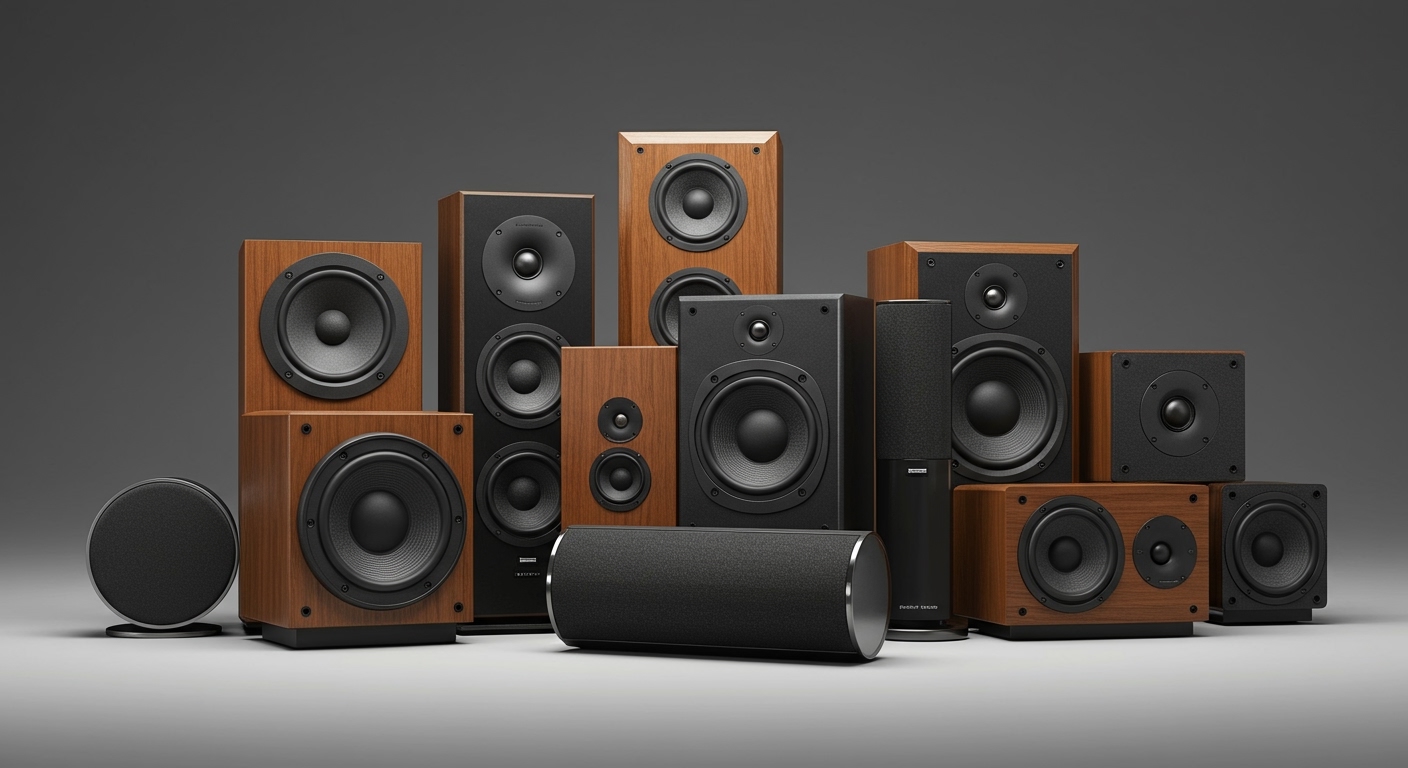
The most critical distinctions are impedance (electrical resistance), power source requirements, enclosure design, and environmental durability. Car speakers are typically 4-ohm, built to run on a car’s 12V DC system and withstand extreme conditions. Home speakers are usually 8-ohm, designed for stable AC wall power and optimized for sound quality in a controlled room. Using one in place of the other is not only impractical but can also damage your equipment.
Key Takeaways: Car Speakers vs. Home Speakers
- Impedance Mismatch: Car speakers are almost always 4 ohms, while home audio speakers are standardized at 8 ohms. Connecting low-impedance car speakers to a home amplifier can cause it to overheat and fail.
- Power Systems: Car audio runs on a low-voltage, high-current 12V DC system from the vehicle’s battery. Home audio uses high-voltage 120V/240V AC from a wall outlet. They are fundamentally incompatible without specialized power supplies.
- Enclosure is Everything: Home speakers are sold as a complete system with the drivers (the speaker cones themselves) installed in a scientifically designed cabinet. Car speakers are typically sold as raw drivers, intended to be installed in a car door or a custom-built box, which then acts as the enclosure.
- Built for Different Worlds: Car speakers are constructed with robust materials like polypropylene and rubber to survive extreme heat, cold, moisture, and vibration. Home speakers use more delicate materials optimized for pure sound fidelity in a climate-controlled room.
- Acoustic Goals: Car audio is engineered to overcome a high “noise floor” (road, wind, and engine sounds). Home audio is designed for critical listening in a quiet environment, prioritizing accuracy and a flat frequency response.
The Core Difference Between Car and Home Speakers: Impedance Explained
To truly understand what is the difference between car speakers and home speakers, we have to start with the most important electrical principle at play: impedance. Getting this wrong is the fastest way to damage your expensive audio gear.
What is Impedance and Why Does It Matter?
In simple terms, impedance is the measure of a speaker’s resistance to the electrical current sent by an amplifier. It’s measured in ohms (Ω). Think of it like a water pipe: a smaller pipe (lower impedance) allows more water (current) to flow through with the same amount of pressure (voltage).
- Car Speakers: The industry standard is 4 ohms.
- Home Speakers: The industry standard is 8 ohms.
This difference exists for a crucial reason. A car’s electrical system is limited to about 12 volts. To generate powerful sound from such low voltage, amplifiers must push more current. According to Ohm’s Law (Power = Voltage² / Resistance), cutting the resistance (impedance) in half from 8 ohms to 4 ohms effectively doubles the amplifier’s potential power output. This is a clever engineering workaround to get loud audio from a low-voltage source.
The Dangers of Mismatching Impedance
Here’s where people get into trouble. Your home audio receiver or amplifier is designed to “see” an 8-ohm load from the speakers. When you connect a 4-ohm car speaker instead, the amplifier sees half the resistance it expects.
This causes the amplifier to try and push out twice the electrical current it was designed to handle. This surge of current generates a massive amount of excess heat, which can lead to two outcomes:
- Protection Mode: A well-designed modern amplifier will detect the thermal overload, shut itself down, and enter “protection mode” to prevent permanent damage.
- Catastrophic Failure: An older or less sophisticated amplifier might not have these protections. It will continue trying to power the speaker until internal components literally burn out. In my years of audio installation, I’ve seen brand-new home receivers destroyed by this simple mistake. It’s a costly and entirely avoidable error.
Power Handling and Amplifier Compatibility Differences
Beyond impedance, the very power that drives these speakers comes from two completely different worlds. This is a fundamental reason are car speakers and home speakers different. They are not designed to be powered by the same sources.
Car Audio: The World of 12V DC Power
Every electronic component in your car, from the headlights to the stereo, runs on a 12-volt Direct Current (DC) electrical system. This power is supplied by the battery and maintained by the alternator while the engine is running.
Car amplifiers are marvels of engineering. They are specifically designed to take this limited 12V DC input and use internal circuitry (a “switching power supply”) to boost it to much higher voltages needed to drive speakers with authority. This is why car amps need thick power and ground wires connected directly to the battery—they draw a huge amount of current.
Home Audio: High-Voltage AC Power
Your home audio system plugs directly into a wall socket, which supplies high-voltage Alternating Current (AC)—typically 120V in North America or 240V in Europe.
A home receiver contains a large, heavy transformer that converts this high-voltage AC into the various DC voltages the internal amplifier circuits need. The entire design is predicated on having access to a powerful, high-voltage source, which is why they can easily power 8-ohm speakers.
Can You Power Car Speakers at Home?
Technically, yes, but it’s a clunky, inefficient, and expensive workaround. You cannot simply wire a car amplifier to a wall plug. You would need a dedicated AC-to-DC power supply that can convert 120V AC to 12V DC and—critically—provide enough amperage (current) to satisfy the amplifier. A small wall adapter won’t work; you’d need a robust, often fan-cooled unit that can cost as much as a decent home amplifier.
Enclosure and Acoustic Design: Why It’s a Critical Speaker Difference
Perhaps the most overlooked, yet most significant, factor in sound quality is the speaker’s enclosure—the box it sits in. This is a major point of divergence when comparing car and home speakers.
Home Speakers: The Science of the Cabinet
When you buy a home speaker, you’re buying a complete acoustic system. The drivers (woofer, tweeter) and the cabinet are designed to work together in perfect harmony. The volume of the box, the length of a port (if it has one), and the









