

What Speakers Are In a Marshall 1960A Cab? An Expert Guide
Have you ever wondered what’s really creating the sound inside that iconic Marshall 1960A cabinet? You’re not alone. Many guitarists buy these cabs used or simply want to understand the core component of their tone, but the answer isn’t always straightforward. Getting it wrong can lead to a mismatched sound or even damage to your amplifier.
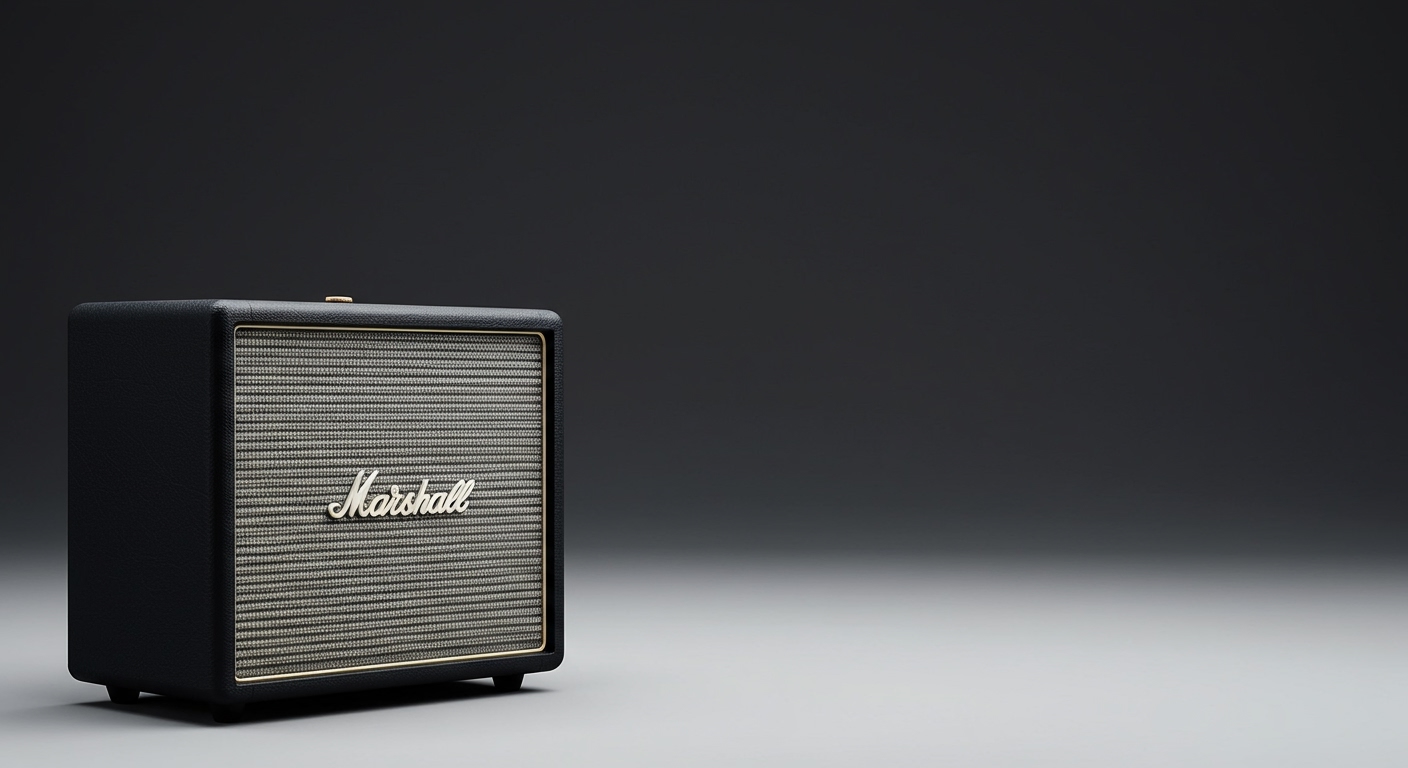
The short answer is that modern Marshall 1960A cabinets are factory-loaded with four Celestion G12T-75 speakers. However, the history of this legendary cab is rich, and different eras featured different speakers, each with a unique sonic footprint. In this comprehensive guide, we’ll break down exactly what speakers are in a Marshall 1960A cab, how to identify them, and how you can even upgrade them to perfectly sculpt your sound.
Key Takeaways (TL;DR)
- Modern Standard: The vast majority of Marshall 1960A cabs made from the mid-1980s to today come standard with Celestion G12T-75 speakers.
- Vintage Variations: Older models from the 60s, 70s, and early 80s can contain classic speakers like Celestion G12M “Greenbacks”, G12-65s, or even G12H-30s.
- Key Sonic Trait: The G12T-75 is known for its high power handling (75 watts), tight low-end, scooped midrange, and aggressive top-end, making it a staple for rock and metal.
- Identification is Key: To be 100% sure what’s in your cab, you need to open the back panel and inspect the speaker’s magnet label and frame codes.
Understanding the Standard: The Celestion G12T-75 Speaker
When people ask what speakers are in a Marshall 1960A cab, the most common and correct answer for any modern cabinet is the Celestion G12T-75. This speaker became the workhorse for Marshall in the mid-1980s, coinciding with the rise of higher-gain amplifiers like the JCM800 2203 and 2204.
The G12T-75 was designed to handle more power and provide a sonic profile that suited the evolving sounds of hard rock and heavy metal. Its predecessor, the G12-65, was struggling to keep up with the increased volume and gain levels players were demanding.
From my experience, the G12T-75 is a “love it or hate it” speaker. Its distinct character defines the sound of countless records.
Sonic Characteristics of the G12T-75
- Power Handling: 75 watts, which gives a standard 4×12 1960A cab a total power handling of 300 watts. This is more than enough for a 100-watt or 150-watt amp head.
- Low End: The bass response is tight and powerful, but not overly boomy. It holds together well under high gain.
- Midrange: This is the G12T-75’s most defining and controversial feature. It has a pronounced mid-scoop, meaning the middle frequencies are less prominent. This helps create clarity in a dense band mix, allowing the guitar to sit perfectly without clashing with the bass or vocals.
- High End: The treble is often described as aggressive, “sizzly,” or “chimey.” It cuts through very effectively but can sound harsh to some players if not EQ’d properly on the amplifier.
This speaker is the sound of 80s metal and 90s rock. Think of bands like Slayer or early Guns N’ Roses; that cutting, aggressive tone is heavily influenced by the G12T-75 in a Marshall 1960A.
The Historical Evolution of Speakers in the Marshall 1960A
While the G12T-75 is the modern standard, the journey to get there is fascinating. Understanding the history helps you identify speakers in vintage cabs and appreciate how Marshall’s sound has evolved.
The Early Days (1960s): G12M “Greenbacks”
The original Marshall 4×12 cabinets, often paired with “Plexi” heads, were typically loaded with Celestion G12M-25 “Greenback” speakers. These are legendary in their own right.
- Power Handling: Low, at only 25 watts each. This meant a 4×12 cab could only handle 100 watts, and players often pushed them to their limits.
- Sound Profile: Famous for a warm, woody tone with a crunchy, vocal-like midrange and a smooth, rolled-off top end. When pushed, they produce a highly sought-after, compressed speaker breakup. I’ve had the pleasure of playing through a vintage ’68 cab, and the dynamic response of the Greenbacks is something special.
The Transitional Era (1970s): G12H-30 and G12-65
As amplifiers got louder, Marshall needed speakers that could take the heat. This led to a few key models appearing in 1960A cabs.
- Celestion G12H-30: This speaker used a heavier (“H”) magnet than the G12M. It offered slightly more power handling (30 watts), a firmer low end, and a more aggressive upper-midrange bite. It was a favorite of players like Jimi Hendrix.
- Celestion G12-65: Introduced in the late ’70s, this was a direct attempt to create a higher-power Greenback. It handled 65 watts and had a warmer, less aggressive tone than the later G12T-75. It’s known for a tight bass and a smoother top end, making it a favorite of players like Robben Ford.
The Modern Era (Mid-1980s to Present): G12T-75
The rise of the Marshall JCM800 demanded a speaker that could handle high gain without turning to mush. The G12T-75 was Celestion’s answer, and it has remained the standard in the 1960A and 1960B (straight) cabinets ever since.
How to Identify the Speakers in Your Marshall 1960A Cab: A Step-by-Step Guide
So, you have a Marshall 1960A and want to know for sure what speakers are in it. The only way to be certain is to look inside. It’s an easy process that I’ve done countless times.
Tools You’ll Need:
- A Phillips head screwdriver
- A flashlight
Step 1: Safety First!
ALWAYS disconnect the cabinet from your amplifier before you begin. Never open a cabinet while it is plugged into an amp head.
Step 2: Remove the Back Panel
Lay the cabinet face down on a soft surface, like a carpet or blanket, to avoid scratching the tolex. The back panel of a Marshall 1960A is typically held in place by 16-20 screws around its perimeter. Carefully remove all of them and set them aside in a safe place.
Step 3: Lift the Back Panel
The panel might be a little snug. Gently pry it up from one corner. Once it’s loose, lift it away. You now have a clear view of the four speakers and the wiring.
Step 4: Inspect the Speaker Magnet
This is where you’ll find all the information. Shine your flashlight onto the large, round magnet on the back of one of the speakers. You are looking for a label.
- Celestion G12T-75: The label will clearly say “G12T-75” and often “Made in England” (though some more recent ones are made in China). It will also state the impedance, which is typically 16 ohms for speakers in a 1960A.
- Celestion Vintage 30: If a previous owner swapped them, you might see “Vintage 30“. This is a very common and popular modification.
- Celestion G12M Greenback: A green plastic magnet cover is the giveaway, though some reissues have labels. It will be marked “G12M“.
Step 5: Check the Frame for Date Codes (For Vintage Cabs)
For older speakers, Celestion stamped a date code onto the speaker’s metal frame or gasket. This code can tell you the exact day, month, and year the speaker was made, which is invaluable for dating a vintage cabinet. A quick search for “Celestion date codes” online will give you a chart to decipher it. For example, a code like “DM12” would translate to April 12, 1969.
Once you’ve identified your speakers, you can carefully screw the back panel on again. Don’t overtighten the screws, as this can strip the wood.
Sound Profile Deep Dive: G12T-75 vs. Popular Alternatives
Understanding how the stock G12T-75 compares to other popular Celestion speakers can help you decide if an upgrade is right for you. I’ve spent years A/B testing these speakers in our studio, and each has a very distinct personality.
Here is a comparison table of the most common speakers found in or swapped into a Marshall 1960A:
| Speaker Model | Power Handling | Bass Response | Midrange Profile | Treble Response | Best For |
|---|---|---|---|---|---|
| Celestion G12T-75 | 75 Watts | Tight, Punchy | Scooped | Aggressive, Sizzly | Modern Rock, Metal, High-Gain |
| Celestion Vintage 30 | 60 Watts | Chunky, Thick | Prominent Upper-Mids | Detailed, Barking | Hard Rock, Metal, Blues-Rock, Lead Tones |









