

The Definitive Guide to Mesa Boogie Cabinet Speakers
Staring at the iconic Mesa/Boogie logo on a speaker cabinet, have you ever wondered what sonic magic is hiding behind that grille cloth? You’re not alone. The speakers inside are a huge part of the legendary Mesa tone, but figuring out exactly what they are can be confusing. This guide will demystify the speakers Mesa/Boogie uses, helping you understand the tone, history, and how to identify what’s in your own cab.
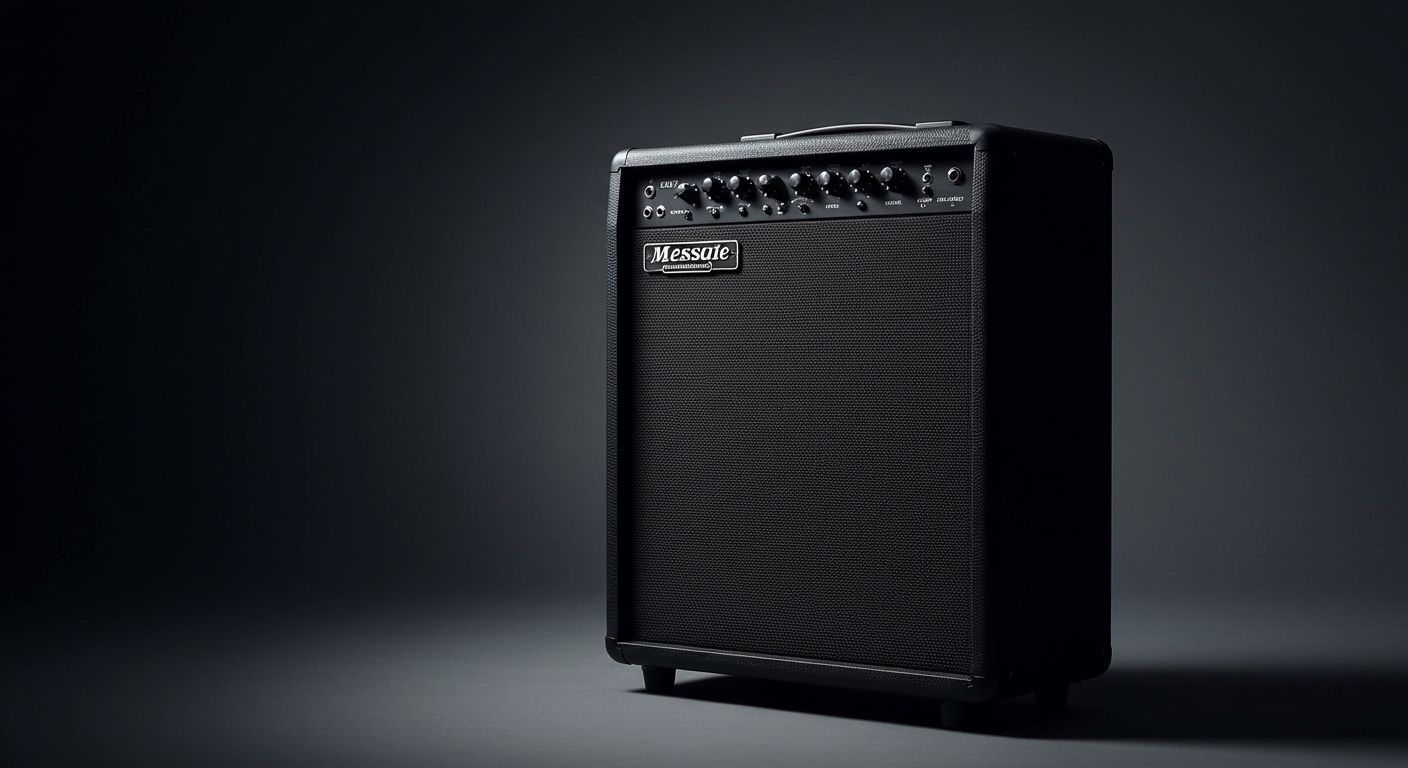
We’ve spent years playing, recording, and even swapping speakers in Mesa cabinets to understand what makes them tick. This isn’t just a list of specs; it’s a deep dive based on hands-on experience to help you find your perfect sound.
Key Takeaways / TL;DR
- What speakers are in Mesa Boogie cabinets? Mesa/Boogie primarily uses proprietary, custom-voiced speakers made by Celestion in the UK.
- Most Common Models: The two most famous and widely used speakers are the Mesa/Boogie Celestion Vintage 30 (V30) and the Mesa/Boogie Celestion Custom 90 (C90), also known as the Black Shadow MC-90.
- The “Mesa Difference”: Mesa’s speakers are not the same as off-the-shelf Celestions. They are built to Mesa’s specific tonal requirements, often resulting in a tighter low-end and a more refined midrange.
- Other Notable Speakers: Mesa also uses other models for specific amps and cabinets, such as the Fillmore FM-75 and the Jensen Blackbird Alnico.
A Deep Dive into Mesa Boogie’s Most Common Speakers
To truly understand what speakers Mesa Boogie uses, we need to look at the individual models that have defined their sound for decades. Each one is a crucial ingredient in the final tonal recipe.
The Legendary Mesa/Boogie Celestion Vintage 30
This is the speaker that most people associate with Mesa’s high-gain sounds. If you’ve ever heard a Dual Rectifier roaring through a 4×12 cabinet, you’ve heard the Mesa V30.
- Sonic Profile: The Mesa V30 is known for its incredibly tight bass response, a powerful and aggressive midrange punch, and a detailed, articulate top end. It cuts through a dense band mix like a hot knife through butter. From my experience, it’s one of the best speakers ever made for recording heavy guitars because that midrange focus translates perfectly to microphones.
- Power Handling: 60 Watts.
- Commonly Found In:
It’s crucial to note: the Mesa-spec V30 is different from a standard Celestion Vintage 30. It’s made in the UK (not China, like many standard V30s) and is voiced to be slightly smoother and less harsh in the upper-mids.
The Versatile Celestion Custom 90 (Black Shadow MC-90)
The Celestion Custom 90, often branded as the Black Shadow MC-90, is the unsung hero of the Mesa speaker lineup. It offers a different, but equally compelling, flavor of tone.
- Sonic Profile: Compared to the V30, the C90 has a broader frequency response. It features a bigger, fatter low-end, a more scooped midrange, and a sparkling, detailed high-end. In our shop, we often recommend this speaker to players who find the V30’s midrange a bit too aggressive. It’s fantastic for achieving pristine clean tones and articulate lead sounds.
- Power Handling: 90 Watts.
- Commonly Found In:
The Smooth Fillmore FM-75
Developed specifically for the vintage-voiced Fillmore amplifier series, the FM-75 is a collaboration between Mesa, Celestion, and renowned speaker designer Jim Seavall.
- Sonic Profile: This speaker delivers a warmer, more traditional rock and blues tone. It has a softer attack, a looser low-end, and a sweet, singing top end without the aggressive bite of a V30. It’s designed to break up musically and respond dynamically to your playing.
- Power Handling: 75 Watts.
- Commonly Found In:
The Punchy Jensen Blackbird Alnico 100
For a true vintage American tone, Mesa turned to Jensen. The Blackbird Alnico is a premium speaker that offers a completely different feel.
- Sonic Profile: Alnico magnets provide a unique compression and chime when pushed. The Blackbird has a warm, woody tone with complex harmonics and a very touch-sensitive response. It’s less aggressive and offers a rounder, more “3D” soundstage.
- Power Handling: 100 Watts.
- Commonly Found In:
Comparing Mesa Boogie’s Core Speaker Models
To make it easier to understand the differences, we’ve broken down the key characteristics of Mesa’s most popular speakers in this table.
| Speaker Model | Power Rating | Magnet Type | Sonic Character | Best For |
|---|---|---|---|---|
| Mesa Celestion V30 | 60 Watts | Ceramic | Tight bass, aggressive midrange, cutting highs | Modern Rock, Metal, Hard Rock |
| Mesa Celestion C90 (MC-90) | 90 Watts | Ceramic | Fat bass, scooped mids, sparkling highs | Versatile Rock, Fusion, Cleans, Leads |
| Mesa Fillmore FM-75 | 75 Watts | Ceramic | Warm, balanced, vintage feel, smooth breakup | Blues, Classic Rock, Roots Music |
| Jensen Blackbird Alnico | 100 Watts | Alnico | Woody, complex, touch-sensitive, natural compression | Vintage Tones, Blues, Jazz, Boutique Cleans |
How to Identify the Speakers in Your Mesa Boogie Cabinet
So, you have a Mesa cab and you’re dying to know what speakers are in it. Here’s a simple, step-by-step process I use to identify them.
Step 1: Check the Backplate
The easiest first step is to look at the metal plate on the back of your cabinet. Mesa often lists the cabinet model and total impedance (Ohms). While it won’t name the speakers, the model (e.g., “Rectifier 4×12 Standard”) is a strong clue, as these almost always contain Mesa V30s.
Step 2: Look for Labels on the Speaker Magnet
Sometimes, you can see the back of the speaker through a rear port or by looking through the grille with a flashlight. Look for a sticker on the large, circular magnet.
- Celestion Stickers: You’ll see a Celestion label. Look for model numbers. The Mesa V30 is often labeled T4416. The Mesa C90 is often labeled T5335.
- Mesa/Boogie Stickers: You might see a “Mesa Black Shadow” or “Mesa Power” sticker, which often covers the original manufacturer’s label.
Step 3: Carefully Remove the Back Panel (The Definitive Method)
This is the only way to be 100% certain. Safety first!
- Disconnect Everything: Make sure the cabinet is completely unplugged from any amplifier.
- Use the Right Tools: Use a screwdriver that fits the screws perfectly to avoid stripping them. Place the screws in a magnetic tray or cup so you don’t lose them.
- Gently Remove the Panel: The back panel may be a tight fit. Pry it off gently and evenly. Be mindful of any speaker wires connected to a jack plate on the panel itself.
- Inspect the Speaker: Now you have a clear view. Examine the labels on the magnet and the speaker frame (cone). You’ll find the manufacturer, model number, impedance, and sometimes a date code.
- Reassemble Carefully: When you’re done, put the back panel on and tighten the screws in a star pattern (like changing a tire) to ensure an even, airtight seal. Don’t overtighten.
Following these steps, I was able to confirm that my older Rectifier 2×12 cabinet, which I bought used, was loaded with the correct UK-made Mesa Celestion V30s, giving me peace of mind about the tone I was getting.
The Mesa/Celestion Partnership: A History of Tone
The reason what speakers are in Mesa Boogie cabinets is so specific is due to a long-standing relationship between Mesa’s founder, Randall Smith, and Celestion.
In the early days, Mesa was searching for a speaker that could handle the high power and gain of their amplifiers without failing. They needed clarity, punch, and durability. After extensive testing, they settled on speakers from the British manufacturer Celestion.
However,









