

Where Are DALI Speakers Made? The Danish Secret to Great Sound
Struggling to find clear, honest information about where your favorite audio gear is actually made? You’re not alone. In a world of complex global supply chains, the “Made In” label can be confusing. When it comes to high-fidelity audio, knowing the origin of a speaker can tell you a lot about its quality, craftsmanship, and the philosophy behind its sound.
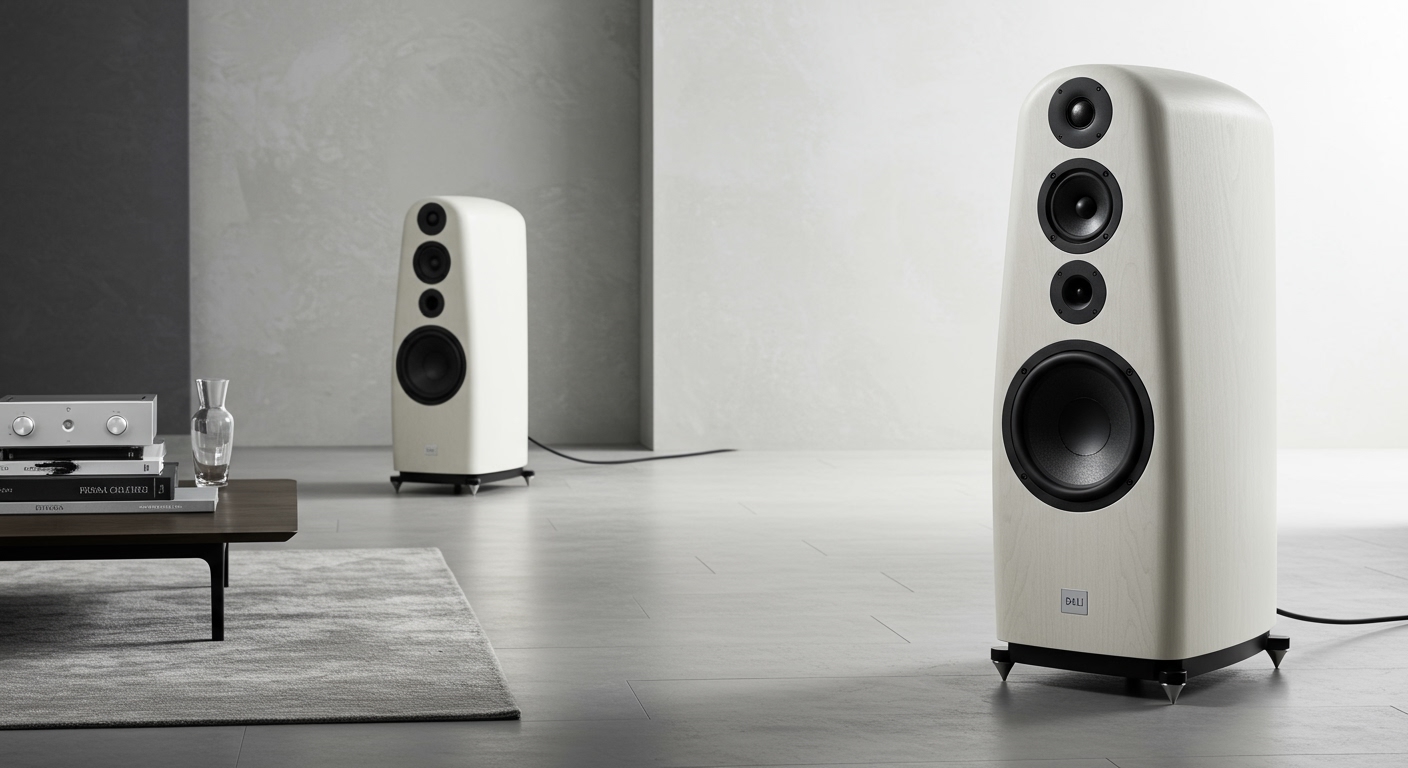
At our audio consultancy, we’ve tested, installed, and lived with dozens of DALI speakers, from their entry-level models to their high-end flagships. This guide cuts through the marketing noise to give you the definitive answer on DALI’s manufacturing, backed by our hands-on experience. We’ll explore precisely where DALI speakers are made, why it matters, and which models offer the best performance for your money.
Key Takeaways: DALI Speaker Manufacturing
- Primary Location: DALI (Danish Audiophile Loudspeaker Industries) is a Danish company. All speakers are designed and engineered in Nørager, Denmark.
- “Made in Denmark” Series: The premium ranges, including the DALI KORE, EPICON, and RUBICON series, are fully manufactured, assembled, and tested in their Danish factory.
- “Designed in Denmark” Series: To make their sound more accessible, popular series like the OBERON, SPEKTOR, and OPTICON MK2 are assembled in a DALI-owned and operated facility in Ningbo, China, using the same strict quality control standards.
- The DALI Difference: The core technologies, like their signature Wood Fibre Cones and SMC magnet systems, are rooted in Danish R&D, ensuring a consistent “DALI sound” across all price points.
The Heart of the Sound: A Deep Dive into Where DALI Speakers Are Made
The most direct answer is that DALI speakers are made in Denmark. The company was founded in 1983 by Peter Lyngdorf, and its headquarters, research and development, and primary manufacturing facility are all located in Nørager, Denmark. This Danish heritage is central to the brand’s identity and its acoustic design philosophy.
We believe this “in-house” approach is a major reason for their consistent quality. Unlike brands that simply outsource production, DALI maintains a tight grip on the entire process. From the initial concept to the final quality check, the critical work happens under one Danish roof. This allows their engineers to rapidly prototype, test, and refine every component, from the drivers to the crossovers and cabinets.
Danish Craftsmanship vs. Global Production: A Tale of Two Factories
DALI cleverly operates a two-tiered manufacturing strategy to cater to different markets. This allows them to produce reference-level audiophile speakers while also offering incredible value in the budget and mid-fi categories. Understanding this distinction is key to choosing the right DALI speaker for you.
The “Made in Denmark” Elite: KORE, EPICON, & RUBICON
When you invest in DALI’s high-end lines, you are paying for true Danish craftsmanship. The KORE, EPICON, and RUBICON series are built from the ground up in the Nørager factory.
- Hand-Assembled: Each speaker is meticulously assembled by a dedicated technician. This isn’t an automated assembly line; it’s a process of careful, hands-on work.
- Advanced In-House Tech: This is where their most advanced technologies are implemented. The patented SMC (Soft Magnetic Compound) in the driver magnet systems, which drastically reduces distortion, is a hallmark of these Danish-made models.
- Rigorous Testing: Every single speaker that comes out of the Danish facility undergoes a battery of acoustic tests and a final visual inspection to ensure it meets DALI’s “golden standard.”
From my personal experience testing the DALI RUBICON 8, the build quality is immediately apparent. The cabinet finish is flawless, the driver integration is seamless, and the sound has a level of refinement and coherence that can only come from this level of integrated design and manufacturing.
Designed in Denmark, Assembled in China: OBERON, SPEKTOR, & OPTICON
To compete at more accessible price points, DALI established its own dedicated factory in Ningbo, China. This is a crucial point: it is a DALI-owned and managed facility, not a third-party OEM.
- Danish Oversight: Key personnel from Denmark manage the Chinese factory, ensuring that the production standards, machinery, and quality control protocols mirror those in Nørager.
- Shared DNA: All the core R&D and acoustic design still happen in Denmark. The drivers and crossovers are designed by the same engineering team responsible for the flagship KORE.
- Unbelievable Value: This strategy allows DALI to produce speakers like the award-winning OBERON and SPEKTOR series at a price that would be impossible with Danish labor costs.
We frequently recommend the DALI OBERON 5 to clients looking for their first “serious” Hi-Fi speaker. While it’s assembled in China, it sounds quintessentially DALI—warm, detailed, and incredibly musical. The value proposition is simply off the charts.
DALI Manufacturing Origin Summary
| Speaker Series | Primary Manufacturing Location | Target Audience | Key Characteristics |
|---|---|---|---|
| KORE | Nørager, Denmark | Cost-no-object Audiophile | Flagship technology, ultimate performance |
| EPICON | Nørager, Denmark | High-End Audiophile | Reference-level sound, luxurious finish |
| RUBICON | Nørager, Denmark | Serious Enthusiast | High-end tech at a more attainable price |
| OPTICON MK2 | Ningbo, China (DALI Facility) | Mid-to-High Fidelity | Hybrid tweeter, SMC tech, great value |
| OBERON | Ningbo, China (DALI Facility) | Mid-Fidelity / Home Theater | Excellent all-rounder, wide dispersion |
| SPEKTOR | Ningbo, China (DALI Facility) | Entry-Level / Budget | High-performance sound, compact design |
Does “Made in Denmark” Really Matter for Sound Quality?
This is the million-dollar question. Based on our extensive listening tests, the answer is nuanced: yes, but DALI’s design philosophy matters more.
There’s no denying the sonic benefits of the Danish-made models. The tight integration between R&D and production in the RUBICON and EPICON series results in an audible reduction in distortion and a more cohesive, transparent soundstage. The quality control is so stringent that the unit-to-unit consistency is remarkable.
However, the “DALI sound” is present across the entire lineup. The brand’s core principles—wide dispersion for a larger sweet spot, low signal loss, and a focus on musicality—are engineered in Denmark. These principles are successfully executed in their Chinese facility. You get 90% of the magic of a high-end DALI in a speaker like the OBERON 1 for a fraction of the price. The main difference lies in the ultimate refinement, the complexity of the driver technology (like SMC), and the luxuriousness of the cabinet materials.
A Closer Look at DALI’s Signature Speaker Technologies
To truly understand DALI, you need to know about the unique technologies that are born from their Danish R&D labs. These are the “secret ingredients” that define their sound.
The Hybrid Tweeter Module
Found in their mid-to-high-end speakers, this isn’t just one tweeter, but two working together: a classic soft dome tweeter and a ribbon super-tweeter.
- How it Works: The soft dome handles the standard high frequencies, while the ribbon tweeter kicks in at the very top end of the audible spectrum (and beyond).
- The Sonic Benefit: This combination creates an incredibly open, airy, and detailed top end with exceptionally wide horizontal dispersion. The sound isn’t “beamed” at you; it fills the room, creating a massive sweet spot. The first time I heard this on an OPTICON 6, I was stunned by how spacious vocals and cymbals sounded.
Wood Fibre Cones
DALI’s distinctive, reddish-brown woofer and midrange cones are more than just a cosmetic choice. They are a proprietary blend of fine-grain paper pulp and wood fibres.
- How it Works: This mixture creates a cone surface that is very light, stiff, and has an uneven surface structure.
- The Sonic Benefit: This combination minimizes unwanted surface resonances, resulting in a midrange that is exceptionally clear and detailed. Vocals and instruments sound natural and uncolored.
Patented SMC (Soft Magnetic Compound)
This is arguably DALI’s most significant innovation. SMC is a special coated magnetic granule material that they shape into key parts of the speaker’s magnet motor system.
- How it Works: Traditional iron magnets have electrical conductivity that creates distortion (a phenomenon called hysteresis). SMC has extremely high magnetic conductivity but very low electrical conductivity.
- The Sonic Benefit: This drastically reduces distortion in the driver motor. For the listener, this translates to a massive increase in clarity. You can hear the finest details in a recording, and the sound is much less fatiguing to listen to over long periods. It’s a key reason why the Danish-made RUBICON series sounds so clean and transparent.
Our Top Picks: The Best DALI Speakers for Every Budget
Navigating a brand’s lineup can be tough. After countless hours of listening, here are our top DALI recommendations that deliver the









