Why Do Speakers Have Holes? The Expert Guide to Bass Ports
Ever looked at a speaker and wondered, “What’s that hole for?” You’re not alone. That hole, technically called a bass reflex port or vent, is a crucial design feature engineered to enhance a speaker’s low-frequency (bass) performance. It works by channeling sound energy from the back of the speaker cone and pushing it out in sync with the sound from the front, making the bass sound fuller, deeper, and more powerful without needing a larger speaker or more amplifier power.

This isn’t just a random hole; it’s a precisely tuned acoustic tube. In my years of designing and testing audio systems, I’ve seen how this simple-looking feature can dramatically transform a speaker’s character. Understanding its purpose is the first step to appreciating the incredible engineering that goes into creating great sound.
Key Takeaways: The Purpose of a Speaker Hole
- The “Hole” is a Port: The hole in a speaker is a bass reflex port, an engineered vent designed to improve bass response.
- Enhances Low Frequencies: It uses the rearward sound wave from the speaker driver to reinforce the forward-moving sound wave, specifically at low frequencies.
- Increased Efficiency: Ported speakers are generally more efficient, meaning they can produce louder bass with less power from an amplifier compared to sealed speakers.
- It’s Not on All Speakers: Many high-quality speakers, known as sealed or acoustic suspension designs, do not have a port. They offer tighter, more accurate bass at the cost of efficiency and low-end extension.
- Placement is Key: The location of the port (front or back) affects how you should place the speaker in your room for optimal performance.
The Science Behind Why Speakers Have Holes
To truly understand the purpose of the port, we first need to look at how a speaker driver (the cone part that moves) actually works. It’s a fascinating process that creates a fundamental acoustic challenge.
How a Speaker Driver Creates Sound
A speaker driver is an electro-mechanical transducer. In simple terms, your amplifier sends an electrical audio signal to the speaker’s voice coil. This coil is attached to the speaker cone and sits in a magnetic field.
- The audio signal causes the voice coil to move rapidly back and forth.
- As the cone moves forward, it pushes air, creating a high-pressure sound wave.
- As the cone moves backward, it pulls air, creating a low-pressure sound wave.
This rapid compression and rarefaction of air is what we perceive as sound. Here’s the problem: The speaker creates sound from both its front and its back.
The Problem of “Out-of-Phase” Sound Waves
The sound wave produced from the back of the cone is 180 degrees out of phase with the sound wave from the front. If these two waves were to meet in open air, they would cancel each other out, especially at lower frequencies. The result would be thin, weak, and virtually non-existent bass.
This is why all speakers need an enclosure or cabinet. The cabinet’s primary job is to isolate the rear sound wave from the front sound wave to prevent this cancellation. Speaker designers have two primary methods for dealing with this trapped rear sound wave.
Speaker Enclosure Designs: Ported vs. Sealed
The decision to include a hole or not defines the two most common types of speaker enclosures: Ported (Bass Reflex) and Sealed (Acoustic Suspension). Each has distinct advantages and a unique sonic signature.
The Ported (Bass Reflex) Design: Using the Hole
This is the design that answers our core question, why do speakers have holes? Instead of just trapping and absorbing the rear sound wave, a bass reflex design puts it to work.
- The Port as a Resonator: The port and the air inside the cabinet form a Helmholtz resonator, the same principle that makes a sound when you blow across the top of a bottle.
- Tuning the Frequency: The port’s length and diameter are precisely calculated to resonate at a specific low frequency.
- Inverting the Phase: As the rear sound wave travels through the port, its phase is inverted. It exits the port in-phase with the front sound wave from the driver.
- Reinforcing the Bass: This newly aligned sound wave from the port combines with the sound from the front, significantly boosting the speaker’s output at that tuned frequency.
This is an incredibly clever bit of acoustic engineering. It’s like getting free bass, increasing the speaker’s efficiency and allowing a smaller speaker to produce the deep notes of a much larger one.
The Sealed (Acoustic Suspension) Design: No Hole
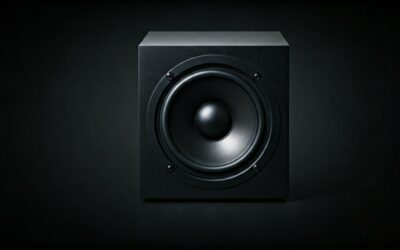
A sealed enclosure is an airtight box. Its goal is to completely trap the rear sound wave.
- Air as a Spring: The air trapped inside the cabinet acts like a spring, creating pressure that resists the cone’s movement. This is called acoustic suspension.
- Damping the Driver: This air spring helps control the driver’s movement, forcing it to return to its neutral position more quickly.
- Sonic Characteristics: This control results in bass that is often described as tighter, more accurate, and more articulate. It’s excellent for music that demands precision and fast transient response, like jazz or classical.
The trade-off is that sealed designs are less efficient. The air spring makes the driver work harder, requiring more amplifier power to produce the same volume as a ported speaker. They also typically don’t play as deep as a similarly sized ported speaker.
Comparison: Ported vs. Sealed Speakers
To make it easier to understand, I’ve broken down the key differences in this table. From my experience, neither is “better”—they are different tools for different jobs and listening preferences.
| Feature | Ported (Bass Reflex) Speaker | Sealed (Acoustic Suspension) Speaker |
|---|---|---|
| Bass Extension | Deeper, more powerful bass for its size. | Less deep bass extension. |
| Bass Quality | Boomy, impactful, “bigger” sound. | Tight, accurate, fast, and articulate. |
| Efficiency | Higher. Requires less amplifier power. | Lower. Requires more amplifier power. |
| Power Handling | Generally lower below the port’s tuning frequency. | Generally better power handling at very low frequencies. |
| Size | Can achieve deep bass in a smaller cabinet. | Requires a larger cabinet to produce very deep bass. |
| Best For | Movies, rock, hip-hop, electronic music. | Critical listening, jazz, classical, acoustic music. |
| Placement | More sensitive to room placement, especially with rear ports. | Less sensitive to room placement. |
Why Do Some Speakers Have Holes in the Back?
You’ll often see the bass reflex port on the front of a speaker, but it’s also very common to find it on the rear panel. This brings up the related question: why do speakers have holes in the back?
The acoustic principle is exactly the same. The choice of front-porting versus rear-porting is a design decision based on aesthetics and intended speaker placement.
- Acoustic Function: Whether the port is on the front or back, it performs the same job of venting bass energy.
- Aesthetics: Placing the port on the back creates a cleaner, more minimalist look on the front baffle of the speaker.
- Audible Port Noise: At very high volumes, air moving rapidly through the port can sometimes create a “chuffing” sound. Placing the port on the back can help mask this noise from the listener’s direct line of sight.
The most critical factor with rear-ported speakers is placement. Because the bass energy is firing backward, the speaker needs adequate space between it and the wall behind it.
Placement Tips for Rear-Ported Speakers
From countless room setups I’ve done, I can tell you that getting this right is crucial.
- Give It Space: As a rule of thumb, start by placing the speaker at least 1-2 feet (30-60 cm) away from the wall behind it.
- Avoid Corners: Placing a rear-ported speaker directly in a corner will over-exaggerate the bass, making it sound boomy and muddy.
- Experiment: The ideal distance will vary based on your room’s acoustics. Try moving the speakers closer to or further from the wall in small increments until the bass sounds balanced and integrated with the rest of the music. Too close, and it’s boomy; too far, and it might sound thin.
What Happens if You Cover the Hole on a Speaker?
Covering the port on a bass reflex speaker is generally not recommended, as you are fundamentally changing its design. Doing so effectively turns it into a poorly designed sealed speaker.
- It Won’t Damage the Speaker: In most cases, blocking the port won’t cause any physical damage, at least at normal listening volumes.
- It Will Change the Sound: You will immediately notice a significant reduction in bass output. The speaker will sound thinner and less full.
- It Can Affect the Driver: The driver and crossover were designed to work with the port. Blocking it changes the internal pressure and load on the driver, which can alter its performance across all frequencies, not just the bass.
Some manufacturers provide a foam “plug” or “bung” with their speakers. This is designed to be inserted into the port to slightly tame the bass output if you are forced to place the speaker too close to a wall. This is the only situation where intentionally blocking the port is a good idea, as it’s an engineered solution provided by the people who designed the speaker.
Beyond the Basic Hole: Other Speaker Venting Designs
While the bass reflex port is the most common type of “hole,” audio engineers have developed other clever ways to manage a driver’s back wave.
- Passive Radiators: A passive radiator looks like a second speaker driver but has no voice coil or magnet. It’s a weighted, unpowered cone that moves in response to the air pressure created by the active driver inside the cabinet. It functions similarly to a port but can be used in smaller enclosures and avoids any potential port noise.
- Transmission Lines: This is a more complex and expensive design where the rear sound wave is channeled down a long, folded, and dampened path inside the cabinet. By the time the sound exits the vent, only the very lowest frequencies remain, emerging in-phase with the main driver. This can produce exceptionally deep and clean bass.
These advanced designs show that the simple “hole” is just one of many solutions to a fundamental challenge in acoustics, all aimed at producing the best possible sound from a given enclosure.
Frequently Asked Questions (FAQ)
Q1: Are speakers without holes (sealed) better than speakers with holes (ported)?
No, neither design is inherently “better.” Ported speakers are more efficient and produce deeper bass from a smaller box, making them great for home theater and powerful music. Sealed speakers offer tighter, more accurate bass, which is often preferred for critical music listening. The best choice depends entirely on your listening preferences, your room, and your audio equipment.
Q2: Does the shape of the speaker hole matter?
Yes, the shape matters. While most ports are simple circles, many high-end designs use flared or rounded edges (like the bell of a trumpet). This is done to ensure the air can flow in and out of the port smoothly, which reduces turbulence and minimizes audible “chuffing” or port noise, especially at high volumes.
Q3: Can I add a hole to my sealed speakers to get more bass?
You should absolutely not do this. A bass reflex port is not just a random hole; it is a precisely engineered component. Its size and length are mathematically calculated based on the speaker driver’s specific parameters (known as Thiele/Small parameters) and the cabinet’s internal volume. Drilling a random hole will ruin the speaker’s performance and likely make it sound much worse.
Q4: Why don’t tweeters (the small speakers for high frequencies) have holes?
Tweeters don’t need ports because the problem of sound wave cancellation is primarily an issue with long, powerful low-frequency sound waves. High-frequency sound waves are much shorter and more directional. Tweeters are typically built as self-contained, sealed units to isolate them from the pressure changes created by the main woofer inside the cabinet.