

The Short Answer: Will a New Head Unit Make My Speakers Louder?
Yes, a new aftermarket head unit will absolutely make your factory or aftermarket speakers louder. The primary reason is that aftermarket head units have more powerful built-in amplifiers than the basic, underpowered units that come standard in most vehicles. Think of it as giving your sound system a bigger, more efficient engine.
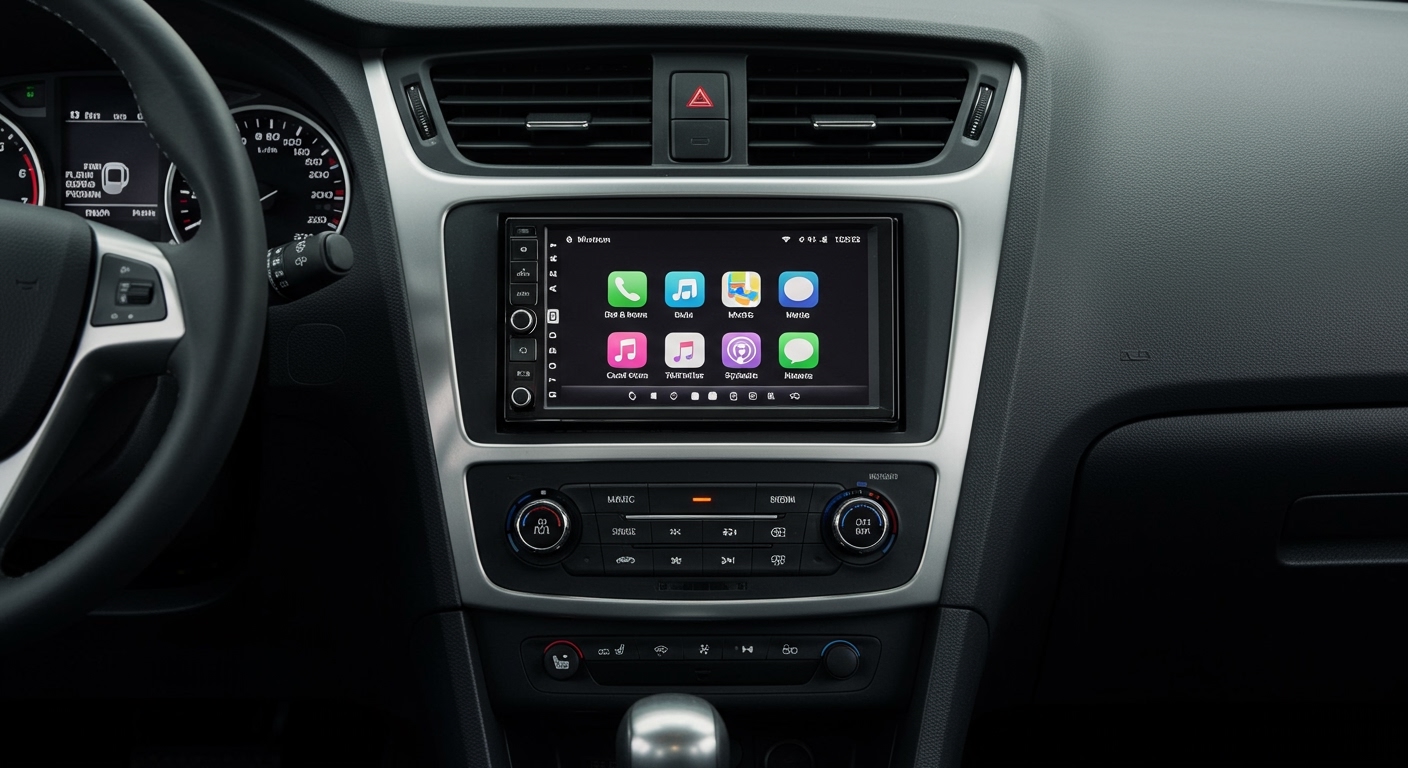
The factory stereo in your car is designed for one thing: to be as cheap as possible for the manufacturer. This means it delivers very little clean power, often distorting long before you reach a satisfying volume. A new head unit from a reputable brand like Pioneer, Kenwood, Sony, or Alpine provides a significant boost in clean, usable power, allowing your speakers to perform closer to their true potential.
Key Takeaways: Why a Head Unit Upgrade is a Game-Changer
- More Power = More Volume: A new head unit typically delivers 2-3 times more usable power (measured in RMS watts) than a factory stereo, resulting in a noticeable increase in loudness.
- Improved Sound Quality: It’s not just about volume. Aftermarket units have superior Digital-to-Analog Converters (DACs) and advanced equalization (EQ) controls, making your music sound clearer, crisper, and more detailed.
- Less Distortion: The cleaner power supplied by a new head unit allows you to turn the volume up much higher before the sound becomes a distorted, muddy mess.
- Best “Bang-for-Your-Buck” Upgrade: For a car with a stock sound system, replacing the head unit is often the single most impactful upgrade you can make for both volume and overall audio fidelity.
- Unlocks Modern Features: Gain access to essential modern tech like Apple CarPlay, Android Auto, high-quality Bluetooth streaming, and touchscreen controls.
Understanding Why a New Head Unit Makes Speakers Louder
When we talk about making speakers louder, we’re really talking about power. The head unit, or car stereo, is the brain of your audio system, but it’s also the heart, pumping power to your speakers. The difference between a factory unit and an aftermarket one is like the difference between a small sedan engine and a V8.
The Power Difference: RMS vs. Peak Power Explained
You’ll see two power ratings on a head unit’s box: Peak Power and RMS Power. It is critical to know the difference.
- Peak Power: This is a marketing number. It represents the maximum power the amplifier can produce in a very short burst. It’s not sustainable and doesn’t reflect real-world performance. You should largely ignore this spec.
- RMS Power (Root Mean Square): This is the number that truly matters. RMS power measures the continuous power an amplifier can deliver. This is the real, usable power that will drive your speakers consistently and make them louder.
As an installer for over a decade, I’ve seen countless factory units that struggle to produce even 5-10 watts RMS per channel. In contrast, a quality aftermarket head unit will reliably deliver 18-25 watts RMS per channel. That’s a massive difference you can hear and feel immediately.
| Head Unit Type | Typical Peak Power (per channel) | Typical RMS Power (per channel) | Real-World Performance |
|---|---|---|---|
| Factory OEM Unit | 20-25 watts | 5-10 watts | Weak, distorts easily at high volume |
| Aftermarket Unit | 50 watts | 18-25 watts | Loud, clear, and rich sound |
This table clearly shows that while the Peak Power numbers might look somewhat similar, the continuous RMS Power is where the aftermarket unit completely outclasses the factory one.
Cleaner Power Means Less Distortion
Have you ever turned your factory stereo up past 70% and heard the music start to crackle and sound terrible? That’s called clipping or distortion. The weak amplifier in the factory unit is being pushed beyond its limits and is sending a “dirty” or “clipped” signal to your speakers. This not only sounds awful but can also damage your speakers over time.
An aftermarket head unit’s more robust amplifier can provide clean power much higher up the volume dial. When I installed a Kenwood DMX9707S in my truck, I noticed I could push the volume to 85% with zero distortion, whereas the factory unit started to fall apart at just 60%. This ability to play loudly and cleanly is a huge part of what makes the upgrade so satisfying.
Better Pre-Amp Voltage for Future Upgrades
If you ever plan to add an external amplifier to your system, the head unit’s pre-amp outputs (RCAs) are crucial. These outputs send the audio signal to your external amp. The voltage of this signal matters immensely.
- Factory Units: Most don’t even have pre-amp outputs. If they do (in premium systems), the voltage is often low (1-2 volts).
- Aftermarket Units: A good head unit will offer pre-amp outputs with 4 volts or even 5 volts.
A higher pre-amp voltage sends a stronger, cleaner, and more robust signal to your amplifier. This means your amp doesn’t have to work as hard, resulting in less potential for system noise (like hissing) and a cleaner overall sound. Choosing a head unit with high-voltage pre-outs is one of the smartest ways to future-proof your car audio system.
Beyond Volume: Will a New Head Unit Make Speakers Sound Better?
Increased volume is a fantastic benefit, but the improvements in sound quality are often even more dramatic. A new head unit is a precision audio component, while your factory unit is a cost-cutting compromise.
The Magic of the DAC (Digital-to-Analog Converter)
Every digital song, whether from a CD, your phone via Bluetooth, or a USB drive, is just a file of 1s and 0s. The DAC is a small chip inside the head unit whose job is to convert that digital data into an analog sound wave that your speakers can play.
The quality of the DAC has a profound impact on the final sound.
- Factory DACs are basic and cheap. They can lose detail and introduce noise during the conversion process, leading to a flat, lifeless sound.
- Aftermarket DACs, especially in units from top brands, are high-fidelity components. They perform the conversion with much greater accuracy.
The result? You’ll hear details in your favorite songs you never noticed before—the subtle breath of a singer, the crisp snap of a snare drum, or the rich decay of a piano note. The entire soundstage becomes wider and more immersive.
Advanced Sound Tuning: Your Personal Sound Studio
A new head unit puts an incredible amount of audio-shaping power at your fingertips. You can move beyond the simple “Bass” and “Treble” knobs of your factory stereo and into the realm of professional-level tuning.
- Graphic Equalizer (EQ): Instead of one or two controls, you’ll get a 13-band (or more) graphic EQ. This allows you to precisely boost or cut specific frequencies to tailor the sound to your car’s acoustics and your personal taste. For example, if your car’s interior makes vocals sound a bit harsh, you can pinpoint the 2-4kHz frequency range and slightly reduce it for a smoother sound.
- Time Alignment: This is a high-end feature that transforms your listening experience. It allows you









