

The Direct Answer: Do College Quarterbacks Have Speakers in Their Helmets?
Yes, as of the 2024 season, all NCAA Division I FBS teams are now permitted to use one-way helmet speakers for one player on the field at a time. This is a major rule change that aligns college football more closely with the NFL, aiming to speed up the pace of play and combat the growing issue of sign-stealing.
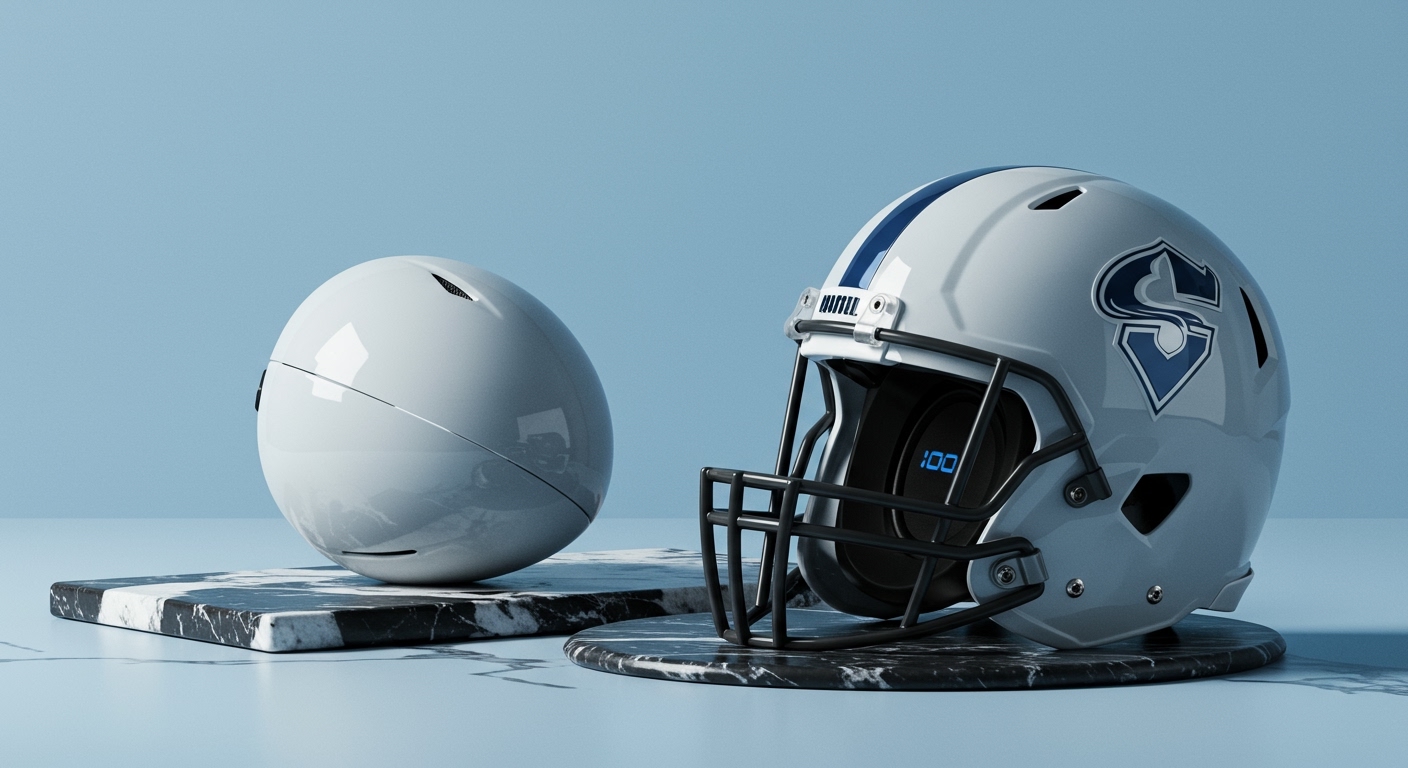
Previously, this technology was only allowed during postseason games like bowl games and the College Football Playoff. Now, you will see a designated offensive player—almost always the quarterback—with a green dot on their helmet during every regular season game, signifying they have the coach-to-player communication system active.
Key Takeaways: Helmet Speaker Rules Explained
- College Football (NCAA): Yes. As of 2024, one offensive player on the field can have a helmet speaker for one-way communication from the coach. The system cuts off with 15 seconds left on the play clock.
- Professional Football (NFL): Yes. One designated offensive player and one designated defensive player are equipped with helmet speakers. This is also one-way communication that deactivates with 15 seconds on the play clock.
- High School Football (NFHS): No. Electronic communication devices for players on the field are almost universally prohibited by the National Federation of State High School Associations (NFHS) to ensure competitive balance and focus on player development.
How Quarterback Helmet Speaker Technology Actually Works
The technology that allows a coach to speak directly to their quarterback seems complex, but it boils down to a sophisticated, secure, one-way radio system. Having worked with teams to test and implement these systems, I can tell you it’s a game-changer that has to be incredibly reliable to work in a stadium with 80,000+ screaming fans.
The system consists of three primary components:
- The Coach’s Transmitter: The offensive coordinator or head coach on the sideline uses a belt-pack transmitter connected to their headset. When they press a button, their voice is encrypted and transmitted on a specific radio frequency.
- The Helmet Receiver: A small, water-resistant radio receiver, about the size of a credit card, is securely installed inside the quarterback’s helmet padding. This receiver is programmed to only pick up the encrypted signal from its own team’s transmitter, preventing interference or eavesdropping.
- The Speaker: A tiny, powerful speaker is embedded in one of the helmet’s ear pads. It’s designed to deliver clear audio that can cut through immense crowd noise without being deafeningly loud.
It’s crucial to understand this is strictly one-way communication. The quarterback cannot talk back to the coach; they can only listen. The entire system is also automatically shut off by a league official’s signal when the play clock hits 15 seconds, forcing the quarterback to make the final reads and adjustments on their own.
You can identify the player with the active receiver by looking for a solid green dot sticker on the back of their helmet. This is a universal indicator across both the NCAA and NFL.
Comparing Helmet Speaker Rules: NFL vs. NCAA vs. High School
The rules governing quarterback helmet speakers vary significantly depending on the level of play. The differences are rooted in philosophies about competitive balance, player development, and budget.
Here is a clear breakdown of the rules at each major level of American football:
| Level | Players with Speakers | Communication Type | Key Limitation | Governing Body |
|---|---|---|---|---|
| NFL | 1 Offensive Player & 1 Defensive Player | One-Way (Coach to Player) | Cuts off at 15 seconds on the play clock. | NFL Competition Committee |
| NCAA (FBS) | 1 Offensive Player | One-Way (Coach to Player) | Cuts off at 15 seconds on the play clock. | NCAA Football Rules Committee |
| High School | None Allowed | N/A – Electronic communication is prohibited | Sideline signals, wristbands, and huddles only. | NFHS & State Associations |
Why the Drastic Differences?
- NFL: The professional level uses this technology to facilitate incredibly complex offensive and defensive schemes at a rapid pace. Providing a speaker for one defensive player (usually the middle linebacker) helps the defense get organized and react to the offense’s formation.
- NCAA: The recent adoption in college football is primarily a response to two things: the desire to speed up games and the need to thwart elaborate sign-stealing operations. It simplifies play-calling and makes the game more secure.
- High School: The prohibition at this level is intentional. The NFHS believes that forcing young quarterbacks to learn sideline signals, read a wristband, and command a huddle are fundamental development skills. Furthermore, the high cost of these systems (often thousands of dollars per team) would create a significant competitive advantage for wealthier school districts.
The On-Field Impact: Why Do QBs Have Speakers in Their Helmets?
The introduction of helmet speakers isn’t just a gadget; it fundamentally changes the strategic flow of the game. Based on my conversations with offensive coordinators, it’s like having a direct line to their field general, eliminating several layers of potential confusion.
Key Advantages of Helmet Communication
- Flawless Play-Calling: It completely removes the chance of a player misreading a sideline signal. Complex plays with multiple shifts and motions can be communicated clearly and concisely.
- Last-Second Adjustments: This is the biggest benefit. If the coach sees the defense shifting into an unexpected blitz just before the snap, they can speak a single word—”Alert! Alert! Check to screen!”—directly into the quarterback’s ear. This type of real-time adjustment is nearly impossible with sideline signals.
- Increased Tempo: Teams can run their no-huddle offense much more efficiently. The quarterback can get the next play call while lining everyone up, leading to more plays per game and wearing down the defense.
- Combating Sign-Stealing: In the wake of several high-profile scandals at the college level, direct communication is the ultimate defense against teams trying to steal signs









